
On This Page
Description
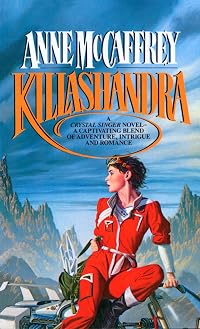
The heir-designate of the Federated Sentient Planets sets in motion events which would determine the fate of her world, her father and her planet.Tags
Recommendations



Member Reviews
I'm not really sure how to feel about this one, mostly due to the format. It is a novella and to add to that, printed in large font (my copy, at least, was) and with many full page illustrations, as well as a few double page spreads. The art, for the most part, is quite lovely and fun to look at. I can guess that the purpose of its inclusion was so that less of the text could be dedicated to describing the scenery and more to the internal worlds of our characters and the specific plot elements, but that is not exactly what reading this feels like.
While I understand the limits of a novella, this book still feels half-finished. I barely know our main character, the Lady Caissa, and I barely know her love interest. Honestly, among the cast show more of characters, it feels as though we become most acquainted with Caissa's parents, and their family and political dynamic within this unfamiliar world.
This is where my conflicted review comes into play. As a standalone book, which I'm aware this is technically not, it simply is not great. There isn't enough here. But, as a hook to convince the reader to dive into the rest of the series, well, that may be more successful. I am intrigued by the strange politics of this futuristic society, and not at all surprised that they are greedy and destructive, to the point ofhunting and farming a precious endangered species to extinction. Unfortunately, that is more of a direct indictment of modern day humanity than some distant made up potentiality, and I'd like to see if this critique is given more depth in the later installments.
Either way, I will continue my way through McCaffrey's works. Even when it's strange or somewhat truncated, I still manage to harbor a fondness for her writing. In this instance, towards the beginning of the book, I was quite charmed to feel somewhat like I was reading rather poorly written fanfic and/or something out of the modern genre of romantasy, proving that, from certain angles at least, McCaffrey's writing stands the test of time. show less
While I understand the limits of a novella, this book still feels half-finished. I barely know our main character, the Lady Caissa, and I barely know her love interest. Honestly, among the cast show more of characters, it feels as though we become most acquainted with Caissa's parents, and their family and political dynamic within this unfamiliar world.
This is where my conflicted review comes into play. As a standalone book, which I'm aware this is technically not, it simply is not great. There isn't enough here. But, as a hook to convince the reader to dive into the rest of the series, well, that may be more successful. I am intrigued by the strange politics of this futuristic society, and not at all surprised that they are greedy and destructive, to the point of
Either way, I will continue my way through McCaffrey's works. Even when it's strange or somewhat truncated, I still manage to harbor a fondness for her writing. In this instance, towards the beginning of the book, I was quite charmed to feel somewhat like I was reading rather poorly written fanfic and/or something out of the modern genre of romantasy, proving that, from certain angles at least, McCaffrey's writing stands the test of time. show less
Caissa is the body-heir of Baythan, an exceptional hunter and all-around perfect specimen of manhood (no really – much is made of his excellent genetic pattern). Caissa is now old enough that she should start considering bearing her own body-heir, but she isn't happy with the man her father suggests she at least establish a temporary heir-contract with. She has a feeling that his recommendation is tied to an undisclosed clause in his heir-contract with her womb-mother, the haughty and vain High Lady Cinna.
Out of loyalty to her father, Caissa agrees to at least meet the man he recommended, but the meeting leaves her feeling so insulted that she decides to leave the city for a bit to blow off some steam. Unfortunately, she didn't show more bother to check her fuel first and ends up briefly stranded in the ruins of Yellow Triad City. It's there that she meets a mysterious man named Murell and learns more about coelura, beings able to spin beautiful living cloth that responds to its wearer's mood.
This was a reread. For some reason, my vague memories of it painted it as a sci-fi retelling of Cinderella. It definitely wasn't, and even “sci-fi fairy tale” doesn't seem appropriate. It was just a short, simple sci-fi story that happened to have magic cloth and instalove.
Well, nearly instalove. Caissa and Murell were wary of each other, at first. But then they talked, Murell learned that Caissa wasn't greedy for coelura cloth the way most women he knew would be, and Murell's outfit and couch (stone covered in coelura cloth) nudged them together. Supposedly they spent a lot of time talking in between bouts of (off-page) sex, but readers weren't shown any of that. After that, Caissa pined after Murell and found herself torn between her desire to be a dutiful daughter and her desire to protect the coelura alongside Murell.
It's tough to say whether I guessed Murell's identity and idea about how to protect the coelura because of my vague memories about the book or because it was just that obvious. There was one big clue that Caissa noted but misinterpreted, and, honestly, the big revelation was a fairly standard one. All in all, the story was pretty simple – most of the book was devoted to setting the stage and trying to explain how the world worked. Body-heirs, the importance of physical and genetic perfection (something that had the potential to become incredibly gross if more time had been spent on it), heir-contracts, etc. I found it a little amusing that McCaffrey managed to work a romantic relationship into a story set in a world that was practically designed to include as little romance as possible. Even friendships seemed to be few and far between. Caissa's closest confidante was Trin, the elderly woman responsible for dressing her.
This was a so-so read, not what I'd recommend to someone just getting started with McCaffrey's works. However, the reason it stuck in my mind for so many years wasn't because of the story, but rather because of its illustrations. They're amazing. Granted, the hair styles tend to be odd – I swear, Caissa often looks like she hacked at the top of her head with a knife – but the detail and the artist's decision to take some of the imagery literally means these illustrations are still well worth checking out. My favorites are the ones depicting the tension and power imbalance in Baythan and Cinna's relationship. And sure, Lady Cinna is vain and horrible, but her outfits and hair look absolutely wonderful.
(Original review posted on A Library Girl's Familiar Diversions.) show less
Out of loyalty to her father, Caissa agrees to at least meet the man he recommended, but the meeting leaves her feeling so insulted that she decides to leave the city for a bit to blow off some steam. Unfortunately, she didn't show more bother to check her fuel first and ends up briefly stranded in the ruins of Yellow Triad City. It's there that she meets a mysterious man named Murell and learns more about coelura, beings able to spin beautiful living cloth that responds to its wearer's mood.
This was a reread. For some reason, my vague memories of it painted it as a sci-fi retelling of Cinderella. It definitely wasn't, and even “sci-fi fairy tale” doesn't seem appropriate. It was just a short, simple sci-fi story that happened to have magic cloth and instalove.
Well, nearly instalove. Caissa and Murell were wary of each other, at first. But then they talked, Murell learned that Caissa wasn't greedy for coelura cloth the way most women he knew would be, and Murell's outfit and couch (stone covered in coelura cloth) nudged them together. Supposedly they spent a lot of time talking in between bouts of (off-page) sex, but readers weren't shown any of that. After that, Caissa pined after Murell and found herself torn between her desire to be a dutiful daughter and her desire to protect the coelura alongside Murell.
It's tough to say whether I guessed Murell's identity and idea about how to protect the coelura because of my vague memories about the book or because it was just that obvious. There was one big clue that Caissa noted but misinterpreted, and, honestly, the big revelation was a fairly standard one. All in all, the story was pretty simple – most of the book was devoted to setting the stage and trying to explain how the world worked. Body-heirs, the importance of physical and genetic perfection (something that had the potential to become incredibly gross if more time had been spent on it), heir-contracts, etc. I found it a little amusing that McCaffrey managed to work a romantic relationship into a story set in a world that was practically designed to include as little romance as possible. Even friendships seemed to be few and far between. Caissa's closest confidante was Trin, the elderly woman responsible for dressing her.
This was a so-so read, not what I'd recommend to someone just getting started with McCaffrey's works. However, the reason it stuck in my mind for so many years wasn't because of the story, but rather because of its illustrations. They're amazing. Granted, the hair styles tend to be odd – I swear, Caissa often looks like she hacked at the top of her head with a knife – but the detail and the artist's decision to take some of the imagery literally means these illustrations are still well worth checking out. My favorites are the ones depicting the tension and power imbalance in Baythan and Cinna's relationship. And sure, Lady Cinna is vain and horrible, but her outfits and hair look absolutely wonderful.
(Original review posted on A Library Girl's Familiar Diversions.) show less
The first time I read this I must have been 12 or 13. I know I picked it up because the cover reminded me of one of my favorite comics A Distant Soil (and rereading now, I can see some other superficial similarities).
Its a short novella, made shorter by at least a dozen pictures (a few of which are double page spreads) depicting various scenes. For instance when Caissa is being desressed by her faithful servant Trin, we are shown this:
(not my image by the by, taken from here: http://www.thebookofchoice.com/Science_Fiction.html)
Ned Dameron, who illustrated the inside images as well as the image of Caissa in the gold gown for the covers, does very detailed work. They're wonderful to look at and part of what appealed to me as a young show more teen/tween.
The story itself though, even read through nostalgia glasses, feels much less coherent and smooth than many of McCaffrey's other novellas and short stories. There's less depth to this then I am used to I think with McCaffrey's stories due in large part to the fact this is one of the few I've read not part of a larger universe.
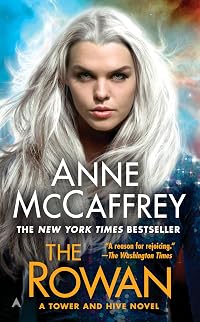
If you take for instance "Lady in the Tower", the short story that would eventually become the first book in the "Tower and Hive" series known as [b:The Rowan|61938|The Rowan (The Tower and the Hive, #1)|Anne McCaffrey|https://images.gr-assets.com/books/1358551536s/61938.jpg|1892324], I read that before I read the book itself. And it stands on its own really well. You get a solid feel for who the Rowan is, for who Jeff is, the romance that builds and the menace that hovers. This isn't quite as well replicated in the sequel "Meeting of Minds" (which is the basis for which the second book [b:Damia|61959|Damia (The Tower and the Hive, #2)|Anne McCaffrey|https://images.gr-assets.com/books/1408926315s/61959.jpg|1779679] in the "Tower and Hive" series), but still pretty strong.
We're not given much idea who Caissa is - she's a cipher, going from obedient "body-heir"/daughter to rebellious young adult constantly. Murrell is given even less build up and the ending, quite honestly, left me feeling like they're all devils in disguise because NO ONE seems AT ALL BOTHERED by the fact they are enslaving an endangered species (even if the production is limited).
In the end this is a solid space opera romance for the YA set (despite Caissa's age of 20), but is not the strongest contender in McCaffrey's backlog to bring readers into her world for. show less
Its a short novella, made shorter by at least a dozen pictures (a few of which are double page spreads) depicting various scenes. For instance when Caissa is being desressed by her faithful servant Trin, we are shown this:
(not my image by the by, taken from here: http://www.thebookofchoice.com/Science_Fiction.html)
Ned Dameron, who illustrated the inside images as well as the image of Caissa in the gold gown for the covers, does very detailed work. They're wonderful to look at and part of what appealed to me as a young show more teen/tween.
The story itself though, even read through nostalgia glasses, feels much less coherent and smooth than many of McCaffrey's other novellas and short stories. There's less depth to this then I am used to I think with McCaffrey's stories due in large part to the fact this is one of the few I've read not part of a larger universe.
If you take for instance "Lady in the Tower", the short story that would eventually become the first book in the "Tower and Hive" series known as [b:The Rowan|61938|The Rowan (The Tower and the Hive, #1)|Anne McCaffrey|https://images.gr-assets.com/books/1358551536s/61938.jpg|1892324], I read that before I read the book itself. And it stands on its own really well. You get a solid feel for who the Rowan is, for who Jeff is, the romance that builds and the menace that hovers. This isn't quite as well replicated in the sequel "Meeting of Minds" (which is the basis for which the second book [b:Damia|61959|Damia (The Tower and the Hive, #2)|Anne McCaffrey|https://images.gr-assets.com/books/1408926315s/61959.jpg|1779679] in the "Tower and Hive" series), but still pretty strong.
We're not given much idea who Caissa is - she's a cipher, going from obedient "body-heir"/daughter to rebellious young adult constantly. Murrell is given even less build up and the ending, quite honestly, left me feeling like they're all devils in disguise because NO ONE seems AT ALL BOTHERED by the fact they are enslaving an endangered species (even if the production is limited).
In the end this is a solid space opera romance for the YA set (despite Caissa's age of 20), but is not the strongest contender in McCaffrey's backlog to bring readers into her world for. show less
Caissa was expected to marry as her father dictated to cement diplomatic alliances. But she hated the man chosen for her so she fled to the forbidden zone. There she rescues a man from the crash of an aircraft. "She has just set into motion events that will determine the fate of her family, her planet...and her happiness." (from the back cover. Something a little different from McCaffrey (written in 1983).
At twenty, Lady Caissa's old enough to contract a body-heir of her own, but going along with her father's choice is so far beyond distasteful, one meeting sends her fleeing for the hills - literally. When she runs out of fuel near an interdicted area she stumbles on far more than she bargained for. What exactly are the coelura? What is her father hiding? And most importantly, who is Murell?
This has always felt to me like a story missing many of the important bits and just begging for expansion. Still, a quick, enjoyable read.
This has always felt to me like a story missing many of the important bits and just begging for expansion. Still, a quick, enjoyable read.
Young Lady Caissa has been raised to show proper obedience and loyalty, even if it means marrying a man she despises. Despite that loyalty, Caissa flees deep into the forbidden zone, where she encounters an injured man who will determine the fate of her family and planet.
Anne McCaffrey has long been a favorite science fiction author of mine. She creates worlds of wonderful complexity with many sentient beings, even planets. This is really a short love story published first in 1983. Filled with black and white illustrations by Ned Dameron.
Anne McCaffrey has long been a favorite science fiction author of mine. She creates worlds of wonderful complexity with many sentient beings, even planets. This is really a short love story published first in 1983. Filled with black and white illustrations by Ned Dameron.
I didn't like this book at all. Its only saving grace was the beautiful illustrations by Ned Dameron (though I had to dig on the copyright page to find the illustrator's name). This is a science fiction/fantasy romance. The background of the planet and society are under-developed: what we do know is given to us in a big info-dump and the rest is unclear. The heroine is insipid, stupid, and unlikable, and the "romance" happens way too quickly. The hero and heroine meet and all of a sudden they're in love. There could have been some interesting questions raised by the coelura (living creatures who spin "living fabric" but die if they spin more than they are allotted in their lives) about endangered species and our responsibility to the show more environment, but instead the plot is quickly tied up. Very disappointing. show less
Members
- Recently Added By
Lists

Best reading order of Anne McCaffrey's non-Pern sci-fi
43 works; 2 members

Books Read in 2016
4,666 works; 199 members

Female Protagonist
1,056 works; 57 members

Best Pern Books
79 works; 10 members
Author Information

261+ Works 208,197 Members
Anne McCaffrey was born in Cambridge, Massachusetts on April 1, 1926. She received a degree in Slavonic languages from Radcliffe College. She worked in advertising for Helena Rubenstein from 1947 to 1952. Her first publication was a short story in Science Fiction Magazine, and her first novel, Restoree, was published in 1967. She is a well-known show more author of over 100 books, mostly science fiction, including the Dragonriders of Pern series, the Crystal Singer series, Acorna's Children series, The Twins of Petaybee series, and Barque Cats series. She won numerous awards including the Hugo Award for Best Novella for the short story Weyr Search in 1968 and the Nebula Award for Best Novella for Dragonrider in 1969. In 2006, she was inducted into the Science Fiction Hall of Fame. She has also written books under the pseudonym Jody Lynn. She died of a stroke on November 21, 2011 at the age of 85. (Bowker Author Biography) show less
Some Editions
Series


Work Relationships
Is contained in
Common Knowledge
- Original title
- The Coelura
- Original publication date
- 1983
- People/Characters
- Trin; Caissa; Baythan; Cinna; Murell
- Important places
- Demeathorn; Yellow Triad City; Red Triad City; Blue Triad City
- Original language
- English
Classifications
Statistics
- Members
- 1,208
- Popularity
- 20,537
- Reviews
- 12
- Rating
- (3.39)
- Languages
- English
- Media
- Paper, Ebook
- ISBNs
- 10
- UPCs
- 1
- ASINs
- 9