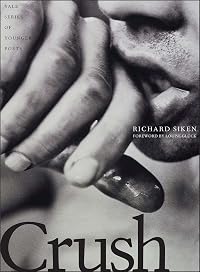
Crush
by Richard Siken
On This Page
Description
The twentieth-anniversary edition of the influential first poetry collection by Richard Siken Since winning the 2004 Yale Series of Younger Poets competition, Crush has become a modern classic. This twentieth-anniversary edition includes a new introduction by award-winning poet Dana Levin and a new afterword by the author.Tags
Recommendations
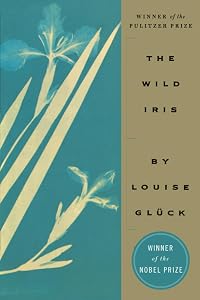
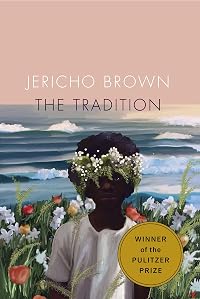

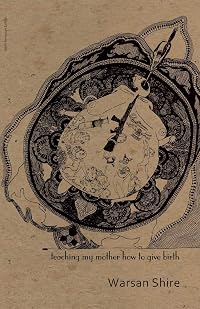
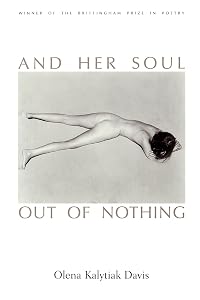


Member Recommendations
by anonymous user
Member Reviews
Reading Crush is like the feeling of pulling a rubber band off your wrist that's been on for hours. There's an ache that is familiar and unnatural and continues to loop around and around in these poems. The poems sprawl, sometimes lingering on a scene either violent or delicate, but all contribute to an intensity that leaves a mark.
What is *THIS*? A poetry collection that I loved to bits and clutched to my chest? If you've been following my thread for a long time, you know that I don't generally get on terribly well with poetry, but this one, man. It is so good, and so heartbreaking, and so, like, beautifully, unbearably *attentive* to detail and nuance of moment and emotion. Just. Read it. But, be aware, it will wreck you.
Poetry should be like a mortal wound. Painful, messy, and ultimately fatal.
Siken's writing is raw, like gnawing on a torn-off limb is raw. Every piece in this collection feels a little like a first draft, too. Not in the way that it feels unfinished, or messy, or like it needs polish; but in the way that it feels as though what Siken has to say couldn't be said any other way, with any other combination of words.
This kind of manic, despondent energy propels even the very longest of these poems along with devastating force. Siken's mastery over misery, over lust, over love, may extend no further than translating it into verse. And thank whatever erotic and miserable god is responsible, because if Richard Siken was happy, we wouldn't have show more wound up with Crush. show less
Siken's writing is raw, like gnawing on a torn-off limb is raw. Every piece in this collection feels a little like a first draft, too. Not in the way that it feels unfinished, or messy, or like it needs polish; but in the way that it feels as though what Siken has to say couldn't be said any other way, with any other combination of words.
This kind of manic, despondent energy propels even the very longest of these poems along with devastating force. Siken's mastery over misery, over lust, over love, may extend no further than translating it into verse. And thank whatever erotic and miserable god is responsible, because if Richard Siken was happy, we wouldn't have show more wound up with Crush. show less
The Director of Love
Richard Siken's Crush is an amazing book. The long lines are merciless and perfect. They are so elegantly crafted they remind me of the beautiful strokes of paint of De Kooning or Frankenthaler. They also seem to be the work of a master cinematographer.The book is of course about unrequited love, about the need for love, about the failure of love. But it is also about using form to discover what is important. To save yourself, one's self, his self. The hypnotism of the lines, the density of the texts makes us complicit, and proves a queer sort of intimacy. Does it matter that the tumultous and turbulent loves told about in the book are same sex? Yes and no. I don't know. It should. But I can see how it doesn't also. show more The structure of this book is the story, the story board even. It is no accident that the first poem is entitled Scheherezade. Siken's Thousand and One Nights are told with a combination of ferocity and sentimentalism (in the best sense of this poor word), and he saves himself from the worst excesses of romanticism and expressionism by the use of a variety of directions. Imagine this, look at that, etc. The Director of Love. The books ends hopfully, you will see. show less
Richard Siken's Crush is an amazing book. The long lines are merciless and perfect. They are so elegantly crafted they remind me of the beautiful strokes of paint of De Kooning or Frankenthaler. They also seem to be the work of a master cinematographer.The book is of course about unrequited love, about the need for love, about the failure of love. But it is also about using form to discover what is important. To save yourself, one's self, his self. The hypnotism of the lines, the density of the texts makes us complicit, and proves a queer sort of intimacy. Does it matter that the tumultous and turbulent loves told about in the book are same sex? Yes and no. I don't know. It should. But I can see how it doesn't also. show more The structure of this book is the story, the story board even. It is no accident that the first poem is entitled Scheherezade. Siken's Thousand and One Nights are told with a combination of ferocity and sentimentalism (in the best sense of this poor word), and he saves himself from the worst excesses of romanticism and expressionism by the use of a variety of directions. Imagine this, look at that, etc. The Director of Love. The books ends hopfully, you will see. show less
A thunderous, passionate and break-neck collection of poems that delve into the darkest corners of love and attraction. These poems are wry, haunting, sad but full of the devil-may-care panache typical of youth. These poems are fractured and glittering like gems in tarnished settings. They are well worth hoarding and studying their many facets.
Favorite Poems: Little Beast; Litany in Which Several Things are Crossed Out; Boot Theory; A Primer for the Small Weird Loves; The Dislocated Room; You Are Jeff
Favorite Poems: Little Beast; Litany in Which Several Things are Crossed Out; Boot Theory; A Primer for the Small Weird Loves; The Dislocated Room; You Are Jeff
Visible World
Sunlight pouring across your skin, your shadow
flat on the wall.
The dawn was breaking the bones of your heart like twigs.
You had not expected this,
the bedroom gone white, the astronomical light
pummeling you in a stream of fists.
You raised your hand to your face as if
to hide it, the pink fingers gone gold as the light
streamed straight to the bone,
as if you were the small room closed in glass
with every speck of dust illuminated.
The light is no mystery,
the mystery is that there is something to keep the light
from passing through.
(Forgive the stripped formatting. As far as I know the pre tag is still broken. Spacing is important here, but not so much that the loss completely destroys the poem.)
Here I am, crawling out of show more the blazing wreckage of 2020 to bring my fellow survivors good news. It has been so long since I found some scrap of something so good. This little collection does not mind being a bleeding scrap pulled from a ruin. It is in a lot of ways about that very thing.
Louise Glück says in her introduction that this book is about panic, but I don't really feel that it is panic. Panic to me implies an overreaction, a loss of control in a situation that could still be saved. This book is about living in terror. It is a raw, steady look at the onrushing horror of a world that repeatedly destroys any love, any life that it does not understand. There's no overreaction. We are really living in that very world. Everyone I know is desperately building homes to be safe in, all the while knowing that it's not going to be enough. That we have failed and are failing and will keep on failing. So we pray (do we still pray?) that the attempt will count for something, that that alone might be enough.
Anyway, I've composed this review a few different times, and maybe I will be able to do it justice later. I should say something about the interconnected three act structure of the overall work, the spiraling themes that turn the reader like a dancer around a single point, and the way the last lines of the last poem land the whole collection, but I don't have it in me right now. All I can really tell you at the moment is that I opened this book and found a friend. It's been a while since I could say that. If you don't feel like your world is burning down around your ears (who ARE you?), this book may not be for you. If you are living your life from one disaster to the next, come on in. Down this slim volume in one go. Don't mind the blood. The beauty is worth it.
(Reviewed 9/19/2020) show less
Sunlight pouring across your skin, your shadow
flat on the wall.
The dawn was breaking the bones of your heart like twigs.
You had not expected this,
the bedroom gone white, the astronomical light
pummeling you in a stream of fists.
You raised your hand to your face as if
to hide it, the pink fingers gone gold as the light
streamed straight to the bone,
as if you were the small room closed in glass
with every speck of dust illuminated.
The light is no mystery,
the mystery is that there is something to keep the light
from passing through.
(Forgive the stripped formatting. As far as I know the pre tag is still broken. Spacing is important here, but not so much that the loss completely destroys the poem.)
Here I am, crawling out of show more the blazing wreckage of 2020 to bring my fellow survivors good news. It has been so long since I found some scrap of something so good. This little collection does not mind being a bleeding scrap pulled from a ruin. It is in a lot of ways about that very thing.
Louise Glück says in her introduction that this book is about panic, but I don't really feel that it is panic. Panic to me implies an overreaction, a loss of control in a situation that could still be saved. This book is about living in terror. It is a raw, steady look at the onrushing horror of a world that repeatedly destroys any love, any life that it does not understand. There's no overreaction. We are really living in that very world. Everyone I know is desperately building homes to be safe in, all the while knowing that it's not going to be enough. That we have failed and are failing and will keep on failing. So we pray (do we still pray?) that the attempt will count for something, that that alone might be enough.
Anyway, I've composed this review a few different times, and maybe I will be able to do it justice later. I should say something about the interconnected three act structure of the overall work, the spiraling themes that turn the reader like a dancer around a single point, and the way the last lines of the last poem land the whole collection, but I don't have it in me right now. All I can really tell you at the moment is that I opened this book and found a friend. It's been a while since I could say that. If you don't feel like your world is burning down around your ears (who ARE you?), this book may not be for you. If you are living your life from one disaster to the next, come on in. Down this slim volume in one go. Don't mind the blood. The beauty is worth it.
(Reviewed 9/19/2020) show less
A poetry collection inconsolable of its particular homosexual aching and desire, Crush grinds words into a cup of caffeine-infused affection. Whilst it also traverses realisations and remembrances throughout the complications of same sex attraction, it is insatiably hungry for love and the many faces it dons. It ravages it with kisses until it's bruised. It leaves. It comes back. And there is a cyclic element amongst the relationship/s this collection macerates into nimble physical proclamations. At times sweet, on other times bitter, much bland on others and unfortunately never a perfect cup, there is an interesting touch of tenderness in the corners of its coarseness. But similar to any caffeinated drink, if taken in excess, Crush show more palpitates into a ramble of overlapping emotions, eroticism, and words with only nearly achieving any kind of infectious poetic vibrancy it probably aims for. It is fairly lovely but can feel overtly long-winded and repetitive. Two poems are added to my favourites nevertheless: Visible World and I Had A Dream About You.
Excerpts from some poems I really liked:
"Tell me how all this, and love too, will ruin us.
These, our bodies, possessed by light.
Tell me we’ll never get used to it."
— from Scheherazade
"History repeats itself. Somebody says this.
History throws its shadow over the beginning, over the desktop,
over the sock drawer with its socks, its hidden letters.
History is a little man in a brown suit
trying to define a room he is outside of.
I know history. There are many names in history
but none of them are ours."
— from Little Beast
"You wanted happiness, I can’t blame you for that,
and maybe a mouth sounds idiotic when it blathers on about joy
but tell me
you love this, tell me you’re not miserable."
— from Seaside Improvisation show less
Excerpts from some poems I really liked:
"Tell me how all this, and love too, will ruin us.
These, our bodies, possessed by light.
Tell me we’ll never get used to it."
— from Scheherazade
"History repeats itself. Somebody says this.
History throws its shadow over the beginning, over the desktop,
over the sock drawer with its socks, its hidden letters.
History is a little man in a brown suit
trying to define a room he is outside of.
I know history. There are many names in history
but none of them are ours."
— from Little Beast
"You wanted happiness, I can’t blame you for that,
and maybe a mouth sounds idiotic when it blathers on about joy
but tell me
you love this, tell me you’re not miserable."
— from Seaside Improvisation show less
Members
- Recently Added By
Lists

Poetry Corner
187 works; 15 members

Books Read in 2020
4,379 works; 123 members

Read in 2021
24 works; 1 member

Read in 2020
33 works; 1 member

Books Read in 2005
185 works; 7 members
Author Information

5+ Works 1,521 Members
Some Editions
Awards and Honors
Awards
Series
Belongs to Publisher Series
Common Knowledge
- Canonical title
- Crush
- Original publication date
- 2005
- First words
- This book is about panic.
Classifications
Statistics
- Members
- 1,114
- Popularity
- 22,823
- Reviews
- 38
- Rating
- (4.44)
- Languages
- English, Portuguese, Spanish
- Media
- Paper, Ebook
- ISBNs
- 9
- UPCs
- 1