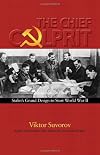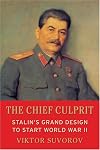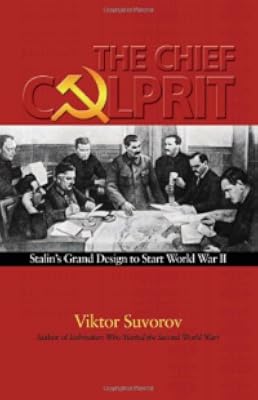
Chief Culprit: Stalin's Grand Design to Start World War II
by Viktor Suvorov
On This Page
Description
℗A remarkable book. A delayed bombshell that includes very pertinent new research and discoveries Suvorov has made since 1990. He makes savvy readers of contemporary and World War II history, of a mind to reexamine the Soviet past in terms of what historians call ℗present interest.' None of the ℗new Russian' historians can match his masterful sweep of research and analysis." ℗ALBERT WEEKS, Professor Emeritus of International Relations, New York University, author of Stalin's Other show more War: Soviet Grand Strategy, 1939-1941 In The Chief Culprit, bestselling author Victor Suvorov probes newly released Soviet documents and reevaluates existing historical material to analyze Stalin's strategic design to conquer Europe and the reasons behind his controversial support for Nazi Germany. A former Soviet army intelligence officer, the author explains that Stalin's strategy leading up to World War II grew from Lenin's belief that if World War I did not ignite the worldwide Communist revolution, then a second world war would be necessary. Suvorov debunks the theory that Stalin was duped by Hitler and that the Soviet Union was a victim of Nazi aggression. Instead, he makes the case that Stalin neither feared Hitler nor mistakenly trusted him. He maintains that after Germany occupied Poland, defeated France, and started to prepare for an invasion of Great Britain, Hitler's intelligence services detected the Soviet Union's preparations for a major war against Germany. This detection, Suvorov argues, led to Germany's preemptive war plan and the launch of an invasion of the USSR. Stalin emerges from the pages of this book as a diabolical genius consumed by visions of a worldwide Communist revolution at any cost℗a leader who wooed Hitler and Germany in his own effort to conquer the world. In contradicting traditional theories about Soviet planning before the German invasion and in arguing for revised view of Stalin's real intentions, The Chief Culprit has provoked debate among historians throughout the world. show lessTags
Recommendations

























Member Reviews
Viktor Suvorov's book "The Chief Culprit" profoundly challenges the standard textbook narrative of the Second World War. This book has forever altered my interpretation of how WWII truly unfolded.
The central thesis of the book can be divided into three arguments:
1. Stalin's grand aim, even years before the war ever began, was to conquer all of Europe.
2. Stalin manipulated Hitler into invading Poland knowing that it would drag France and Britain into a major war against Germany, weakening them all.
3. In the summer of 1941, Stalin had initiated the most massive military mobilization in history, and was within weeks or even days of launching a sudden strike against Germany (and a seizure of the Romanian oil fields, Germany's only source show more of oil). However, Hitler had deduced Stalin's aim by the end of 1940 and decided to preemptively strike.
The translation isn't great, and I suspect that even in Russian elegant prose is not Suvorov's strength. The first quarter of the book was a bit of a slog, as I remained skeptical of Suvorov's central thesis and did not feel that he was presenting any "smoking gun" evidence to support his argument.
By the mid-point of the book however, the gravity of Suvorov's documentary evidence reaches a critical mass and the book becomes a page turner. This book shatters the Western consensus narrative of the Second World War, and when the evidence presented for Suvorov's thesis reaches the point of being simply overwhelming, the value and relevance of this book is clarified.
One of the most important history books I've ever read. A must read for anyone who values truth over consensus narrative. "The Chief Culprit" will reorient your entire perspective on the war. show less
The central thesis of the book can be divided into three arguments:
1. Stalin's grand aim, even years before the war ever began, was to conquer all of Europe.
2. Stalin manipulated Hitler into invading Poland knowing that it would drag France and Britain into a major war against Germany, weakening them all.
3. In the summer of 1941, Stalin had initiated the most massive military mobilization in history, and was within weeks or even days of launching a sudden strike against Germany (and a seizure of the Romanian oil fields, Germany's only source show more of oil). However, Hitler had deduced Stalin's aim by the end of 1940 and decided to preemptively strike.
The translation isn't great, and I suspect that even in Russian elegant prose is not Suvorov's strength. The first quarter of the book was a bit of a slog, as I remained skeptical of Suvorov's central thesis and did not feel that he was presenting any "smoking gun" evidence to support his argument.
By the mid-point of the book however, the gravity of Suvorov's documentary evidence reaches a critical mass and the book becomes a page turner. This book shatters the Western consensus narrative of the Second World War, and when the evidence presented for Suvorov's thesis reaches the point of being simply overwhelming, the value and relevance of this book is clarified.
One of the most important history books I've ever read. A must read for anyone who values truth over consensus narrative. "The Chief Culprit" will reorient your entire perspective on the war. show less
Suvorov makes a very persuasive case that the Red Army, far from being the bungling, ill-equipped force overrun by the Germans in their surprise attack on the Soviet Union, was in fact in possession of weapons that surpassed those of the Germans (indeed anyone in the world) in both quality and quantity. It also had large numbers of highly trained, specialized troops. The problem was that all of their weapons and training were offensive rather than defensive.
They had vast numbers of dive bombers very similar to those used by the Japanese at Pearl Harbor. These planes are attack planes, with little armor or defense capability. They are designed for surprise attack when they can catch their enemies unprepared and on the ground.
They had show more huge numbers of very high quality tanks, more than Hitler had at his disposal at the time. They even had amphibious tanks at at time when no one else had any. If you are fighting a defensive war, you have no use whatsoever for amphibious tanks. You simply fortify yourself on one side of the river and repel all comers.
They had artillery which was unexcelled in the world, including the Katyusha rocket launcher. These were mobile artillery units designed for offensive mobility.
They had a million highly trained paratroopers. Paratroopers are assault troops; you don't have a use for them in a defensive war.
Why then did the Germans overrun the Red Army so easily in the early weeks of the war? Suvorov's argument, well documented, is that Stalin planned a surprise attack on the Germans and indeed the order for mobilization for attack had already been given. Troops were converging, or had already arrived, at the border. Those which had arrived prepared no defensive positions; their mission would be to attack and fight on the enemy's soil not their own. Planes were lined up wingtip to wingtip awaiting the order to scramble for attack. These resources were coming from all over the Soviet Union, but the largest numbers were coming from the East beyond the Caucausus. These are huge distances. The effort failed because Hitler had only to move his troops relatively short distances to put them in attack position on the Eastern Front. He attacked first and the rest is history.
I expect this book will be savaged by professional historians as acceptance of its basic arguments would require a complete rethinking and rewriting of much of the history of World War II in which many of them have a vested interest; indeed, for some of them a life's work. The theses are too important and too persuasively put forth to be quietly set aside. They should be aired and debated. show less
They had vast numbers of dive bombers very similar to those used by the Japanese at Pearl Harbor. These planes are attack planes, with little armor or defense capability. They are designed for surprise attack when they can catch their enemies unprepared and on the ground.
They had show more huge numbers of very high quality tanks, more than Hitler had at his disposal at the time. They even had amphibious tanks at at time when no one else had any. If you are fighting a defensive war, you have no use whatsoever for amphibious tanks. You simply fortify yourself on one side of the river and repel all comers.
They had artillery which was unexcelled in the world, including the Katyusha rocket launcher. These were mobile artillery units designed for offensive mobility.
They had a million highly trained paratroopers. Paratroopers are assault troops; you don't have a use for them in a defensive war.
Why then did the Germans overrun the Red Army so easily in the early weeks of the war? Suvorov's argument, well documented, is that Stalin planned a surprise attack on the Germans and indeed the order for mobilization for attack had already been given. Troops were converging, or had already arrived, at the border. Those which had arrived prepared no defensive positions; their mission would be to attack and fight on the enemy's soil not their own. Planes were lined up wingtip to wingtip awaiting the order to scramble for attack. These resources were coming from all over the Soviet Union, but the largest numbers were coming from the East beyond the Caucausus. These are huge distances. The effort failed because Hitler had only to move his troops relatively short distances to put them in attack position on the Eastern Front. He attacked first and the rest is history.
I expect this book will be savaged by professional historians as acceptance of its basic arguments would require a complete rethinking and rewriting of much of the history of World War II in which many of them have a vested interest; indeed, for some of them a life's work. The theses are too important and too persuasively put forth to be quietly set aside. They should be aired and debated. show less
Ratings
Members
- Recently Added By
Lists

All Things Russia
459 works; 11 members
Author Information

49 Works 1,130 Members
Common Knowledge
- Canonical title*
- Stalins verhinderter Erstschlag: Hitler erstickt die Weltrevolution
- People/Characters
- Joseph Stalin
- Important events
- World War II (1939 | 1945)
*Some information comes from Common Knowledge in other languages. Click "Edit" for more information.
Classifications
Statistics
- Members
- 55
- Popularity
- 557,015
- Reviews
- 2
- Rating
- (4.00)
- Languages
- English, German
- Media
- Paper, Ebook
- ISBNs
- 5
- ASINs
- 1