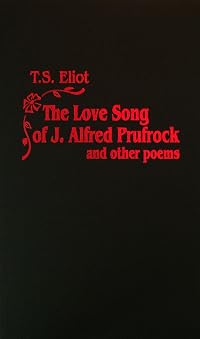
The Love Song of J. Alfred Prufrock and other poems
by T. S. Eliot
On This Page
Description
A collection of poems composed by Nobel Prize-winning writer T.S. Eliot between 1909 and 1935.Tags
Recommendations




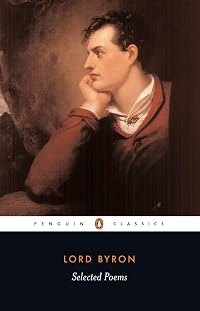
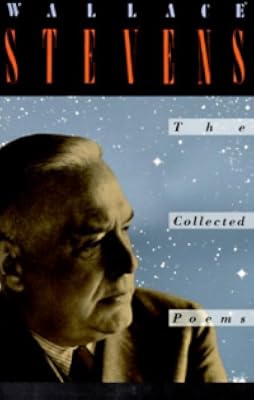
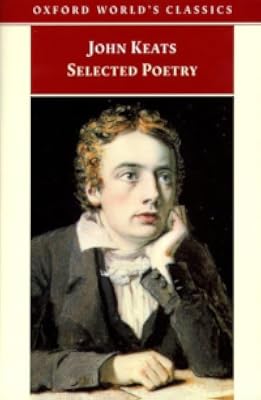

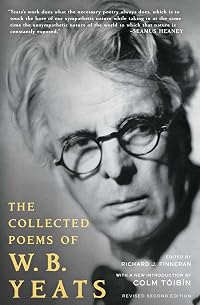





Member Reviews
I got to Eliot by way of Porter. I want to better understand the influences that were poured into Grief Is The Thing With Feathers. A couple Christmases ago, at a friend's mountain cottage, i found an old hardback of his mother's, The Complete Works of T. S. Eliot. A casual flip though impressed me by the range of voices and techniques he employed. And there among those varied voices and approaches one of them sounded like Crow.
Too daunting to go for his complete works, I decided to begin at the beginning. This is his first ever poetry collection, published about a year after moving to the UK from the US at around 28 years old.
It isn't bad. It is readable. And that Crow sound and style is there in Prufrock (if much less so in the other show more poems):
"The yellow fog that rubs its back upon the window-panes,
The yellow smoke that rubs its muzzle on the window-panes,
Licked its tongue into the corners of the evening,
Lingered upon the pools that stand in drains,
Let fall upon its back the soot that falls from chimneys,
Slipped by the terrace, made a sudden leap,
And seeing that it was a soft October night,
Curled once about the house, and fell asleep."
Absolutely fantastic. Do I idealise Grief too much? Perhaps. Here are my two resistances to Prufrock And:
First, Grief doesn't feel pretentious to me. You feel the weight of its cultural inheritance. You know Porter has incredible learning and has brought to bear his extended reading. His passion and position as someone dedicated to literature and working in publishing somehow shows. But it is consequential, not flamboyant. It just happens to be. He is not showing it off, he is putting it to use. His work stands so beautifully and strong alone even if you don't pick up on the thousand references to all the best that has come before. If Porter's excellent education was acquired through posh privilege or upwardly mobile merit it doesn't matter and it doesn't show. The work itself is all the merit we need and we don't need to interpret it through Porter's life or otherwise.
I don't have the same feeling with Eliot. Modernist or not, groundbreaking or not, Eliot is pretentious. That he mixes it all up with references to soot and chimenies and late night city lamposts and maybe even some drinking... doesn't remove the heavy weight of the constant not casual Greek and Italian and French thrown into the mix. We have references to Lucian and Hamlet and Lazarus and the Jew of Malta and Chopin and servants and Priapus and Rochefoucauld and Michelangelo... All that in just 33 pages - many of them blank. I. Am. Bored! The poems read so much like code and in jokes and in references so one happily goes along in good faith investigation and it turns out he studied at Harvard and only decamped for the UK because the aristocrat Bertrand Russell recruited him to study a doctorate under him at Oxford and fancied Eliot's fiancé. That is the story behind Mr. Apollinax, the poem based on Russell. The Weeping Girl, pardon me "La Figlia Che Piange" was written because he was on holiday in Italy and a friend sent him to see a monument of that name and he couldn't find it. How many commonfolk went to Italy in the 1910s? I mean, these are just poems talking in code about little moments among the upper crust. This kind of Oxbridge schoolboy saunter that flaunts their budding knowledge to one another to make them feel good about not being among the unwashed. Except Eliot was approaching his thirties and doing a doctorate. And this combines, too, with an American earnestness and direct simplicity that thinks these half-tricks are enough. Part pre-beatnick, part wannabe-made-it Oxbridge.
There is something less than pleasing about reading Eliot in 2020, caught so tight as we are in the vice of late capitalism's unending meta sizing growth into all spheres of life. We are voting for Trump. We are voting for Sanders. After Oxbridge Eliot worked in banking for a bit before moving to head up what would later be Faber and Faber publishing house. We are fed up of the comfortable self-satisfied "rational-scientific" intellectual - and modern - liberal elites that have brought us into this prison with promises of prosperity and freedom always around the corner.
He's not bad. I found some Crow. Aunt Helen made me laugh the first time I read it. But maybe the modern era that he inaugurated is over. Whatever he may have done that was new then is read now taken for granted as common. Maybe that era has left a modern sized wound still open and gushing and painful. Maybe Eliot is simply too recently passé to be yet brought back with a retro filter. Eliot is not the lost prior voice of the millenial generation.
Still, I might continue Crow-hunting in his later works and see if I discover something different. show less
Too daunting to go for his complete works, I decided to begin at the beginning. This is his first ever poetry collection, published about a year after moving to the UK from the US at around 28 years old.
It isn't bad. It is readable. And that Crow sound and style is there in Prufrock (if much less so in the other show more poems):
"The yellow fog that rubs its back upon the window-panes,
The yellow smoke that rubs its muzzle on the window-panes,
Licked its tongue into the corners of the evening,
Lingered upon the pools that stand in drains,
Let fall upon its back the soot that falls from chimneys,
Slipped by the terrace, made a sudden leap,
And seeing that it was a soft October night,
Curled once about the house, and fell asleep."
Absolutely fantastic. Do I idealise Grief too much? Perhaps. Here are my two resistances to Prufrock And:
First, Grief doesn't feel pretentious to me. You feel the weight of its cultural inheritance. You know Porter has incredible learning and has brought to bear his extended reading. His passion and position as someone dedicated to literature and working in publishing somehow shows. But it is consequential, not flamboyant. It just happens to be. He is not showing it off, he is putting it to use. His work stands so beautifully and strong alone even if you don't pick up on the thousand references to all the best that has come before. If Porter's excellent education was acquired through posh privilege or upwardly mobile merit it doesn't matter and it doesn't show. The work itself is all the merit we need and we don't need to interpret it through Porter's life or otherwise.
I don't have the same feeling with Eliot. Modernist or not, groundbreaking or not, Eliot is pretentious. That he mixes it all up with references to soot and chimenies and late night city lamposts and maybe even some drinking... doesn't remove the heavy weight of the constant not casual Greek and Italian and French thrown into the mix. We have references to Lucian and Hamlet and Lazarus and the Jew of Malta and Chopin and servants and Priapus and Rochefoucauld and Michelangelo... All that in just 33 pages - many of them blank. I. Am. Bored! The poems read so much like code and in jokes and in references so one happily goes along in good faith investigation and it turns out he studied at Harvard and only decamped for the UK because the aristocrat Bertrand Russell recruited him to study a doctorate under him at Oxford and fancied Eliot's fiancé. That is the story behind Mr. Apollinax, the poem based on Russell. The Weeping Girl, pardon me "La Figlia Che Piange" was written because he was on holiday in Italy and a friend sent him to see a monument of that name and he couldn't find it. How many commonfolk went to Italy in the 1910s? I mean, these are just poems talking in code about little moments among the upper crust. This kind of Oxbridge schoolboy saunter that flaunts their budding knowledge to one another to make them feel good about not being among the unwashed. Except Eliot was approaching his thirties and doing a doctorate. And this combines, too, with an American earnestness and direct simplicity that thinks these half-tricks are enough. Part pre-beatnick, part wannabe-made-it Oxbridge.
There is something less than pleasing about reading Eliot in 2020, caught so tight as we are in the vice of late capitalism's unending meta sizing growth into all spheres of life. We are voting for Trump. We are voting for Sanders. After Oxbridge Eliot worked in banking for a bit before moving to head up what would later be Faber and Faber publishing house. We are fed up of the comfortable self-satisfied "rational-scientific" intellectual - and modern - liberal elites that have brought us into this prison with promises of prosperity and freedom always around the corner.
He's not bad. I found some Crow. Aunt Helen made me laugh the first time I read it. But maybe the modern era that he inaugurated is over. Whatever he may have done that was new then is read now taken for granted as common. Maybe that era has left a modern sized wound still open and gushing and painful. Maybe Eliot is simply too recently passé to be yet brought back with a retro filter. Eliot is not the lost prior voice of the millenial generation.
Still, I might continue Crow-hunting in his later works and see if I discover something different. show less
I enjoyed the bleak tone of the poem and the way images of domestic life are infused with a sense of dread. You can really feel the existential horror of life in the wake of the first world war. That war basically blackpilled an entire generation.
"Oh do not ask what it is, let us go and make our visit"
"Do I dare to eat a peach?"
I'm not a poetry person, but even as someone who doesn't like poems this one is pretty dope.
"Oh do not ask what it is, let us go and make our visit"
"Do I dare to eat a peach?"
I'm not a poetry person, but even as someone who doesn't like poems this one is pretty dope.
"The Love Song of J. Alfred Prufrock" is at once lyrical and cutting, magical and mundane. It is bittersweet in its musical recounting of a life measured in coffee spoons, an elegy for the everyman.
It is worth reading and rereading.
It is worth reading and rereading.
I always enjoy returning to Eliot, and as much of a cliche as it is Prufrock is always one of my favourites. His poems benefit from spending time with them, and I often pull this book out for a lazy, rainy night.
This was a gloomy, depressing, bleak and confusing poem. I will confess to be "lost" with poetry. This was a stream of consciousness of a sad, unfulfilled, lonely and self effacing man. It is a famous work and the volume I had included some other material. I wish I could find poetry as moving as many say it is.
The poem that gives the collection its title is very beautiful, the style very particular, the images evoked by the words very suggestive.
The other poems maintain the same style but didn't strike me as much.
La poesia che dà il titolo alla raccolta è molto bella, lo stile molto particolare, le immagini evocate dalle parole molto suggestive.
Le altre poesie mantengono lo stesso stile ma non mi hanno colpito così tanto.
https://www.naufragio.it/iltempodileggere/24004
The other poems maintain the same style but didn't strike me as much.
La poesia che dà il titolo alla raccolta è molto bella, lo stile molto particolare, le immagini evocate dalle parole molto suggestive.
Le altre poesie mantengono lo stesso stile ma non mi hanno colpito così tanto.
https://www.naufragio.it/iltempodileggere/24004
Such a beautiful poem
Members
- Recently Added By
Lists

University literature
145 works; 5 members

Books Mentioned in The Wedding Planner's Daughter series
107 works; 2 members

poetry
15 works; 1 member

Recommended Reading : 600 Classics Reviewed, Editors of Salem Press, 2015
634 works; 6 members
Author Information

508+ Works 47,870 Members
T. S. Eliot is considered by many to be a literary genius and one of the most influential men of letters during the half-century after World War I. He was born on September 26, 1888, in St. Louis, Missouri. Eliot attended Harvard University, with time abroad pursuing graduate studies at the Sorbonne, Marburg, and Oxford. The outbreak of World War show more I prevented his return to the United States, and, persuaded by Ezra Pound to remain in England, he decided to settle there permanently. He published his influential early criticism, much of it written as occasional pieces for literary periodicals. He developed such doctrines as the "dissociation of sensibility" and the "objective correlative" and elaborated his views on wit and on the relation of tradition to the individual talent. Eliot by this time had left his early, derivative verse far behind and had begun to publish avant-garde poetry (including "The Love Song of J. Alfred Prufrock" (1915), which exploited fresh rhythms, abrupt juxtapositions, contemporary subject matter, and witty allusion. This period of creativity also resulted in another collection of verse (including "Gerontian") and culminated in The Waste Land, a masterpiece published in 1922 and produced partly during a period of psychological breakdown while married to his wife, Vivienne Haigh-Wood Eliot. In 1922, Eliot became a director of the Faber & Faber publishing house, and in 1927 he became a British citizen and joined the Church of England. Thereafter, his career underwent a change. With the publication of Ash Wednesday in 1930, his poetry became more overtly Christian. As editor of the influential literary magazine The Criterion, he turned his hand to social as well as literary criticism, with an increasingly conservative orientation. His religious poetry culminated in Four Quartets, published individually from 1936 onward and collectively in 1943. This work is often considered to be his greatest poetic achievement. Eliot also wrote poetry in a much lighter vein, such as Old Possum's Book of Practical Cats (1939), a collection that was used during the early 1980s as the basis for the musical, Cats. In addition to his contributions in poetry and criticism, Eliot is the pivotal verse dramatist of this century. He followed the lead of William Butler Yeats in attempting to revive metrical language in the theater. But, unlike Yeats, Eliot wanted a dramatic verse that would be self-effacing, capable of expressing the most prosaic passages in a play, and an insistent, undetected presence capable of elevating itself at a moment's notice. His progression from the pageant The Rock (1934) and Murder in the Cathedral (1935), written for the Canterbury Festival, through The Family Reunion (1939) and The Cocktail Party (1949), a West End hit, was thus a matter of neutralizing obvious poetic effects and bringing prose passages into the flow of verse. Recent critics have seen Eliot as a divided figure, covertly attracted to the very elements (romanticism, personality, heresy) he overtly condemned. His early attacks on romantic poets, for example, often reveal him as a romantic against the grain. The same divisions carry over into his verse, where violence struggles against restraint, emotion against order, and imagination against ironic detachment. This Eliot is more human and more attractive to contemporary taste. During his lifetime, Eliot received many honors and awards, including the Nobel Prize for literature in 1948. (Bowker Author Biography) show less
Common Knowledge
- Canonical title
- The Love Song of J. Alfred Prufrock and other poems
- First words
- Let us go then, you and I
Classifications
Statistics
- Members
- 268
- Popularity
- 120,556
- Reviews
- 9
- Rating
- (4.22)
- Languages
- English
- Media
- Paper, Audiobook, Ebook
- ISBNs
- 3
- ASINs
- 3