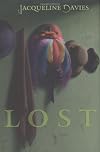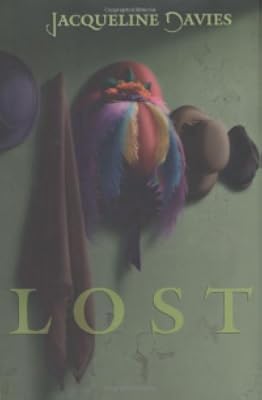
Lost
by Jacqueline Davies
On This Page
Description
In 1911 New York, sixteen-year-old Essie Rosenfeld must stop taking care of her irrepressible six-year-old sister when she goes to work at the Triangle Waist Company, where she befriends a missing heiress who is in hiding from her family and who seems to understand the feelings of heartache and grief that Essie is trying desperately to escape.Tags
Recommendations













Member Reviews
"It's a terrible thing to lose someone you love. I heard about a man once who jumped off the Brooklyn Bridge because his wife had died, and when he hit the water, it ripped the clothes right off him. The police fished his body out of the East River, and he was completely naked. Grief is like that. You smash up against it, and it rips all the outer parts of you away. You're left naked in front of everybody." (p71)
"It's like if you're on a street corner and someone next to you says, "I lost a penny," you would take a look around and do your best to help find it. Sure, you would. But if someone on that same corner says, "I lost a diamond ring," you would get down on your hands and knees and search 'til the sun went down. And the next day, show more you'd come back and start looking all over again. And then every time you passed that corner, you'd think to yourself, "I wonder if they ever found that diamond ring," and I bet your eyes would wander to the ground and have another look. For years and years." (p138)
"So what's that about?" he says, pointing to the book and taking a long drag on his cigarette. "It's about the world," I say, looking at the thin gray book in my hands. "About the whole world, and how it's made up of nothing but particles. Little specks so small you can't even see 'em. You and me and this fire escape and that building and even the air and the water and the planets and stars - all of it - it's all made up of little particles." Jimmy nods, like he's heard this before, but doesn't say anything, just waits for me to go on. The next part is hard to put into words. I haven't finished the book, so I'm not sure I've got it right. "And everything's falling apart, all the time," I say. "That's the important thing. Everything. Even while we're sitting here talking. This building is slowly crumbling, and this metal" - I rest my hand on the fire escape that holds us in the air - "is turning to rust. And all the people are slowly dying. Even civilizations are creeping to their ends, and the stars, every one of 'em, are burning out. All of it - it all falls apart." "I think that I should think it's sad and upsetting, everything going to pieces like that. But I think -" I stop because I'm not sure how to put this into words. ... "I think, " I try again, "that what the book doesn't say is that out of all that destruction, something new is born. You know how when a tree rots to the ground, it makes something else grow. Or like how when someone dies, we give that name to a new baby. Something new comes from out of the death." (p60-62) show less
"It's like if you're on a street corner and someone next to you says, "I lost a penny," you would take a look around and do your best to help find it. Sure, you would. But if someone on that same corner says, "I lost a diamond ring," you would get down on your hands and knees and search 'til the sun went down. And the next day, show more you'd come back and start looking all over again. And then every time you passed that corner, you'd think to yourself, "I wonder if they ever found that diamond ring," and I bet your eyes would wander to the ground and have another look. For years and years." (p138)
"So what's that about?" he says, pointing to the book and taking a long drag on his cigarette. "It's about the world," I say, looking at the thin gray book in my hands. "About the whole world, and how it's made up of nothing but particles. Little specks so small you can't even see 'em. You and me and this fire escape and that building and even the air and the water and the planets and stars - all of it - it's all made up of little particles." Jimmy nods, like he's heard this before, but doesn't say anything, just waits for me to go on. The next part is hard to put into words. I haven't finished the book, so I'm not sure I've got it right. "And everything's falling apart, all the time," I say. "That's the important thing. Everything. Even while we're sitting here talking. This building is slowly crumbling, and this metal" - I rest my hand on the fire escape that holds us in the air - "is turning to rust. And all the people are slowly dying. Even civilizations are creeping to their ends, and the stars, every one of 'em, are burning out. All of it - it all falls apart." "I think that I should think it's sad and upsetting, everything going to pieces like that. But I think -" I stop because I'm not sure how to put this into words. ... "I think, " I try again, "that what the book doesn't say is that out of all that destruction, something new is born. You know how when a tree rots to the ground, it makes something else grow. Or like how when someone dies, we give that name to a new baby. Something new comes from out of the death." (p60-62) show less
For 16-year-old Essie Rosenfeld, life in New York City revolves around a slowly-moving spiral of home, caring for her young sister and working tirelessly at the Triangle Shirtwaist Factory, where she earns just enough money to help support her family — and still have a few coins leftover for her true passion: hat-making.
It’s 1911 and the Rosenfelds, still grieving the loss of Essie’s father, are struggling to stay afloat. Essie’s mother has deteoriated into a shell of a woman, leaving her eldest daughter to care for Zelda, the baby she was carrying when her husband died. Exhausted and bitter, Mrs. Rosenfeld pushes her duties onto her eldest — who fights, also, to keep her younger brother in line.
It’s in the midst of this show more push-and-pull chaos that Essie meets Harriet, a young woman who arrives at the factory looking as out-of-place as a diamond on the factory floor. Essie is told to teach Harriet what she knows about the construction of shirtwaists — and Harriet, scared but desperate for employment, does her best to keep up. As their friendship grows, Harriet and Essie begin to lift one another from the frightened malaise that has taken over their lives — and maybe, possibly, give them the strength to move forward. Until the unimaginable happens.
Jacqueline Davies’ Lost is everything I just described, but also so much more than that. We can sit and classify the novel in a variety of ways — historical fiction; young adult — but nothing can truly come close to what actually happens here. I started the book at 8 p.m. on a weeknight, intending to just read until I got drowsy, and put it back down at 2 a.m. when I knew full well I’d have to be up in four hours. I read it straight through — without pause. And if I had it to read all over again, I’d probably do the same.
More than anything, the novel felt like an exploration of grief . . . and as such, you’d expect it to be depressing, plodding and painful. But Davies writes with a light hand, showing us shades of Essie and revealing facts over time — never letting us get muddled down in the shadowy details. Each character became so real to me, vivid and beyond description — and even those I wanted to dislike, like Essie’s mother, were sympathetic figures. While Zelda was wild and “spoiled,” I couldn’t help but fall in love with her, too — especially since Essie clearly loved her beyond reproach. The love that Mrs. Rosenfeld couldn’t provide fell to Essie to give, and she had it in spades.
The juxtaposition between the boring, dull work Essie performed in the factory and the whimsical, imaginative and fun of her hat-making was interesting, too, and was the perfect way to showcase how talented Essie was — though her life in New York kept her mired in anything but creative pursuits. It was impossible not to want a hat from Essie — the devoted sister, the dutiful daughter. And, as in Harriet’s case, the loyal friend.
As a modern woman, factory life is impossible for me to imagine: the incredibly long hours in a hot, dirty factory, often without breaks; the painful, time-consuming work; the terrible lighting conditions; sharing a work space with so many other tired, exhausted women, and for so little pay. I work in a comfortable, air-conditioned office, where I’m compensated well for my work. I have a college degree. I get a lunch break. And at the end of the day? Well, if I ever got tired of what I do — or felt like I was being treated unfairly — I could leave. Get a new job. Move.
For someone like Essie? Well, that was out of the question. And when Harriet comes onto the scene — Harriet, the enigma — you realize just how out of the question it was for her, too. Learning about Harriet throughout the course of the novel, including the own secrets she wore close to her heart, was fascinating.
In fact, that’s a good word for Lost: fascinating. Full of rich imagery and unforgettable passages. And though it’s hard for me to classify in a few simple words, I’d recommend it very highly to fans of historical fiction and young adult — or anyone looking for a heartbreaking story. Not a novel I’ll soon forget. show less
It’s 1911 and the Rosenfelds, still grieving the loss of Essie’s father, are struggling to stay afloat. Essie’s mother has deteoriated into a shell of a woman, leaving her eldest daughter to care for Zelda, the baby she was carrying when her husband died. Exhausted and bitter, Mrs. Rosenfeld pushes her duties onto her eldest — who fights, also, to keep her younger brother in line.
It’s in the midst of this show more push-and-pull chaos that Essie meets Harriet, a young woman who arrives at the factory looking as out-of-place as a diamond on the factory floor. Essie is told to teach Harriet what she knows about the construction of shirtwaists — and Harriet, scared but desperate for employment, does her best to keep up. As their friendship grows, Harriet and Essie begin to lift one another from the frightened malaise that has taken over their lives — and maybe, possibly, give them the strength to move forward. Until the unimaginable happens.
Jacqueline Davies’ Lost is everything I just described, but also so much more than that. We can sit and classify the novel in a variety of ways — historical fiction; young adult — but nothing can truly come close to what actually happens here. I started the book at 8 p.m. on a weeknight, intending to just read until I got drowsy, and put it back down at 2 a.m. when I knew full well I’d have to be up in four hours. I read it straight through — without pause. And if I had it to read all over again, I’d probably do the same.
More than anything, the novel felt like an exploration of grief . . . and as such, you’d expect it to be depressing, plodding and painful. But Davies writes with a light hand, showing us shades of Essie and revealing facts over time — never letting us get muddled down in the shadowy details. Each character became so real to me, vivid and beyond description — and even those I wanted to dislike, like Essie’s mother, were sympathetic figures. While Zelda was wild and “spoiled,” I couldn’t help but fall in love with her, too — especially since Essie clearly loved her beyond reproach. The love that Mrs. Rosenfeld couldn’t provide fell to Essie to give, and she had it in spades.
The juxtaposition between the boring, dull work Essie performed in the factory and the whimsical, imaginative and fun of her hat-making was interesting, too, and was the perfect way to showcase how talented Essie was — though her life in New York kept her mired in anything but creative pursuits. It was impossible not to want a hat from Essie — the devoted sister, the dutiful daughter. And, as in Harriet’s case, the loyal friend.
As a modern woman, factory life is impossible for me to imagine: the incredibly long hours in a hot, dirty factory, often without breaks; the painful, time-consuming work; the terrible lighting conditions; sharing a work space with so many other tired, exhausted women, and for so little pay. I work in a comfortable, air-conditioned office, where I’m compensated well for my work. I have a college degree. I get a lunch break. And at the end of the day? Well, if I ever got tired of what I do — or felt like I was being treated unfairly — I could leave. Get a new job. Move.
For someone like Essie? Well, that was out of the question. And when Harriet comes onto the scene — Harriet, the enigma — you realize just how out of the question it was for her, too. Learning about Harriet throughout the course of the novel, including the own secrets she wore close to her heart, was fascinating.
In fact, that’s a good word for Lost: fascinating. Full of rich imagery and unforgettable passages. And though it’s hard for me to classify in a few simple words, I’d recommend it very highly to fans of historical fiction and young adult — or anyone looking for a heartbreaking story. Not a novel I’ll soon forget. show less
Essie can tell from the moment she lays eyes on Harriet Abbott: this
is a woman who has taken a wrong turn in life. Why else would an
educated, well-dressed, clearly upper-crust girl end up in the
Triangle Shirtwaist Factory setting sleeves for six dollars a day? But Harriet
isn't the only one who is lost. Essie wanders between the opposing emotions
of her love for the young would-be lawyer who lives next door and
her hatred for her mother who seems determined to take away every bit
of happiness that Essie hopes to find. As the unlikely friendship between
Essie and Harriet grows, so does the weight of the question hanging
between them: Who is lost? And who will be found?
is a woman who has taken a wrong turn in life. Why else would an
educated, well-dressed, clearly upper-crust girl end up in the
Triangle Shirtwaist Factory setting sleeves for six dollars a day? But Harriet
isn't the only one who is lost. Essie wanders between the opposing emotions
of her love for the young would-be lawyer who lives next door and
her hatred for her mother who seems determined to take away every bit
of happiness that Essie hopes to find. As the unlikely friendship between
Essie and Harriet grows, so does the weight of the question hanging
between them: Who is lost? And who will be found?
Wonderful fiction about the Triangle Shirtwaist Factory and the women (girls) who worked there. The part about the missing heiress seemed a little weak, but the working conditions and the Zelda's home life felt authentic. Painless way to learn about a part of American history!
An interesting story about the Triangle Shirtwaist Factory fire in Manhattan in the early 1900's. Essie is a poor Jew who has to start working at age 16. She also is her younger sister's de facto mother. Her mother, widowed while pregnant, did not have the energy for another child. Something was nagging Essie about her little sister throughout the book, and while the reader understands that the sister died recently, Essie chooses to believe that she is simply hiding. Meanwhile, Essie makes friends with a new girl at the factory who is obviously much more refined than the others. While the book has a lot going for it, I have quibbles about several things. The memories of the little sister made her seem more like a very annoying and out show more of control little girl rather than an endearing high spirited child, as she is supposed to seem. The outcome of the fire is pretty obvious. Clearly, the new girl is going to die in the fire because her life situation is hopeless. Essie, though, lives and all of the bad things in her life get wrapped up pretty neatly after the fire. It was all resolved just a little too well. show less
The story of a survivor of the Triangle Shirtwaist Factory fire. Wonderfully researched and well written, I just couldn't get into the story.
In 1911 New York, sixteen-year-old Essie Rosenfeld must stop taking care of her irrepressible six-year-old sister when she goes to work at the Triangle Waist Company, where she befriends a missing heiress who is in hiding from her family and who seems to understand the feelings of heartache and grief that Essie is trying desperately to escape.
Members
- Recently Added By
Author Information

26 Works 9,087 Members
Awards and Honors
Awards
Distinctions
Common Knowledge
- Canonical title
- Lost
- Original publication date
- 2009-04-01
- People/Characters
- Essie Rosenfeld; Harriet Abbott; Zelda Rosenfeld; Saulie Rosenfeld; Freyda
- Important places
- New York, New York, USA
- Important events
- Triangle Shirtwaist Factory Fire (1911-03-25)
- Quotations
- It's a terrible thing to lose someone you love. I heard about a man once who jumped off the Brooklyn Bridge because his wife had died, and when he hit the water, it ripped the clothes right off him. The police fished his body... (show all) out of the East River, and he was completely naked. Grief is like that. You smash up against it, and it rips all the outer parts of you away. You're left naked in front of everybody.
Classifications
- Genres
- Fiction and Literature, Tween, Kids, Teen, Young Adult
- DDC/MDS
- 791.4572 — Arts & recreation Recreation, sports, and performing arts Public performances Motion pictures, radio, television, podcasting Television Programs; television plays Single programs
- LCC
- PZ7 .D29392 .L — Language and Literature Fiction and juvenile belles lettres Fiction and juvenile belles lettres Juvenile belles lettres
- BISAC
Statistics
- Members
- 169
- Popularity
- 194,556
- Reviews
- 9
- Rating
- (3.96)
- Languages
- English
- Media
- Paper, Ebook
- ISBNs
- 6
- ASINs
- 2