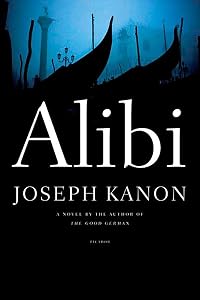
Alibi
by Joseph Kanon
On This Page
Description
From the bestselling author of Los Alamos and The Good German comes Joseph Kanon's riveting tale of love, revenge and murder set in postwar Venice. Winner of the Hammett Prize It is 1946, and Adam Miller has come to Venice to visit his widowed mother and try to forget the horrors he has witnessed as a U.S. Army war crimes investigator in Germany. But when he falls in love with Claudia, a Jewish woman scarred by her devastating experiences during World War II, he is forced to confront another show more Venice, a city still at war with itself, haunted by atrocities it would rather forget. Everyone, including his mother's suave new Venetian suitor, has been compromised by the occupation, and Adam finds himself at the center of a web of deception, intrigue, and unexpected moral dilemmas. When is murder acceptable? What are the limits of guilt? How much is someone willing to pay for a perfect alibi? show lessTags
Recommendations













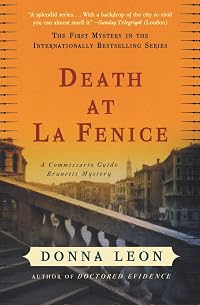
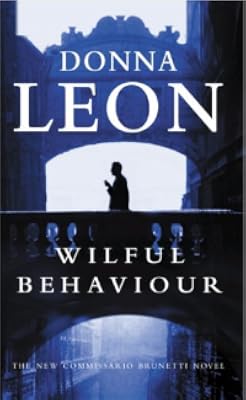



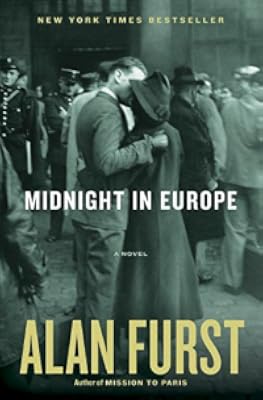
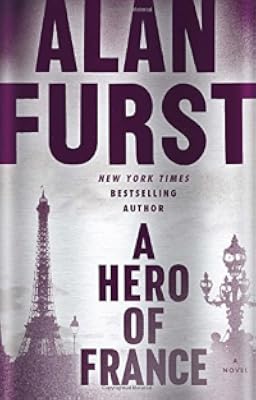
Member Reviews
An unexpected pleasure. I chose this thriller, which was on the sale table, in large part because the action takes place in Venice. There is a map on the inside covers. I have loved Venice since I visited it in 1974 and I have read several popular mysteries that are based there. But I did not know much about Venice during WWII or shortly after. That is the time period of this novel.
Venice managed to come through undamaged. That is, the buildings did. The beautiful city attracted widow Grace Miller, who leased a home for several months. Perhaps she would stay, live there. Her son Adam, released from military service, comes to stay with her, and meets the man she is currently seeing, Gianni Maglione. Gianni is charming, well-mannered, show more and from an old Venetian family. But Adam does not like him.
Adam meets Claudia at a party. Claudia is Jewish and survived a camp. Her scars are more than physical, as she had been made to be essentially a sex slave to one of the Nazis running the camp. The two hit it off. But then there is an incident that pits Claudia against Gianni, and Adam calls on his military intelligence buddies to find out more. And then one fateful night everything changes.
The story really kept me in suspense. A different type of suspense than one might expect from a thriller. And it revealed a part of Venice - and Italy - that we may tend to gloss over in our daily lives. I suspect that Kanon's representation of the general feelings after the war are pretty nearly accurate. They make sense while they make one think. What does it mean when a country is occupied and its inhabitants become used to following orders of its occupiers? What happens after and how do the citizens feel and act?
Not what I'd call a "nice" story. But fascinating, absorbing, thought-provoking. show less
Venice managed to come through undamaged. That is, the buildings did. The beautiful city attracted widow Grace Miller, who leased a home for several months. Perhaps she would stay, live there. Her son Adam, released from military service, comes to stay with her, and meets the man she is currently seeing, Gianni Maglione. Gianni is charming, well-mannered, show more and from an old Venetian family. But Adam does not like him.
Adam meets Claudia at a party. Claudia is Jewish and survived a camp. Her scars are more than physical, as she had been made to be essentially a sex slave to one of the Nazis running the camp. The two hit it off. But then there is an incident that pits Claudia against Gianni, and Adam calls on his military intelligence buddies to find out more. And then one fateful night everything changes.
The story really kept me in suspense. A different type of suspense than one might expect from a thriller. And it revealed a part of Venice - and Italy - that we may tend to gloss over in our daily lives. I suspect that Kanon's representation of the general feelings after the war are pretty nearly accurate. They make sense while they make one think. What does it mean when a country is occupied and its inhabitants become used to following orders of its occupiers? What happens after and how do the citizens feel and act?
Not what I'd call a "nice" story. But fascinating, absorbing, thought-provoking. show less
While I enjoyed this book as I usually enjoy Kanon's work, it doesn't stand up to his earlier work. The characters and places are flatter and less engaging, and the story leaves something to be desire--it wasn't bad, just not great. If you're new to Kanon, I'd start with a different book, and then try not to be too disappointed when you get to this one. If you're more of a traditional mystery reader than suspense, and don't mind a slow-to-casual pace, this might be more up your alley.
Another solid outing from Kanon, who has yet to disappoint me. The Venice setting is so perfectly described throughout that I really feel as if my passport should have another entry stamped on it at this point. The plot and its resolution were terrific and the pacing was rarely off. Major and minor characters were all well developed and believable, and the only real nit I have about the whole package would involve the female lead, given that I felt sorry for her but I didn't feel a whole lot of sympathy for her by the end. But Kanon puts everyone through the wringer and no one comes out unscathed. And justice? Well, you could say that justice was a fluid thing in postwar Venice...
This is a case of the whole being more than the sum of the parts. The two main characters are frequently unbelievable to the point of being archetypes. The two main plot twists are so silly as to be near absurd. Anyone who had read enough crime novels will be pretty sure of the outline of the ending halfway through. However the writing and pace are SO good that you won't care. His sense of place is more than good enough for an Anglosphere reader [I did a lot of business in the region over several decades and can nitpick]. His sense of period will again suffice for those not really fluent on Italian politics and history. All in all it was extremely good fun to the point that I read it every moment I could get free till I finished it, show more then went back to immediately reread a few choice scenes. It is really a pity that this wasn't made into the Hollywood movie instead of his 'the Good German' as this one would be much easier to shoot. show less
Thriller about post WWII Venice. The killer gets involved in the investigation of the crimen, as the story is told from this point of view the reading is stressful. The plot is fine and the story is well told, but to read this book is not an enjoyable experience.
I may be done with Joseph Kanon. I liked Los Alamos, didn't like his latest one and thought this was OK...a tad too long.
It's post WW II Venice and Adam, an American soldier, just released from service is in Venice to visit his mother. She has met an Italian doctor, Gianni Maglione, and plans to marry him.
Adam, at a party, meets Claudia, a Jewess who was in an Italian prisoner camp and, in order to stay alive, became a consort to a Nazi officer. Claudia tells Adam that during the war, Maglione ID'd her father to the Nazis who took him to a camp, where he perished. When confronted, Maglione says he did it because the man was ill and he saved a partisan in the process.
Adam, goaded on by Claudia, doesn't want to hear (or believe) this and show more presses his Army friends to investigate Maglione. He also doesn't want his mother to marry him. One night before a party, Adam confronts Maglione and in a tussle, he and Claudia kill Maglione. Much of the book is the cover-up and Adam's interaction with supposedly a bumbling (but not so) Italian police officer Cavellini.
Although, I liked the ending, getting to the end was challenging. I could not visualize Venice, even though I've been there. I couldn't understand, many times, who was talking and about whom. There was a lot of repetition..."we must get our stories straight", etc. If you're not familiar with the differences between Fascists, Nazis, etc., you lose much of the political atmosphere.
So, in conclusion, Alibi was OK, not stellar. show less
It's post WW II Venice and Adam, an American soldier, just released from service is in Venice to visit his mother. She has met an Italian doctor, Gianni Maglione, and plans to marry him.
Adam, at a party, meets Claudia, a Jewess who was in an Italian prisoner camp and, in order to stay alive, became a consort to a Nazi officer. Claudia tells Adam that during the war, Maglione ID'd her father to the Nazis who took him to a camp, where he perished. When confronted, Maglione says he did it because the man was ill and he saved a partisan in the process.
Adam, goaded on by Claudia, doesn't want to hear (or believe) this and show more presses his Army friends to investigate Maglione. He also doesn't want his mother to marry him. One night before a party, Adam confronts Maglione and in a tussle, he and Claudia kill Maglione. Much of the book is the cover-up and Adam's interaction with supposedly a bumbling (but not so) Italian police officer Cavellini.
Although, I liked the ending, getting to the end was challenging. I could not visualize Venice, even though I've been there. I couldn't understand, many times, who was talking and about whom. There was a lot of repetition..."we must get our stories straight", etc. If you're not familiar with the differences between Fascists, Nazis, etc., you lose much of the political atmosphere.
So, in conclusion, Alibi was OK, not stellar. show less
A simple murder in post WWII Venice opens up a complex web of inter-related killings during the German occupancy. The protagonist kills his mother's suitor believing he was a Nazi collaborator. Subsequently, he begins to doubt whether his assumptions were correct. A number of the other characters have dark secrets from the war that play into the unraveling of events that occurred during the war. Well done beach read for fans of Kanon's earlier works.
Members
- Recently Added By
Published Reviews
ThingScore 75
Kanon has chosen Venice as the unlikely location for his latest novel, "Alibi," and it turns out to have yielded his richest, most full-blooded work to date. Kanon ... has mastered the art of the historical thriller in which a specific time and place is integral to the story.
added by danielx
Author Information

14+ Works 6,758 Members
Joseph Kanon began his career in publishing while an undergraduate at Harvard, reading manuscripts for The Atlantic Monthly. Kanon traveled to England for graduate school, then returned to the United States to work as a book review editor and writer for the Saturday Review. Rising through the ranks of the publishing world, he eventually became show more president and CEO of E.P. Dutton, and then executive vice president of Houghton Mifflin's Trade and Reference Division. Kanon is the author of Los Alamos (1997), an authentic fictional recreation of the waning days of World War II during which the murder of one of the Manhattan Project's security officers occurs. The Prodigal Spy was published in late 1998. His novel, Leaving Berlin, is a 2015 New York Times bestseller. (Bowker Author Biography) show less
Some Editions
Awards and Honors
Awards
Common Knowledge
- Canonical title
- Alibi
- Original publication date
- 2005
- People/Characters
- Adam Miller; Claudia
- Important places
- Venice, Veneto, Italy; Italy
- Important events
- World War II
- Dedication
- For David and Lizbeth Straus
- First words
- After the war, my mother took a house in Venice.
- Last words
- (Click to show. Warning: May contain spoilers.)"These things arrange themselves. We'll think of something."
Classifications
Statistics
- Members
- 654
- Popularity
- 44,198
- Reviews
- 18
- Rating
- (3.34)
- Languages
- Dutch, English, French, German
- Media
- Paper, Audiobook, Ebook
- ISBNs
- 27
- ASINs
- 6