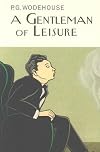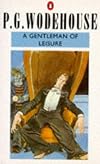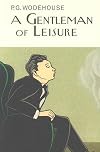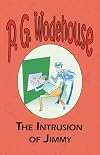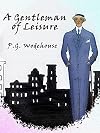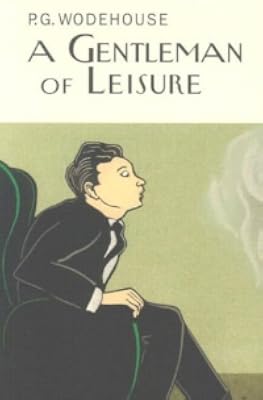
A Gentleman of Leisure
by P. G. Wodehouse
On This Page
Description
Also published under the title A Gentleman of Leisure, The Intrusion of Jimmy plumbs the depths of misbegotten romantic entanglements with a level of skill and virtuosity that only famed British humorist P.G. Wodehouse could pull off without a hitch. After falling in love with a comely fellow passenger on a sea voyage, wealthy gadabout Jimmy Pitt is sucked into a downward spiral of unfortunate events and bad decisions while trying to woo his beloved..
Tags
Recommendations





















Member Reviews
A Gentleman of Leisure (UK) / The Intrusion of Jimmy (US) was published in 1910, with a stage version under the title A Gentleman of Leisure opening in New York the following year, with Douglas Fairbanks Sr. in the leading role. It was Wodehouse's second novel for adults, following on from Love among the Chickens (UK 1906/US 1909).
Arguably, this is the first book where we meet the "classic Wodehouse formula", with the characteristic three-act plot and theatrical staging, the classic cast of Wodehouse types (the glib Man of Action, the stammering Upper-Class Twit, the Nice Girl and the Heavy Uncle); we have a castle in Shropshire, a superb butler (albeit with only a tiny walk-on part), all manner of impostors, detectives, burglars and show more con-men, the sensational theft of a diamond necklace, engagements made and broken, and all the rest of it.
The main difference between A Gentleman of Leisure and later Wodehouse is that he hasn't quite achieved the playful freedom with language that we know and love. The style is clear and confident, free of the Edwardian archness of some of his early writing, but the jokes, though clever, are still a little bit laboured. Quotations are used straight out of the box, without the later inventive misapplication. Wodehouse has already picked up some characteristic tricks: for example, in the scene where Jimmy and Spike are caught burgling McEachern's house, Wodehouse invokes Shakespeare (twice), Byron and Verdi, and constructs an extended simile between barking dogs and opera singers, all to build up tension in the middle of a hectic action sequence without dialogue.
There are other things Wodehouse would not have done later on. In particular, he doesn't give the second girl anything to do -- her part is almost entirely offstage. I don't know the stage version, but I suspect that this part would have had to be built up more to give the play a bit of balance. Spike's extended dialect passages jar a bit too -- Wodehouse would certainly have cleaned these up a bit in a later work, just modifying one or two words to signal that Spike is speaking dialect, rather than rendering the whole speech phonetically.
A passage that has always made me raise an eyebrow is where Jimmy and Spike take a taxi to go burgling:
Jimmy paid the driver, who took the money with that magnificently aloof air which characterizes the taxi-chauffeur. A lesser man might have displayed some curiosity about the ill-matched pair. The chauffeur, having lighted a cigarette, drove off without any display of interest whatsoever. It might have been part of his ordinary duties to drive gentlemen in evening clothes and shock-headed youths in parti-colored sweaters about the city at three o'clock in the morning.
Surely even Wodehouse, who had a few years in London musical theatre behind him by this time, would have known what gentlemen in evening clothes might be doing driving about in taxis at might with rough-looking youths... Spike, we should remember, is the one who "ain't got no use for goils".
Oddly enough, A Gentleman of Leisure was my first encounter with Wodehouse. Aged about eight and in the middle of a long illness, I'd read my way through all the Arthur Ransomes, and my father, probably desperate for something to keep me occupied, turned up with a pile of Wodehouse from his school library. The first one I picked up, with no thought of chronological order, was A Gentleman of Leisure -- I have a feeling that Love among the Chickens and Something Fresh must have been in that first batch as well, so maybe there was some system to it after all. At any rate, I devoured the first one eagerly, and was pleased to see that long, long list of other titles on the dust-jacket. The list was not as long as it later became, of course: Wodehouse was still going strong in those days, with another ten books or so ahead of him. show less
Arguably, this is the first book where we meet the "classic Wodehouse formula", with the characteristic three-act plot and theatrical staging, the classic cast of Wodehouse types (the glib Man of Action, the stammering Upper-Class Twit, the Nice Girl and the Heavy Uncle); we have a castle in Shropshire, a superb butler (albeit with only a tiny walk-on part), all manner of impostors, detectives, burglars and show more con-men, the sensational theft of a diamond necklace, engagements made and broken, and all the rest of it.
The main difference between A Gentleman of Leisure and later Wodehouse is that he hasn't quite achieved the playful freedom with language that we know and love. The style is clear and confident, free of the Edwardian archness of some of his early writing, but the jokes, though clever, are still a little bit laboured. Quotations are used straight out of the box, without the later inventive misapplication. Wodehouse has already picked up some characteristic tricks: for example, in the scene where Jimmy and Spike are caught burgling McEachern's house, Wodehouse invokes Shakespeare (twice), Byron and Verdi, and constructs an extended simile between barking dogs and opera singers, all to build up tension in the middle of a hectic action sequence without dialogue.
There are other things Wodehouse would not have done later on. In particular, he doesn't give the second girl anything to do -- her part is almost entirely offstage. I don't know the stage version, but I suspect that this part would have had to be built up more to give the play a bit of balance. Spike's extended dialect passages jar a bit too -- Wodehouse would certainly have cleaned these up a bit in a later work, just modifying one or two words to signal that Spike is speaking dialect, rather than rendering the whole speech phonetically.
A passage that has always made me raise an eyebrow is where Jimmy and Spike take a taxi to go burgling:
Jimmy paid the driver, who took the money with that magnificently aloof air which characterizes the taxi-chauffeur. A lesser man might have displayed some curiosity about the ill-matched pair. The chauffeur, having lighted a cigarette, drove off without any display of interest whatsoever. It might have been part of his ordinary duties to drive gentlemen in evening clothes and shock-headed youths in parti-colored sweaters about the city at three o'clock in the morning.
Surely even Wodehouse, who had a few years in London musical theatre behind him by this time, would have known what gentlemen in evening clothes might be doing driving about in taxis at might with rough-looking youths... Spike, we should remember, is the one who "ain't got no use for goils".
Oddly enough, A Gentleman of Leisure was my first encounter with Wodehouse. Aged about eight and in the middle of a long illness, I'd read my way through all the Arthur Ransomes, and my father, probably desperate for something to keep me occupied, turned up with a pile of Wodehouse from his school library. The first one I picked up, with no thought of chronological order, was A Gentleman of Leisure -- I have a feeling that Love among the Chickens and Something Fresh must have been in that first batch as well, so maybe there was some system to it after all. At any rate, I devoured the first one eagerly, and was pleased to see that long, long list of other titles on the dust-jacket. The list was not as long as it later became, of course: Wodehouse was still going strong in those days, with another ten books or so ahead of him. show less
It had a slow beginning, so I was afraid I wouldn't like it, but the second part of the book was charming :) I really liked Jimmy, he was so intelligent, generous and fun. My favourite scene was definitely Maud's reaction to Jimmy's story, when he finally told her the truth - it was precious :) I really enjoyed this book.
I’d like to begin by saying that I LOVE the Jeeves novels. They never fail to make me laugh, even when I’m in a bad mood. Perhaps it’s because I enjoy those so much that this one fell flat. Knowing what Wodehouse is capable of makes this effort a disappointment.
Jimmy falls in love at first sight with an American named Molly while traveling across the Atlantic. Later an unwise wager involving robbing a house leads to lots of misunderstandings and an awkward meeting between Molly’s father and Jimmy. The ensuing complications, including a young thief, a party at a country house and a young lord with a desire to marry for love instead of money, make up the rest of the plot.
Unfortunately those elements don’t add up to much. The show more novel lacks the hilarious scenes that Jeeves’ droll presence adds to Wodehouse’s other books. Without Jeeves the flighty, rich young man character just doesn’t work as well. That plucky, but clueless chap needs the grounding gravity of Jeeves and without it the story falls flat.
BOTTOM LINE: Skip it and head straight to the Jeeves books. It doesn’t matter where you start, they’re all funny. show less
Jimmy falls in love at first sight with an American named Molly while traveling across the Atlantic. Later an unwise wager involving robbing a house leads to lots of misunderstandings and an awkward meeting between Molly’s father and Jimmy. The ensuing complications, including a young thief, a party at a country house and a young lord with a desire to marry for love instead of money, make up the rest of the plot.
Unfortunately those elements don’t add up to much. The show more novel lacks the hilarious scenes that Jeeves’ droll presence adds to Wodehouse’s other books. Without Jeeves the flighty, rich young man character just doesn’t work as well. That plucky, but clueless chap needs the grounding gravity of Jeeves and without it the story falls flat.
BOTTOM LINE: Skip it and head straight to the Jeeves books. It doesn’t matter where you start, they’re all funny. show less
Part of a series of reprints; this story was originally published in 1910. In spite of the reviews I read after I bought the book (fortunately), I'm enjoying it.
Some thoughts while reading: Wodehouse assumes the reader is intelligent and that he doesn't need to explain everything. I am, however, a bit perplexed about why a smart young man, who briefly was a reporter, is unable to discover the name of the woman he saw from afar on a ship: weren't passenger lists with addresses available? And once he learns that her father is a policeman, couldn't he contact a newspaper colleague to see who was known to demand payments from thieves if they wanted to operate in New York. (While Bertie Wooster only suspected that judges got rich pocketing show more the fines they gave out, here we have a policeman who definitely becomes wealthy by collecting graft. Wodehouse doesn't seem to have any ethical problems with this, although the character does keep his activities secret from his daughter.)
Having finished the book, it turns out, that in spite of all the complications, everything works out very nicely. show less
Some thoughts while reading: Wodehouse assumes the reader is intelligent and that he doesn't need to explain everything. I am, however, a bit perplexed about why a smart young man, who briefly was a reporter, is unable to discover the name of the woman he saw from afar on a ship: weren't passenger lists with addresses available? And once he learns that her father is a policeman, couldn't he contact a newspaper colleague to see who was known to demand payments from thieves if they wanted to operate in New York. (While Bertie Wooster only suspected that judges got rich pocketing show more the fines they gave out, here we have a policeman who definitely becomes wealthy by collecting graft. Wodehouse doesn't seem to have any ethical problems with this, although the character does keep his activities secret from his daughter.)
Having finished the book, it turns out, that in spite of all the complications, everything works out very nicely. show less
OK, but not as funny as a lot of Wodehouse. After seeing a play featuring a gentleman burglar, Jimmy, an American of means, bets his friends that he could break into a residence only to find a burglar breaking into his own a bit later. He enlists the help of the burglar in achieving his bet only to find himself caught in the act by the owner of the home, a police commissioner. To further complicate matters, the commissioner's daughter is a young woman on whom Jimmy has developed a serious crush. It gets more complicated from there as the action moves to England and involves a few aristocratic types. I would have likes to have seen a simpler plot and more genuine humor than what resulted.
This is a fairly early Wodehouse and he hadn't quite hit his straps. There is some sparkling dialogue but it's fairly far and few between and the plot is a little plodding. I still enjoyed it and it's nice to have a bit more realism on the characterisation front. I love the later, rollicking "musical comedy" style Wodehouse, but this was still a very pleasant variation.
This is one of Plum's earlier novels (1910) and later was adapted as a play which starred Douglas Fairbanks. It contains many of the author's favourite themes - silly-ass young noblemen, terrifying patrician aunts saved from poverty by their nouveau-riche commercial husbands, butlers in stately homes, mistaken identities and happy endings where the boy gets the right girl. The book hangs together rather well and, despite the absence of PGW's later important characters, has a strong story line.
This book reminds one not only how the Wodehouse canon relies on relatively few plots - but also that that does nothing to lessen the great pleasure to be had in reading the works.
This book reminds one not only how the Wodehouse canon relies on relatively few plots - but also that that does nothing to lessen the great pleasure to be had in reading the works.
Members
- Recently Added By
Lists

Books Read in 2024
4,623 works; 126 members
Author Information

656+ Works 110,569 Members
P. G. Wodehouse was born in Guildford, United Kingdom on October 15, 1881. After completing school, he spent two years as a banker at the Hong Kong and Shanghai Bank in London and then took a job as a sports reporter and columnist for the Globe newspaper. His first novel, The Pothunters, was published in 1902. He wrote over 100 novels and short show more story collections during his lifetime including A Perfect Uncle, Love Among the Chickens, The Swoop, P. Smith in the City, Meet Mr. Milliner, Doctor Sally, Quick Service, The Old Reliable, Uneasy Money, A Damsel in Distress, Jill the Reckless, The Adventures of Sally, A Pelican at Blandings, The Girl in Blue, and Aunts Aren't Gentlemen. His most famous characters, Bertie Wooster and his manservant, Jeeves, appeared in books such as Much Obliged, Jeeves. He also wrote lyrics for musical comedies and worked as screenwriter in Hollywood in the 1930s. In 1939, he bought a villa in Le Touquet on the coast of France. He remained there when World War II started in 1939. The following year, the Germans appropriated the villa, confiscated property, and arrested him. He was detained in various German camps for almost one year before being released in 1941. He went to Berlin and spoke of his experience in five radio talks to be broadcast to America and England. The talks themselves were completely innocuous, but he was charged with treason in England. He was cleared, but settled permanently in the United States. He became a citizen in 1955. He was made a Knight Commander of the Order of the British Empire in 1975. He died from a heart attack after a long illness on February 14, 1975 at the age of 93. (Bowker Author Biography) show less
Some Editions
Series
Belongs to Publisher Series
Work Relationships
Is an expanded version of
Common Knowledge
- Canonical title*
- Un gentiluomo in ozio
- Original title
- A Gentleman of leisure
- Alternate titles
- The Intrusion of Jimmy; Un gentiluomo in ozio; Black Sheep
- Original publication date
- 1910
- People/Characters
- Jimmy Pitt; John McEachern; Molly McEachern; Spike Mullins
- Important places
- Dreever Castle,Shropshire,England
- Dedication
- To Douglas Fairbanks who many years ago played 'Jimmy' in the dramatised version of this novel
- First words
- The main smoking-room of the Strollers' Club had been filling for the last half-hour, and was now nearly full.
- Last words
- (Click to show. Warning: May contain spoilers.)It shone on a red head.
- Disambiguation notice
- The novel was provisionally titled Black Sheep prior to publication. UK title 'A Gentleman of Leisure', US title 'The Intrusion of Jimmy'.
It is a substantially revised and expanded version of an earlier nove... (show all)lla called 'The Gem Collector.' "The Gem Collector" is substantially different and should not be combined here.
The book was later adapted as a play and retitled Thief for a Night. This should also not be combined.
*Some information comes from Common Knowledge in other languages. Click "Edit" for more information.
Classifications
Statistics
- Members
- 557
- Popularity
- 52,975
- Reviews
- 16
- Rating
- (3.77)
- Languages
- 5 — Dutch, English, Finnish, French, Italian
- Media
- Paper, Audiobook, Ebook
- ISBNs
- 65
- ASINs
- 23