On This Page
Description
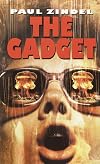
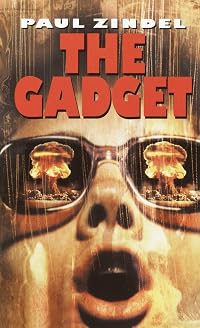
In 1945, having joined his father at Los Alamos, where he and other scientists are working on a secret project to end World War II, thirteen-year-old Stephen becomes caught in a web of secrecy and intrigue.Tags
Recommendations
















Member Reviews
The Gadget is told from the perspective of a young boy at Los Alamos during the Manhattan Project. The story is written in a very direct and fast paced style. Even though this is aimed at boys/tweens, the author managed to incorporate a good bit of historical detail. Although the author changed the dates and details, I really appreciated that he included the Demon Core incidents in the book. The descriptions of Trinity Site and the actual test were detailed and seemed very accurate. The plot involving spies seemed a bit half-hearted, but worked for the purposes of the story. A good choice for younger readers.
The Gadget By Paul Zindel and published in 2001 by Dell Laurel-Leaf. It is a Historical Fiction novel about Stephen Orr, a boy whose father works on the Manhattan Project and the choices and consequences Stephen must make. I like this book a lot. This was the first chapter book that I personally picked to read back in the fourth grade. This is a wonderful book that has a suspenseful plot, very believable characters, and an interesting point of view.
The plot in this book is a non-stop action filled excitement ride. The author kept the pace of the story building and building until it reached its climax. The author completed this task by using the ever present fear of the unknown project and the overall fear of World War Two. We can see show more the tension of Stephen and his father multiple times. The first time, and the most poignant is when the two finally meet. Stephen has not seen his father for a very long time and is completely eager to see his father. On the other hand, his father is worn out with the project and exhausted. The best he can offer his son is a simple handshake. This makes Stephen mad and immediately escalates the emotions between the two. The author does a great job at creating conflict at the end of the story. Stephen completely refuses to believe that his good friend Alexei is a foreign spy. We see Stephen alienated to the other camp because of his friendship with Alexei. Towards the end we see Stephen come to terms with this conflict and accept that there may be more to his friend then he thinks. Lastly, the suspense is evident all through the book as I found myself wondering if the bomb will be completed on time and if Stephen will ever agree with his father. The pinnacle of the suspense is when Stephen finds Alexei’s father communicating with the enemy. I then read on as Stephen was trying to escape from his friend and his family of spies.
The protagonist Stephen and the antagonist Alexei are described, developed, and believed in very well. In the story, Stephen starts out as a naive boy who is torn during World War II. With his mother in England and his father on a top secret mission, Stephen feels torn between a normal life and wanting to know his father. When Stephen travels to America we see that he is full of mystery as to what is happening. Stephen develops from a naive friendly boy to a war and spy savvy young man who comes to terms with what the Manhattan Project really is. This is never more evident than when Stephen finds out that Alexei, and Alexei’s families are spies. Stephen is roped in by Alexei’s family by the promise of having a pseudo father who is not always ignoring him for some big secret. We see Stephen become more aware of Alexei’s family and what they are really doing. At the end of the novel we Stephen come to the realization that his friend was a spy. This was my favorite part of the book, when we saw Stephen shoot up from a boy to a young man who had to come to terms with reality. Alexei is a completely believable spy. The author did a great job hiding his true identity until the final 30 pages of the book. Alexei is completely believable in his simple deception of Stephen. Alexei becomes friends with Stephen to find out what Stephens father knows. The author makes us believe that Alexei is an innocent loving friend by simple acts like going over to Stephen’s house for a play date. I completely believed that Alexei was good by how the author presented this character.
The author wrote this story in third person. This is interesting because when the story is in third person I, the reader, can read things and pick up on things that I might not have if it was in first person. An example of this is when Stephen accidentally walks in on his father and the secret project. The narrator then describes to us that there was this big map of places in Japan and complicated chemical drawings on the board. If this was from the point of view of Stephen we might have not seen anything. We may have just seen Stephens father racing towards him to block his view. Third person also helped me to concentrate more on the plot and be more exited in the story. During the big chase scene I read that the whole camp came alive trying to capture Alexei and his family as they were trying to kill Stephan. If this was just from one person’s point of view I might have not read the amount of excitement happening in the camp.
Wise Choices, family, and broadening ones view are all big ideas in The Gadget. Living on a top secret military base where scientists are working on a huge secret project forces Stephen to make wise choices in his daily life. He must make choices in the friends he makes, the letters he writes, and the activities he does in the camp. Family is very important in this story. Stephen must try to connect with his father while he is occupied with the project. This puts a large strain on the two of them, but to see through the war they must learn to come together. Stephen is a naive young boy who is thrown into the midst of war. At a young age he must expand his world view to that beyond the typical twelve year old perspective. Stephen must widen his view to make sure that he is mindful of the people he associates with. show less
The plot in this book is a non-stop action filled excitement ride. The author kept the pace of the story building and building until it reached its climax. The author completed this task by using the ever present fear of the unknown project and the overall fear of World War Two. We can see show more the tension of Stephen and his father multiple times. The first time, and the most poignant is when the two finally meet. Stephen has not seen his father for a very long time and is completely eager to see his father. On the other hand, his father is worn out with the project and exhausted. The best he can offer his son is a simple handshake. This makes Stephen mad and immediately escalates the emotions between the two. The author does a great job at creating conflict at the end of the story. Stephen completely refuses to believe that his good friend Alexei is a foreign spy. We see Stephen alienated to the other camp because of his friendship with Alexei. Towards the end we see Stephen come to terms with this conflict and accept that there may be more to his friend then he thinks. Lastly, the suspense is evident all through the book as I found myself wondering if the bomb will be completed on time and if Stephen will ever agree with his father. The pinnacle of the suspense is when Stephen finds Alexei’s father communicating with the enemy. I then read on as Stephen was trying to escape from his friend and his family of spies.
The protagonist Stephen and the antagonist Alexei are described, developed, and believed in very well. In the story, Stephen starts out as a naive boy who is torn during World War II. With his mother in England and his father on a top secret mission, Stephen feels torn between a normal life and wanting to know his father. When Stephen travels to America we see that he is full of mystery as to what is happening. Stephen develops from a naive friendly boy to a war and spy savvy young man who comes to terms with what the Manhattan Project really is. This is never more evident than when Stephen finds out that Alexei, and Alexei’s families are spies. Stephen is roped in by Alexei’s family by the promise of having a pseudo father who is not always ignoring him for some big secret. We see Stephen become more aware of Alexei’s family and what they are really doing. At the end of the novel we Stephen come to the realization that his friend was a spy. This was my favorite part of the book, when we saw Stephen shoot up from a boy to a young man who had to come to terms with reality. Alexei is a completely believable spy. The author did a great job hiding his true identity until the final 30 pages of the book. Alexei is completely believable in his simple deception of Stephen. Alexei becomes friends with Stephen to find out what Stephens father knows. The author makes us believe that Alexei is an innocent loving friend by simple acts like going over to Stephen’s house for a play date. I completely believed that Alexei was good by how the author presented this character.
The author wrote this story in third person. This is interesting because when the story is in third person I, the reader, can read things and pick up on things that I might not have if it was in first person. An example of this is when Stephen accidentally walks in on his father and the secret project. The narrator then describes to us that there was this big map of places in Japan and complicated chemical drawings on the board. If this was from the point of view of Stephen we might have not seen anything. We may have just seen Stephens father racing towards him to block his view. Third person also helped me to concentrate more on the plot and be more exited in the story. During the big chase scene I read that the whole camp came alive trying to capture Alexei and his family as they were trying to kill Stephan. If this was just from one person’s point of view I might have not read the amount of excitement happening in the camp.
Wise Choices, family, and broadening ones view are all big ideas in The Gadget. Living on a top secret military base where scientists are working on a huge secret project forces Stephen to make wise choices in his daily life. He must make choices in the friends he makes, the letters he writes, and the activities he does in the camp. Family is very important in this story. Stephen must try to connect with his father while he is occupied with the project. This puts a large strain on the two of them, but to see through the war they must learn to come together. Stephen is a naive young boy who is thrown into the midst of war. At a young age he must expand his world view to that beyond the typical twelve year old perspective. Stephen must widen his view to make sure that he is mindful of the people he associates with. show less
A fast, easy read. Poor Stephen didn't know who the bad guys were, when it was freaking obvious halfway in. I would recommend this book to kids interested in history.
It was a good book well at first Stephen's cousin got blown off there roof in world war two. So Stephen was moved to a camp called Los Almos, and it was a secret camp. He met a friend named Alexi, they find out that Stephen's dad is making something to win the war. They go out to where they test the thing and it's a atomic bomb. And when he gets out of that his best friend Alexi is a spy he finds out he gets run over by a train.
This award winning author died this year. This book is about a boy's adventures living in Los Alamos while the bomb was being developed.
Ratings
Members
- Recently Added By
Lists

The Story of the World: Activity Book Four: The Modern Age
333 works; 2 members
Author Information

71+ Works 9,254 Members
Paul Zindel Born on Staten Island, New York, Zindel was raised by a single mother who pursued a variety of odd and mostly unsuccessful jobs and took in terminally ill patients to supplement the family income. Due to her eccentricity and restlessness, the mother moved the family from one apartment to another, making it difficult for Zindel to form show more lasting friendships. As a consequence, the boy lived in the world of his imagination, developing interests in both science and writing. Zindel majored in chemistry at Wagner College on Staten Island, completing both bachelors and masters degrees. During this period he also took a creative-writing course offered by the playwright Edward Albee. After college he worked briefly as a technical writer for a chemical company and then discovered a more fulfilling vocation as a teacher of chemistry and physics at a Staten Island high school. It was during this period in the early 1960s that Zindel was able to develop his potential as a playwright by drawing on his own background as well as the experiences of his young students. The Effect of Gamma Rays on Man-in-the-Moon Marigolds premiered at the Alley Theater in Houston in 1965, was presented in a condensed version on television the following year, and finally opened off-Broadway at the Mercer-O'Casey Theater in 1970. Because of a fire in the theater, the play was moved, with a new cast, to the New Theater on Broadway, where it ran for a total of 819 performances. In addition to being enormously popular, Gamma Rays earned in 1970 an Obie Award as the best play of the season, the New York Drama Critics Circle Award as the best American play, and the Vernon Rice Drama Desk Award for most promising playwright. In 1971 the play was awarded the Pulitzer Prize in Drama. Gamma Rays is the story of an embittered, half-mad widow, Beatrice Hunsdorfer; her teenaged daughters, Ruth and Tillie; and Nanny, a decrepit old woman who boards with them. The family lives in chaos, with Beatrice dealing out petty vengeance to everyone. Nanny has been abandoned by her daughter. Ruth is wanton, untidy, and subject to seizures. Tillie, however, has become interested in science and enters her marigold experiment in the science fair; by exposing the marigold seeds to radiation, she shows that some produce normal plants, others produce mutations with beautiful double blooms, while still others die. The metaphor, of course, is that Tillie has emerged from her chaotic environment as a beautiful and whole person, a human "double bloom." Zindel's other plays include And Miss Reardon Drinks a Little (1971), The Secret Affairs of Mildred Wild(1973), Let Me Hear You Whisper (1973), and Ladies at the Alamo(1975). While these plays continue to show Zindel's skill in writing excellent roles for women, none of them have matched the critical and popular success of Gamma Rays. Since the late 1960s, Zindel has also written several novels for young adults. The Pigman (1968), which is about a lonely widower and two destructive teenagers, has sold more than 1 million copies. His other novels include My Darling, My Hamburger (1969), I Never Loved Your Mind (1970), Pardon Me, You're Stepping on My Eyeball (1976), Confessions of a Teenage Baboon (1977), and The Undertaker's Gone Bananas (1978). As in Gamma Rays, these works display not only a penchant for grotesque humor but an uncanny awareness of the problems of teenagers. Zindel's works, which also include several screenplays, explore the themes of loneliness, escapism, and eccentricity. His best works are humorous, perceptive, and warm; they present an affirmation of life emerging from desperate and grotesque circumstances. He is especially noted for his excellent women's roles, which has helped sustain him as a best-selling playwright for school and community groups. (Bowker Author Biography) show less
Awards and Honors
Awards
Notable Lists
Series

Common Knowledge
- Canonical title
- The Gadget
- Original publication date
- 2001
- People/Characters
- Stephen; Alexi
- Important places
- Los Alamos, New Mexico, USA
- Important events
- World War II
- Dedication
- To my sister, Betty,
and her sixty Japanese students - First words
- Stephen waited until his mother and aunt were out in the kitchen making coffee before he slipped away from the family dinner table.
- Last words
- (Click to show. Warning: May contain spoilers.)From there they could see the east canyon and the adobe walls of the San Ildefonso Pueblo and -- in the distance -- the dust rising as the trucks headed off the mesa on their way to end a war.
Classifications
Statistics
- Members
- 286
- Popularity
- 112,294
- Reviews
- 5
- Rating
- (3.03)
- Languages
- English
- Media
- Paper
- ISBNs
- 8
- ASINs
- 2