On This Page
Description
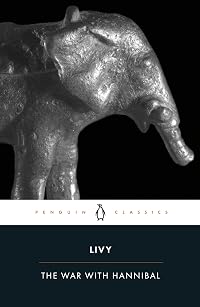
In The War with Hannibal, Livy (59 BC AD 17) chronicles the events of the Second Punic War between Rome and Carthage, until the Battle of Zama in 202 BC. He vividly recreates the immense armies of Hannibal, complete with elephants, crossing the Alps; the panic as they approached the gates of Rome; and the decimation of the Roman army at the Battle of Lake Trasimene. Yet it is also the clash of personalities that fascinates Livy, from great debates in the Senate to the historic meeting show more between Scipio and Hannibal before the decisive battle. Livy never hesitates to introduce both intense drama and moral lessons into his work, and here he brings a turbulent episode in history powerfully to life. show lessTags
Recommendations















Member Reviews
Livy begins his history of the Roman War with Carthage with the following passage: "I am now about to tell the story of the most memorable war in history: that, namely, which was fought by Carthage under the leadership of Hannibal against Rome." Thus asserts Livy at the start of the decade beginning in 222bc, books 21–30. He was certainly correct regarding ancient history. The Indo-Germanic and Semitic races were at war with one another over world dominance. The historian notes that the two had a hatred for one another that was as great as their armies, and that they were not only evenly matched but also knowledgeable of the enemy's battle strategies and potential might.
Livy never downplays the exploits of Hannibal, a 26-year-old who show more emerged as the protagonist of his tale. Ninety thousand soldiers, twelve thousand cavalry, and thirty-seven elephants crossed the Alps, and he made up any facts he could not find in existing records. After failing to stop the Carthaginians in Gaul, Scipio the father attempted again in the Italian plains, but each setback terrorized the imperial city. After Trebia and Lake Trasimene, Fabius Maximus's delay strategies were successful in keeping the invaders at bay for a while, but another consul, Varro, was impatient, which led to the ultimate Roman loss at Cannae (216 b.c.e.). Hannibal could have easily reached Rome if he had capitalized on his victory.
Book 25 covers a different stage of the conflict. A seventy-four-year-old mathematician named Archimedes' inventions of the catapult and grappling hooks, which lifted the prows of Roman ships attempting to attack the breakwater and sank them, kept Marcellus, who was besieging Syracuse, at bay for three years. Ultimately, though, the Romans discovered the gap in the defenses and took control of the island. This war is not over, but will continue until Scipio pursues Hannibal all the way to Zamma outside of Carthage where he will lead Rome to their ultimate victory.
I was impressed that Livy opened his narrative mentioning Hannibal by name. That is undoubtedly because he is the most engaging character in the story and likely the best General in spite of ultimately being defeated by Scipio Africanus. It is a narrative is full of great commanders, brutal and bloody warfare, shifting loyalties, superstitions and omens, and enough thrills to keep the reader both informed and entertained. show less
Livy never downplays the exploits of Hannibal, a 26-year-old who show more emerged as the protagonist of his tale. Ninety thousand soldiers, twelve thousand cavalry, and thirty-seven elephants crossed the Alps, and he made up any facts he could not find in existing records. After failing to stop the Carthaginians in Gaul, Scipio the father attempted again in the Italian plains, but each setback terrorized the imperial city. After Trebia and Lake Trasimene, Fabius Maximus's delay strategies were successful in keeping the invaders at bay for a while, but another consul, Varro, was impatient, which led to the ultimate Roman loss at Cannae (216 b.c.e.). Hannibal could have easily reached Rome if he had capitalized on his victory.
Book 25 covers a different stage of the conflict. A seventy-four-year-old mathematician named Archimedes' inventions of the catapult and grappling hooks, which lifted the prows of Roman ships attempting to attack the breakwater and sank them, kept Marcellus, who was besieging Syracuse, at bay for three years. Ultimately, though, the Romans discovered the gap in the defenses and took control of the island. This war is not over, but will continue until Scipio pursues Hannibal all the way to Zamma outside of Carthage where he will lead Rome to their ultimate victory.
I was impressed that Livy opened his narrative mentioning Hannibal by name. That is undoubtedly because he is the most engaging character in the story and likely the best General in spite of ultimately being defeated by Scipio Africanus. It is a narrative is full of great commanders, brutal and bloody warfare, shifting loyalties, superstitions and omens, and enough thrills to keep the reader both informed and entertained. show less
If anyone is interested in bringing that greatest of ancient wars to life in their mind, then this is a must read. While Livy is not necessarily the greatest on technical accuracy he paints a vivid picture of the imminent danger of the situation and the apparent hopelessness of the Roman cause all the while he is fully aware that everyone knows the ultimate outcome. The personalities of all the principal actors are creatively explored to keep the reader engaged. Sometimes I wonder if those who write historical fiction should be required to read Titus Livius first because he certainly sets the bar high. That may not be a great statement about Livy as a historian but it is certainly high praise for his literary genius. Nonetheless, it is show more also pretty good history as long as you have taken an actual college course on the Roman Republic and/or have read some reputable sources on the Punic Wars. show less
ძააან მაგარი წიგნია მყარი არგუმენტებით გამტკიცებული
Edition: // Descr: 174 p. : map (1) 19.5 cm. // Series: The Lake Classical Series Call No. { 878 L76 18 } Series Edited by Harold W. Johnston and Edward Capps Edited by Edward Ambrose Bechtel. // //
Edition: // Descr: 725 p. 19.5 cm. // Series: Call No. { 878 L76 2 Vol. II } Literally Translated with Notes by D. Spillan and Cyrus Edmonds. // //
Livius is een Romeinse geschiedschrijver uit de tijd van Augustus (rond het begin van onze jaartelling), die een 140-delige geschiedenis heeft geschreven van het Romeinse Rijk vanaf de stichting van de stad.
Deze vertaling omvat de delen 21 tot en met 30 waarin de Tweede Punische Oorlog wordt behandeld, waarin Hannibal ten strijde trok tegen de Romeinen. De eerste 150 blz van het boek zijn spannend: het verhaal van de tocht met olifanten over de Alpen en de twee grote veldslagen waarin Romeinse legers verpletterend worden verslagen. Daarna wordt het een onoverzichtelijk geheel van kleine schermutselingen waarbij nu eens de Carthagers winnen en dan weer de Romeinen. Op een gegeven moment hebben de Romeinen eindelijk een competente show more veldheer (Scipio die later de naam Africanus krijgt) die de Carthagers eerst uit Spanje verjaagt en vervolgens naar Afrika optrekt om Hannibal te dwingen zijn leger uit Italië terug te trekken.
De vertaling leest prettig, maar zoals gezegd de draad van het verhaal is moeilijk te volgen show less
Deze vertaling omvat de delen 21 tot en met 30 waarin de Tweede Punische Oorlog wordt behandeld, waarin Hannibal ten strijde trok tegen de Romeinen. De eerste 150 blz van het boek zijn spannend: het verhaal van de tocht met olifanten over de Alpen en de twee grote veldslagen waarin Romeinse legers verpletterend worden verslagen. Daarna wordt het een onoverzichtelijk geheel van kleine schermutselingen waarbij nu eens de Carthagers winnen en dan weer de Romeinen. Op een gegeven moment hebben de Romeinen eindelijk een competente show more veldheer (Scipio die later de naam Africanus krijgt) die de Carthagers eerst uit Spanje verjaagt en vervolgens naar Afrika optrekt om Hannibal te dwingen zijn leger uit Italië terug te trekken.
De vertaling leest prettig, maar zoals gezegd de draad van het verhaal is moeilijk te volgen show less
Jun 24, 2010Dutch
goede psychologische tekening van Hannibal en vrij spannend in aanloop en eerste jaren, maar daarna saaie opeenvolging van feiten.
Aug 11, 2010Dutch
Members
- Recently Added By
Lists

Books Set in Rome
98 works; 2 members
Author Information
Some Editions
Series

Belongs to Publisher Series
Common Knowledge
- Canonical title
- History of Rome, books 21-30
- Original title
- Ab urbe condita : libri XXI-XXX
- Original publication date
- 1
- People/Characters
- Hannibal; Livy; Titus Livy; Hannibal Barca; Gauls; Numidian
- Important places
- Rome, Italy; Zama, Tunisia; Xama, Tunisia; Tunisia; Ancient Africa; Ancient Rome (show all 11); Ancient Greece; Ancient Arabia; Ancient Italy; Carthage; Phoenicia
- Important events
- Second Punic War (218 - 201 BCE); Battle of Zama; The Hannibalic War; War Against Hannibal; Punic Wars; Battle of Lake Trasimene (show all 43); Battle of Ilipa; Battle of Ticinus; Battle of the Trebia; Battle of Umbrian Lake; Battle of Ager Falernus; Battle of Geronium; Battle of Cannae; Battle of Silva Litana; Battle of 1st Nola; Battle of 1st Casilinum; Battle of Hamae; Battle of 1st Petelia; Battle of 2nd Nola; Battle of 3rd Nola; Battle of 1st Beneventum; Battle of 2nd Casilinum; Battle of Lucania; Battle of Arpi; Battle of 1st Tarentum; Battle of 2nd Beneventum; Battle of Campi Veteres; Battle of Silarus; Battle of 1st Capua; Battle of 1st Herdonia; Battle of 2nd Capua; Battle of Sapriportis; Battle of 2nd Herdonia; Battle of Numistro; Battle of Canusium; Battle of Manduria; Battle of Caulonia; Battle of 2nd Tarentum; Battle of 2nd Petelia; Battle of Venusia; Battle of Grumentum; Battle of Metaurus; Battle of Crotona
- Disambiguation notice
- This is for books 21-30 of Livy's History of Rome (Ab Urbe Condita) in translation
Classifications
- Genres
- History, Nonfiction, General Nonfiction
- DDC/MDS
- 355 — Society, government, & culture Public administration & military science The Military - Land, Air & Sea / Warfare
- LCC
- DG247 .L533 — History of Europe, Asia, Africa and Oceania City History of Italy Ancient Italy. Rome to 476 History By period Kings and Republic, 753-27 B.C. Republic, 509-27 Conquest of Mediterranean world. 264-133 First and Second Punic Wars. Illyrian
- BISAC
Statistics
- Members
- 1,522
- Popularity
- 15,202
- Reviews
- 7
- Rating
- (4.08)
- Languages
- Dutch, English, Latin, Russian
- Media
- Paper, Audiobook, Ebook
- ISBNs
- 18
- ASINs
- 19
