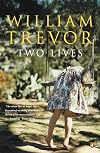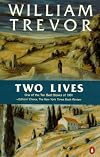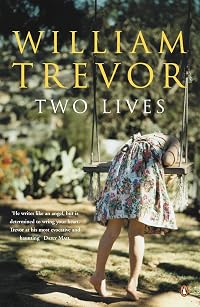
Two Lives: Reading Turgenev and My House in Umbria
by William Trevor
On This Page
Description
In Reading Turgenevan Irish country girl is trapped in a loveless marriage with an older man but she finds release through secret meetings with a man who shares her passion for Russian novels. My House in Umbriatells of Emily Delanhunty, a writer of romantic novels, who helps the survivors of a bomb attack on a train to convalesce, inventing colourful pasts for her patients. Two novels, two women who retreat further into the realm of the imagination until the boundaries between what is real show more and what is not become blurred . . . show lessTags
Recommendations










Member Reviews
Two novels by William Trevor in one volume. Reading Turgenev is the tragic story of Mary Louise Dallon, who marries a man twice her age for the stability and the opportunity to move from the family farm into town. They apparently never consummate the marriage and she suffers harassment from her husband’s two sisters. Mary falls in love with her cousin, is presumed mad, and finds a way to escape the marriage for thirty years.
In My House in Umbria a fifty-six year old Englishwoman knows how to survive: “Men have offered me gifts, probably all of which I have accepted.” She has a past, perhaps unsavory, which has financed the purchase of a house in Umbria which she shares with Quinty, an Irishman who “can be dubious to a degree show more that makes him untrustworthy.” They run the house as an “informal hotel” and she has written and had published several romance novels while there. She is the victim of a terrorist bomb on a train and when out of the hospital offers several other victims use of her home while healing. Her full shattered personality and past traumas then come to the surface.
Two excellent novels, which is really the only kind Trevor wrote. show less
In My House in Umbria a fifty-six year old Englishwoman knows how to survive: “Men have offered me gifts, probably all of which I have accepted.” She has a past, perhaps unsavory, which has financed the purchase of a house in Umbria which she shares with Quinty, an Irishman who “can be dubious to a degree show more that makes him untrustworthy.” They run the house as an “informal hotel” and she has written and had published several romance novels while there. She is the victim of a terrorist bomb on a train and when out of the hospital offers several other victims use of her home while healing. Her full shattered personality and past traumas then come to the surface.
Two excellent novels, which is really the only kind Trevor wrote. show less
(49) Every time I read one of Trevor's short novels (and all of his are short,) I am reminded that fiction can be art. Not in a gimmicky, reductive, pretentious way a la the last book I read (We The Animals) but in a beautiful, tight, quiet and powerful way. 'Two Lives' is interesting in that the book consists of two seemingly separate novellas, yet the page count doesn't start over with the second and the title clearly is meant to encompass our two female protagonists.
'Reading Turgenev' in my opinion is the stronger novella - a young Irish girl, afraid of leading a too small life, marries a dullard of a man much her senior, to escape the family home. When she finds herself disappointed, she retreats into a fantasy. This is a similar show more story in 'My House in Umbria,' just a completely different woman in completely different circumstances - but still, retreats into a fantasy life given the ugly realities that have made up her real one. 'Turgenev' was so sad and powerful in Trevor's understated way - you could feel Mary Louise's quiet desperation in her every action and reaction - the writing is just exquisite. I did not enjoy 'Umbria' as much (though I think there is a movie based on it) - Mrs. Delahunty was harder to empathize with and her fantastic musings were not as affecting for me. This novella brought the rating down a bit for me as I was ready for this tale to wrap up. And I thought the wrap up would be better than it was.
Overall, this is lovely fiction -- Memorable, powerful, dramatic tension and crystalline prose with remarkable few pages. Perhaps the best living writer? 'The Story of Lucy Gault' remains my favorite. show less
'Reading Turgenev' in my opinion is the stronger novella - a young Irish girl, afraid of leading a too small life, marries a dullard of a man much her senior, to escape the family home. When she finds herself disappointed, she retreats into a fantasy. This is a similar show more story in 'My House in Umbria,' just a completely different woman in completely different circumstances - but still, retreats into a fantasy life given the ugly realities that have made up her real one. 'Turgenev' was so sad and powerful in Trevor's understated way - you could feel Mary Louise's quiet desperation in her every action and reaction - the writing is just exquisite. I did not enjoy 'Umbria' as much (though I think there is a movie based on it) - Mrs. Delahunty was harder to empathize with and her fantastic musings were not as affecting for me. This novella brought the rating down a bit for me as I was ready for this tale to wrap up. And I thought the wrap up would be better than it was.
Overall, this is lovely fiction -- Memorable, powerful, dramatic tension and crystalline prose with remarkable few pages. Perhaps the best living writer? 'The Story of Lucy Gault' remains my favorite. show less
Two riveting stories or novellas or whatever they need to be labelled. "Reading Turgenev" and "My House in Umbria" have subtle links with respect to the women who are the principals of each story. The action in both unrelated pieces takes place in 1987. Both women have endured hardship and lack of love but each eventually makes some lemonade out of the lemons they have inherited. The are survivors of utterly different personal histories who at a late stage in life emerge as redeemed.
William Trevor is a superb writer - full of compassion, unsentimental, and one who lets his characters control the action.
William Trevor is a superb writer - full of compassion, unsentimental, and one who lets his characters control the action.
Sad, reflective, but very interesting. It was fascinating to see the world through the eyes of people, I wouldn’t say mentally normal. Probably not ill, but definitely different. The first story was quite reflective on love. What is it, how can it be perceived? The second one is different. About dreams, how can a person see the world differently around and push the “correct” thought on other people without realising that it may cross the boundary. At least that’s what I saw.
I'd never heard of William Trevor but I enjoyed the two novellas here very much. The first, "Reading Turgenov", drew me in quickly. It made me think somewhat of Doris Lessing's The Grass is Singing, a young wife driven to madness by her situation. Here it is hard to put a finger on what it is. Certainly you are not meant to even remotely like her two harpy sisters-in-law but her weak husband and reticent family are also part of it. I liked the way it moved bewteen times in the chapters, slowly bringing the past and present together. Dark and more than a little depressing but well done. The second, "My House in Umbria" was a bit more difficult. I was unsure what to expect and I think the narrator as the mildly delusional Mrs. Delahunty show more made it hard to follow the ins and outs. I couldn't really get a grip on her, perhaps that was the point. Well done as well but a bit more enigmatic. Worth seeking out more by this author. show less
Two novellas, of which the first only was short-listed for the Booker Prize. Reading Turgenev is a very moving, tonally exquisite novella about a young girl from a dying protestant community in Ireland, trapped in an unhappy marriage in one time frame, and about to be let out of mental hospital into care in the community in the novel's present. As the onion layers of the novel are revealed, a narrative of love and freedom, found in the most unexpected of places reveals itself in Mary Louise's brief love affair and her collusion in her capture. A surrounding cast of characters in the narrow community, claustrophobic and closed, act as a chorus of counterpoints. For me this was much better for being juxtaposed with My House in Umbria - a show more first person narrative with a crackingly unreliable narrator. 'Mrs Delahunty', a lady of dubious past, doubtful name and a taste for the local hooch, runs an occasional guesthouse in Umbria on her shadily gotten gains. A train crash brings her together with a small band of survivors and begins a story that might be entirely fantasy or perhaps, on some deep level, true. Women's lives, and unexpected ones, are at the heart of each of these. show less
William Trevor is a fine writer, similar to Coetzee and Ishiguro in the arts of understatement and subtlety. Each word is perfectly placed and his sense of structure is unerring.
Two Lives (1991) consists of two novellas: Reading Turgenev and My House in Umbria. The former is the story of an Irish girl who enters into an unhappy marriage with an older man. She escapes by carrying on an imaginary relationship with her dead cousin.
My House in Umbria is narrated by the eccentric but admirable Mrs Delahunty. After a bomb explodes in her train compartment, Mrs D takes the survivors home with her.
Both novellas are compelling and moving. I imagine this lovely book would appeal to a wide range of readers.
Two Lives (1991) consists of two novellas: Reading Turgenev and My House in Umbria. The former is the story of an Irish girl who enters into an unhappy marriage with an older man. She escapes by carrying on an imaginary relationship with her dead cousin.
My House in Umbria is narrated by the eccentric but admirable Mrs Delahunty. After a bomb explodes in her train compartment, Mrs D takes the survivors home with her.
Both novellas are compelling and moving. I imagine this lovely book would appeal to a wide range of readers.
Members
- Recently Added By
Lists

Top Five Books of 2014
1,064 works; 398 members

Man Booker Prize Longlist 1991
6 works; 2 members
Author Information

120+ Works 13,471 Members
William Trevor Cox was born in Mitchelstown, County Cork, Ireland on May 24, 1928. He received a degree in history from Trinity College in 1950. Before becoming a full-time author in 1965, he worked as a sculptor, a teacher, and a copywriter at an advertising agency. He exhibited his sculptures in Dublin and England and was joint winner of the show more International Year of the Political Prisoner art competition in 1952. His first novel, A Standard of Behaviour, was published in 1958. His other novels include Other People's Worlds, Nights at the Alexandra, The Silence in the Garden, The Story of Lucy Gault, My House in Umbria, and Love and Summer. He won the Hawthornden Prize in 1964 for The Old Boys, the Whitbread Award in 1976 for The Children of Dynmouth, the Whitbread Award in 1983 for Fools of Fortune, and the Whitbread Award in 1994 for Felicia's Journey. His short story collections include The Day We Got Drunk on Cake and Other Stories, The Ballroom of Romance and Other Stories, Beyond the Pale, A Bit on the Side, Cheating at Canasta, and The Mark-2 Wife. The Hill Bachelors received the 2001 Irish Times Irish Literature Prize for Fiction and the PEN/Macmillan Silver Pen Award for Short Stories. He received the Allied Irish Banks' Prize in 1976, The Sunday Times Award for Literary Excellence in 1992, the David Cohen British Literature Prize in 1999, and the Bob Hughes Lifetime Achievement Award in Irish Literature in 2008. In 1977, he was awarded an honorary CBE in recognition of his services to literature. He died on November 20, 2016 at the age of 88. (Bowker Author Biography) show less
Awards and Honors
Awards
Distinctions
Series
Belongs to Publisher Series
Work Relationships
Contains
Common Knowledge
- Canonical title
- Two Lives: Reading Turgenev and My House in Umbria
- Original publication date
- 1991
- Important places
- Umbria, Italy; Ireland
- Related movies
- My House in Umbria (2003 | IMDb)
Classifications
Statistics
- Members
- 629
- Popularity
- 46,329
- Reviews
- 10
- Rating
- (3.79)
- Languages
- English, Estonian, German
- Media
- Paper, Ebook
- ISBNs
- 10
- ASINs
- 5