On This Page
Description
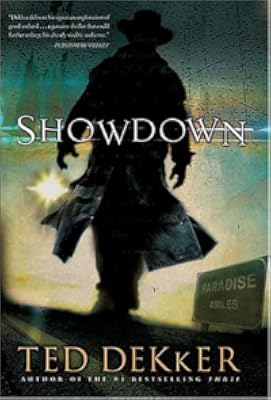
Welcome to Paradise. Epic battles of good and evil are happening all around us. Today that battle comes to town with the sound of lone footsteps clacking down the blacktop on a hot, lazy summer afternoon. The black-cloaked man arrives in the sleepy town of Paradise and manages to become the talk of the town within the hour. Bearing the power to grant any unfulfilled dream, he is irresistible. Seems like bliss...but is it? Or is hell about to break loose in Paradise?Tags
Recommendations




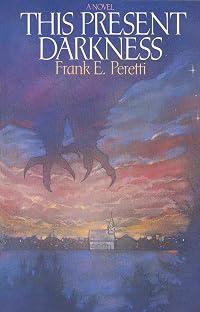
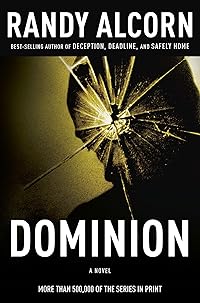





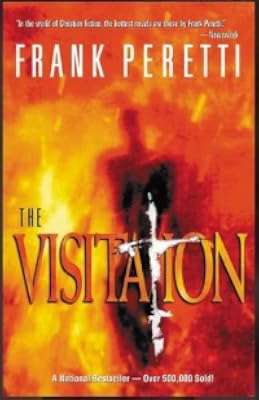
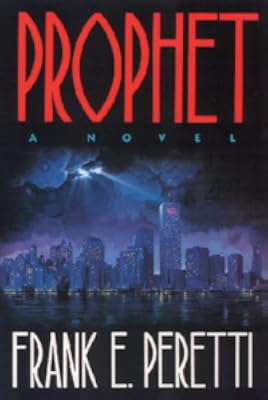


















Member Recommendations

Markrmorris2 This book, and the style is similar. Enjoy!
Member Reviews
When I write about books I really like, I often write long reviews. When I really dislike a book I often write even more. That's because I want to explain the many reasons I disliked it. It seems a funny exercise, because I could just write "I hated it" and move on, but usually the reasons I dislike a book have to do with the assumptions the author makes about certain aspects of life, and I can't live with not saying something about them.
So it is with this book.
Imagine this: A group of children is raised from birth in a loving environment, taught the forgiving ways of Christianity. They are raised in a monastery, where they have no access to the outside world and can therefore not be influenced by the uglier aspects of some people's show more characters. Every day these children write stories. Writing is a big part of their lives and they become very good at it.
Okay so far. The children are told not to enter the lower level of the monastery, a land of tunnels that has a reputation of being an "evil place", and until they turn 13 they don't even consider it. But then one of the children, Billy, finds a note that urges him to go there and eventually he takes a look. The tunnels are lined with large worms that emit a slime that smells good to Billy. When he gets past the worms he finds a large library that excites him greatly.
When the leaders of the monastery find out about Billy's excursions some of them want to force him back in line. But their leader, who is in fact not a monk but a scientist, says no. Because one of the other tenets of this "experiment" is that the adults will not interfere when any children encounter evil in any form. For the experiment is to find out if good will, in all cases, overcome evil.
Presumably because these children were raised in this Christian place they are considered "pure good". Can they be corrupted? If so, will the good eventually win out anyway?
All right. So we buy this so far. I have difficulty with the definition of "good" as being solely defined by a belief in christianity. We have evolved to know the difference, with or without a religion. It is better for the continuation of the human race if we treat each other decently so we have developed an innate sense of right and wrong, even as toddlers who know nothing of any gods. But we'll accept, for now, that these children have been raised with love.
And yet. Billy is easily converted to a love of "evil". He delights in making bad things happen to others, and he easily persuades others to join him. This is where I have to wonder. What was all that about love? All those years of living a life of love and decency and snap! It's gone. By exposure to evil. Really??
Eventually there is but one child left who has not gone to the "dungeons" to write and enjoy making life hard for others not themselves. This is Samuel, son of the leader of the monastery. I won't complicate this review by describing exactly what Samuel and the others are doing when they write in a large bunch of bizarre blank books - that would be telling! - but I will say that he tries to conquer the evil that Billy and the others have wrought, led in fact by a monk who has gone astray.
Samuel ultimately in effect takes on the role of Jesus. It was impossible to escape the allegory here. He does so to save a town called Paradise from Hell. But it is only the intervention of his father that finally saves the town (sorry if I've blown the story here for some of you). The question is: how in fact did good defeat evil? Was it through the actions of these many children who had been raised in love??
Ultimately, I'd have to say that Dekker has a very pessimistic view of human nature if he believes thirteen-year-olds can change their nature so easily. I believe they would have greater inner strength. If not, what is the point of all this Christian teaching? I think he defeats his own message, which, obviously, I don't share anyway. show less
So it is with this book.
Imagine this: A group of children is raised from birth in a loving environment, taught the forgiving ways of Christianity. They are raised in a monastery, where they have no access to the outside world and can therefore not be influenced by the uglier aspects of some people's show more characters. Every day these children write stories. Writing is a big part of their lives and they become very good at it.
Okay so far. The children are told not to enter the lower level of the monastery, a land of tunnels that has a reputation of being an "evil place", and until they turn 13 they don't even consider it. But then one of the children, Billy, finds a note that urges him to go there and eventually he takes a look. The tunnels are lined with large worms that emit a slime that smells good to Billy. When he gets past the worms he finds a large library that excites him greatly.
When the leaders of the monastery find out about Billy's excursions some of them want to force him back in line. But their leader, who is in fact not a monk but a scientist, says no. Because one of the other tenets of this "experiment" is that the adults will not interfere when any children encounter evil in any form. For the experiment is to find out if good will, in all cases, overcome evil.
Presumably because these children were raised in this Christian place they are considered "pure good". Can they be corrupted? If so, will the good eventually win out anyway?
All right. So we buy this so far. I have difficulty with the definition of "good" as being solely defined by a belief in christianity. We have evolved to know the difference, with or without a religion. It is better for the continuation of the human race if we treat each other decently so we have developed an innate sense of right and wrong, even as toddlers who know nothing of any gods. But we'll accept, for now, that these children have been raised with love.
And yet. Billy is easily converted to a love of "evil". He delights in making bad things happen to others, and he easily persuades others to join him. This is where I have to wonder. What was all that about love? All those years of living a life of love and decency and snap! It's gone. By exposure to evil. Really??
Eventually there is but one child left who has not gone to the "dungeons" to write and enjoy making life hard for others not themselves. This is Samuel, son of the leader of the monastery. I won't complicate this review by describing exactly what Samuel and the others are doing when they write in a large bunch of bizarre blank books - that would be telling! - but I will say that he tries to conquer the evil that Billy and the others have wrought, led in fact by a monk who has gone astray.
Samuel ultimately in effect takes on the role of Jesus. It was impossible to escape the allegory here. He does so to save a town called Paradise from Hell. But it is only the intervention of his father that finally saves the town (sorry if I've blown the story here for some of you). The question is: how in fact did good defeat evil? Was it through the actions of these many children who had been raised in love??
Ultimately, I'd have to say that Dekker has a very pessimistic view of human nature if he believes thirteen-year-olds can change their nature so easily. I believe they would have greater inner strength. If not, what is the point of all this Christian teaching? I think he defeats his own message, which, obviously, I don't share anyway. show less
Is Ted Dekker getting too bizarre and full of blood and gore? I really liked his earlier books but this one kind of threw me for a loop. Basically there is this town in an isolated part of Colorado called Paradise. A wierd dude shows up and starts claiming to be a prophet of some sort--a prophet who does some stage tricks and then somehow has the whole town convinced to let go of their inhibitions and give into their obsessions. So one townsperson is gorging herself on food--but that's mild compared to some of the others who are sharpening stakes to use as intruments and generally destroying the town or each other. Meanwhile there is this monastary of sorts outside of the town where there are these children who have been part of an show more experiment to see what happens to kids raised in a controlled environment with no contact from the outside world. One of the kids discovers some tunnels under the monastary filled with all sorts of disgusting things and also a library full of books. He is drawn to the forbiddeness of the tunnels and pretty soon has the entire school in a revolution against the teachers and order. Somehow these two are related, and many more bizarre things happen along the way.
For me this book was filled with too much unexplained violence and some of the supernatural events that drove the plot along were too bizarre for me to stomach. So if you like that sort of thing give this one a try, but otherwise it may not be for you. show less
For me this book was filled with too much unexplained violence and some of the supernatural events that drove the plot along were too bizarre for me to stomach. So if you like that sort of thing give this one a try, but otherwise it may not be for you. show less
Taken as a thriller, this book is okay. It frequently drifts into silliness, and the plot over the top, though Dekker does keep your attention, and it's a reasonably fun read.
Taken as a religious allegory, which (we see clearly by the end) it was clearly meant to be, it is a good illustration of the problems you have when you have a false understanding of the Gospel.
We see, for example, just how impotent God is under a theology that exalts man's free will over God's free will. The God-figure of the book is utterly helpless against the rising tide of evil in this book -- he can only hope that things turn out okay.
This is not the way God is. God is sovereign over all things. He does not sit back and hope for the best, but instead moves show more the earth by His hand to bring about His redemptive purpose.
The real problem comes in the end, and it is mainly bcause Dekker has a false understanding of the atonement. I'll not give away the details, but in his understanding of the atonement (which seems to be simply "Love conquers all"), we really have quite a silly conclusion that only makes sense under specific and contrived circumstances.
Dekker's understanding of the evil within all of us is pretty sound, so I wonder why he thinks that a little love can make up for all of that wickedness. God, in Dekker's world here, is a helpless old man who just wants to hug everyone, not a holy and righteous sovereign. Why does the massive amount of evil that is perpetrated in this book not worthy of justice?
The true atonement answers this question. Jesus did not merely die to show us love (though that is certainly true), but to pay the price for our sin. He took the punishment we deserve upon Himself so that we could live. Those who repent and have faith in Him will find their just sentence served by Him.
Some of Dekker's own comments about being a "post-Christian believer" prove rather clearly that he is not of the faith. We should pray for him, and pray that God reveals to him to truth of Christ's work on the cross.
Luckily for Dekker, the true God is not one who merely sits back and hopes that all of us wicked people suddenly become good people and seek Him. God actively saves His children. We should pray that Dekker is amongst them. show less
Taken as a religious allegory, which (we see clearly by the end) it was clearly meant to be, it is a good illustration of the problems you have when you have a false understanding of the Gospel.
We see, for example, just how impotent God is under a theology that exalts man's free will over God's free will. The God-figure of the book is utterly helpless against the rising tide of evil in this book -- he can only hope that things turn out okay.
This is not the way God is. God is sovereign over all things. He does not sit back and hope for the best, but instead moves show more the earth by His hand to bring about His redemptive purpose.
The real problem comes in the end, and it is mainly bcause Dekker has a false understanding of the atonement. I'll not give away the details, but in his understanding of the atonement (which seems to be simply "Love conquers all"), we really have quite a silly conclusion that only makes sense under specific and contrived circumstances.
Dekker's understanding of the evil within all of us is pretty sound, so I wonder why he thinks that a little love can make up for all of that wickedness. God, in Dekker's world here, is a helpless old man who just wants to hug everyone, not a holy and righteous sovereign. Why does the massive amount of evil that is perpetrated in this book not worthy of justice?
The true atonement answers this question. Jesus did not merely die to show us love (though that is certainly true), but to pay the price for our sin. He took the punishment we deserve upon Himself so that we could live. Those who repent and have faith in Him will find their just sentence served by Him.
Some of Dekker's own comments about being a "post-Christian believer" prove rather clearly that he is not of the faith. We should pray for him, and pray that God reveals to him to truth of Christ's work on the cross.
Luckily for Dekker, the true God is not one who merely sits back and hopes that all of us wicked people suddenly become good people and seek Him. God actively saves His children. We should pray that Dekker is amongst them. show less
my first Dekker book. Heard a lot about him. Now I've read him. I like it. About a Battle for the town of Paradise between children using Books of History[in which the writer's writings come true]. The Story of Christ told all over again. It reminded me of the Visitation a good bit.
I don't even know how to describe this one. Part horror, part supernatural, part thriller, with some Christian undertones. Basically a man (Marsuvees Black) arrives in the small town of Paradise, Colorado and starts creating havoc. Meanwhile, in a nearby monastery, orphan children who have been brought up with a religious background and have been tailored to become gifted writers, become divided and seek out the restricted underground tunnels, discovering secret blank books. However, when the children begin writing in the books, their stories become reality, adversely affecting the town of Paradise.
This book is as crazy as it sounds. I still am not sure what the point of it was or why Marsuvees Black began causing trouble in the first show more place. The audio I listened to was an abridgment. I'm not sure if the story would've made more sense to me had it not been abridged. Probably not. But I doubt that I'll read anymore Ted Dekker. Too weird. show less
This book is as crazy as it sounds. I still am not sure what the point of it was or why Marsuvees Black began causing trouble in the first show more place. The audio I listened to was an abridgment. I'm not sure if the story would've made more sense to me had it not been abridged. Probably not. But I doubt that I'll read anymore Ted Dekker. Too weird. show less
I am only about halfway through this long novel, however, I may not like it. I am a fan of Stephen King and the similiarities between Necessary Things and this novel are kind of obvious. From the cruel reverend's entry into the small town smoldering with unsavory feelings to the lone preteen who understands the stranger's true nature, the plot is carbon copy. I will finish the novel because I want to know if poor Johnny is able to defeat the evil reverend.
Update: I take it back; I really enjoyed this novel. It takes a while to really get to the action. It is brutal and a little sad to see the degeneration of the town. It is a Christ-tale and if you're like me, have your tissues handy. I thought the ending was a bit weak, but otherwise I show more would definitely recommend it (even to King fans). show less
Update: I take it back; I really enjoyed this novel. It takes a while to really get to the action. It is brutal and a little sad to see the degeneration of the town. It is a Christ-tale and if you're like me, have your tissues handy. I thought the ending was a bit weak, but otherwise I show more would definitely recommend it (even to King fans). show less
At first, I found Showdown to be rather tedious. It switches back and forth between the town of Paradise, Colorado, and a Monastery. It took until the halfway point of the book for it to really get exciting for me. But when it did, it got exciting and engaging very quickly. The rather slow build-up was definitely worth it! I loved the constant battle between good and evil, and what was actually good? What was the definition? Was it really good, or was it evil? Or was evil really good if it lead to the discovery of love? I enjoyed this book immensely and would recommend it to others. This was the first of Dekker's work that I read, but I will be reading more in the future.
Members
- Recently Added By
Author Information

171+ Works 48,065 Members
The son of missionaries, Ted Dekker grew up in the jungles of Indonesia. He returned to the United States to attend Evangel College, graduating with a religion and philosophy major. After several years in corporate marketing, he began writing books like Heaven's Wager. Ted and his wife live in the mountains of Colorado with their four children. show more (Publisher Provided) Ted Dekker was born on October 24, 1962. After receiving a bachelor's degree from Evangel University, he entered the corporate world. After numerous successful years, he traded corporate life for a wide range of entrepreneurial pursuits that included buying and selling businesses, healthcare services, and marketing. Eventually he decided to try his hand at writing. He writes spiritual thrillers, mainstream novels, and fantasy thrillers that metaphorically explore faith. His works include Black; Red; White; Thr3e; Blink; Showdown; Saint; Skin; Heaven's Wager; Obsessed; When Heaven Weeps; Thunder of Heaven; and A Martyr's Song. He also wrote The Slumber of Christianity, a non-fiction work about misplaced values in the post-modern church. (Bowker Author Biography) show less
Series


Work Relationships
Common Knowledge
- Canonical title
- Showdown
- Original publication date
- 2006
- Important places
- USA; Colorado, USA
Classifications
- Genres
- Christian Fiction, Fiction and Literature, Suspense & Thriller, Fantasy, Horror
- DDC/MDS
- 813.6 — Literature & rhetoric American literature in English American fiction in English 2000-
- LCC
- PS3554 .E43 .S56 — Language and Literature American literature American literature Individual authors 1961-
- BISAC
Statistics
- Members
- 1,659
- Popularity
- 13,568
- Reviews
- 29
- Rating
- (3.74)
- Languages
- English
- Media
- Paper, Audiobook, Ebook
- ISBNs
- 15
- UPCs
- 5
- ASINs
- 12