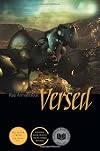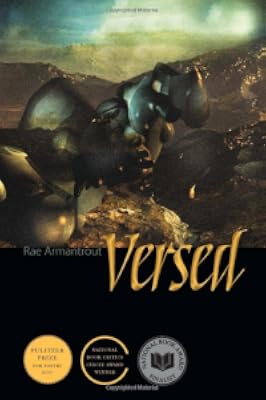
Versed
by Rae Armantrout
On This Page
Description
Winner of the 2010 Pulitzer Prize for PoetryTags
Recommendations






Member Reviews
Armantrout forces the reader to redefine their relationship with language. At first, reading Armantrout is a lover's quarrel, but after awhile it turns into really good make up sex. She utilizes the power of sounds and their connotations, of stolen phrases overheard on the street, and turns them into poetic collages to be questioned and pondered. Even when dealing with very personal themes, such as her battle with cancer, Armantrout approaches such material through a shocking and fresh paradigm of language that is in turns both detached and playful. An interesting and challenging poet. Her work will be seen by many as quite confusing (maybe even nonsensical), but it deserves a level of contemplation from the reader equal to the amount show more of perplexity it births. show less
Can't say that I understood it all, but impressive in its commitment to play, to strangeness, and to invention.
National Book Award Finalist
2010 Pulitzer Prize winner for Poetry
Versed by Rae Armantrout made me feel pretty ignorant (more than usual anyway!). I know that her work has always been highly respected, but when I first picked it up, I just didn’t get it. A few phrases, here and there, would resonate, but then the lines would go off the track I imagined they were on. I’m fine with stream-of-consciousness writing, but that doesn’t describe it either. Quite simply, I was lost. I put the collection down to return to another time.
In the meantime, The New Yorker had an article about Armantrout’s winning the Pulitzer Prize for this collection, and explained in length not just her biography but her status as a Language poet. Language show more poets were once a cultural rebellion against Post- Modern poets, but have now become more mainstream, and of them, she’s known as the best. The essay explained how her poems are often cryptic with double meanings and turns that are meant to wake up the reader, to shock them out of numb reality.
With this in mind, I went back and reread each piece. I confess that most are still over my head, I can’t make the connections. But a few really did give me pause. And I think that is how she should be read: not in a hurry to finish but to slowly unravel.
From Outer:
“I’m the one who can’t know if the scraggly old woman putting a gallon of vodka in her shopping cart feels guilty, defiant, or even glamorous as she does so. She may imagine herself as an actress playing an alcoholic in a film.
Removal activates glamour?
To see yourself as if from the outside – though not as others see you.”
All in all, trying to figure out the meanings was fascinating, like the first few games of Sudoku. But after awhile, just as Sudoku gets more difficult, this felt like more work than I was willing to invest. I just don’t have that in me, to understand what these mean. I am too simple for these complexities. However, someone with a stronger background in poetry, especially Language poetry, would likely enjoy this special collection. show less
2010 Pulitzer Prize winner for Poetry
Versed by Rae Armantrout made me feel pretty ignorant (more than usual anyway!). I know that her work has always been highly respected, but when I first picked it up, I just didn’t get it. A few phrases, here and there, would resonate, but then the lines would go off the track I imagined they were on. I’m fine with stream-of-consciousness writing, but that doesn’t describe it either. Quite simply, I was lost. I put the collection down to return to another time.
In the meantime, The New Yorker had an article about Armantrout’s winning the Pulitzer Prize for this collection, and explained in length not just her biography but her status as a Language poet. Language show more poets were once a cultural rebellion against Post- Modern poets, but have now become more mainstream, and of them, she’s known as the best. The essay explained how her poems are often cryptic with double meanings and turns that are meant to wake up the reader, to shock them out of numb reality.
With this in mind, I went back and reread each piece. I confess that most are still over my head, I can’t make the connections. But a few really did give me pause. And I think that is how she should be read: not in a hurry to finish but to slowly unravel.
From Outer:
“I’m the one who can’t know if the scraggly old woman putting a gallon of vodka in her shopping cart feels guilty, defiant, or even glamorous as she does so. She may imagine herself as an actress playing an alcoholic in a film.
Removal activates glamour?
To see yourself as if from the outside – though not as others see you.”
All in all, trying to figure out the meanings was fascinating, like the first few games of Sudoku. But after awhile, just as Sudoku gets more difficult, this felt like more work than I was willing to invest. I just don’t have that in me, to understand what these mean. I am too simple for these complexities. However, someone with a stronger background in poetry, especially Language poetry, would likely enjoy this special collection. show less
Not my favorite book of poetry. Armantrout writes short simple lines with short stanzas. The poems tend to come with numbered (I'm sure there's another name for it) chapters or sections, and often I couldn't see what the connection between each one was. The overall message of each poem elluded me, and I kept thinking that a chapter/section could be a poem all on its own.
Poetry comes down to resonance with me, and different poetry resonates with different people. In the end, with one or two exceptions (in which I wanted to hold the stanza or line forever), the vast majority poetry in this book did not resonate with me. Maybe it will work for someone else.
Poetry comes down to resonance with me, and different poetry resonates with different people. In the end, with one or two exceptions (in which I wanted to hold the stanza or line forever), the vast majority poetry in this book did not resonate with me. Maybe it will work for someone else.
This collection has many little gems. Really liked her sparse style.
Ratings
Members
- Recently Added By
Author Information

32+ Works 641 Members
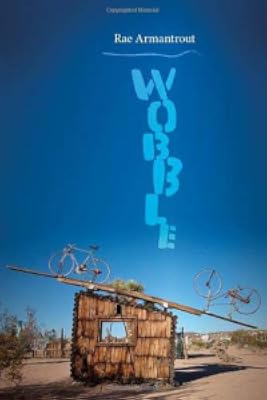
Rae Armantrout is the Pulitzer Prize winning author of fifteen books of poetry. She has published ten books with Wesleyan University Press, including Wobble, Entanglements, Partly, and Versed.
Awards and Honors
Awards
Common Knowledge
- Canonical title
- Versed
- Blurbers
- Mlinko, Ange; Burt, Stephen; Klubocar, Andrew
Classifications
Statistics
- Members
- 163
- Popularity
- 200,738
- Reviews
- 5
- Rating
- (3.57)
- Languages
- English
- Media
- Paper, Ebook
- ISBNs
- 3
- ASINs
- 2