On This Page
Description
Fifteen-year-old Camilla gains new maturity through her relationship with her best friend's brother and the growing realization that her parents are fallible individuals.Tags
Recommendations







Member Reviews
A reviewer at the Saturday Review compared Camilla to The Catcher in the Rye. Holden Caulfield and Camilla Dickinson, the protagonists in question, are a bit like Romeo and Juliet: he gets some terrific lines and flails around memorably, but she's the one who grows and matures and doesn't have an ego so huge it could eat New York City without having to open its mouth all the way.
Anyway.
I don't understand why Camilla isn't better known. As in, it doesn't seem to be known at all. It's a beautifully written story, first published in 1951, about a girl becoming a woman. That doesn't mean sex or love or even deciding on a career, though she does experience her first romantic interest and physical attraction in the course of the novel, and show more she is quite decisive about becoming an astronomer. Womanhood means the end of childhood, and for Camilla that means understanding that her parents were not put on this earth simply to be Mother and Father to a solemn-eyed girl.
As Camilla puts it, "It is a much more upsetting thing to realize that your parents are human beings than it is to realize that you are one yourself."
The romance aspect of this novel hasn't aged well. Frank Rowan, the boy Camilla falls for and the brother of her best friend Luisa, is a dud. He's a pompous, self-important, patronizing, sexist pig. He treats Camilla like absolute garbage. He asks her questions and sneers at her answers, probably because all he wants from her is for her to say, "Oh, Frank, that's wonderful!" Which she generally does. It's painful.
Here's a perfectly representative passage. Frank has just spent the last million pages talking about his ideas about life, the universe, and everything. Seriously, his speeches go on for page-long paragraphs. I think he grows up to be John Galt. Anyway, he finally pauses for breath long enough to offer to take Camilla somewhere they can get a bite to eat.
But I wasn't hungry. I shook my head. "No. But you go on and have something if you want to."
"Me, you think I could eat?" Frank turned on me and his voice was suddenly savage. "You think I could eat when the minute you're born you're condemned to die? When thousands of people are dying every minute before they've even had a chance to begin? Death isn't fair. It's – it's a denial of life! How can we be given life when we're given death at the same time? Death isn't fair," Frank cried again, his voice soaring and cracking with rage. "I resent death! I resent it with every bone in my body! And you think – you think I could eat!"
He looked at me as though he hated me. He jammed a coin into the slot and pushed me ahead of him onto the New York-bound ferry and stood with his arms crossed in bitter and passionate anger. He did not look at me; he did not talk. Once when the ferry slapped into a wave and I was thrown against him he pulled away from me as though I repelled him.
Now, those thoughts about the people who never get anything like a shot at a real life are remarkably similar to my own teenage (and post-teen) rantings on the subject. But it's hard to have sympathy or empathy for Frank Who Thinks And Feels So Much More Deeply Than We Do That He Can't Eat when this is his response after he brought up food in the first place. His exact question was, "Want to go somewhere and have a frankfurter or something?" God only knows what he would have done if Camilla had said yes. Taken her on the ferry and promptly thrown her overboard, probably.
So, yeah, the parts with Frank are rough going. And the ending isn't happy, I'm not going to lie to you.
But if you were (or are) a kid who spent a lot of time wondering about the world and your place in it, and who went on walks at night hoping "to talk to someone else who wanted to be out all night walking too," and who would rather have one good friend you could talk about everything to than a bunch of friends who only ever chatted about boys and clothes – you could do a lot worse than read Camilla. Yes, it's a period piece; but so is Catcher, and Camilla's thoughts and struggles are often a lot more engaging than Holden Caulfield running around saying how phony everybody else is. show less
Anyway.
I don't understand why Camilla isn't better known. As in, it doesn't seem to be known at all. It's a beautifully written story, first published in 1951, about a girl becoming a woman. That doesn't mean sex or love or even deciding on a career, though she does experience her first romantic interest and physical attraction in the course of the novel, and show more she is quite decisive about becoming an astronomer. Womanhood means the end of childhood, and for Camilla that means understanding that her parents were not put on this earth simply to be Mother and Father to a solemn-eyed girl.
As Camilla puts it, "It is a much more upsetting thing to realize that your parents are human beings than it is to realize that you are one yourself."
The romance aspect of this novel hasn't aged well. Frank Rowan, the boy Camilla falls for and the brother of her best friend Luisa, is a dud. He's a pompous, self-important, patronizing, sexist pig. He treats Camilla like absolute garbage. He asks her questions and sneers at her answers, probably because all he wants from her is for her to say, "Oh, Frank, that's wonderful!" Which she generally does. It's painful.
Here's a perfectly representative passage. Frank has just spent the last million pages talking about his ideas about life, the universe, and everything. Seriously, his speeches go on for page-long paragraphs. I think he grows up to be John Galt. Anyway, he finally pauses for breath long enough to offer to take Camilla somewhere they can get a bite to eat.
But I wasn't hungry. I shook my head. "No. But you go on and have something if you want to."
"Me, you think I could eat?" Frank turned on me and his voice was suddenly savage. "You think I could eat when the minute you're born you're condemned to die? When thousands of people are dying every minute before they've even had a chance to begin? Death isn't fair. It's – it's a denial of life! How can we be given life when we're given death at the same time? Death isn't fair," Frank cried again, his voice soaring and cracking with rage. "I resent death! I resent it with every bone in my body! And you think – you think I could eat!"
He looked at me as though he hated me. He jammed a coin into the slot and pushed me ahead of him onto the New York-bound ferry and stood with his arms crossed in bitter and passionate anger. He did not look at me; he did not talk. Once when the ferry slapped into a wave and I was thrown against him he pulled away from me as though I repelled him.
Now, those thoughts about the people who never get anything like a shot at a real life are remarkably similar to my own teenage (and post-teen) rantings on the subject. But it's hard to have sympathy or empathy for Frank Who Thinks And Feels So Much More Deeply Than We Do That He Can't Eat when this is his response after he brought up food in the first place. His exact question was, "Want to go somewhere and have a frankfurter or something?" God only knows what he would have done if Camilla had said yes. Taken her on the ferry and promptly thrown her overboard, probably.
So, yeah, the parts with Frank are rough going. And the ending isn't happy, I'm not going to lie to you.
But if you were (or are) a kid who spent a lot of time wondering about the world and your place in it, and who went on walks at night hoping "to talk to someone else who wanted to be out all night walking too," and who would rather have one good friend you could talk about everything to than a bunch of friends who only ever chatted about boys and clothes – you could do a lot worse than read Camilla. Yes, it's a period piece; but so is Catcher, and Camilla's thoughts and struggles are often a lot more engaging than Holden Caulfield running around saying how phony everybody else is. show less
My favorite book from my early teen years, this one will always have a special place in my heart. Many years after reading (and re-reading and re-reading) this, I picked up the sequel ("A Live Coal in the Sea") and found that Camilla had not had the life I had wanted for her at all. Yet the life that she did have was one of love and pain and challenge, and the things that seemed so important at 15 were often not important at all to the woman at 80. It is the way that many lives truly are, and L'Engle is a master at letting her characters go where they will, much closer to real life than the intricate plotting and happy endings found elsewhere.
Just to be clear, I love Madeleine L'Engle's storytelling, ever since she swept me off my feet with A Wrinkle in Time. I think this YA novel deals with the questions of growing up and discovering the humanity of oneself and one's parents and one's peers is very well done. It was written in either 1951 or 1955 (Wikipedia vs. author website), and considering it is nearly 70 years old it has aged pretty well. Some attitudes are slightly dated (sexism, although that certainly hasn't gone away), but the questions and emotions of young people on the cusp of adulthood are still relevant. I like the fact that the ending isn't all wrapped up in a bow, because that's not how life generally is. The character of Frank is abrasive, as is his sister, show more and Camilla sometimes lacks agency, but honestly that's how people are. A mass of contradictions and good and bad points. Overall I enjoyed re-reading this, which is more than I can say for The Catcher in the Rye. show less
This is told in the first person from the point of view of a fifteen-year-old teenage girl who lives in New York. Camilla has been quite sheltered from adult problems, but we meet her when she starts to realise that her parents may be fallible, and that she is no longer a little girl...
Essentially it’s a coming-of-age story, about teenage worries, and first love. It feels quite modern in the way it discusses relationships and marriage problems, despite being written in 1965. There is a moving subplot about a young man with a serious disability after being in the war, and many references to astronomy and the idea of God. These are not preachy in any way, but from the point of view of two teenagers trying to decide what they believe, show more and why, with some unusual theories.
The descriptive and narrative writing is good, and I thought the insights into a teenage mind felt realistic. However I found the dialogue a bit stilted, and the story sometimes a little slow-moving. I found the ending inconclusive, and a little depressing.
Still, it was a pleasant read that could be of interest to younger teens as well as nostalgic adults. show less
Essentially it’s a coming-of-age story, about teenage worries, and first love. It feels quite modern in the way it discusses relationships and marriage problems, despite being written in 1965. There is a moving subplot about a young man with a serious disability after being in the war, and many references to astronomy and the idea of God. These are not preachy in any way, but from the point of view of two teenagers trying to decide what they believe, show more and why, with some unusual theories.
The descriptive and narrative writing is good, and I thought the insights into a teenage mind felt realistic. However I found the dialogue a bit stilted, and the story sometimes a little slow-moving. I found the ending inconclusive, and a little depressing.
Still, it was a pleasant read that could be of interest to younger teens as well as nostalgic adults. show less
This book is also noted in the American Author challenge. Camilla by Madeleine L'Engle contains wonderful images of New York City, and the character development is so well developed that I didn't want the book to end. I very much enjoyed this book. The story of Camilla Dickerson is an in-depth study of a young girl who is forced to mature when she discovers her quite beautiful mother is cheating on her father. Camilla is exceedingly disappointed in her mother, especially when time and time again she arrives home (in the Upper East side of New York City,) to find her mother's "friend" Jacques in an embrace with her mother.
Camilla finds a good friend, one whom she can share her life experiences with. And, this friend happens to have a show more brother who is drawn to Camilla. It is through her experiences with her friend and her friend's brother, Frank, that Camilla understands she is not alone. While her friends parents marriage is breaking apart, Camilla finds a lot of emotional support in the fact that Frank and his sister also are in the middle of their parents arguments and breaking apart.
Frank becomes Camilla's first love. He opens her world to new people and experiences.
Highly recommended for the excellent reading style and clear depiction of disappointment with parents who cannot seem to follow vows of "forsaking all others!"
I was disappointed in the "ending" which really did not have a sense of an end. show less
Camilla finds a good friend, one whom she can share her life experiences with. And, this friend happens to have a show more brother who is drawn to Camilla. It is through her experiences with her friend and her friend's brother, Frank, that Camilla understands she is not alone. While her friends parents marriage is breaking apart, Camilla finds a lot of emotional support in the fact that Frank and his sister also are in the middle of their parents arguments and breaking apart.
Frank becomes Camilla's first love. He opens her world to new people and experiences.
Highly recommended for the excellent reading style and clear depiction of disappointment with parents who cannot seem to follow vows of "forsaking all others!"
I was disappointed in the "ending" which really did not have a sense of an end. show less
I love Madeleine L'Engle. Let me start by putting that out there. I'm sure there are people who don't like her style of writing, or the overt spiritual questions (and occasionally pat answers) in her novels. But I've always dived into her books the way I might into a good conversation with a kindred spirit. So yes, I enjoyed Camilla, my latest foray into her writing. That said, it wasn't anywhere near my favorite L'Engle book.
Camilla is much more 'real' than much of L'Engle's Young Adult fiction, which is somewhere in the science fiction/fantasy/metaphysical realm (think A Wrinkle in Time or A Swiftly Tilting Planet.) But, although Camilla's genre was more like L'Engle's works for adults, this book lacked the depth and the rich language show more that make me cherish books like The Crosswicks Journal. It was sweet and familiar: the bitter disappointment of first realizing people you want to look up to aren't perfect, the frustration of realizing you can't make the world alright, the giddy happiness of a first crush. But unless you happen to be a 15- or 16-year old girl yourself, you know – as Camilla doesn't – that she's still got so much to learn. Although I could recognize and empathize with Camilla's coming of age, I found myself wondering if a meeting with Camilla 10 years later might not be more intellectually satisfying.
Camilla's questions about the existence of God are what I'd expect from a 15-year old in her position, but they're ultimately neither satisfying nor very insightful. The recurring theme that being truly alive is the most important thing one can do – that to stop caring is a form of spiritual death – is phrased as a sort of adolescent rebellion. Where is the subtlety and grace with which L'Engle typically explores these subjects? Ultimately, I have to suggest passing on this book, and reading (or re-reading) one of her other works. Luckily, she was prolific enough that that's not hard to do. show less
Camilla is much more 'real' than much of L'Engle's Young Adult fiction, which is somewhere in the science fiction/fantasy/metaphysical realm (think A Wrinkle in Time or A Swiftly Tilting Planet.) But, although Camilla's genre was more like L'Engle's works for adults, this book lacked the depth and the rich language show more that make me cherish books like The Crosswicks Journal. It was sweet and familiar: the bitter disappointment of first realizing people you want to look up to aren't perfect, the frustration of realizing you can't make the world alright, the giddy happiness of a first crush. But unless you happen to be a 15- or 16-year old girl yourself, you know – as Camilla doesn't – that she's still got so much to learn. Although I could recognize and empathize with Camilla's coming of age, I found myself wondering if a meeting with Camilla 10 years later might not be more intellectually satisfying.
Camilla's questions about the existence of God are what I'd expect from a 15-year old in her position, but they're ultimately neither satisfying nor very insightful. The recurring theme that being truly alive is the most important thing one can do – that to stop caring is a form of spiritual death – is phrased as a sort of adolescent rebellion. Where is the subtlety and grace with which L'Engle typically explores these subjects? Ultimately, I have to suggest passing on this book, and reading (or re-reading) one of her other works. Luckily, she was prolific enough that that's not hard to do. show less
Camilla is the story of Camilla Dickinson, a 15 year old from a wealthy New York City family. She is an only child and has lived a relatively sheltered life until one day she comes home to find her beautiful and fragile mother kissing a man who isn't her strong and silent father. Camilla is great because she keeps almost everything inside (I can relate) and doesn't talk about how all this makes her feel, even to her best friend Luisa whose parents often have screaming matches that wake up the neighbors, drink too much, and break things. Instead Camilla finds herself falling into a first romance with Luisa's older brother, Frank, and that little bit of distance is enough to pull her away from her parents and make her see herself as an show more individual, her parents as human, and her friends as fallible.
There are the kinds of young-romance / coming-of-age plot points that you might expect in this kind of novel, but L'Engle handles them all in such a unique, real, and dark way that this book is miles away from the usual young adult fare. It treats the reader like they are smart and grown up enough to read about war, death, drinking problems, suicide, amputation, depression, unhappy endings, and failed love. There are light and happy points too, and L'Engle's description of New York City is truly wonderful.
[full review here: http://spacebeer.blogspot.com/2008/06/camilla-1951.html ] show less
There are the kinds of young-romance / coming-of-age plot points that you might expect in this kind of novel, but L'Engle handles them all in such a unique, real, and dark way that this book is miles away from the usual young adult fare. It treats the reader like they are smart and grown up enough to read about war, death, drinking problems, suicide, amputation, depression, unhappy endings, and failed love. There are light and happy points too, and L'Engle's description of New York City is truly wonderful.
[full review here: http://spacebeer.blogspot.com/2008/06/camilla-1951.html ] show less
Members
- Recently Added By
Lists

Favorite Coming of Age Novels.
164 works; 51 members

Newbery Adjacent
747 works; 3 members

Books Read in 2023
5,547 works; 145 members
Author Information

123+ Works 128,253 Members
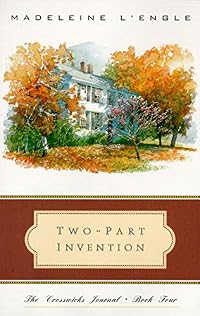
Author Madeleine L'Engle was born in New York City on November 29, 1918. She graduated from Smith College. She is best known for A Wrinkle in Time (1962), which won the 1963 Newbery Medal for best American children's book. While many of her novels blend science fiction and fantasy, she has also written a series of autobiographical books, including show more Two Part Invention: The Story of a Marriage, which deals with the illness and death of her husband, soap opera actor Hugh Franklin. In 2004, she received a National Humanities Medal from President George W. Bush. She died on September 6, 2007 of natural causes. Since 1976, Wheaton College in Illinois has maintained a special collection of L'Engle's papers, and a variety of other materials, dating back to 1919. (Bowker Author Biography) show less
Series

Belongs to Publisher Series
Alfaguara juvenil (288)
Work Relationships
Is contained in
Has the adaptation
Common Knowledge
- Canonical title
- Camilla
- Original title
- Camilla Dickinson
- Original publication date
- 1951
- People/Characters
- Camilla Dickinson; Frank Rowan; Louisa Rowan; David Gauss; Rose Dickinson; Rafferty Dickinson (show all 7); Jacques Nissen
- Important places
- New York, New York, USA
- Related movies
- Camilla Dickinson (2012 | IMDb)
- Dedication
- To Hugh Franklin
- First words
- I knew as soon as I got home on Wednesday that Jacques was there with my mother.
- Last words
- (Click to show. Warning: May contain spoilers.)I told myself these facts and the tears retreated and I knew that I would not have to cry.
- Original language*
- Amerikanisch
- Disambiguation notice
- Originally published as Camilla Dickinson in 1951. Republished as Camilla in 1965.
*Some information comes from Common Knowledge in other languages. Click "Edit" for more information.
Classifications
Statistics
- Members
- 809
- Popularity
- 34,015
- Reviews
- 18
- Rating
- (3.46)
- Languages
- English, German, Spanish
- Media
- Paper, Audiobook, Ebook
- ISBNs
- 20
- ASINs
- 17