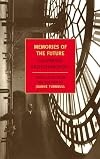
Memories of the Future
by Sigismund Krzyżanowski
On This Page
Description
Written in Soviet Moscow in the 1920s - but considered too subversive even to show to a publisher - the seven tales included here attest to Sigizmund Krzhizhanovsky's boundless imagination, black humor, and breathtaking irony: a man loses his way in the vast black waste of his own small room; the Eiffel Tower runs amok; a kind soul dreams of selling "everything you need for suicide"; an absentminded passenger boards the wrong train, winding up in a place where night is day, nightmares are show more the reality, and the backs of all facts have been broken; a man out looking for work comes across a line for logic but doesn't join it as there's no guarantee the logic will last; a sociable corpse misses his own funeral; an inventor gets a glimpse of the far-from-radiant communist future. show lessTags
Recommendations












Member Recommendations

Member Reviews
This is a collection of weirdly imaginative, usually surreal, and always interesting tales. Written in the 1920s by a slightly subversive author whose stories couldn’t be published until after his death, these tales are darkly whimsical reflections on Soviet society: Existential despair in a room that gets bigger on the inside, everyday Literary Criticism on a city bench, a vagrant table-to-table philosopher who sells aphorisms and totally original systems of thought for a living, a Time Traveller struggling to build and rebuild his machine after the war.
Several of these are very entertaining in an off-beat, slighly unusual kind of way, as though they were written in a culture with perceptibly different standards, tropes and show more expectations. Some would do very well in collections of Early Science Fiction. Most of these tales would appeal to those with an academic interest in Literature or Criticism, because they are explicitly about writing, reading, engaging with literature, and confronting themes with Theories. This is why I’d recommend spacing these stories out a bit: they’re very different tales, but the approach gets a bit samey after three or four in quick succession.
If you’d like your Borges with more black humour and set in Moscow, less everything-and-the-kitchen-sink and more focused, then give Krzhizhanovsky a try. show less
Several of these are very entertaining in an off-beat, slighly unusual kind of way, as though they were written in a culture with perceptibly different standards, tropes and show more expectations. Some would do very well in collections of Early Science Fiction. Most of these tales would appeal to those with an academic interest in Literature or Criticism, because they are explicitly about writing, reading, engaging with literature, and confronting themes with Theories. This is why I’d recommend spacing these stories out a bit: they’re very different tales, but the approach gets a bit samey after three or four in quick succession.
If you’d like your Borges with more black humour and set in Moscow, less everything-and-the-kitchen-sink and more focused, then give Krzhizhanovsky a try. show less
First off, the author's name is pronounced Kurr-zheh-zhuh-nov-skee. Now you, too, can dazzle and impress your friends!
This is a set of unpublished short stories written in 1920s Soviet Russia, and were never shown to a publisher, out of fear of being too subversive and dangerous to show. These were also concurrent with the decline of the Soviet avant garde, and their gradual replacement with the institutional kitsch of Stalin's joyous peasant propaganda.
These stories are very much a grab bag. Some are like Kafka's parables, darkly humorous, (ex: Quadraturin), some are dreamy surreal narratives (the Eiffel tower galloping along the streets of Paris) and some are so boring as to be incomprehensible.
But even the 'worst' stories still have show more fun ideas to play with, the fragments of interesting ideas, and broken pieces of brain candy. One story (not a bad one, for example) is about a mad scientist who wants to make time go in a circle, and another is about a street peddler who sells philosophical systems and aphorisms.
These are the sort of stories that Stalin's dreary little world needed, and also the sort which our slightly less dreary world could use as well. show less
This is a set of unpublished short stories written in 1920s Soviet Russia, and were never shown to a publisher, out of fear of being too subversive and dangerous to show. These were also concurrent with the decline of the Soviet avant garde, and their gradual replacement with the institutional kitsch of Stalin's joyous peasant propaganda.
These stories are very much a grab bag. Some are like Kafka's parables, darkly humorous, (ex: Quadraturin), some are dreamy surreal narratives (the Eiffel tower galloping along the streets of Paris) and some are so boring as to be incomprehensible.
But even the 'worst' stories still have show more fun ideas to play with, the fragments of interesting ideas, and broken pieces of brain candy. One story (not a bad one, for example) is about a mad scientist who wants to make time go in a circle, and another is about a street peddler who sells philosophical systems and aphorisms.
These are the sort of stories that Stalin's dreary little world needed, and also the sort which our slightly less dreary world could use as well. show less
In each of Sigizmund Krzhizhanovsky's seven stories that are found in Memories of the Future, a character takes to the streets of Moscow to reflect on the central focus of the narrative. There's Sutulin, restlessly pacing back and forth, too afraid to enter his ever-expanding apartment. There's the "theme catcher" from The Bookmark, lamenting on the lack of artistry in contemporary Soviet Literature while making up incredible new stories just by observing his surroundings. There's the gravedigger from The Thirteenth Category of Reason, riding a tram with a dead man who was too late to go to his own funeral. And there's Max Shterer, sitting on a park bench with nowhere to stay now that he's back from the future. The characters' show more understanding of where they are and why they are there is central to the work of Krzhizhanovsky, a man who seems to have loved where he was without necessarily loving when he was.
The stories were very hit-or miss for me. I loved Quadraturin and The Bookmark, liked Someone Else's Theme and The Thirteenth Category of Reason, had mixed feelings about Memories of the Future, and couldn't get into the others at all.
Because of the limited amount of space an author has in a short story, creating a sense of place is crucial if the reader stands any chance of connecting with the narrative. If it takes too long for the reader to find his/her footing on whatever/wherever the literary terra firma of the piece may be, there just isn't enough time left to say anything interesting. Krzhizhanovsky deals with some lofty, abstract concepts, and I thought in The Branch Line and Red Snow, both of them heavy critiques of the Soviet Union, he didn't give himself room to flesh those out.
When Krzhizhanovky's on the ball, though, he's a funny and incisive critic of the world around him. The Bookmark in particular stuck out to me in this regard. Centered around a narrator who is interacting with a brilliant, unpublished writer (which parallels Krzhizhanovsky himself, as none of the stories in this book were published in his lifetime), we get a great feel for the limitations on artistic expression in Russia, even before Stalin's Great Purges.
While not one to be overly bitter about things, Krzhizhanovsky writes like a man who knows he was born at the wrong time to be successful. He was gracious enough, however, to not hold that against the city he inhabited. Moscow comes to life in these stories as a city filled with buildings that have given up and people who haven't. I'm far more familiar with literature based in Saint Petersburg, so I really enjoyed the opportunity to explore a new city through a contemporary author's eyes.
In Joanne Turnbull's introduction to the book, she includes a quote from Krzhizhanovsky about why Shakespeare's work was so inundated with dreams:
The stories were very hit-or miss for me. I loved Quadraturin and The Bookmark, liked Someone Else's Theme and The Thirteenth Category of Reason, had mixed feelings about Memories of the Future, and couldn't get into the others at all.
Because of the limited amount of space an author has in a short story, creating a sense of place is crucial if the reader stands any chance of connecting with the narrative. If it takes too long for the reader to find his/her footing on whatever/wherever the literary terra firma of the piece may be, there just isn't enough time left to say anything interesting. Krzhizhanovsky deals with some lofty, abstract concepts, and I thought in The Branch Line and Red Snow, both of them heavy critiques of the Soviet Union, he didn't give himself room to flesh those out.
When Krzhizhanovky's on the ball, though, he's a funny and incisive critic of the world around him. The Bookmark in particular stuck out to me in this regard. Centered around a narrator who is interacting with a brilliant, unpublished writer (which parallels Krzhizhanovsky himself, as none of the stories in this book were published in his lifetime), we get a great feel for the limitations on artistic expression in Russia, even before Stalin's Great Purges.
While not one to be overly bitter about things, Krzhizhanovsky writes like a man who knows he was born at the wrong time to be successful. He was gracious enough, however, to not hold that against the city he inhabited. Moscow comes to life in these stories as a city filled with buildings that have given up and people who haven't. I'm far more familiar with literature based in Saint Petersburg, so I really enjoyed the opportunity to explore a new city through a contemporary author's eyes.
In Joanne Turnbull's introduction to the book, she includes a quote from Krzhizhanovsky about why Shakespeare's work was so inundated with dreams:
"The answer is plain. A dream is the only instance when we apprehend our thoughts as external facts."Krzhizhanovsky wrote the way he dreamed, imagining new ways to evaluate life, death, time, and creativity while he wandered through a park in Moscow. show less
What distinguishes an artist from the other people?
Sigizmund Krzhizhanovsky, Memories of the Future (tr. from the Russian by Joanne Turnbull)
This book written (but not published) in the 1920s in Communist Russia is not an easy read, but it has some extraordinary pages. Some American reviewers call SK “surrealist” because the reality he describes doesn’t correspond to their definition of reality. Bullshit! What would people do if the word “surrealist” didn’t exist? This has nothing to do with surrealism. Maybe the Soviet reality of the time was surreal, but poor Sigizmund had no intention of being “surrealist”! Let’s remember that the surrealists were either being playful or were trying to subvert the “rational” show more way of looking at things. But Russian and East European writers don’t need to “subvert” this rational way of perceiving the real because they don’t perceive it in this rational way to being with. They are naturally “irrational” (that is, according to the Western definition of “reason”)—ie, they do not necessarily use a cause-effect logic.
SK was a kin soul to Felipe Alfau. His characters not only become independent of their creator, but turn into critics, denying their author’s existence—“they are the book’s atheists.”
In one of the book’s dialogues, one of the characters asks, “What distinguishes a creator of culture from its consumers?”
The answer is the best definition of the artist I have ever read:
“Honesty”—and this is why:
What distinguishes them is the fact that, unlike other people, the creator gives back what he receives on credit from nature. Every day the sun “lends its rays to every one of us.” To give something back is a duty of anyone who “doesn’t wish to be a thief of his own existence. Talent is just that, a basic honesty on the part of ‘I’ toward ‘not I’, a partial payment of the bill presented by the sun: the painter pays for the colors of things with the paints on his palette […:] the philosopher pays for the world with his worldview.”
In other words: Honesty toward a higher order of things (not toward your next-door neighbor) show less
Sigizmund Krzhizhanovsky, Memories of the Future (tr. from the Russian by Joanne Turnbull)
This book written (but not published) in the 1920s in Communist Russia is not an easy read, but it has some extraordinary pages. Some American reviewers call SK “surrealist” because the reality he describes doesn’t correspond to their definition of reality. Bullshit! What would people do if the word “surrealist” didn’t exist? This has nothing to do with surrealism. Maybe the Soviet reality of the time was surreal, but poor Sigizmund had no intention of being “surrealist”! Let’s remember that the surrealists were either being playful or were trying to subvert the “rational” show more way of looking at things. But Russian and East European writers don’t need to “subvert” this rational way of perceiving the real because they don’t perceive it in this rational way to being with. They are naturally “irrational” (that is, according to the Western definition of “reason”)—ie, they do not necessarily use a cause-effect logic.
SK was a kin soul to Felipe Alfau. His characters not only become independent of their creator, but turn into critics, denying their author’s existence—“they are the book’s atheists.”
In one of the book’s dialogues, one of the characters asks, “What distinguishes a creator of culture from its consumers?”
The answer is the best definition of the artist I have ever read:
“Honesty”—and this is why:
What distinguishes them is the fact that, unlike other people, the creator gives back what he receives on credit from nature. Every day the sun “lends its rays to every one of us.” To give something back is a duty of anyone who “doesn’t wish to be a thief of his own existence. Talent is just that, a basic honesty on the part of ‘I’ toward ‘not I’, a partial payment of the bill presented by the sun: the painter pays for the colors of things with the paints on his palette […:] the philosopher pays for the world with his worldview.”
In other words: Honesty toward a higher order of things (not toward your next-door neighbor) show less
A philosophy of life is more terrible than syphilis and people - you have to give them credit - take every precaution not to become infected. Especially by a philosophy of life.
Obscure authors are only exhumed with praise, not sober reflections on potential inclusion in the canon. No, hysterics and mashed analogies are required; its as if ______ had a baby who grew addicted to mescaline and rewrote _____. Rebirth also requires nudges and casual mention. I suppose that was Goodreads has become a nudging machine for the authors without bodies. Can you feel the tension between the molecular and molar now? I thought you could.
http://www.nybooks.com/books/authors/sigizmund-krzhizhanovsky/
This collection is astounding. These are stories of show more the highest order. These pieces are in the ball park with Borges and Kis.: I mean that. That said, they remain unusually foreign and unique. This isn't as if anyone went drinking with anyone else as interpreted by Ozu or Bresson; such be Rhizomic. These are dreamy portraits which ponder the possible and deflate in the face of the horrific
Everyone needs to read these, quickly now. show less
Obscure authors are only exhumed with praise, not sober reflections on potential inclusion in the canon. No, hysterics and mashed analogies are required; its as if ______ had a baby who grew addicted to mescaline and rewrote _____. Rebirth also requires nudges and casual mention. I suppose that was Goodreads has become a nudging machine for the authors without bodies. Can you feel the tension between the molecular and molar now? I thought you could.
http://www.nybooks.com/books/authors/sigizmund-krzhizhanovsky/
This collection is astounding. These are stories of show more the highest order. These pieces are in the ball park with Borges and Kis.: I mean that. That said, they remain unusually foreign and unique. This isn't as if anyone went drinking with anyone else as interpreted by Ozu or Bresson; such be Rhizomic. These are dreamy portraits which ponder the possible and deflate in the face of the horrific
Everyone needs to read these, quickly now. show less
This collection of seven loosely interconnected short stories, by turns whimsical and menacing, examines Soviet Moscow in the 1920s. In these stories Krzhizhanovsky primarily focuses on the lives of displaced intellectuals—those who, after World War I and the Russian Revolution of 1917, are left with little to do but wander the city’s streets wondering what happened to their settled lives of respectability. One of Krzhizhanovsky’s protagonists describes Soviet Russia, and particularly Moscow, as a “country of nonexistences,” and it is these nonexistences, left without a place or function in society, that populate Krzhizhanovsky’s stories. While often representing an isolated point of view, Krzhizhanovsky’s stories contain show more enough dark comedy and signs of hope to mitigate their overall bleakness.
In a self-described style of “experimental realism,” Krzhizhanovsky mixes gritty details (dark rooms in concrete block buildings, frozen boulevard benches) with fantastical elements, including several extended dream sequences. In one story, the Eiffel Tower uproots itself and heads towards the revolution in the East, laying waste to everything in its path. In another, a sociable corpse manages to miss his funeral while trying to experience one more day of life. In the last story of the collection (Memories of the Future), Max Scherter is a man obsessed with the concept of time. He works to build a time machine only to be repeatedly interrupted by war and revolution. Despite the obstacles Max faces, his story is a hopeful one of the perseverance of a noble idea over mankind’s tragedies.
Krzhizhanovsky died in 1950 before any of his stories were published. Now, for the first time, these seven stories are available to an English audience thanks to Joanne Turnbull’s translation and the New York Review of Books. Memories of the Future, although sometimes confusing in its wild departures from reality, gives us a valuable and unique insider’s view into a closed society.
This review also appears on my blog Literary License. show less
In a self-described style of “experimental realism,” Krzhizhanovsky mixes gritty details (dark rooms in concrete block buildings, frozen boulevard benches) with fantastical elements, including several extended dream sequences. In one story, the Eiffel Tower uproots itself and heads towards the revolution in the East, laying waste to everything in its path. In another, a sociable corpse manages to miss his funeral while trying to experience one more day of life. In the last story of the collection (Memories of the Future), Max Scherter is a man obsessed with the concept of time. He works to build a time machine only to be repeatedly interrupted by war and revolution. Despite the obstacles Max faces, his story is a hopeful one of the perseverance of a noble idea over mankind’s tragedies.
Krzhizhanovsky died in 1950 before any of his stories were published. Now, for the first time, these seven stories are available to an English audience thanks to Joanne Turnbull’s translation and the New York Review of Books. Memories of the Future, although sometimes confusing in its wild departures from reality, gives us a valuable and unique insider’s view into a closed society.
This review also appears on my blog Literary License. show less
My full review is at http://kateofmind.blogspot.com/2011/01/100-books-1-sigizmund-krzhizhanovskys.htm...
In brief, fans of Mikhail Bulgakov, Yevgeny Zamyatin, Philip K. Dick or Jorge Luis Borges would all find something to please here, first-rate fabulism mixed in with a great deal of stark portrayals of life in the early days of Soviet Russia. The translation is a bit uneven (for me, a story that should have been my favorite, "The Branch Line," was spoilt by too much clumsy alliteration and florid word choices) but 'tis mostly glorious and I do recommend these stories!
In brief, fans of Mikhail Bulgakov, Yevgeny Zamyatin, Philip K. Dick or Jorge Luis Borges would all find something to please here, first-rate fabulism mixed in with a great deal of stark portrayals of life in the early days of Soviet Russia. The translation is a bit uneven (for me, a story that should have been my favorite, "The Branch Line," was spoilt by too much clumsy alliteration and florid word choices) but 'tis mostly glorious and I do recommend these stories!
Members
- Recently Added By
Published Reviews
ThingScore 100
In the 1920s, a disaffected Soviet encyclopedia editor named Sigizmund Krzhizhanovsky — a man haunted by Kant’s “Critique of Pure Reason” and by Communist realities — began writing a series of philosophical, allegorical, fantastical short stories. Seven of them appear in “Memories of the Future,” a selection of his fiction that takes its title from the book’s longest entry — show more the tale of a brusque monomaniac who builds a “timecutter” to eject himself from 1920s Moscow. None of these stories were published in Krzhizhanovsky’s lifetime. This was not because the work had been rejected or because it was, well, a little weird. Krzhizhanovsky, it seems, was too proud, too shy or (more likely) too frightened to show them around — given that he was spinning his dystopic fictions at about the same time that Stalin was collectivizing the Soviet countryside. show less
added by fannyprice
Lists

1920s
141 works; 6 members

Speculative Fiction from around the World
610 works; 18 members
Author Information

35+ Works 1,917 Members
Some Editions
Awards and Honors
Series
Belongs to Publisher Series
Common Knowledge
- Canonical title
- Memories of the Future
- Original publication date
- 1927-1929
- Original language
- Russian
Classifications
- Genres
- General Fiction, Fiction and Literature
- DDC/MDS
- 891.7342 — Literature & rhetoric Literatures of other languages East Indo-European and Celtic literatures Russian and East Slavic languages Russian fiction USSR 1917–1991 Early 20th century 1917–1945
- LCC
- PG3476 .K782 .A6 — Language and Literature Slavic languages and literatures. Baltic languages. Albanian language Slavic. Baltic. Albanian Russian literature Individual authors and works 1917-1960
- BISAC
Statistics
- Members
- 559
- Popularity
- 52,972
- Reviews
- 14
- Rating
- (3.93)
- Languages
- English, French, Japanese
- Media
- Paper
- ISBNs
- 3