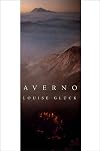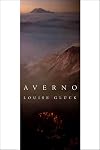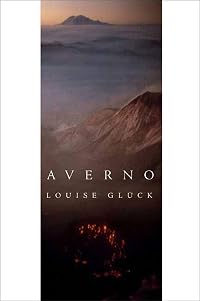
Averno: Poems
by Louise Glück
On This Page
Description
Averno is a small crater lake in southern , regarded by the ancient Romans as the entrance to the underworld. That place gives its name to Louise Glück's eleventh collection: in a landscape turned irretrievably to winter, it is the only source of heat and light, a gate or passageway that invites traffic between worlds while at the same time opposing their reconciliation. Averno is an extended lamentation, its long, restless poems no less spellbinding for being without plot or hope, no less show more ravishing for being savage, grief-stricken. What Averno provides is not a map to a point of arrival or departure, but a diagram of where we are, the harrowing, enduring presence. show lessTags
Recommendations










Member Reviews
To such endless impressions
we poets give ourselves absolutely,
making, in silence, omen of mere event,
until the world reflects the deepest needs of the soul.
Averno is poetic eschatology—a rumination on the end, meaning, believing, understanding. Reflections on Persephone, dead or kidnapped, making sense of things chthonic, paired with a young girl's loss of innocence after burning a wheat field to ash. Glück peers into the "pit of disappearance," takes heed of what she sees there, and renders tentative revelations:
All your life, you wait for the propitious time.
Then the propitious time
reveals itself as action taken.
&
You die when your spirit dies.
Otherwise, you live.
You may not do a good job of it, but you go on—
something you have show more no choice about.
&
But ignorance
cannot will knowledge. Ignorance
wills something imagined, which it believes exists. show less
we poets give ourselves absolutely,
making, in silence, omen of mere event,
until the world reflects the deepest needs of the soul.
Averno is poetic eschatology—a rumination on the end, meaning, believing, understanding. Reflections on Persephone, dead or kidnapped, making sense of things chthonic, paired with a young girl's loss of innocence after burning a wheat field to ash. Glück peers into the "pit of disappearance," takes heed of what she sees there, and renders tentative revelations:
All your life, you wait for the propitious time.
Then the propitious time
reveals itself as action taken.
&
You die when your spirit dies.
Otherwise, you live.
You may not do a good job of it, but you go on—
something you have show more no choice about.
&
But ignorance
cannot will knowledge. Ignorance
wills something imagined, which it believes exists. show less
Persephone the Wanderer
In the first version, Persephone
is taken from her mother
and the goddess of the earth
punishes the earth—this is
consistent with what we known of human behavior,
that human beings take profound satisfaction
in doing harm, particularly
unconscious harm:
we may call this
negative creation.
Persephone’s initial
sojourn in hell continues to be
pawed over by scholars who dispute
the sensations of the virgin:
did she cooperate in her rape,
or was she drugged, violated against her will,
as happens so often now to modern girls.
As is well known, the return of the beloved
does not correct
the loss of the beloved: Persephone
returns home
stained with red juice like
a character in Hawthorne—
I am not certain I will
keep this word: is show more earth
”home” to Persephone? Is she at home, conceivable,
in the bed of the god? Is she
at home nowhere? Is she
a born wanderer, in other words
an existential
replica of her own mother, less
hamstrung by ideas of causality?
You are allowed to like
no one, you know. The characters
are not people.
They are aspects of a dilemma or conflict.
Three parts: just as the soul is divided,
ego, superego, id. Likewise
the three levels of the known world,
a kind of diagram that separates
heaven from earth from hell.
You must ask yourself:
where is it snowing?
White of forgetfulness,
of desecration—
It is snowing on earth; the cold wind says
Persephone is having sex in hell.
Unlike the rest of us, she doesn’t know
what winter is, only that
she is what causes it.
She is lying in the bed of Hades.
What is in her mind?
Is she afraid? Has something
blotted out the idea
of mind?
She does know the earth
is run by mothers, this much
is certain. She also knows
she is not what is called
a girl any longer. Regarding
incarceration, she believes
she has been a prisoner since she has been a daughter.
The terrible reunions in store for her
will take up the rest of her life.
When the passion for expiation
is chronic, fierce, you do not choose
the way you live. You do not live;
you are not allowed to die.
You drift between earth and death
which seem, finally,
strangely alike. Scholars tell us
that there is no point in knowing what you want
when the forces contending over you
could kill you.
White of forgetfulness,
white of safety—
They say
there is a rift in the human soul
which was not constructed to belong
entirely to life. Earth
Asks us to deny this rift, a threat
disguised as suggestion—
As we have seen
in the tale of Persephone
which should be read
As an argument between the mother and the lover—
the daughter is just meat.
When death confronts her, she has never seen
the meadow without the daisies.
Suddenly she is no longer
singing her maidenly songs.
about her mother’s
beauty and fecundity. Where
the rift is, the break is.
Song of the earth,
song of the mystic vision of eternal life—
My soul
shattered with the strain
of trying to belong to earth—
What will you do,
when it is your turn in the field with the god?
####################################
In the second version, Persephone
is dead. She dies, her mother grieves —
problems of sexuality need not
trouble us here.
Compulsively, in grief, Demeter
circles the earth. We don’t expect to know
what Persephone is doing.
She is dead, the dead are mysteries.
We have here
a mother and a cipher: this is
accurate to the experience
of the mother as
she looks into the infant’s face. She thinks:
I remember when you didn’t exist. The infant
is puzzled; later, the child’s opinion is
she has always existed, just as
her mother has always existed
in her present form. Her mother
is like a figure at a bus stop,
an audience for the bus’s arrival. Before that,
she was the bus, a temporary
home or convenience. Persephone, protected,
stares out the window of the chariot.
What does she see? A morning
in early spring, in April. Now
her whole life is beginning — unfortunately,
it’s going to be
a short life. She’s going to know, really,
only two adults: death and her mother.
But two is
twice what her mother has:
her mother has
one child, a daughter.
As a god, she could have had
a thousand children.
We begin to see here
the deep violence of the earth
whose hostility suggests
she has no wish
to continue as a source of life.
And why is this hypothesis
never discussed? Because
it is not in the story; it only
creates the story.
In grief, after the daughter dies,
the mother wanders the earth.
She is preparing her case;
like a politician
she remembers everything and admits
nothing.
For example, her daughter’s
birth was unbearable, her beauty
was unbearable: she remembers this.
She remembers Persephone’s
innocence, her tenderness —
What is she planning, seeking her daughter?
She is issuing
a warning whose implicit message is:
what are you doing outside my body?
You ask yourself:
why is the mother’s body safe?
The answer is
this is the wrong question, since
the daughter’s body
doesn’t exist, except
as a branch of the mother’s body
that needs to be
reattached at any cost.
When a god grieves it means
destroying others (as in war)
while at the same time petitioning
to reverse agreements (as in war also):
if Zeus will get her back,
winter will end.
Winter will end, spring will return.
The small pestering breezes
that I so loved, the idiot yellow flowers —
Spring will return, a dream
based on a falsehood:
that the dead return.
Persephone
was used to death. Now over and over
her mother hauls her out again —
You must ask yourself:
are the flowers real? If
Persephone “returns” there will be
one of two reasons:
either she was not dead or
she is being used
to support a fiction —
I think I can remember
being dead. Many times, in winter,
I approached Zeus. Tell me, I would ask him,
how can I endure the earth?
And he would say,
in a short time you will be here again.
And in the time between
you will forget everything:
those fields of ice will be
the meadows of Elysium. show less
In the first version, Persephone
is taken from her mother
and the goddess of the earth
punishes the earth—this is
consistent with what we known of human behavior,
that human beings take profound satisfaction
in doing harm, particularly
unconscious harm:
we may call this
negative creation.
Persephone’s initial
sojourn in hell continues to be
pawed over by scholars who dispute
the sensations of the virgin:
did she cooperate in her rape,
or was she drugged, violated against her will,
as happens so often now to modern girls.
As is well known, the return of the beloved
does not correct
the loss of the beloved: Persephone
returns home
stained with red juice like
a character in Hawthorne—
I am not certain I will
keep this word: is show more earth
”home” to Persephone? Is she at home, conceivable,
in the bed of the god? Is she
at home nowhere? Is she
a born wanderer, in other words
an existential
replica of her own mother, less
hamstrung by ideas of causality?
You are allowed to like
no one, you know. The characters
are not people.
They are aspects of a dilemma or conflict.
Three parts: just as the soul is divided,
ego, superego, id. Likewise
the three levels of the known world,
a kind of diagram that separates
heaven from earth from hell.
You must ask yourself:
where is it snowing?
White of forgetfulness,
of desecration—
It is snowing on earth; the cold wind says
Persephone is having sex in hell.
Unlike the rest of us, she doesn’t know
what winter is, only that
she is what causes it.
She is lying in the bed of Hades.
What is in her mind?
Is she afraid? Has something
blotted out the idea
of mind?
She does know the earth
is run by mothers, this much
is certain. She also knows
she is not what is called
a girl any longer. Regarding
incarceration, she believes
she has been a prisoner since she has been a daughter.
The terrible reunions in store for her
will take up the rest of her life.
When the passion for expiation
is chronic, fierce, you do not choose
the way you live. You do not live;
you are not allowed to die.
You drift between earth and death
which seem, finally,
strangely alike. Scholars tell us
that there is no point in knowing what you want
when the forces contending over you
could kill you.
White of forgetfulness,
white of safety—
They say
there is a rift in the human soul
which was not constructed to belong
entirely to life. Earth
Asks us to deny this rift, a threat
disguised as suggestion—
As we have seen
in the tale of Persephone
which should be read
As an argument between the mother and the lover—
the daughter is just meat.
When death confronts her, she has never seen
the meadow without the daisies.
Suddenly she is no longer
singing her maidenly songs.
about her mother’s
beauty and fecundity. Where
the rift is, the break is.
Song of the earth,
song of the mystic vision of eternal life—
My soul
shattered with the strain
of trying to belong to earth—
What will you do,
when it is your turn in the field with the god?
####################################
In the second version, Persephone
is dead. She dies, her mother grieves —
problems of sexuality need not
trouble us here.
Compulsively, in grief, Demeter
circles the earth. We don’t expect to know
what Persephone is doing.
She is dead, the dead are mysteries.
We have here
a mother and a cipher: this is
accurate to the experience
of the mother as
she looks into the infant’s face. She thinks:
I remember when you didn’t exist. The infant
is puzzled; later, the child’s opinion is
she has always existed, just as
her mother has always existed
in her present form. Her mother
is like a figure at a bus stop,
an audience for the bus’s arrival. Before that,
she was the bus, a temporary
home or convenience. Persephone, protected,
stares out the window of the chariot.
What does she see? A morning
in early spring, in April. Now
her whole life is beginning — unfortunately,
it’s going to be
a short life. She’s going to know, really,
only two adults: death and her mother.
But two is
twice what her mother has:
her mother has
one child, a daughter.
As a god, she could have had
a thousand children.
We begin to see here
the deep violence of the earth
whose hostility suggests
she has no wish
to continue as a source of life.
And why is this hypothesis
never discussed? Because
it is not in the story; it only
creates the story.
In grief, after the daughter dies,
the mother wanders the earth.
She is preparing her case;
like a politician
she remembers everything and admits
nothing.
For example, her daughter’s
birth was unbearable, her beauty
was unbearable: she remembers this.
She remembers Persephone’s
innocence, her tenderness —
What is she planning, seeking her daughter?
She is issuing
a warning whose implicit message is:
what are you doing outside my body?
You ask yourself:
why is the mother’s body safe?
The answer is
this is the wrong question, since
the daughter’s body
doesn’t exist, except
as a branch of the mother’s body
that needs to be
reattached at any cost.
When a god grieves it means
destroying others (as in war)
while at the same time petitioning
to reverse agreements (as in war also):
if Zeus will get her back,
winter will end.
Winter will end, spring will return.
The small pestering breezes
that I so loved, the idiot yellow flowers —
Spring will return, a dream
based on a falsehood:
that the dead return.
Persephone
was used to death. Now over and over
her mother hauls her out again —
You must ask yourself:
are the flowers real? If
Persephone “returns” there will be
one of two reasons:
either she was not dead or
she is being used
to support a fiction —
I think I can remember
being dead. Many times, in winter,
I approached Zeus. Tell me, I would ask him,
how can I endure the earth?
And he would say,
in a short time you will be here again.
And in the time between
you will forget everything:
those fields of ice will be
the meadows of Elysium. show less
Averno is a small crater lake in southern Italy, regarded by the ancient Romans as the entrance to the underworld. That place gives its name to Louise Glück’s tenth collection: in a landscape turned irretrievably to winter, it is a gate or passageway that invites traffic between worlds while at the same time resisting their reconciliation. Averno is an extended lamentation, its long, restless poems no less spellbinding for being without conventional resoltution or consolation, no less ravishing for being savage, grief-stricken. What Averno provides is not a map to a point of arrival or departure, but a diagram of where we are, the harrowing, enduring present. Averno is a 2006 National Book Award Finalist for Poetry.
I do love the Greek myths, and the abduction of Persephone is one I find particularly fascinating in the way it engages with notions of women's agency and the cycle of separation and reunion.
Glück's poetry here manages to capture that sense of conflict perfectly, layering it through with images of nature both in bloom and in death which are singular in their precision.
Glück's poetry here manages to capture that sense of conflict perfectly, layering it through with images of nature both in bloom and in death which are singular in their precision.
This is an interesting collection of poems. The first poem presented threw me off a bit and I really disliked the tone and ambiguity of it. Please, keep plowing through though because there are better things to come. Gluck's cynical humour and philisophical view on the world as well as fascination with the human soul connected to nature do generate some very intriguing poems. Prism is one of my favorites. This collection is not for everyone though, her style is indeed different (some would say prose in lines) and she rambles too much at times. For me though, it's something that I like to flip through from time to time and seek out the particular passages and lines that I love.
“The Wild Iris” was the first Glück collection I read. She is also an essential poet for me, in that her poems of psychological extremity tend to be perfectly pitched--aurally, rhythmically, sonically (I see this is the same characterisation as Stephanie Burt's). Lots of lyric poets want to do what she does, but none to me do it as well. Pretty much all her poems, to me, are about the unfairness of transience, the agony of knowing we aren't immortal and cannot stay in the most beautiful of all possible worlds for ever. The thing about “The Wild Iris”, it centred on the voices of plants which are, in a sense resurrected, individual flowers die but the plant flowers again next year, unlike humans - "that which you call death/I show more remember". When I first read that collection in 1992 I found it shattering and have read all her others since. For a long time “The Wild Iris” was my favourite, but now I would say “Averno” (I’m reading it in a bilingual translation by Inês Dias). My favourite individual poem of hers, though, would be "Arboretum" from “The Seven Ages” ("we had the problem of age, the problem of wishing to linger"). She is one of the two living poets I could least do without (the other is Paul Henry).
(stanza 4 of the poem "October")
To me she has an unusual capacity to reinvent herself for a poet of such an achieved manner. On at least two occasions she has put out a more tentative, or modest, volume after one brought to an impressively emphatic point--in “Meadowlands” after “The Wild Iris”, and A Village Life after Averno”. Both times I was initially baffled, and thought the following collection just a falling-off--that there was only that long, after all, a writer could sustain such intensity. But “Meadowlands”, in particular, in its scrappiness of form and thought, was more challenging than that. Glück shows us that her poetry is dominated by spoken-word-prose-poems. Reliant for success not because of any sustained original strings of linguistic invention, but on how the audience hears it spoken with emphasis and in a specific tone of voice that evokes in the reader a profoundly vague and slippery but fashionable emotional response tending to what's innately inarticulate and challenging to communicate critically with any meaning beyond a personal 'like' of it for presentational reasons. Whatever that means. That’s why it's mandatory that Glück’s poetry/prose must be enjoyed out loud.
Somebody once asked me to clarify what a qualified translator was and whether it was a person with a university degree in translation. Although it is not necessary to have a degree in translation to translate, there is an assumption that just knowing a language well is enough to translate. It is not that simple. You need to go a little deeper and be a wordsmith, a willing linguistic as well. Translating is not easy. In terms of fiction, is like rewriting the story in a different language and trying to be true to the author's style. I find translating poetry incredibly difficult and I much prefer to translate technical or general fiction stuff. But one thing is absolutely true about translation: you need to understand what you are going to translate. If not, you will do a terrible job. When I'm translating I often consider the purpose of the translation, but I don't agonize over "Skopos theory". Knowledge of two languages is indeed not a qualification for translation, but most translation courses aren't worth the paper they're printed on and won't turn a bad translator into a good one. It surely is a hard gig to get right. I remember watching an American film subtitled in Japanese with a Japanese friend at the Portuguese Cinemateca many eons ago. One of the characters said, "Come here you sexy bitch!" My friend started laughing. Turns out that was translated into something more like, "Come here you good women!" Not quite the same thing. Of course, every good woman is sexy, but not every sexy woman is good. I think. Maybe. Quite possibly, I may be corrected on this point…This to say that Inês Dias’s rendering into Portuguese is top-notch and does Glück’s work justice (vide October's stanza 4 in the picture above if you want to understand what I'm talking about).
What an experience it was to have read Glück’s work in the middle of the Mediterranean sea. show less
(stanza 4 of the poem "October")
To me she has an unusual capacity to reinvent herself for a poet of such an achieved manner. On at least two occasions she has put out a more tentative, or modest, volume after one brought to an impressively emphatic point--in “Meadowlands” after “The Wild Iris”, and A Village Life after Averno”. Both times I was initially baffled, and thought the following collection just a falling-off--that there was only that long, after all, a writer could sustain such intensity. But “Meadowlands”, in particular, in its scrappiness of form and thought, was more challenging than that. Glück shows us that her poetry is dominated by spoken-word-prose-poems. Reliant for success not because of any sustained original strings of linguistic invention, but on how the audience hears it spoken with emphasis and in a specific tone of voice that evokes in the reader a profoundly vague and slippery but fashionable emotional response tending to what's innately inarticulate and challenging to communicate critically with any meaning beyond a personal 'like' of it for presentational reasons. Whatever that means. That’s why it's mandatory that Glück’s poetry/prose must be enjoyed out loud.
Somebody once asked me to clarify what a qualified translator was and whether it was a person with a university degree in translation. Although it is not necessary to have a degree in translation to translate, there is an assumption that just knowing a language well is enough to translate. It is not that simple. You need to go a little deeper and be a wordsmith, a willing linguistic as well. Translating is not easy. In terms of fiction, is like rewriting the story in a different language and trying to be true to the author's style. I find translating poetry incredibly difficult and I much prefer to translate technical or general fiction stuff. But one thing is absolutely true about translation: you need to understand what you are going to translate. If not, you will do a terrible job. When I'm translating I often consider the purpose of the translation, but I don't agonize over "Skopos theory". Knowledge of two languages is indeed not a qualification for translation, but most translation courses aren't worth the paper they're printed on and won't turn a bad translator into a good one. It surely is a hard gig to get right. I remember watching an American film subtitled in Japanese with a Japanese friend at the Portuguese Cinemateca many eons ago. One of the characters said, "Come here you sexy bitch!" My friend started laughing. Turns out that was translated into something more like, "Come here you good women!" Not quite the same thing. Of course, every good woman is sexy, but not every sexy woman is good. I think. Maybe. Quite possibly, I may be corrected on this point…This to say that Inês Dias’s rendering into Portuguese is top-notch and does Glück’s work justice (vide October's stanza 4 in the picture above if you want to understand what I'm talking about).
What an experience it was to have read Glück’s work in the middle of the Mediterranean sea. show less
I always enjoy Gluck's poetry, and I liked Averno, too. The title is the name of a crater in southern Italy thought by the Romans to be the entrance to the underworld. And these poems are concerned with myth and death, my favorite being "The Myth of Devotion", another telling of Persephone in hell. In fact, Persephone herself is character and theme of several of the poems. But the onset of chill fall, death, and the need for consolation inhabit them as much as character, human and god. They're somber but lovely, too, interesting as stories.
Members
- Recently Added By
Lists

Reading LIst
648 works; 1 member
Author Information

39+ Works 6,444 Members
Louise Elizabeth Gluck, 1943 - Louise Gluck was born April 22, 1943 in New York City, New York. She grew up on Long Island and attended Sarah Lawrence College and Columbia University, both in New York State. She is best known for her award winning collection entitled "The Wild Iris". After graduation, Gluck began teaching poetry, accepting show more positions at various colleges and universities. In 1968, her first collection entitled "Firstborn" was published. Seven years later she published "The House on the Marshland", and in 1985, "The Triumph of Achilles" won the National Book Critics Circle Award for poetry. In 1993, she was an editor of The Best American Poetry anthology. Her last appointment was as Senior Lecturer in English at Williams College. Louise Gluck is considered one of the most gifted poets of her generation. Known for her well-crafted use of verse and meter, she first garnered attention with "Firstborn", a collection of poetry from 1968. Full of angry emotion and disturbing tone, her poetry deals with the horrible and painful. In 1985, "The Triumph of Achilles" was released to thunderous applause, gaining awards in every category. It received the National Book Circle Award, the Boston Globe Literary Press Award and the Poetry Society of America's Melville Kane Award. Gluck has received the Bollingen Prize in Poetry, the Lannas Literary Award for Poetry, fellowships from the Guggenheim and Rockefeller foundations and the National Endowments for the Arts. Her collection "Ararat", (1990) received the Rebekah Johnson Bobbett National Prize for Poetry. Other collections include "The Garden" and "The Wild Iris". The "Wild Iris", perhaps her most award winning collection acquired the highest honor possible in 1993, the Pulitzer Prize for Poetry. It also received the Poetry Society of America's William Carlos Williams Award In 1994 she was named Poet Laureate of Vermont, and was elected as a Chancellor of the Academy of American Poets. In 2003, she was named Poet Laureat of the United States. She was awarded the 2020 Nobel Prize for Literature. (Bowker Author Biography) show less
Some Editions
Awards and Honors
Awards
Distinctions
Series
Belongs to Publisher Series
Work Relationships
Is contained in
Common Knowledge
- Original publication date
- 2006
Classifications
Statistics
- Members
- 580
- Popularity
- 50,883
- Reviews
- 14
- Rating
- (3.99)
- Languages
- 10 — Danish, Dutch, English, French, German, Italian, Japanese, Portuguese, Spanish, Swedish
- Media
- Paper, Ebook
- ISBNs
- 21
- ASINs
- 2