On This Page
Description
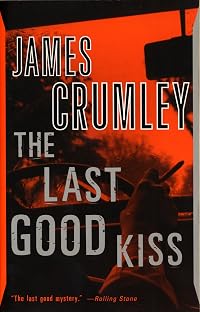
One of the most influential crime novels ever written, by a legend of the genre.Tough, hard-boiled, and brilliantly suspenseful, The Last Good Kiss is an unforgettable detective story starring C. W. Sughrue, a Montana investigator who kills time by working at a topless bar. Hired to track down a derelict author, he ends up on the trail of a girl missing in Haight-Ashbury for a decade. The tense hunt becomes obsessive as Sughrue takes a haunting journey through the underbelly of America's show more sleaziest nightmares. show less
Tags
Recommendations



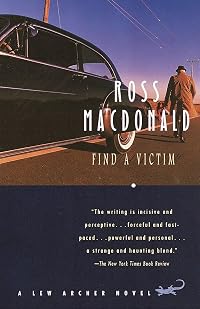
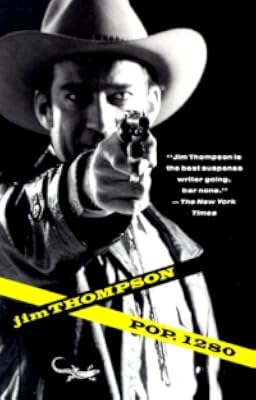

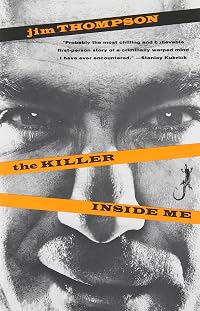
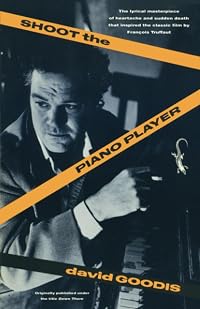





Member Recommendations
Member Reviews
Crumley is an author I had never heard of until recently, when I came across the first line of this novel playing the board game "It Was a Dark and Stormy Night", and I knew I had to get my hands on it. It's extremely well-written hard-boiled detective fiction, with absolutely no soft center. The characters are all less than likeable, although a couple of them deserve a bit of sympathy from the reader, especially as the author doesn't give them any at all. The story is well-put-together; many more remarkable, almost poetic sentences follow the first one (in fact, it's almost over-written simply because there are so many remarkable sentences), but it disturbed me in ways this genre usually doesn't. The protagonist (for lack of a better show more term), C. W. Sughrue, is more conflicted than most (we blame Vietnam, and a lot of substances), but everyone in the book, including the dog, gives him a run for his money in the screwed-up-head department. Bad things happen --one expects that-- but the motivations behind some of what goes on here are baffling, and almost nobody gets what they deserve. It reminded me of James Lee Burke's later novels, where the darkness seems to be winning. I admire the talent that came up with this one, but I don't think I want to spend any more time in Crumley's world. show less
This book has a famous first line: “When I finally caught up with Abraham Trahearne, he was drinking beer with an alcoholic bulldog named Fireball Roberts in a ramshackle joint just outside of Sonoma, California, drinking the heart right out of a fine spring afternoon.”
Rightfully famous. And there are plenty of good ones that follow.
A woman has “a small mobile mouth, and the straightforward approach of a bedroom lady.”
“He couldn’t have been any angrier if I had sat down on his wife’s face.”
And “Life always begins and ends in a bloody muddle, womb to tomb, just one big mess, a can of worms left to rot in the sun.”
C.W. Sughrue, a “seedy private dick” is hired to find a writer, the previously mentioned Trahearne, show more on a long-distance drinking binge. Out of goodness, Sughrue also attempts to find a girl that has been missing for a decade. He is accompanied by Trahearne, and the bulldog. The story is muscular and there are plenty of twists, but what stands out is James Crumley’s prose and sentences.
Speaking of the bulldog, after a particularly debauched hotel stay: “The worst thing that happened, though, was that Fireball took to wearing a rhinestone collar and drinking Japanese beer.”
That's one of the last light moments as the road trip, and story, progress from something of a lark to a darker place. show less
Rightfully famous. And there are plenty of good ones that follow.
A woman has “a small mobile mouth, and the straightforward approach of a bedroom lady.”
“He couldn’t have been any angrier if I had sat down on his wife’s face.”
And “Life always begins and ends in a bloody muddle, womb to tomb, just one big mess, a can of worms left to rot in the sun.”
C.W. Sughrue, a “seedy private dick” is hired to find a writer, the previously mentioned Trahearne, show more on a long-distance drinking binge. Out of goodness, Sughrue also attempts to find a girl that has been missing for a decade. He is accompanied by Trahearne, and the bulldog. The story is muscular and there are plenty of twists, but what stands out is James Crumley’s prose and sentences.
Speaking of the bulldog, after a particularly debauched hotel stay: “The worst thing that happened, though, was that Fireball took to wearing a rhinestone collar and drinking Japanese beer.”
That's one of the last light moments as the road trip, and story, progress from something of a lark to a darker place. show less
A famous writer has gone on one of his legendary benders and his ex-wife has hired private detective C.W. Sughrue to locate him and see that he makes it home safe before it turns terminal. The chase was a long one but he finally tracks him down in a ramshackle joint in Sonoma with an alcoholic bulldog for a drinking buddy. The meet-up doesn't exactly go smoothly and the writer ends up in hospital after getting shot in a sensitive place. As he's likely to be spending a few days of recovery in hospital, Sughrue agrees to look for the daughter of the owner of the aforementioned ramshackle joint but advises his new client it's unlikely that he'll find anything. Most missing person cases don't get solved if they're not found in the first show more year and this one's been gone for 10 already so he's not too hopeful of turning anything up. The writer discharges himself from hospital a few days early and tags along in the investigation.
This is hard-boiled detective fiction at its finest. Starting as a drink fuelled road trip it quickly supplies enough twists to make even the soberest reader dizzy. The characters are wonderfully drawn and the dialogue is as snappy as that proverbial crocodile sandwich. The writer's family dynamic is certainly an interesting one. Within the confines of an albeit large ranch he has his ex-wife living with his mother who are both in agreement that they detest his new wife. It provides a wonderful backdrop to what is essentially a dark and violent tale of love, betrayal and the sleazy underbelly of the American Dream. show less
This is hard-boiled detective fiction at its finest. Starting as a drink fuelled road trip it quickly supplies enough twists to make even the soberest reader dizzy. The characters are wonderfully drawn and the dialogue is as snappy as that proverbial crocodile sandwich. The writer's family dynamic is certainly an interesting one. Within the confines of an albeit large ranch he has his ex-wife living with his mother who are both in agreement that they detest his new wife. It provides a wonderful backdrop to what is essentially a dark and violent tale of love, betrayal and the sleazy underbelly of the American Dream. show less
"When I finally caught up with Abraham Trahearne, he was drinking beer with an alcoholic bulldog named Fireball Roberts in a ramshackle joint just outside of Sonoma, California, drinking the heart right out of a fine spring afternoon.”
What an opening sentence. A kicker. Let me say straight out, this is a five star book; it’s just that five-star reads for me mean they need a place on my shelf and a re-read or more. (Thus, four and a half rating on my WordPress blog). This: this was beautifully written, not an extraneous word but so interestingly, humorously, perfectly descriptive:
“As I ordered a beer from the middle-aged barmaid, she slipped out of her daydreams and into a sleepy grin. When she opened the bottle, the bulldog came show more out of his drunken nap, belched like a dragon, then heaved his narrow haunches upright and waddled across three rickety stools through the musty cloud of stale beer and bulldog breath to trade me a wet, stringy kiss for a hit off my beer. I didn’t offer him any, so he upped the ante by drooling all over my sunburnt elbow.”
But Crumley, and the narrator, C.W. Sughrue, set up an exhausting pace through the seediest of joints. C.W. is chasing an errant Trahearne for his ex-wife, who wants him back at his place and writing his next Great Novel. Trahearne seems intent on drinking his way across the west in the seediest bars possible, until he lands in this one. A fight lands Trahearne in the hospital, and the sleepy barmaid, Rosie, offers C.W. a job finding her lost daughter while he waits on Trahearne’s recovery and release before escorting him back home. The two detour through San Francisco following a lead. The plot's a kicker; I did not expect all the places it went to.
C.W. knows how wretched much of his existence is, and his humor lessons the sadness. He also has a fair bit of compassion mixed in with the anger and the bitterness at those that exploit and are exploited. But he’s never far from a drunk, and he’s closer still to a beer and a whiskey. In these days, you did half your drinking while driving. The unencumbered sex, the porn–if you had any illusions about free love, the 1960s, and their aftermath, this will help disabuse them. Drugs? Why yes, it'll help the booze along.
It took me a long time to finish this book, unusually long for its short length and quality–and for a mystery. All I can say is that it is because of the strength of the writing; out of very clear choices, I’ve stayed far away from C.W.’s world, and to immerse myself in it is both sad and exhausting. It’s like Fear and Loathing in Las Vegas written by Raymond Chandler.
“The next morning, the condemned man, who had slept like a child and showered like a teenager preparing for a date, ate as hearty a breakfast as the Holiday Inn could provide, then stepped outside to contemplate the delicate air and the clear blue sunshine of the high plains.”
Sad, beautiful, drunken, funny, tragic; highly recommended. show less
What an opening sentence. A kicker. Let me say straight out, this is a five star book; it’s just that five-star reads for me mean they need a place on my shelf and a re-read or more. (Thus, four and a half rating on my WordPress blog). This: this was beautifully written, not an extraneous word but so interestingly, humorously, perfectly descriptive:
“As I ordered a beer from the middle-aged barmaid, she slipped out of her daydreams and into a sleepy grin. When she opened the bottle, the bulldog came show more out of his drunken nap, belched like a dragon, then heaved his narrow haunches upright and waddled across three rickety stools through the musty cloud of stale beer and bulldog breath to trade me a wet, stringy kiss for a hit off my beer. I didn’t offer him any, so he upped the ante by drooling all over my sunburnt elbow.”
But Crumley, and the narrator, C.W. Sughrue, set up an exhausting pace through the seediest of joints. C.W. is chasing an errant Trahearne for his ex-wife, who wants him back at his place and writing his next Great Novel. Trahearne seems intent on drinking his way across the west in the seediest bars possible, until he lands in this one. A fight lands Trahearne in the hospital, and the sleepy barmaid, Rosie, offers C.W. a job finding her lost daughter while he waits on Trahearne’s recovery and release before escorting him back home. The two detour through San Francisco following a lead. The plot's a kicker; I did not expect all the places it went to.
C.W. knows how wretched much of his existence is, and his humor lessons the sadness. He also has a fair bit of compassion mixed in with the anger and the bitterness at those that exploit and are exploited. But he’s never far from a drunk, and he’s closer still to a beer and a whiskey. In these days, you did half your drinking while driving. The unencumbered sex, the porn–if you had any illusions about free love, the 1960s, and their aftermath, this will help disabuse them. Drugs? Why yes, it'll help the booze along.
It took me a long time to finish this book, unusually long for its short length and quality–and for a mystery. All I can say is that it is because of the strength of the writing; out of very clear choices, I’ve stayed far away from C.W.’s world, and to immerse myself in it is both sad and exhausting. It’s like Fear and Loathing in Las Vegas written by Raymond Chandler.
“The next morning, the condemned man, who had slept like a child and showered like a teenager preparing for a date, ate as hearty a breakfast as the Holiday Inn could provide, then stepped outside to contemplate the delicate air and the clear blue sunshine of the high plains.”
Sad, beautiful, drunken, funny, tragic; highly recommended. show less
I often use the word “protagonist” because I don’t want to have explain why I picked whichever side I did in the hero/antihero debate, not with line becoming increasingly blurry, certainly not in a synopsis or capsule review, where space is at a premium. One thing is without doubt. James Crumley’s private detective C. W. Sughrue is no role model. A daytime night crawler, he spends more time drunk than sober.
Hired to track down a wayward writer on a multi-state binge, the bar fight begins the novel and ends Sughrue’s quest strands him in Sonoma for a few days, where he promptly picks up another case. The bar owner asks him to find her daughter, who ran away ten years earlier. An impossible task yet he gives it a genuine effort, show more if not steady one. This is 1978, so sifting through the remnants of the hippie culture allows plenty of opportunity to partake in alcohol, sex and drugs, particularly as the writer Sughrue originally sought has taken a liking to him and has invited himself along on the investigation. Feeding into each other, they actually find time to do some investigating between the bars and parties. And when Sughrue meets the writer’s family, a self-described viper’s nest, sobriety seems even more like the poorest of options.
But as the case untangles and serious acts require serious responses, Sughrue’s deeper code of ethics, long buried somewhere under his surface of self-destruction, comes forward without hesitation. It’s the contradictions--in all the characters, not just Sughrue--that make the tapestry so rich. And the atmosphere. There is such a foreboding layered into the story that you know that even as Sughrue works things out, the pages are not going to wind down to a happy ending.
The reader is the better for it. This is an excellent example of elevating the genre. show less
Hired to track down a wayward writer on a multi-state binge, the bar fight begins the novel and ends Sughrue’s quest strands him in Sonoma for a few days, where he promptly picks up another case. The bar owner asks him to find her daughter, who ran away ten years earlier. An impossible task yet he gives it a genuine effort, show more if not steady one. This is 1978, so sifting through the remnants of the hippie culture allows plenty of opportunity to partake in alcohol, sex and drugs, particularly as the writer Sughrue originally sought has taken a liking to him and has invited himself along on the investigation. Feeding into each other, they actually find time to do some investigating between the bars and parties. And when Sughrue meets the writer’s family, a self-described viper’s nest, sobriety seems even more like the poorest of options.
But as the case untangles and serious acts require serious responses, Sughrue’s deeper code of ethics, long buried somewhere under his surface of self-destruction, comes forward without hesitation. It’s the contradictions--in all the characters, not just Sughrue--that make the tapestry so rich. And the atmosphere. There is such a foreboding layered into the story that you know that even as Sughrue works things out, the pages are not going to wind down to a happy ending.
The reader is the better for it. This is an excellent example of elevating the genre. show less
When I finally caught up with Abraham Trahearne, he was drinking beer with an alcoholic bulldog named Fireball Roberts in a ramshackle joint just outside of Sonoma, California, drinking the heart right out of a fine spring afternoon.
CW Sughrue is a private eye in the tradition of Marlowe and Spade, which means that ten years after Woodstock, ten years after coming home from Vietnam, ten years after Kent State, etc etc etc he's as hopelessly out of time as the other remnants of a more hopeful time he keeps coming across. He's hired by the ex-wife of a famous novelist to bring said novelist back from one of his many 3-week benders, and when he finally finds him in a bar in California he gets to talking to the woman behind the bar. She show more asks him to look for her daughter, who disappeared into San Francisco in 1969 and hasn't been seen since. And for whatever reason - it certainly isn't money - Sughrue can't not take the case, so off he goes on a trip through a late-70s America full of ex-hippies, coke addicts, Vietnam vets, drunks, porn stars and clever exploiters, looking for a lost flowerchild.
It's a brilliant setup, sort of a low-budget hardboiled detective version of Fear And Loathing In Las Vegas, in a late-70s setting where everything seems covered in cheap upholstery and owned by some skeevy fuck in a plaid sports jacket and large sideburns driving a late-model Chevy with a plastic dashboard. ...And if that sounds a little too dramatic, then maybe that's part of the problem of the book as well. Sughrue is constantly monologizing like a Tom Waits character, and it gets a little too much at times. At the same time, that's part of the novel's charm; we have a novel where the typical cynical private eye, a man who's killed women and children in the name of democracy, suddenly finds himself almost the last person in the world who still cares about anything but money and power. As a detective story, it's deliciously slow-moving - no murder every 50 pages to keep up the interest, no endless descriptions of clues, violent and harsh when it needs to be but never looking away from the consequences (in this world, when you punch someone in the jaw, you break your own fingers). As a description of its time, it's fascinating if not quite as sharp as, say, James Ellroy - who, of course, has the benefit of hindsight.
The Last Good Kiss takes on two genres; the detective novel meets post-Vietnam Americana. It's not a perfect fit, and certainly not a marriage that lets anyone in it live happy ever after, but a fascinating one. show less
CW Sughrue is a private eye in the tradition of Marlowe and Spade, which means that ten years after Woodstock, ten years after coming home from Vietnam, ten years after Kent State, etc etc etc he's as hopelessly out of time as the other remnants of a more hopeful time he keeps coming across. He's hired by the ex-wife of a famous novelist to bring said novelist back from one of his many 3-week benders, and when he finally finds him in a bar in California he gets to talking to the woman behind the bar. She show more asks him to look for her daughter, who disappeared into San Francisco in 1969 and hasn't been seen since. And for whatever reason - it certainly isn't money - Sughrue can't not take the case, so off he goes on a trip through a late-70s America full of ex-hippies, coke addicts, Vietnam vets, drunks, porn stars and clever exploiters, looking for a lost flowerchild.
It's a brilliant setup, sort of a low-budget hardboiled detective version of Fear And Loathing In Las Vegas, in a late-70s setting where everything seems covered in cheap upholstery and owned by some skeevy fuck in a plaid sports jacket and large sideburns driving a late-model Chevy with a plastic dashboard. ...And if that sounds a little too dramatic, then maybe that's part of the problem of the book as well. Sughrue is constantly monologizing like a Tom Waits character, and it gets a little too much at times. At the same time, that's part of the novel's charm; we have a novel where the typical cynical private eye, a man who's killed women and children in the name of democracy, suddenly finds himself almost the last person in the world who still cares about anything but money and power. As a detective story, it's deliciously slow-moving - no murder every 50 pages to keep up the interest, no endless descriptions of clues, violent and harsh when it needs to be but never looking away from the consequences (in this world, when you punch someone in the jaw, you break your own fingers). As a description of its time, it's fascinating if not quite as sharp as, say, James Ellroy - who, of course, has the benefit of hindsight.
The Last Good Kiss takes on two genres; the detective novel meets post-Vietnam Americana. It's not a perfect fit, and certainly not a marriage that lets anyone in it live happy ever after, but a fascinating one. show less
Reading this book is a bit like being dragged through hell. It doesn't start out that way. Crumley's writing is so engaging and his frequent similes so good that the pages roll by smoothly. But the twisting plot, which starts off with a Montana private eye being hired to bring back a writer who has gone on a barhopping drunk binge through the American West just gets darker and darker as the private eye gets to know the writer's ex-wife and mother, who live together next door to the writer and his new wife. All these people are seriously screwed up in one way or another, as is the PI himself for that matter. Toss in an alcoholic dog and you have a mixture you won't soon forget. Parts of the story read like John D. MacDonald without the show more labored moralizing, but the overall tone somehow reminds me of the sadness that pervades Chandler's The Long Goodbye. It's an impressive piece of writing anyway you look at it, and I will definitely look up Mr. Crumley again, but only after I've read something else to get my spirits back up.... show less
Members
- Recently Added By
Lists

1001 Books You Must Read Before You Die
1,448 works; 1,134 members

100 Mysteries and Thrillers to Read in a Lifetime
99 works; 22 members

Books Read in 2013
1,630 works; 51 members

Blue Pyramid 1,276 Best Books of All Time
1,248 works; 32 members

Page Turners
185 works; 11 members

McMurtry's Texas Literature
27 works; 1 member

Facebook list
55 works; 3 members

Best First Lines
133 works; 8 members

Books With the Most Memorable Titles
478 works; 158 members
Canon de la narrativa universal del s. XX (cicutadry)
499 works; 3 members

Vlogbrothers Book Recommendations
307 works; 4 members
Author Information

20+ Works 3,532 Members
He won the 1994 Dashiell Hammett Award for Best Literary Crime Novel for the Mexican Tree Duck. He lives in Montana. (Publisher Provided) Author James Crumley was born in Three Rivers, Texas on October 12, 1939. He enlisted in the Army in the late 1950s and served in the Philippines. He studied history at the Texas College of Arts and Industries show more and earned a master's degree from the Iowa Writers' Workshop in 1966. His first book, One to Count Cadence, was published in 1969. He wrote seven private eye novels featuring either Milton Chester Milodragovitch or C. W. Sughrue. He also wrote a collection of essays and short fiction entitled The Muddy Fork and Other Things. He died on September 17, 2008 at the age of 68. (Bowker Author Biography) show less
Some Editions
Awards and Honors
Series

Belongs to Publisher Series
Work Relationships
Common Knowledge
- Canonical title*
- The Last Good Kiss
- Original title
- The Last Good Kiss
- Original publication date
- 1978
- People/Characters
- C.W. Sughrue; Abraham Trahearne
- Important places
- Montana, USA; California, USA
- First words
- When I finally caught up with Abraham Trahearne, he was drinking beer with an alcoholic bulldog named Fireball Roberts in a ramshackle joint just outside of Sonoma, California, drinking the heart right out of a fine spring af... (show all)ternoon.
*Some information comes from Common Knowledge in other languages. Click "Edit" for more information.
Classifications
Statistics
- Members
- 1,101
- Popularity
- 23,072
- Reviews
- 38
- Rating
- (3.93)
- Languages
- 13 — Catalan, Danish, Dutch, English, Finnish, French, German, Italian, Japanese, Norwegian (Bokmål), Norwegian, Spanish, Swedish
- Media
- Paper, Ebook
- ISBNs
- 30
- ASINs
- 8