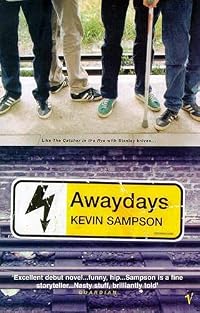
Awaydays
by Kevin Sampson
On This Page
Description
It's 1979 and in Birkenhead smack and Maggie Thatcher are still less of an issue than Lois jeans and Adidas Forest Hills training shoes. for Paul Carty, 19, and his mystical, Joy Division-loving mate Elvis, life revolves around The Pack, a mob of violent Tranmere Rovers supporters. Carty and Elvis travel the Northern wastelands, always by train, causing mayhem in the 'woollyback' strongholds of Halifax, Crewe and Chesterfield. For most of the mob, The Pack is their reason for living. But show more Elvis, who loves Ezra Pound, and Carty, still getting over the death of his mother, are starting to get bored of it all. The question is- will the Pack let them go? And can they get by without each other? show lessTags
Recommendations




























Member Reviews
A story of the third division Tranmere Rovers in 1979, but mainly their hooligans, the self-proclaimed "away crew," AKA "The Pack." Disaffected young men preoccupied with clothes and the latest haircuts. "The plum Mushroom Wedge is going to be THE haircut to have," and "arguing about the virtues of Nastase training shoes over their ghastly, I think, yellow pretenders Forest Hills."
Paul Carty, nineteen years old, is the narrator. His mother has recently died, he subsequently left school, and the pack is what fulfills him. But he's really not one of them. His parents were business owners. None of the pack know where he lives.
He's beginning to sense it's time to move on from the senseless violence as his family begins to heal. Paul, his show more sister Molly, and their father. He begins to make his peace with breaking away from the pack and from his best friend Elvis, who is into music, the pack, and now, heroin. "My life is not awful. There's something here for me," Carty realizes.
Carty is finally forced to recognize he was never really part of the pack, despite his penchant for proving himself through violence.
This is a football hooligan story, but a layered one, from the perspective of a hooligan who tries his best, but never really fits in. show less
Paul Carty, nineteen years old, is the narrator. His mother has recently died, he subsequently left school, and the pack is what fulfills him. But he's really not one of them. His parents were business owners. None of the pack know where he lives.
He's beginning to sense it's time to move on from the senseless violence as his family begins to heal. Paul, his show more sister Molly, and their father. He begins to make his peace with breaking away from the pack and from his best friend Elvis, who is into music, the pack, and now, heroin. "My life is not awful. There's something here for me," Carty realizes.
Carty is finally forced to recognize he was never really part of the pack, despite his penchant for proving himself through violence.
This is a football hooligan story, but a layered one, from the perspective of a hooligan who tries his best, but never really fits in. show less
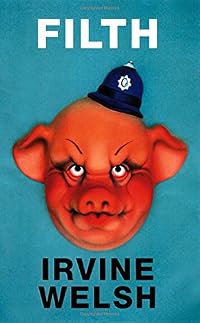
I read this book in three days as it was so depressing I couldn't wait to get through it. The central character is a familiar one - a product of a broken society but one who is both an insider and an outsider and therefore able to give the uninitiated reader an insight into their environment - but he shows neither the appeal of a character like Renton from Irvine Welsh's Trainspotting, nor the frightening dehumanisation depicted by Graham Green in Brighton Rock or Anthony Burgess in A Clockwork Orange. Having lived in the places described in the story (Rock Ferry/Tranmere/Birkenhead) all my life, the author's view of the area seemed lifeless and shallow and fails to pick up on the brilliantly comic characters you come across on a daily show more basis (with the exception of Carty's boss, Bob, showing the only glimmer of this humour).
The many pages of description of football violence evidence the difficulty of describing fast action, as in a battle scene, and actually seem quite boring and sterile, and makes it even more unpleasant to read. Similarly the sex scenes which are also cold with an undertone of violence and misogyny.
The novel picked up towards the end as Carty attempts to break away from the gang and reintegrate (or 'choose life'), with the Christmas scenes showing particular depth and humour, but the writer seems to be rushing to the end by this point. Overall this short novel is over-populated with flat and uninspiring characters and I was glad to finish it. I might still watch the film when it come out though! show less
The many pages of description of football violence evidence the difficulty of describing fast action, as in a battle scene, and actually seem quite boring and sterile, and makes it even more unpleasant to read. Similarly the sex scenes which are also cold with an undertone of violence and misogyny.
The novel picked up towards the end as Carty attempts to break away from the gang and reintegrate (or 'choose life'), with the Christmas scenes showing particular depth and humour, but the writer seems to be rushing to the end by this point. Overall this short novel is over-populated with flat and uninspiring characters and I was glad to finish it. I might still watch the film when it come out though! show less
Ratings
Members
- Recently Added By
Author Information
13+ Works 370 Members
Some Editions
Work Relationships
Has the adaptation
Common Knowledge
Classifications
Statistics
- Members
- 105
- Popularity
- 307,517
- Reviews
- 1
- Rating
- (3.39)
- Languages
- English, German
- Media
- Paper, Ebook
- ISBNs
- 7