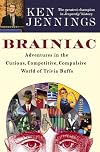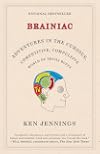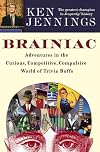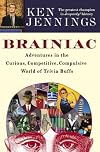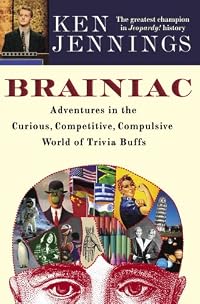
Brainiac: Adventures in the Curious, Competitive, Compulsive World of Trivia Buffs
by Ken Jennings
On This Page
Description
The competitor who became the longest running champion on "Jeopardy!" offers a look at the human fascination with trivia, from the pop culture of the past to such modern-day phenomena as Trivial Pursuit, that celebrates the glory of the useless fact.Tags
Recommendations



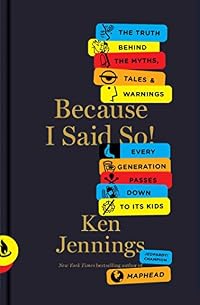
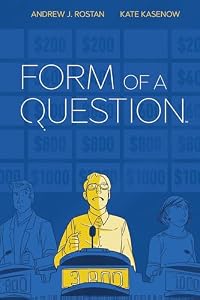


Member Recommendations
Member Reviews
I've watched Jeopardy throughout my life and Ken Jennings's spectacular run fascinated me in 2004 and still does so today. I always enjoy seeing him return for new bouts. I found Brainiac to be an overall interesting read. There was less behind-the-scenes info on Jeopardy than I expected, though I understand why there isn't more. His long run blurred together for the most part.
Much of the book is about the nature of trivia itself--how it became a thing, how the fad has ebbed and flowed over the decades, and how it is celebrated in various forms today. I found the early portions on the history of trivia to read as slow--but perhaps that was also my impatience to find out more about Jeopardy--but I really enjoyed the insights at the end show more about Stevens Point Wisconsin's massive trivia weekend and how bar trivia developed in recent years. show less
Much of the book is about the nature of trivia itself--how it became a thing, how the fad has ebbed and flowed over the decades, and how it is celebrated in various forms today. I found the early portions on the history of trivia to read as slow--but perhaps that was also my impatience to find out more about Jeopardy--but I really enjoyed the insights at the end show more about Stevens Point Wisconsin's massive trivia weekend and how bar trivia developed in recent years. show less
Ken Jennings talks about his experiences being on Jeopardy! (over and over and over...) and what his life was like before, during and after his unprecedented run of wins. Interspersed with that, he talks about trivia: its history as a pastime, why it's interesting and whether it's worthwhile, and what kind of person turns that pastime into a full-blown obsession. (Jennings himself honestly seems to have been born to it. Some of the stories about what he was like even as a small child do kind of make me feel much better about the fact that I haven't won seventy-four games of Jeopardy! in a row. I like trivia, but I think I'm lacking some gene for it that this guy was born with.) He also talks a lot about particular trivia contests and show more events, including college bowl quizzes, rigged 1950s game shows, and a weird town in Wisconsin where the biggest event of the year is an insanely nitpicky fifty-four hour trivia event.
I found some of the trivia-obsessed people and places he visits a lot more interesting than others, but overall this was an entertaining read, and I love the way he peppers the book with trivia questions to challenge the reader in a way that makes them part of the narrative. And his descriptions of his Jeopardy! career are especially interesting, and much more exciting than I might have expected from the fact that I already knew perfectly well how the whole thing went. show less
I found some of the trivia-obsessed people and places he visits a lot more interesting than others, but overall this was an entertaining read, and I love the way he peppers the book with trivia questions to challenge the reader in a way that makes them part of the narrative. And his descriptions of his Jeopardy! career are especially interesting, and much more exciting than I might have expected from the fact that I already knew perfectly well how the whole thing went. show less
"Curiosity, memory, and a love for exhaustive and exhausting detail--that's the trivia trifecta right there."
This is Ken Jennings memoir of his months' long run in 2003 as Jeopardy champion during which he won more than $2 million. Interspersed is a history of trivia fads and games over the years, as well as interviews and stories about famous and not-so-famous trivia celebrities, such as the inventor of the Trivial Pursuit game, or people associated with the various College Bowl games.
The book is well-written and quite entertaining. As a bonus, in each chapter Jennings embeds 10 trivia questions. I was quite pleased with myself at usually being able to answer at least 5 of them--Alas not quite Jeopardy champ material.
3 stars
This is Ken Jennings memoir of his months' long run in 2003 as Jeopardy champion during which he won more than $2 million. Interspersed is a history of trivia fads and games over the years, as well as interviews and stories about famous and not-so-famous trivia celebrities, such as the inventor of the Trivial Pursuit game, or people associated with the various College Bowl games.
The book is well-written and quite entertaining. As a bonus, in each chapter Jennings embeds 10 trivia questions. I was quite pleased with myself at usually being able to answer at least 5 of them--Alas not quite Jeopardy champ material.
3 stars
Jenning’s treatise on trivia and his own experiences on Jeopardy! are brilliant without being magnanimous. Everyone involved in the history of trivia and trivia-writing is included in this touching (yet slim) book. This book, paired with Jacob’s Mr. Know-It-All, offer just about all the useless information a person may well need in their lifetime, but will keep them begging for more. Ken’s incorporation of brilliant bits of minutiae into the text makes for wonderful reading.
Interesting read, but longer than it needs be. I enjoyed reading about his experience on Jeopardy, & before & after, the other chapters seemed extraneous. Did though, really like his thoughts on our culture, and why we are so much more divided - the world had much more in common. "Sunday nite television, divided into 3 choices, Ed Sullivan, Steve Allen & Maverick." People shared so much. "You knew what every one on your street did for a living. Bus driver, teacher, pet-food salesman." Now it's senior production controller, a consulting program manager, information security analyst." We don't even know what it means.
Just heaven for a trivia buff. Ken Jennings, who won a record 74 straight games on Jeopardy, uses his own experiences on the show to explore the arcane world of trivia in America, from fiercely competitive college quiz bowls to a town in Wisconsin that for one weekend a year becomes trivia capital of the world, to the languishing pub trivia scene. And a special treat for trivia obsessives, Jennings includes a list of delectable question which readers can attempt to solve before checking the answers at the end of each chapter. Delightful, funny, honest and quirky. Great stuff.
On my British Airways flight across the Pond, halfway between the free wine and free cappuccino, I started to read Ken Jennings' book. If you haven't heard of Ken Jennings, here's a quick primer: http://en.wikipedia.org/wiki/Ken_Jennings. In a nutshell, he's the guy who won Jeopardy! seventy-four consecutive times and raked in over two and a half million dollars. His book integrates three "spheres" of trivia culture: his own Jeopardy! experiences, various depictions of the American trivia scene (mostly focusing on college quiz bowl teams), and actual trivia questions to be answered by the reader.
It's a wonderfully entertaining book, and I'm not surprised. Looking at Jennings' demeanor while he was on Jeopardy, he's easygoing, show more conversational, and clever. In fact, Jennings reminds me of myself... granted, a somewhat more knowledgeable and much more successful me. He writes a lot like I do, too, with the critical distinction that he actually has something worthwhile to talk about.
One of the main themes of the book is the relationship between intelligence and success on Jeopardy. A cursory look at the situation would probably suggest that of course a smart person is going to succeed at Jeopardy because he knows lots of things. Jennings disputes this, saying that there is indeed a link between intelligence and Jeopardy success, but that it has comparatively little to do with knowing stuff. He himself knows a lot of stuff, and he's a smart man. But knowing stuff doesn't exactly translate into being intelligent, or vice versa. Jennings admits to being a "pretty mediocre computer programmer," acknowledging that his success in trivia and his mastery of information doesn't necessarily make him good at anything except knowing things.
Knowing things, of course, is a valuable skill to have on Jeopardy. But it's not the only skill. Another skill, the one that does have a direct connection to intelligence, is knowing how to play the game. It's things like knowing what time to press the button, how to wager well, and what the questions are going to be about. This last one was particularly important to Jennings: the most-asked topics on Jeopardy include US presidents; opera, ballet, and 19th-century poetry; and alcohol. The first was an old standby from college quiz bowl days, so that was an easy one. The next three didn't naturally appeal to Jennings as a computer programmer--who knows what the differences between Wordsworth, Keats, and Longfellow are? The last presented a problem as a Mormon--after making mixed-drink flash cards to study from, Jennings says that he could make a hell of a bartender even though he hasn't actually tasted any of those drinks.
Anyone who's ever planning to go on Jeopardy should probably read this book to follow Jennings' advice (look at the number of records on that Wikipedia page). But even if you're not a Jeopardy aspirant, this book is entertaining, insightful, and absorbing. Test yourself as you go through the book (there's even a question about Georgia Tech!) and allow yourself to be amazed by the utter trivia obsession of some of Jennings' contemporaries. show less
It's a wonderfully entertaining book, and I'm not surprised. Looking at Jennings' demeanor while he was on Jeopardy, he's easygoing, show more conversational, and clever. In fact, Jennings reminds me of myself... granted, a somewhat more knowledgeable and much more successful me. He writes a lot like I do, too, with the critical distinction that he actually has something worthwhile to talk about.
One of the main themes of the book is the relationship between intelligence and success on Jeopardy. A cursory look at the situation would probably suggest that of course a smart person is going to succeed at Jeopardy because he knows lots of things. Jennings disputes this, saying that there is indeed a link between intelligence and Jeopardy success, but that it has comparatively little to do with knowing stuff. He himself knows a lot of stuff, and he's a smart man. But knowing stuff doesn't exactly translate into being intelligent, or vice versa. Jennings admits to being a "pretty mediocre computer programmer," acknowledging that his success in trivia and his mastery of information doesn't necessarily make him good at anything except knowing things.
Knowing things, of course, is a valuable skill to have on Jeopardy. But it's not the only skill. Another skill, the one that does have a direct connection to intelligence, is knowing how to play the game. It's things like knowing what time to press the button, how to wager well, and what the questions are going to be about. This last one was particularly important to Jennings: the most-asked topics on Jeopardy include US presidents; opera, ballet, and 19th-century poetry; and alcohol. The first was an old standby from college quiz bowl days, so that was an easy one. The next three didn't naturally appeal to Jennings as a computer programmer--who knows what the differences between Wordsworth, Keats, and Longfellow are? The last presented a problem as a Mormon--after making mixed-drink flash cards to study from, Jennings says that he could make a hell of a bartender even though he hasn't actually tasted any of those drinks.
Anyone who's ever planning to go on Jeopardy should probably read this book to follow Jennings' advice (look at the number of records on that Wikipedia page). But even if you're not a Jeopardy aspirant, this book is entertaining, insightful, and absorbing. Test yourself as you go through the book (there's even a question about Georgia Tech!) and allow yourself to be amazed by the utter trivia obsession of some of Jennings' contemporaries. show less
Members
- Recently Added By
Published Reviews
ThingScore 100
Lists

2024 Reading List
49 works; 1 member
Author Information

15+ Works 3,644 Members
Ken Jennings is die author of Brainiac: Adventures in the Curious, Competitive, Compulsive World of Trivia Buffs, about his record-breaking 2004 appearance on the quiz show Jeopardy!, as well as Ken Jennings's Trivia Almanac: 8,883 Questions in 365 Days. He lives outside Seattle, Washington, with his wife, Mindy, their two kids, and a deeply show more unstable Labrador retriever named Banjo. show less
Common Knowledge
- Original publication date
- 2006
- People/Characters
- Ken Jennings; Alex Trebek
- Epigraph
- What shall I compare it to, this fantastic thing I call my Mind? To a waste-paper basket, to a sieve choked with sediment, or to a barrel full of floating froth and refuse? --Logan Pearsall Smith, Trivia, 1917
- Dedication
- To Mindy for all of the usual reasons and six unusual ones
- First words
- Here's some trivia for you.
- Last words
- (Click to show. Warning: May contain spoilers.)That's what we love about it.
- Blurbers
- Fatsis, Stefan; Shortz, Will
- Canonical DDC/MDS
- 791.4572
Classifications
- Genres
- Reference, Nonfiction, General Nonfiction, Biography & Memoir
- DDC/MDS
- 791.4572 — Arts & recreation Recreation, sports, and performing arts Public performances Motion pictures, radio, television, podcasting Television Programs; television plays Single programs
- LCC
- GV1507 .Q5 .J44 — Geography, Anthropology and Recreation Recreation. Leisure Recreation. Leisure Games and amusements Parties. Party games and stunts Puzzles
- BISAC
Statistics
- Members
- 713
- Popularity
- 39,596
- Reviews
- 31
- Rating
- (3.86)
- Languages
- English
- Media
- Paper, Ebook
- ISBNs
- 5
- ASINs
- 2