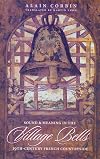
Village Bells
by Alain Corbin
On This Page
Description
In the French Canton of Brienne in November 1799, local authorities were scandalized when a crowd of girls broke through the doors of the church and rang the bells in order to mark the festival of St. Catherine. Religious use of the bells was forbidden by law, but the villagers boldly insisted on their right to celebrate with peals the feast of a beloved saint. So begins Village Bells, Alain Corbin's exploration of the "auditory landscape" of nineteenth-century France, a story of lost show more sensory experiences and forgotten passions. In the nineteenth century, these instruments were symbols of their towns and objects of both ecclesiastic and civic pride. Bell-ringing served practical purposes of communication, marking both religious and secular time, as well as calling citizens to pray, assemble, take arms, or beware of danger. As Corbin shows, the bells also reflected the social, political, and religious struggles of the time. To control the bells was to control the symbolic order, rhythm, and loyalties of French village and country life. Using church archives and local documents, Corbin forges a unique history of the role of bells from the aftermath of the Revolution to the dawn of the twentieth century. show lessTags
Recommendations


















































Member Reviews
Members
- Recently Added By
Author Information

Alain Corbin is Emeritus Professor of History at the University of Paris I, Sorbonne.
Some Editions
Awards and Honors
Series
Belongs to Publisher Series
Common Knowledge
- Canonical title*
- Les cloches de la terre. Paysage sonore et culture sensible dans les campagnes au XIXe siècle
- Original title
- Les cloches de la terre. Paysage sonore et culture sensible dans les campagnes au XIXe siècle
- Original publication date
- 1994-01-28 (1e édition originale française, L'évolution de l'humanité, Albin Michel) (1e édition originale française, L'évolution de l'humanité, Albin Michel); 2000-04-18 (Réédition française, Champs, N° 453, Flammarion) (Réédition française, Champs, N° 453, Flammarion); 2013-08-24 (Réédition française, Champs histoire, N° 453, Flammarion) (Réédition française, Champs histoire, N° 453, Flammarion); 2023-02-01 (Réédition française, Espaces libres, Histoire, Albin Michel) (Réédition française, Espaces libres, Histoire, Albin Michel)
*Some information comes from Common Knowledge in other languages. Click "Edit" for more information.
Classifications
- Genres
- History, Nonfiction, Anthropology, Music, General Nonfiction
- DDC/MDS
- 944.08 — History & geography History of Europe France and Monaco France Third republic 1870-
- LCC
- DC33.5 .C6713 — History of Europe, Asia, Africa and Oceania France – Andorra – Monaco History of France Antiquities. Social life and customs. Ethnography
- BISAC
Statistics
- Members
- 71
- Popularity
- 444,571
- Rating
- (3.33)
- Languages
- English, French, German
- Media
- Paper, Ebook
- ISBNs
- 8
- ASINs
- 2