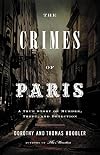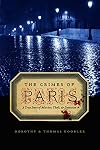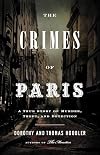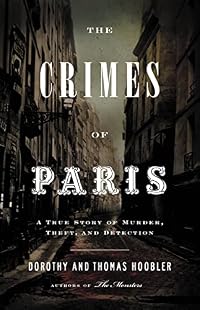
The Crimes of Paris: A True Story of Murder, Theft, and Detection
by Dorothy Hoobler
On This Page
Description
History. Sociology. Nonfiction. Turn-of-the-century Paris was the beating heart of a rapidly changing world. Painters, scientists, revolutionaries, poets--all were there. But so, too, were the shadows: Paris was a violent, criminal place, its sinister alleyways the haunts of Apache gangsters and its cafes the gathering places of murderous anarchists. In 1911, it fell victim to perhaps the greatest theft of all time--the taking of the Mona Lisa from the Louvre. Immediately, Alphonse show more Bertillon, a detective world-renowned for pioneering crime-scene investigation techniques, was called upon to solve the crime. And quickly the Paris police had a suspect: a young Spanish artist named Pablo Picasso.... show lessTags
Recommendations
























Member Recommendations
Member Reviews
The pacing was strange. The long introduction was a bit of a slog, and spacing the Mona Lisa mystery out as the author did was vaguely frustrating, especially because there wasn't quite enough content to it to justify its prominence in the book. There were lots of interesting anecdotes (like Picasso's involvement in the Mona Lisa affair), the history of the detective novel was pretty interesting, and so was the stuff on the history of criminal identification (from pre-Bertillonage to fingerprints). I'm sure it was tough to get all this to hang together, and the author mostly succeeded. But it was still a choppy read sometimes.
I found this book fascinating. It talks about the theft of the Mona Lisa and keeps coming back to that theme throughout the book but that is not really what the book is about. It starts by setting the scene of Paris and the social and political climate at the time. It talks about art, and how it was changing, and the emergence of cubism. It talks about the life of Pablo Picasso and his friends and contemporaries. And it talks a lot about crime and how that was changing too. From the first time a car was used as a get away vehicle to the first private detective to the beginnings of the use of science to solve crimes. Normally, I would think that there were too many vastly different topics to fit together in one cohesive book. But I did show more not find that the case here. None of the pieces made you wonder what they were doing there. Instead you saw how they all were interconnected. There were no improbable jumps or abrupt changes of subject as if the author was trying to shoehorn in every piece of information they happened to know no matter how unrelated. And there is a lot of information. You can tell that a lot of time went into researching this book. But even though there is a lot to digest I found the writing easy to read, it didn’t get dull or dry and it flowed well so the book moved quickly. I loved learning all the little tidbits like how cubism found its way into the military, or when the word detective was first used. I also liked that it wasn’t all just facts and dates and that you got to see some of the events in the context of people’s lives, having seen their background and how they got to where they were. There is a part of this book that is true crime in that it talks about a lot of cases and gives some specifics of each one, but it is also a history and talks about the anarchists and the political climate, it explores the culture of the time in the talk about art and the love of crime fiction. It may not be for everyone but I think it has appeal for several different interests. I don’t think you ever really forget the fact that this is a non-fiction book but at the same time it is definitely a good story. And it may not be filled with heart stopping thrills but there is a bit of mystery about it and it does keep you interested until the very end. show less
The Crimes of Paris is a book about just that: the crimes that took place in and around Paris from about 1880 to the beginning of World War I. The book’s “hook” is the theft of the Mona Lisa from the Louvre in 1911, but the bulk of the book deals with famous murders, murderers, detectives, and gangs of fin de sicle France. The 19th century was an era in which France, beset by numerous revolutions, changed drastically, and the urban landscape with it. The way that people interacted with each other changed, too, hence the number, and variety, of crimes that were carried out. Changes in technology and scientific thinking enabled detectives and the police to solve crimes that had previous remained unexplained.
If you come to this book show more expecting it to be solely about the theft of the Mona Lisa, you’ll be disappointed (watch out: the story of the theft itself is sort of a doozy). One of the crime’s suspects, briefly, was Picasso. You wonder why he was considered a suspect in the first place; he had no motive for stealing the painting, nor was he anywhere near the scene of the crime at the time it happened.
The book’s strength lies in its descriptions of other famous (and not so famous) crimes). The reader is introduced to a host of historical figures: Vidocq, France’s first real detective; Bertillon, who developed the science of anthropometry; the Bonnot gang, anarchists who were the first to escape the scenes of their crimes via car; Meg Steinheil, who murdered her husband in cold blood; and many more. As I’ve said, the “hook” of the book is the theft of the Mona Lisa, in reality unconnected to the other crimes related in this book. It would have been better had the book been described as it really was. Also, the authors make flimsy, superfluous connections between the theft and the murders. But other than that, I mostly enjoyed my trip to turn-of-the-century Paris. The book is accompanied by 14 pages of black and white reproduction photographs. show less
If you come to this book show more expecting it to be solely about the theft of the Mona Lisa, you’ll be disappointed (watch out: the story of the theft itself is sort of a doozy). One of the crime’s suspects, briefly, was Picasso. You wonder why he was considered a suspect in the first place; he had no motive for stealing the painting, nor was he anywhere near the scene of the crime at the time it happened.
The book’s strength lies in its descriptions of other famous (and not so famous) crimes). The reader is introduced to a host of historical figures: Vidocq, France’s first real detective; Bertillon, who developed the science of anthropometry; the Bonnot gang, anarchists who were the first to escape the scenes of their crimes via car; Meg Steinheil, who murdered her husband in cold blood; and many more. As I’ve said, the “hook” of the book is the theft of the Mona Lisa, in reality unconnected to the other crimes related in this book. It would have been better had the book been described as it really was. Also, the authors make flimsy, superfluous connections between the theft and the murders. But other than that, I mostly enjoyed my trip to turn-of-the-century Paris. The book is accompanied by 14 pages of black and white reproduction photographs. show less
 This review was written for LibraryThing Early Reviewers.
They use the Mona Lisa story as a hook, it is a very small portion of the narrative, It doesn't matter, though, because the catalogue of other crimes on order is full and a mini-history of French forensics is provided. Enjoyable read
I picked this book up because it was about the theft of the Mona Lisa from the Louvre at the turn of the century. I love books that deal with real art and/or artists wrapped into the fictional story. (suggestions always welcome) With this book I was slightly deceived, but very pleasantly so. The book talks about Paris in general and crime in Paris specifically, at the end of the 19th century. Anyone interested in CSI procedures and their development coupled with true crime stories would love this book. I found it quite informative and fascinating. And yes, the book does get the theft of the painting as well. I was so enthralled with the reading it almost didn’t matter.
The Crimes of Paris is a non-fiction book, but you would not know it from reading it. The book is full of stories about the many different crimes that happened in Paris, not just the theft of the Mona Lisa. This allows the reader a look into the lives of the people within Paris. It shows how the citizens of Paris were fascinated with crime and longed for a sense of fear, Paris definitely did not disappoint. The criminals of Paris were aided in their delinquent behavior by the technological advancements of the time, such as the first implementation of the get-a-way car.
As a history major I am assigned many non-fiction source books and I can say without a doubt none of them has held my attention in such a way as The Crimes of Paris. show more Dorothy and Thomas Hoobler do an amazing job turning the history of Paris' criminal past into an entertaining story. The story envelopes you in such a way that the book is hard to put down since you are transported to turn of the century Paris and fail to remember that you are even reading.
I was first drawn to this book due to the cover and would certainly recommend anyone who picks it up at a bookstore to buy it. I was lucky enough to have been able to visit the Louvre last year and did not take the time to see the Mona Lisa, I will not make that mistake again after reading The Crimes of Paris. Anyone who has a love for Paris, art, or of history in general would benefit from reading this book. show less
As a history major I am assigned many non-fiction source books and I can say without a doubt none of them has held my attention in such a way as The Crimes of Paris. show more Dorothy and Thomas Hoobler do an amazing job turning the history of Paris' criminal past into an entertaining story. The story envelopes you in such a way that the book is hard to put down since you are transported to turn of the century Paris and fail to remember that you are even reading.
I was first drawn to this book due to the cover and would certainly recommend anyone who picks it up at a bookstore to buy it. I was lucky enough to have been able to visit the Louvre last year and did not take the time to see the Mona Lisa, I will not make that mistake again after reading The Crimes of Paris. Anyone who has a love for Paris, art, or of history in general would benefit from reading this book. show less
I've been having problems getting started on my review of Dorothy and Thomas Hoobler's The Crimes of Paris: A True Story of Murder, Theft, and Detection. It's not because I didn't enjoy the book -- the opposite is true. I think that I'm having trouble writing this review because this book is just so chock full of information that I have no idea where to begin! This was a very interesting book full of fascinating anecdotes and stories about crime and crime detection in turn-of-the-century Paris.
Just a few of the fun topics that this book explores are:
--Crime writing ... who wrote about crime, who wrote about criminals and who created the first detective novel.
--Crime detection ... Bertillonage, Vidocq, detecting poisons and the advent of show more fingerprinting.
--Crime ... anarchists, the first getaway car and the theft of the Mona Lisa.
--Art ... Picasso and his contemporaries try to change the way they express their world views.
http://webereading.com/2009/04/new-release-crimes-of-paris.html show less
Just a few of the fun topics that this book explores are:
--Crime writing ... who wrote about crime, who wrote about criminals and who created the first detective novel.
--Crime detection ... Bertillonage, Vidocq, detecting poisons and the advent of show more fingerprinting.
--Crime ... anarchists, the first getaway car and the theft of the Mona Lisa.
--Art ... Picasso and his contemporaries try to change the way they express their world views.
http://webereading.com/2009/04/new-release-crimes-of-paris.html show less
Members
- Recently Added By
Lists

True Crime
216 works; 16 members
Author Information

99 Works 4,929 Members
Dorothy Hoobler is a historian and author of over sixty books, both fiction and nonfiction, mostly for young readers. Her and her husband are the authors of the well-loved American Family Album series, including The Japanese American Family Album, which was named a Carter G. Woodson Honor Book in 1997. The Hooblers won the Edgar Allan Poe Award show more for Best Young Adult Novel in 2005 with In Darkness, Death. In addition, the Society for School Librarians International chose their book Showa: The Era of Hirohito for a best book award in 1991, and they have been cited for excellence by the Library of Congress, the Parents' Choice Foundation, Bank Street College, the International Reading Association, the National Conference of Christians and Jews, and the New York Public Library. (Bowker Author Biography) show less
Common Knowledge
- Original publication date
- 2009-04
- People/Characters
- Alphonse Bertillon; Guillaume Apollinaire; Pablo Picasso
- Important places
- Paris, France; Louvre Museum, Paris, France
- Important events
- Theft of the Mona Lisa (1911-08-21)
- First words
- It was Monday and the Louvre was closed.
- Last words
- (Click to show. Warning: May contain spoilers.)That mystery has yet to be solved.
- Blurbers
- Connelly, Michael; Black, Cara
Classifications
Statistics
- Members
- 327
- Popularity
- 96,889
- Reviews
- 18
- Rating
- (3.82)
- Languages
- English, Portuguese
- Media
- Paper, Ebook
- ISBNs
- 5
- ASINs
- 3