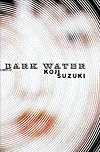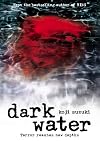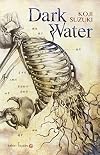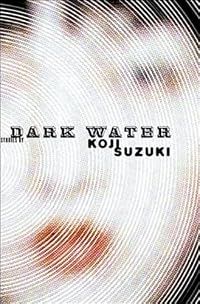
Dark Water
by Koji Suzuki
On This Page
Description
A collection of horror short stories from the acclaimed author of Ring and Spiral. These spooky stories share the sea as a theme.Tags
Recommendations

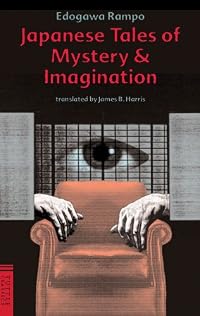

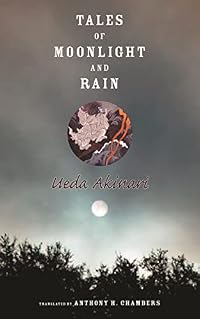
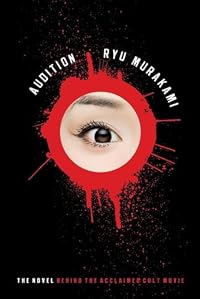

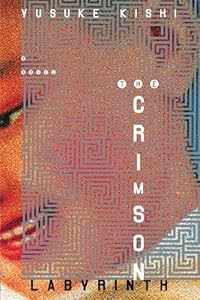






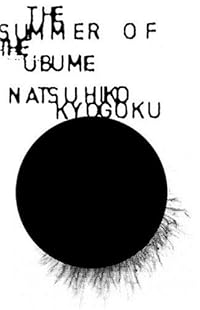
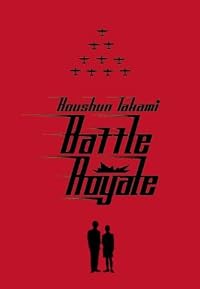
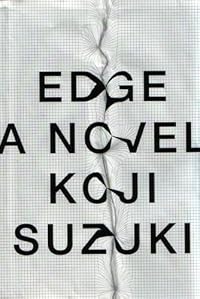

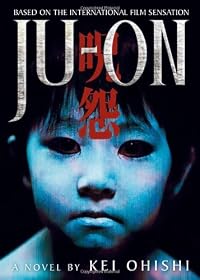














Member Recommendations
Member Reviews
Dark Water is a quietly cruel collection, and that cruelty is its organizing principle rather than a flaw. These stories are not interested in spectacle or elaborate mythology. They are about pressure: social, institutional, environmental, and psychological. Suzuki’s horror comes from neglect, indifference, and people failing—or refusing—to recognize what others actually need.
The book is framed by a prologue and epilogue that function as a perfect wrapper. Rather than offering explanation or resolution, they establish tone and aftermath. They make it clear that what follows is not a series of isolated incidents, but variations within the same hostile ecosystem. By the time you reach the epilogue, nothing has been “fixed,” but show more the emotional logic of the collection feels complete.
Floating Water is the keystone story, and its refusal to resolve is one of its greatest strengths. The horror persists because the conditions persist. Yoshimi does not escape so much as pause, and the story’s power lies in how plausible it feels that she might return. Suzuki denies both catharsis and clarity, leaving the reader in the same state as his protagonist: alert, exhausted, and unsupported. The haunting is almost secondary to the systems that allow it to continue.
Most of the collection maintains this restraint, which makes Adrift stand out as the lone disappointment. There is nothing structurally wrong with the story, but it repeatedly explains itself—its dangers, its emotions, its implications—in a way that undercuts tension. Suzuki is at his best when he trusts the reader to sit with uncertainty. Here, that trust falters, and the result feels heavy-handed in a book otherwise defined by understatement.
Forest under the Sea was the most difficult story to endure, not because it fails, but because it succeeds too well. Suzuki makes the tunnels genuinely unbearable. The claustrophobia is relentless and physical, and the reader is never allowed the relief of distance or abstraction. The ending ultimately leans toward hope, which may surprise given the book’s prevailing bleakness, but it doesn’t erase what came before. Survival, here, feels earned rather than comforting.
Across the collection, Suzuki returns again and again to people taking advantage of one another, or simply not caring enough to notice harm as it unfolds. These are not stories about evil masterminds. They are about ordinary failures of attention, empathy, and responsibility. The horror comes from how little effort it takes for someone to be abandoned.
Dark Water is not a comforting read, but it is a precise one. Its stories linger not because of what they explain, but because of what they refuse to resolve. The cruelty is quiet, systemic, and devastating—and once you notice it, you see it everywhere. show less
The book is framed by a prologue and epilogue that function as a perfect wrapper. Rather than offering explanation or resolution, they establish tone and aftermath. They make it clear that what follows is not a series of isolated incidents, but variations within the same hostile ecosystem. By the time you reach the epilogue, nothing has been “fixed,” but show more the emotional logic of the collection feels complete.
Floating Water is the keystone story, and its refusal to resolve is one of its greatest strengths. The horror persists because the conditions persist. Yoshimi does not escape so much as pause, and the story’s power lies in how plausible it feels that she might return. Suzuki denies both catharsis and clarity, leaving the reader in the same state as his protagonist: alert, exhausted, and unsupported. The haunting is almost secondary to the systems that allow it to continue.
Most of the collection maintains this restraint, which makes Adrift stand out as the lone disappointment. There is nothing structurally wrong with the story, but it repeatedly explains itself—its dangers, its emotions, its implications—in a way that undercuts tension. Suzuki is at his best when he trusts the reader to sit with uncertainty. Here, that trust falters, and the result feels heavy-handed in a book otherwise defined by understatement.
Forest under the Sea was the most difficult story to endure, not because it fails, but because it succeeds too well. Suzuki makes the tunnels genuinely unbearable. The claustrophobia is relentless and physical, and the reader is never allowed the relief of distance or abstraction. The ending ultimately leans toward hope, which may surprise given the book’s prevailing bleakness, but it doesn’t erase what came before. Survival, here, feels earned rather than comforting.
Across the collection, Suzuki returns again and again to people taking advantage of one another, or simply not caring enough to notice harm as it unfolds. These are not stories about evil masterminds. They are about ordinary failures of attention, empathy, and responsibility. The horror comes from how little effort it takes for someone to be abandoned.
Dark Water is not a comforting read, but it is a precise one. Its stories linger not because of what they explain, but because of what they refuse to resolve. The cruelty is quiet, systemic, and devastating—and once you notice it, you see it everywhere. show less
This is a nice collection of short stories. That said, its tagline is "Terror reaches new depths" and it's marketed as a horror book.
Terror? nah. None of these stories were particularly terrifying or even scary. Eerie, maybe some of them, but most of them just gave off a slightly odd atmosphere at most. It could the translation, which was awkward and very heavy, but the stories themselves didn't make any chills go down my spine.
There was also a theme of violence against women that made me uneasy, but then again, that's a staple of the horror genre, isn't it?
I don't know, at the end, the book was just okay.
Terror? nah. None of these stories were particularly terrifying or even scary. Eerie, maybe some of them, but most of them just gave off a slightly odd atmosphere at most. It could the translation, which was awkward and very heavy, but the stories themselves didn't make any chills go down my spine.
There was also a theme of violence against women that made me uneasy, but then again, that's a staple of the horror genre, isn't it?
I don't know, at the end, the book was just okay.
Leuke verhalenbundel! Sommige waren echt eng maar niet alle verhalen zijn horrorverhalen. Ze zijn wel allemaal goed geschreven qua opbouw, plot, tempo en karakters.
Wonderful short stories from this established horror writer. All dealing with "water" in some way. Some stories are brief creepers, others are touching sentiments, still more remind me of Jules Verne. Good read!
Reading this collection of short stories was like eating a bag of chips with the munchies... empty calories but tasted good. The stories were creepy, nightmarish... just downright scary... most of them anyway. All were linked by the element of water... and water, especially dark water and little kid ghosts and kid's shoes and abandoned boats... all that stuff scares me. But still, potato chips. And then I had a bad dream last night but the dream was about air and missing my flight... go figure.
[b:Dark Water|26759|Dark Water|Koji Suzuki|https://d.gr-assets.com/books/1386921123s/26759.jpg|27439] is a collection of short stories all connected through the characters' interactions with water and death. The way Suzuki incorporated paranormal elements into these connections was very interesting and was what kept me reading. However, I was thinking this would be more of a horror book than it really was. The majority of the tales reminded me more of [a:Karen Russell|26417|Karen Russell|https://d.gr-assets.com/authors/1295563225p2/26417.jpg]'s short stories, which are general fiction that utilizes some paranormal elements. So, if you're looking for a scary or creepy read, I would suggest you look elsewhere. But if you're looking for a show more collection of interesting stories then this is a solid read. show less
This collection of short stories from the author of 'The Ring' series begins with the tale that inspired the movie 'Honogurai mizu no soko kara' and the American remake 'Dark Water'.
For fans of the movies, it's interesting to see how the movies extend and, to a certain extent, cap off the original story. I found the original fiction a little lacking when compared with the development of the more complete movie tale.
As with all of Suzuki's fiction, the stories start slowly and build gradually, rewarding the patient reader, but some will definitely be disappointed by a puzzling lack of horror and supernatural elements. It is there, but not in the quantity you might expect from this author.
Overrall, a little bit hit-and-miss, but certainly show more worth a read. show less
For fans of the movies, it's interesting to see how the movies extend and, to a certain extent, cap off the original story. I found the original fiction a little lacking when compared with the development of the more complete movie tale.
As with all of Suzuki's fiction, the stories start slowly and build gradually, rewarding the patient reader, but some will definitely be disappointed by a puzzling lack of horror and supernatural elements. It is there, but not in the quantity you might expect from this author.
Overrall, a little bit hit-and-miss, but certainly show more worth a read. show less
Members
- Recently Added By
Lists

Diverse Horror
262 works; 6 members
Author Information

31+ Works 4,825 Members
Series
Belongs to Publisher Series
Common Knowledge
- Canonical title
- Dark Water
- Original publication date
- 1996
- Important places
- Japan
- Related movies
- Dark Water (2002 | IMDb | Nakata); Dark Water (2005 | IMDb | Salles); Dream Cruise (2007 | IMDb)
- First words
- Whenever her son and his family came down from Tokyo to spend time with her, Kayo would take her little granddaughter Yuko out on early morning walks.
- Last words
- (Click to show. Warning: May contain spoilers.)As she hurried home, she bounced with life.
- Original language
- Japanese
Classifications
- Genres
- Fiction and Literature, Horror
- DDC/MDS
- 895.635 — Literature & rhetoric Literatures of other languages Literatures of East and Southeast Asia Japanese Japanese fiction 1945–2000
- LCC
- PL861 .U92716 .H6613 — Language and Literature Languages and literatures of Eastern Asia, Africa, Oceania Languages of Eastern Asia, Africa, Oceania Japanese language and literature Japanese literature Individual authors and works
- BISAC
Statistics
- Members
- 552
- Popularity
- 53,328
- Reviews
- 11
- Rating
- (3.62)
- Languages
- 8 — Czech, Dutch, English, French, German, Italian, Japanese, Spanish
- Media
- Paper, Ebook
- ISBNs
- 16
- UPCs
- 1
- ASINs
- 2