Metroland
by Julian Barnes
On This Page
Description
The adolescent Christopher and his soul mate Toni had sneered at the stifling ennui of Metroland, their cosy patch of suburbia on the Metropolitan line. They had longed for Life to begin - meaning Sex and Freedom - to travel and choose their own clothes.Then Chris, at thirty, starts to settle comfortably into bourgeois contentment himself. Luckily, Toni is still around to challenge such backsliding..Tags
Recommendations

















Member Reviews
This book is a coming-of-age novel, so in that sense, it’s a typical first novel. But it’s a fresh take on the genre, both structurally and in the insights it offers. Barnes arranges the plot like a triptych. The center panel takes place in Paris, May 1968, with the protagonist oblivious to the epoch-making events a few streets over. The self-absorption is ironic since the few weeks he spends there on a research grant provide a clear demarcation between adolescence and adulthood. Sexual initiation, naturally, plays a role, but this, like the rest of the narrative, is handled in a fresh, non-sentimental way.
And the two side panels? A decade after Paris the protagonist has returned to Metroland (the suburbs stretching north of London show more along the Metropolitan line) and has become the kind of person he despised as a schoolboy (described in the first section). The irony is that he doesn’t mind.
I came to this after reading other books by Barnes and wasn’t surprised to find his preoccupations already evident: his love of French language and literature, for instance, and his fear of death. His vocabulary is fresh and finely-honed, without seeming affected, and his analysis of the shifts in relationships is subtle. An enjoyable read. show less
And the two side panels? A decade after Paris the protagonist has returned to Metroland (the suburbs stretching north of London show more along the Metropolitan line) and has become the kind of person he despised as a schoolboy (described in the first section). The irony is that he doesn’t mind.
I came to this after reading other books by Barnes and wasn’t surprised to find his preoccupations already evident: his love of French language and literature, for instance, and his fear of death. His vocabulary is fresh and finely-honed, without seeming affected, and his analysis of the shifts in relationships is subtle. An enjoyable read. show less
"Ah - a new definition of "adult": the time during which one has sold out", remarks Toni caustically. But then it's certainly not the majority of us who maintain an adolescent's sneering contempt of the bourgeoisie (as they might term it in London, at least) and of such traditional life choices as marriage, children, mortgages, and steady jobs on into what can solidly be considered the adult years. The debut novel of Julian Barnes is a coming of age story that extends into the solid rungs of adulthood and contrasts the diverging paths of teenage best friends Toni, who retains the stark intellectual and emotional outlook of rebellious adolescence, and Chris, who either matures or sells-out, as you like it.
As teenagers in sixties London, show more Toni and Chris bonded over a shared intellectualism, a revulsion towards their suburban surroundings, a conviction that Art was the most important thing in life, and an impatient waiting for that time that they would be Out There Living, and doing so better than the contemptible adults around them did.
In 1968, Chris, now 21, goes to Paris, officially with a research grant in hand but more accurately on a self-discovery jaunt. He becomes involved with a girl and begins to reconsider certain attitudes:
"Until I met Annick I'd always been certain that the edgy cynicism and disbelief in which I dealt, plus a cowed trust in the word of any imaginative writer, were the only tools for the painful, wrenching extraction of truths from the surrounding quartz of hypocrisy and deceit. The pursuit of truth had always seemed something combative. Now, not exactly in a flash, but over a few weeks, I wondered if it weren't something both higher - above the supposed conflict - and simpler, attainable not through striving but a simple inward glance."
It is his first love affair, and the righteous certitude of teenage theories fails him: "'[F:]eelings' were things you felt, so why couldn't you identify them?". He fumbles that relationship away, but meets the woman he'll marry back home in London in three years time. There, Toni refuses to attend the wedding on principle, sending "a carefully argued case against marriage" through the post that Chris doesn't bother to read. When do the theories stop? He finds a job in publishing, which "doesn't make me feel shitty: we don't fight against making money but we use good people, and we produce good books."
The novel ends when Chris and Toni are about 30 years old. They see each other infrequently, and Toni does not hold back his assertive contempt for Chris's "bourgeois" life those times they meet up, condemning his friend's retreat from those trenchant attitudes they shared as adolescents. Chris is on the defensive on two fronts, towards Toni and towards the inner voice of self-doubt, the latter being the more insidious.
As the story comes to a close he fights it off: "But what do these complaints urge, except pointless excess and disloyalty to one's character? What do they promise but disorientation and the loss of love? What's so chic about extremes; and why such guilt about the false lure of action?" He's a happy man, he declares, an achievement worthy of an adult life.
I first read this novel at age 22, while on a bit of a self-discovery jaunt in a foreign country myself. I'd say it was a time of some transition not dissimilar to what Chris's character experienced. Re-reading the novel now at age 33, I have ended up in much the same place Chris did. Married, mortgage, child(ren), steady job that doesn't make me feel shitty. Bourgeois? Perhaps. Happy? Yes. It is worthy. show less
As teenagers in sixties London, show more Toni and Chris bonded over a shared intellectualism, a revulsion towards their suburban surroundings, a conviction that Art was the most important thing in life, and an impatient waiting for that time that they would be Out There Living, and doing so better than the contemptible adults around them did.
In 1968, Chris, now 21, goes to Paris, officially with a research grant in hand but more accurately on a self-discovery jaunt. He becomes involved with a girl and begins to reconsider certain attitudes:
"Until I met Annick I'd always been certain that the edgy cynicism and disbelief in which I dealt, plus a cowed trust in the word of any imaginative writer, were the only tools for the painful, wrenching extraction of truths from the surrounding quartz of hypocrisy and deceit. The pursuit of truth had always seemed something combative. Now, not exactly in a flash, but over a few weeks, I wondered if it weren't something both higher - above the supposed conflict - and simpler, attainable not through striving but a simple inward glance."
It is his first love affair, and the righteous certitude of teenage theories fails him: "'[F:]eelings' were things you felt, so why couldn't you identify them?". He fumbles that relationship away, but meets the woman he'll marry back home in London in three years time. There, Toni refuses to attend the wedding on principle, sending "a carefully argued case against marriage" through the post that Chris doesn't bother to read. When do the theories stop? He finds a job in publishing, which "doesn't make me feel shitty: we don't fight against making money but we use good people, and we produce good books."
The novel ends when Chris and Toni are about 30 years old. They see each other infrequently, and Toni does not hold back his assertive contempt for Chris's "bourgeois" life those times they meet up, condemning his friend's retreat from those trenchant attitudes they shared as adolescents. Chris is on the defensive on two fronts, towards Toni and towards the inner voice of self-doubt, the latter being the more insidious.
As the story comes to a close he fights it off: "But what do these complaints urge, except pointless excess and disloyalty to one's character? What do they promise but disorientation and the loss of love? What's so chic about extremes; and why such guilt about the false lure of action?" He's a happy man, he declares, an achievement worthy of an adult life.
I first read this novel at age 22, while on a bit of a self-discovery jaunt in a foreign country myself. I'd say it was a time of some transition not dissimilar to what Chris's character experienced. Re-reading the novel now at age 33, I have ended up in much the same place Chris did. Married, mortgage, child(ren), steady job that doesn't make me feel shitty. Bourgeois? Perhaps. Happy? Yes. It is worthy. show less
I think there are two types of teenagers. The first kind see the world as signifying nothing. The second kind see the world as signifying too much. Both are full of angst, convinced that they can see clearly what the rest of the world--particularly grown-ups, society, the establishment, etc.--is too dull and superficial to notice. Teenagers of the first type are enthralled by [author: J.D. Salinger]'s [book: Catcher in the Rye], and find in Holden Caulfield a more eloquent expression of their own ill-formed views. Teenagers of the second type (as you might imagine, I include myself here) see Holden Caufield as a boring, spoiled, whiny brat. Barnes' [book: Metroland] is written for that second type of teenager. If high school reading show more lists offered a choice between both books, I think my own journey into adulthood might have been a little easier. I would, at least, have had a better literary model. Late in the book, when both main characters have grown into what society would doubtless call adulthood, the less contented of the two confronts his old friend:"Remember when we were at school, when life had a capital letter and it was all Out There somehow, we used to think that the way to live our lives was to discover or deduce certain principles from which individual decisions could be worked out? Seemed obvious to everyone but wankers at the time, didn't it? Remember reading all those late Tolstoy pamphlets called things like The Way We Ought To Live? I was just wondering really if you would have despised yourself then if you'd known you were going to end up making decisions based on hunches which you could easily verify, but couldn't be bothered to?"The questions that second type of teenager asks never really go away; they just get set aside in the press of marriage, mortgages, and steady jobs. There's no shame in that, Barnes suggests, but it happens all the same. We make do. Catcher is a novel about fear, and I read it as ultimately optimistic: being a teenager is hell, but you'll eventually look back on it, your fear conquered with the wisdom of age, and laugh. [book: Metroland] is a novel about desire--desire which may change its form and objects, but which never goes away. For Barnes, there is no cliff at the edge of the field, there is only another field, and another, and another. That's life, he says; and we make do. show less
I’ve recently read, and posted reviews of two other Julian Barnes’ novels, “The Sense of an Ending” and “A History of the World in 10 ½ Chapters,” both of which I thoroughly enjoyed. “Metroland” reflects some of the same themes: obnoxiousness of young schoolboys who have read a few important books but not nearly enough, growing up, love, and memory. This being my third book by Barnes, I’m starting to get a feel for his authorial panache, and I can’t help being charmed by it. You get the sense that he’s always writing with a gentle smirk on his face, not unlike the one he always has on display on the back covers of his books.
The story follows the narrator Chris and his best friend from school, Toni, as they grow show more up in the suburbs of London (the “Metroland” of the title). They both hate ordinary people, whom they contemptuously go around calling “bourgeois.” They profess to live for art and ideas, when really it’s just a kind of self-important high-mindedness they’re putting on. Part II sees Chris moving to Paris and growing a bit distant from Toni. While there, he meets and falls in love with a French woman named Annick and befriends three fellow art-lovers, one of them a woman named Marion, on a visit to the Musee Gustave Moreau. One day, he mentions to Annick rather heavy-handedly that he met Marion (with whom he has done nothing other than casually flirt), but Annick gets upset, leaves him, and is never seen again.
And here’s where Barnes’ wonderful infatuation with irony comes to a head: he falls in love with Marion, has a child with her, takes on a mortgage and respectable job that he actually enjoys, and turns into one of those hideous bourgeois that he hated as a boy. However, he’s an adult now, and he’s come to find out that living a middle-class life can be full of the same happiness, stress, joy, and anxiety that even the life of an artist can.
For a rough comparison, imagine two Holden Caulfields, except that Chris actually manages to make some moral and intellectual progress and crawl out of his teenage funk during the course of the story. Toni unfortunately doesn’t, and at the end of the novel is bitter that his writing hasn’t proven more successful than it is. Being a successful human being first helps, though – a lesson that Chris learned, by hook or by crook.
This novel was published in 1980, and it resembles what you would expect Barnes then: the author finding his voice, a voice that still resonates in his later fiction - philosophical but not overbearing, witty but not caustic. For a debut novel, I thought this was very impressive. I didn’t find it as wonderful as some of his later stuff – “A History of the World in 10 ½ Chapters” is still my favorite of the three – but it’s definitely worth checking out if you enjoy his other work. show less
The story follows the narrator Chris and his best friend from school, Toni, as they grow show more up in the suburbs of London (the “Metroland” of the title). They both hate ordinary people, whom they contemptuously go around calling “bourgeois.” They profess to live for art and ideas, when really it’s just a kind of self-important high-mindedness they’re putting on. Part II sees Chris moving to Paris and growing a bit distant from Toni. While there, he meets and falls in love with a French woman named Annick and befriends three fellow art-lovers, one of them a woman named Marion, on a visit to the Musee Gustave Moreau. One day, he mentions to Annick rather heavy-handedly that he met Marion (with whom he has done nothing other than casually flirt), but Annick gets upset, leaves him, and is never seen again.
And here’s where Barnes’ wonderful infatuation with irony comes to a head: he falls in love with Marion, has a child with her, takes on a mortgage and respectable job that he actually enjoys, and turns into one of those hideous bourgeois that he hated as a boy. However, he’s an adult now, and he’s come to find out that living a middle-class life can be full of the same happiness, stress, joy, and anxiety that even the life of an artist can.
For a rough comparison, imagine two Holden Caulfields, except that Chris actually manages to make some moral and intellectual progress and crawl out of his teenage funk during the course of the story. Toni unfortunately doesn’t, and at the end of the novel is bitter that his writing hasn’t proven more successful than it is. Being a successful human being first helps, though – a lesson that Chris learned, by hook or by crook.
This novel was published in 1980, and it resembles what you would expect Barnes then: the author finding his voice, a voice that still resonates in his later fiction - philosophical but not overbearing, witty but not caustic. For a debut novel, I thought this was very impressive. I didn’t find it as wonderful as some of his later stuff – “A History of the World in 10 ½ Chapters” is still my favorite of the three – but it’s definitely worth checking out if you enjoy his other work. show less
This is Barnes’ first novel, published in 1980 when he was 34 years old. It is told from the perspective of Christopher Lloyd, aged 15-16, living in Metroland and going to school with his best friend Toni, the two boys thinking themselves very smart in with their French language, their search for the meaning of art and life, their intellectual, superior ways with which they score points as they can from the unsuspecting…basically all the hubris of youth unblemished and untested in life and emotions…plus their insecurities vis-à-vis the opposite sex and their conjectures and fantasies about sex. Chris goes to Paris when he is 20 to study, loses his virginity, discovers sex, discovers the value of frank and open conversation rather show more than clever circumlocutions, and discovers the tangled web of emotions and trying to decide what is love. He also meets the woman who becomes his wife when they have returned to Metroland and Chris has become what, as a youth, he would have derided: employed with a mortgage and a family and, somewhat to his surprise, happy. Toni has stayed much more bohemian, but one has the sense that he has to because it is his only sense of self-identification; he sneers slightly at Chris’s bourgeois lifestyle and that Chris isn’t interested in extra-marital sex because he loves his wife and is satisfied with her….which leads to an interesting conversation between Chris and Marion, later.
The book is well written and enjoyable in itself: it rings true in the psychology of Chirs and Toni as young and more mature men; it is also interesting for themes that one can see later in Barnes’s writing.
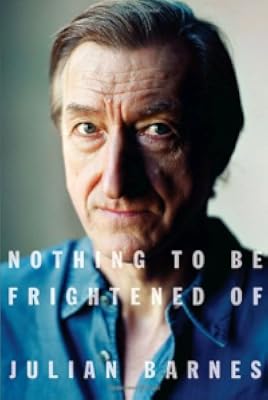
One of those themes, briefly covered in one of the short chapters, is the fear of death….a subject that Barnes explores to much greater length in nothing to be afraid of. In Metroland, Chris’s older brother Nigel is quite dismissive of such fears and Chris decides that Nigel, “either had a less touchy imagination, or he had a firmer, less anguished grasp of the termination of his own existence. “ I think there is an autobiographical touch here because in nothing to be afraid of, Barnes often juxtaposes his ruminations with the more analytical stance of his philosopher brother.
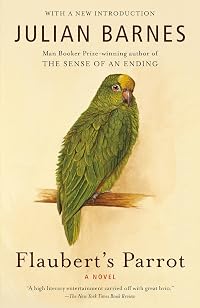
Another theme, explored further in Flaubert’s Parrot and also in Daudet, is the duty of the writer to observe and record, even to the extent of being seen as cold and unfeeling. Context shapes not just mannerisms (Chris finds himself adopting all kinds of French body language), it also affects language and how reality is described or lived. Chris quotes a study of Japanese GI-brides who spoke English at home and in the shops but Japanese among themselves; the group was interviewed twice, in Japanese and in English; with the former they came across as submissive, supportive, aware of the value of tight social cohesion; in English they were independent, frank, and much more outward-looking.
Another thought, explored further in Flaubert’s Parrot, is the power and appeal of anticipation as opposed to realization and success or failure, in many things, including sexual relations
What is happiness and how is to be structured and what right do people have to sneer at the happiness of others, however that might be defined? Looking at his life, Chris concludes: “I’d call myself a happy man; if preachy, then out of a sense of modest excitement, not pride. I wonder why happiness is despised nowadays; dismissively confused with comfort or complacency, judged an enemy of the social—even technological—progress. People often refuse to believe it when they see it; or disregard it as something merely lucky, merely genetic: a few drops of this, a dash of that, a couple of synapses unclogged. Not an achievement.”
And finally, on the last page, Chris ruminates that, “there’s no point in trying to thrust false significance on to things.”…by which he means not just physical things but also thoughts, beliefs, ideologies; because in this direction lie distortion and untruths.
Interesting to note (from Barnes’s book: nothing to be frightened of) the reaction of Barnes’s parents to this, his first published novel. His father thought, “the book well-written and funny, though he’d found the language ‘a bit lower-deck’”. His mother was more scathing: she thought the novel made some points, but she hadn’t been able to bear, “the bombardment of filth.” So, she would show friends the cover of the book, but not allow them to look inside! show less
The book is well written and enjoyable in itself: it rings true in the psychology of Chirs and Toni as young and more mature men; it is also interesting for themes that one can see later in Barnes’s writing.
One of those themes, briefly covered in one of the short chapters, is the fear of death….a subject that Barnes explores to much greater length in nothing to be afraid of. In Metroland, Chris’s older brother Nigel is quite dismissive of such fears and Chris decides that Nigel, “either had a less touchy imagination, or he had a firmer, less anguished grasp of the termination of his own existence. “ I think there is an autobiographical touch here because in nothing to be afraid of, Barnes often juxtaposes his ruminations with the more analytical stance of his philosopher brother.
Another theme, explored further in Flaubert’s Parrot and also in Daudet, is the duty of the writer to observe and record, even to the extent of being seen as cold and unfeeling. Context shapes not just mannerisms (Chris finds himself adopting all kinds of French body language), it also affects language and how reality is described or lived. Chris quotes a study of Japanese GI-brides who spoke English at home and in the shops but Japanese among themselves; the group was interviewed twice, in Japanese and in English; with the former they came across as submissive, supportive, aware of the value of tight social cohesion; in English they were independent, frank, and much more outward-looking.
Another thought, explored further in Flaubert’s Parrot, is the power and appeal of anticipation as opposed to realization and success or failure, in many things, including sexual relations
What is happiness and how is to be structured and what right do people have to sneer at the happiness of others, however that might be defined? Looking at his life, Chris concludes: “I’d call myself a happy man; if preachy, then out of a sense of modest excitement, not pride. I wonder why happiness is despised nowadays; dismissively confused with comfort or complacency, judged an enemy of the social—even technological—progress. People often refuse to believe it when they see it; or disregard it as something merely lucky, merely genetic: a few drops of this, a dash of that, a couple of synapses unclogged. Not an achievement.”
And finally, on the last page, Chris ruminates that, “there’s no point in trying to thrust false significance on to things.”…by which he means not just physical things but also thoughts, beliefs, ideologies; because in this direction lie distortion and untruths.
Interesting to note (from Barnes’s book: nothing to be frightened of) the reaction of Barnes’s parents to this, his first published novel. His father thought, “the book well-written and funny, though he’d found the language ‘a bit lower-deck’”. His mother was more scathing: she thought the novel made some points, but she hadn’t been able to bear, “the bombardment of filth.” So, she would show friends the cover of the book, but not allow them to look inside! show less
Julian Barnes' first novel (based on his own youth and early adulthood). The story is mildly interesting (callow Brit youth grows up and away from his friend) but the writing craft already shines through. He does a great turn of the narrator trying to control a conversation completely without success as his interlocutor keeps saying things he didn't expect. It takes a clever writer to take his own narrator (himself, really) by surprise.
I picked this up at a bookshop in Vancouver on my way to meet a friend, the description on the back feeling promising and befitting. Friends who consider themselves pretty great as teenagers being forced to face what that amounts to later on. I love that Barnes handles this without condemning anything, but it gets under my skin at this stage of my life, that's sure. This book isn't perfect and isn't as good as his later stuff, but it still gave me a lot of things I needed, and it kept striking me in strange ways.
[b:Flaubert's Parrot|2176|Flaubert's Parrot|Julian Barnes|https://d.gr-assets.com/books/1400866083s/2176.jpg|1414912] alerted me to Barnes' familiarity with French writers of the 19th century, a subject aligning with my own show more interests, but I wasn't aware of how intensely Francophile he is. Apparently I ought to read [b:Cross Channel|110948|Cross Channel|Julian Barnes|https://d.gr-assets.com/books/1356453412s/110948.jpg|2456074]. The mentions of Baudelaire and Gautier pricked my attention, but when it came to the Gustave Moreau museum I nearly lost it. Everything about it, an unwelcoming building near Saint-Lazare, the kind of place you find out about on your third trip and visit on your fourth, made it feel like Barnes was repeating my own experiences back to me. It's a rather important museum to me, the justification of a "research trip" to Paris when my English visa expired, staying with my sister who lived there at the time, and all the strange background and personal history that led me there at that time. It's not a place I see mentioned a lot and it almost bothered me as much as it excited me that Barnes would write about this place and make it important and everything.
This was a right-book-at-the-right-time kind of read for me, for certain, though part of me wonders if there'd ever be a wrong time with Barnes. show less
[b:Flaubert's Parrot|2176|Flaubert's Parrot|Julian Barnes|https://d.gr-assets.com/books/1400866083s/2176.jpg|1414912] alerted me to Barnes' familiarity with French writers of the 19th century, a subject aligning with my own show more interests, but I wasn't aware of how intensely Francophile he is. Apparently I ought to read [b:Cross Channel|110948|Cross Channel|Julian Barnes|https://d.gr-assets.com/books/1356453412s/110948.jpg|2456074]. The mentions of Baudelaire and Gautier pricked my attention, but when it came to the Gustave Moreau museum I nearly lost it. Everything about it, an unwelcoming building near Saint-Lazare, the kind of place you find out about on your third trip and visit on your fourth, made it feel like Barnes was repeating my own experiences back to me. It's a rather important museum to me, the justification of a "research trip" to Paris when my English visa expired, staying with my sister who lived there at the time, and all the strange background and personal history that led me there at that time. It's not a place I see mentioned a lot and it almost bothered me as much as it excited me that Barnes would write about this place and make it important and everything.
This was a right-book-at-the-right-time kind of read for me, for certain, though part of me wonders if there'd ever be a wrong time with Barnes. show less
Members
- Recently Added By
Author Information

89+ Works 43,205 Members
Julian Barnes was born in Leicester, England, on January 19, 1946. He received a degree in modern languages from Magdalen College, Oxford University in 1968. He has held jobs as a lexicographer for the Oxford English Dictionary, a reviewer and literary editor for the New Statesmen and the New Review, and a television critic. He has written show more numerous works of fiction including Arthur and George, Pulse: Stories, The Noise of Time, and England, England. He received the Somerset Maugham Award in 1980 for Metroland, the Geoffrey Faber Memorial Prize in 1985 and a Prix Medicis in 1986 for Flaubert's Parrot, and the Man Booker Prize in 2011 for The Sense of an Ending. He also writes non-fiction works including Letters from London, The Pedant in the Kitchen, and Nothing to Be Frightened Of. He received the Shakespeare Prize by the FVS Foundation in 1993, the Austrian State Prize for European Literature in 2004, and the David Cohen Prize for Literature in 2011. He writes detective novels under the pseudonym Dan Kavanaugh. His works under this name include Duffy, Fiddle City, Putting the Boot In, and Going to the Dogs. (Bowker Author Biography) show less
Some Editions
Awards and Honors
Awards
Series
Belongs to Publisher Series
HaffmannsTaschenBuch (128)
Gallimard, Folio (2987)
Work Relationships
Has the adaptation
Common Knowledge
- Canonical title
- Metroland
- Original title
- Metroland
- Original publication date
- 1980
- People/Characters
- Christopher Lloyd
- Dedication
- To Laurien
- First words
- There is no rule against carrying binoculars in the National Gallery.
- Blurbers
- Blishen, Edward; Bawden, Nina
- Original language
- English; French
Classifications
Statistics
- Members
- 935
- Popularity
- 28,687
- Reviews
- 20
- Rating
- (3.60)
- Languages
- 10 — Dutch, English, French, German, Italian, Romanian, Russian, Spanish, Swedish, Turkish
- Media
- Paper, Audiobook, Ebook
- ISBNs
- 38
- UPCs
- 1
- ASINs
- 6