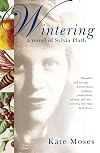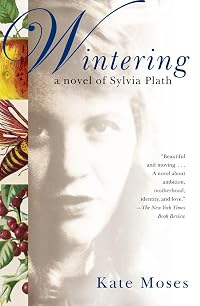
Wintering: A Novel of Sylvia Plath
by Kate Moses
On This Page
Description
This is the story of a woman forging a new life for herself after her marriage has foundered, shutting up her beloved Devonshire house and making a home for her two young children in London, elated at completing the collection of poems she foresees will make her name. It is also the story of a woman struggling to maintain her mental equilibrium, to absorb the pain of her husband's betrayal and to resist her mother's engulfing love. It is the story of Sylvia Plath. In this deeply felt novel, show more Kate Moses recreates Sylvia Plath's last months, weaving in the background of her life before she met Ted Hughes through to the disintegration of their relationship and the burst of creativity this triggered. It is inspired by Plath's original ordering and selection of the poems in Ariel, which begins with the word 'love' and ends with 'spring,' a mythic narrative of defiant survival quite different from the chronological version edited by Hughes. At Wintering's heart, though, lie the two weeks in December when Plath finds herself still alone and grief-stricken, despite all her determined hope. With exceptional empathy and lyrical grace, Moses captures her poignant, untenable and courageous struggle to confront not only her future as a woman, an artist and a mother, but the unbanished demons of her past. show lessTags
Recommendations





Member Reviews
I gave this book the rare compliment of reading it twice -- once when it first came out, back in 2003. I have a frustrating relationship with Plath, to whom I'd like to give, alternately, a long hug and a hard slap. Apparently that's the way Ted felt about her, too.
As a child of a mother who made many attempts at suicide, and who finally died by accident when she was about Plath's age (when I was 2 1/2 and my sister was 5 1/2), I have always been struck by the extraordinary self-centeredness of young parents who choose suicide. I imagine Plath's children, who are older than me by about a decade, have searched all their lives for the answers to why they were not --worthy enough? --compelling enough? --loved enough? --to have a mother who show more chose to stay, to live, if only for them. Kate Moses has helped to shed some light on these terrible questions, and for that, I thank her. show less
As a child of a mother who made many attempts at suicide, and who finally died by accident when she was about Plath's age (when I was 2 1/2 and my sister was 5 1/2), I have always been struck by the extraordinary self-centeredness of young parents who choose suicide. I imagine Plath's children, who are older than me by about a decade, have searched all their lives for the answers to why they were not --worthy enough? --compelling enough? --loved enough? --to have a mother who show more chose to stay, to live, if only for them. Kate Moses has helped to shed some light on these terrible questions, and for that, I thank her. show less
I found this book in a recycle dumpster outside of the library and picked it up because Sylvia Plath has fascinated me since the first time I heard about her and the gas oven.
It was hard to put down. Very well researched and written, and Kate Moses can phrase certain intangible emotions perfectly. I admit that I enjoyed the book for mostly personal reasons - my mild obsession with Plath, and having plodded miserably and antagonizingly through a relationship built on symbiotic compromise.
Other than that, the book ended in a weird spot. Syliva was almost on a high note...and while it is important to recognize the ups and downs of her emotions, it seems almost like a Disney movie injustice to leave off right there without examining what show more led to her ultimate breakdown. show less
It was hard to put down. Very well researched and written, and Kate Moses can phrase certain intangible emotions perfectly. I admit that I enjoyed the book for mostly personal reasons - my mild obsession with Plath, and having plodded miserably and antagonizingly through a relationship built on symbiotic compromise.
Other than that, the book ended in a weird spot. Syliva was almost on a high note...and while it is important to recognize the ups and downs of her emotions, it seems almost like a Disney movie injustice to leave off right there without examining what show more led to her ultimate breakdown. show less
A beautiful narrative with saccades of memory interwoven with a tragic subject: the final months of Sylvia Plath. Almost poetic in style, Moses creates convincing fictional dialogue; and links Plath's life events with mythologies and the culture of the era. There is a tug-of-war of empathy for both Plath and Hughes; as Hughes is portrayed with a humanly character in contrast to the stereotype created by feminists. The deep spiritual union between art and life is left with the reader on conclusion of this work.
Worth re-reading if only for the vocabulary.
Worth re-reading if only for the vocabulary.
An introspective look at Sylvia Plath's mindset in the years leading up to her suicide. Wintering takes particular interest the author's interactions with her stifling mother, beloved children, and adulterous husband (Ted Hughes.) The timeline is difficult to follow, since each chapter jumps back and forth between adolescence, separation, and divorce, but Sylvia's attempts to find her independence lend clarity to each scene. Ted is definitely the villain here, and Sylvia the victim, but it's hard to argue the point, after suicide attempts and shock therapy.
Moses does an excellent job re-imagining the last months of Sylvia Plath's life.
A novel you must read twice. It made me cry, Sylvia alone and cold. It makes me want to know more about Sylvia the
Poet
Poet
Weird concept, a fictionalized telling of Plath's last year alive.
Members
- Recently Added By
Lists

Authors portrayed in Novels
7 works; 2 members

Lives of the Poets (and Philosophers)
110 works; 5 members
Author Information

5+ Works 801 Members
Kate Moses was born in San Francisco in 1962 to a British father and an American mother, and grew up in various parts of the United States before returning to California to attend college. She subsequently worked as an editor in publishing and as literary director at San Francisco's Intersection for the Arts. In 1997 she became one of the two show more founding editors of Salon.com's Mothers Who Think Web site show less
Awards and Honors
Awards
Common Knowledge
- People/Characters
- Sylvia Plath; Ted Hughes
Classifications
Statistics
- Members
- 454
- Popularity
- 67,442
- Reviews
- 7
- Rating
- (3.84)
- Languages
- 8 — English, Estonian, French, Norwegian (Bokmål), Polish, Portuguese, Spanish, Swedish
- Media
- Paper, Ebook
- ISBNs
- 14
- ASINs
- 4