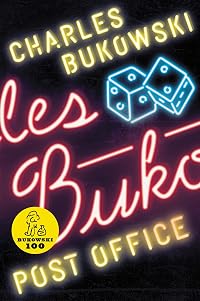
Post Office
by Charles Bukowski
On This Page
Description
"It began as a mistake." By middle age, Henry Chinaski has lost more than twelve years of his life to the U.S. Postal Service. In a world where his three true, bitter pleasures are women, booze, and racetrack betting, he somehow drags his hangover out of bed every dawn to lug waterlogged mailbags up mud-soaked mountains, outsmart vicious guard dogs, and pray to survive the day-to-day trials of sadistic bosses and certifiable coworkers. This classic 1971 novel-the one that catapulted its show more author to national fame-is the perfect introduction to the grimly hysterical world of legendary writer, poet, and Dirty Old Man Charles Bukowski and his fictional alter ego, Chinaski. show lessTags
Recommendations
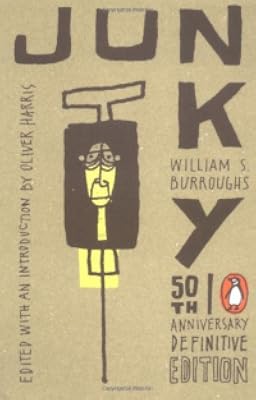
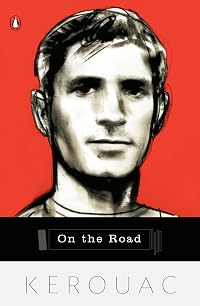
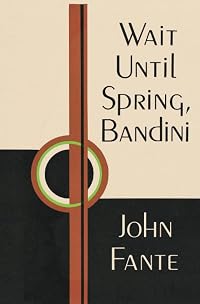
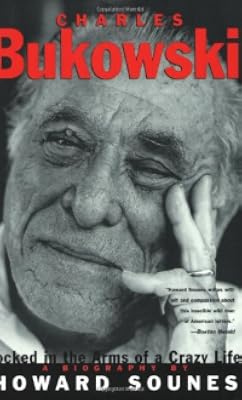







Member Recommendations

SCPeterson Melville's nightmare offers an existential take on dead-end office-work
20
mArC0 Self-destruction through alcohol and denial;
Write what you know.
Member Reviews
Charles Bukowski is the patron saint of toxic masculinity. That is a simple fact. If reading a deeply autobiographical work by the patron saint of toxic masculinity is something that does not intrigue you, or even worse if it is something that repels you, you might want to skip Post Office. The book is, for me, Bukowski's apotheosis. When people ask me how I rate books I generally say that I try to determine whether the work is the best it could be given the parameters I believe the author set for the book he intended to write (both the quality of the prose and the storytelling are relevant.) Then I think about how much it impacted me, did it change my understanding or the way I look at things. Then I think about how much I enjoyed the show more reading experience. I wish I could say I did not like reading this, but I would be lying (Bukowski is hilarious and frighteningly insightful) but even if I could say that, this book is exactly the book Bukowski set out to write, it could not have been better, it is as spare as a training manual, every word and punctuation mark is necessary, and its impact on me on this second reading was powerful. I am pretty sure it would have been a 5-star even if I had been miserable reading it. It is freaking genius. It just is.
Many great books are structured around a relationship from just before its inception to its end, and this book follows that structure. Post Office tells the story of Hank Chinaski (surprise, Hank is Charles Bukoski!) and his relationship with the US Postal Service. This is set during his years as a mail carrier and later a mail sorter. Hank's relationship with civil servanthood as he tries to avoid all labor and it tries to whittle him down to nothing more than a machine provides a good deal of the book's humor and pathos. The Postal Service is made to look ridiculous and dehumanizing, but I guess if that experience is going to happen to anyone Hank is the guy you want going through it. Hank is a terrible person. interested only in drinking and going to the track. He exerts the minimum amount of effort needed to keep a roof over his head. He stays with women he doesn't like (let alone love) mostly because it's a roof, it's easy, and it's not worth the effort of breaking up or finding a new apartment or a new lay, and anyway they will kick him out eventually. He has the emotional bandwidth of an earthworm. Generally he is not cruel or violent, but only because it would take too much energy. Hank's passivity, or really laziness, actually surprises me because it is clear from his writing that Bukowski is not passive. His prose has a desperate intensity that is unlike any other writer I can name. It almost feels like someone is standing behind him as he types, loosely holding a garrote and insisting he keep writing and it better be damn good or that wire is going to start tightening. It is like every word must come out or he will die. As a reader I can only describe it as electric, and not always in a way that feels good.
Many people have talked about how Bukowski hates women, but that is not entirely fair. Bukowski hates men at least as much as he hates women, maybe more. If is fair to say that Bukowski sees women as beings he wants to nail and beings he doesn't want to nail. Really that is the only thing that seems to matter. Every woman he sees, other mail clerks, nurses, neighbors, the first thing he does is describe breasts, thighs, legs, asses, noses, sizes. And he must shoot low because Hank kills it with the ladies, never choosing one that rejects him. So here I must address the rape scene in this book, which is related in the same way Bukowski might tell you Hank ran to the store for a quart of milk or took the dog for a walk. It is just something that happened during Hank's day. He felt dehumanized (I know that word keeps popping up) by his job, and ended up with an anger overload that needed release. Someone particularly vulnerable happened to hold the straw that broke the camel's back. Is this disturbing? Of course it is. And feeling beaten down does not make rape okay, But if you sign up to get to know Hank Chinaski, this is part of the package, he is not a good person. There is nothing sensational about the rape, there is no real description of the act, this is not Bret Easton Ellis. Quite the opposite, its just something that happened. When I read this in college I saw this very differently (not just the rape but the depiction of women in general), perhaps not least of all because it was less than a year after I was sexually assaulted, but I think it was mostly that I had a rosier view of people and of their potential then and did not fully understand what happens to a person when every day is something to be gotten through and there is no vision beyond that. As they say, lives of quiet desperation. Either my feelings about Bukowski changed because I became more compassionate or because I came to see how rare unselfconscious truth really is, or because I became jaded. I am not sure which.
I am going to give myself a little time to recover but I am definitely going to reread more Bukowski, and I suspect I will pick up some of the books I never read because it may be vile, but it is funny, and it is true, and it is brilliant. show less
Many great books are structured around a relationship from just before its inception to its end, and this book follows that structure. Post Office tells the story of Hank Chinaski (surprise, Hank is Charles Bukoski!) and his relationship with the US Postal Service. This is set during his years as a mail carrier and later a mail sorter. Hank's relationship with civil servanthood as he tries to avoid all labor and it tries to whittle him down to nothing more than a machine provides a good deal of the book's humor and pathos. The Postal Service is made to look ridiculous and dehumanizing, but I guess if that experience is going to happen to anyone Hank is the guy you want going through it. Hank is a terrible person. interested only in drinking and going to the track. He exerts the minimum amount of effort needed to keep a roof over his head. He stays with women he doesn't like (let alone love) mostly because it's a roof, it's easy, and it's not worth the effort of breaking up or finding a new apartment or a new lay, and anyway they will kick him out eventually. He has the emotional bandwidth of an earthworm. Generally he is not cruel or violent, but only because it would take too much energy. Hank's passivity, or really laziness, actually surprises me because it is clear from his writing that Bukowski is not passive. His prose has a desperate intensity that is unlike any other writer I can name. It almost feels like someone is standing behind him as he types, loosely holding a garrote and insisting he keep writing and it better be damn good or that wire is going to start tightening. It is like every word must come out or he will die. As a reader I can only describe it as electric, and not always in a way that feels good.
Many people have talked about how Bukowski hates women, but that is not entirely fair. Bukowski hates men at least as much as he hates women, maybe more. If is fair to say that Bukowski sees women as beings he wants to nail and beings he doesn't want to nail. Really that is the only thing that seems to matter. Every woman he sees, other mail clerks, nurses, neighbors, the first thing he does is describe breasts, thighs, legs, asses, noses, sizes. And he must shoot low because Hank kills it with the ladies, never choosing one that rejects him. So here I must address the rape scene in this book, which is related in the same way Bukowski might tell you Hank ran to the store for a quart of milk or took the dog for a walk. It is just something that happened during Hank's day. He felt dehumanized (I know that word keeps popping up) by his job, and ended up with an anger overload that needed release. Someone particularly vulnerable happened to hold the straw that broke the camel's back. Is this disturbing? Of course it is. And feeling beaten down does not make rape okay, But if you sign up to get to know Hank Chinaski, this is part of the package, he is not a good person. There is nothing sensational about the rape, there is no real description of the act, this is not Bret Easton Ellis. Quite the opposite, its just something that happened. When I read this in college I saw this very differently (not just the rape but the depiction of women in general), perhaps not least of all because it was less than a year after I was sexually assaulted, but I think it was mostly that I had a rosier view of people and of their potential then and did not fully understand what happens to a person when every day is something to be gotten through and there is no vision beyond that. As they say, lives of quiet desperation. Either my feelings about Bukowski changed because I became more compassionate or because I came to see how rare unselfconscious truth really is, or because I became jaded. I am not sure which.
I am going to give myself a little time to recover but I am definitely going to reread more Bukowski, and I suspect I will pick up some of the books I never read because it may be vile, but it is funny, and it is true, and it is brilliant. show less
A short, touching novel about Bukowski's alter ego, Hank Chinaski, and his time as an employee of the U.S. Post Office. Bukowski perfectly captures how dull and soul-crushing repetitive, manual labor is, and how pointless the bureaucracy and authority is that is so plentiful in office buildings, factories and other places that are full of people working a job that slowly eats them alive.
Chinaski gets into several relationships with women, drinks more than a man should be able to handle, and can generally not be bothered by a whole lot of things except good drink, good food, female company and horse racing.
The book is funny and often accurate, but most of all very relatable if you've worked in an idiotic place atleast once in your show more life. Chinaski (Bukowski) did it for over 10 years. With a mind like his, no wonder he stuck to drink and bummery so fervently. show less
Chinaski gets into several relationships with women, drinks more than a man should be able to handle, and can generally not be bothered by a whole lot of things except good drink, good food, female company and horse racing.
The book is funny and often accurate, but most of all very relatable if you've worked in an idiotic place atleast once in your show more life. Chinaski (Bukowski) did it for over 10 years. With a mind like his, no wonder he stuck to drink and bummery so fervently. show less
I enjoyed this more than I expected and in some way, more than I think I should!
Hank Chinaski describes a little more than a decade of his life. He is intelligent, but mostly lives the life of a loser: too much booze; menial work, mostly in the eponymous post office; bad relationships; bunking off work; betting on horses; more booze etc. It is all somewhat detached; his daughter is "the girl", even though he knew "as long as I could see the girl I would be all right", but such detachment is necessary for him to survive his lifestyle, especially the times when he is hurt.
Amorality Redeemed by Humour
Despite his general lack of moral compass or consideration of such matters, and the dreadful way he treats some women, it is a compellingly show more written story, with a wonderful irreverent wit than won me over, rather as an indulgent adult overlooks the worst excesses of a naughty child. At times it appears like a rambling stream-of-consciousness, but I think that is a chimera and that it is actually a carefully crafted story.
Bathos
The opening line is, "It began as a mistake", section two opens, "Meanwhile, things went on" and the book closes with, "Maybe I'll write a novel I thought. And then I did." Wonderful bathos.
When job hunting, "The first place smelled like work, so I took the second" and much of the humour comes from work, especially satirising the bureaucracy of the post office supervisors and colleagues who are variously incompetent, sadistic and playing the system.
It's not just bureaucracy, but full control, bordering on brainwashing: at one point, they are told "Each letter you stick... beyond duty helps defeat the Russians!" Targets and training are rigorous and a nurse does spot checks on anyone off sick, yet those who miss targets get compulsory "counselling" (as well as disciplinary chits).
When trying to learn the routes, Chinaski comes up with a variant of traditional memory techniques, but instead of visualising ordinary people and objects along the route, his is more like a series of orgies. Like many administratively burdened institutions, "You had to fill out more papers to get out than to get in", but before he leaves, Chinaski has one victory: a small fire from cigar ash heralds the introduction of ash trays: "I had all by myself... revolutionised the postal system", which I'm sure would be an epitaph he'd be happy with.
Poignant
Despite the light touch, Chinaski isn't immune from hurt, grief and introspection: "We slept without touching. We had both been robbed" and "How the hell do I know who you are or I am or anybody is?". Nevertheless, dirt and depravity notwithstanding, the overall tone is humorous.
Insane but Never Dull?
Early on Chinaski realises "the streets were full of insane and dull people"; he is probably the former, but certainly never the latter. show less
Hank Chinaski describes a little more than a decade of his life. He is intelligent, but mostly lives the life of a loser: too much booze; menial work, mostly in the eponymous post office; bad relationships; bunking off work; betting on horses; more booze etc. It is all somewhat detached; his daughter is "the girl", even though he knew "as long as I could see the girl I would be all right", but such detachment is necessary for him to survive his lifestyle, especially the times when he is hurt.
Amorality Redeemed by Humour
Despite his general lack of moral compass or consideration of such matters, and the dreadful way he treats some women, it is a compellingly show more written story, with a wonderful irreverent wit than won me over, rather as an indulgent adult overlooks the worst excesses of a naughty child. At times it appears like a rambling stream-of-consciousness, but I think that is a chimera and that it is actually a carefully crafted story.
Bathos
The opening line is, "It began as a mistake", section two opens, "Meanwhile, things went on" and the book closes with, "Maybe I'll write a novel I thought. And then I did." Wonderful bathos.
When job hunting, "The first place smelled like work, so I took the second" and much of the humour comes from work, especially satirising the bureaucracy of the post office supervisors and colleagues who are variously incompetent, sadistic and playing the system.
It's not just bureaucracy, but full control, bordering on brainwashing: at one point, they are told "Each letter you stick... beyond duty helps defeat the Russians!" Targets and training are rigorous and a nurse does spot checks on anyone off sick, yet those who miss targets get compulsory "counselling" (as well as disciplinary chits).
When trying to learn the routes, Chinaski comes up with a variant of traditional memory techniques, but instead of visualising ordinary people and objects along the route, his is more like a series of orgies. Like many administratively burdened institutions, "You had to fill out more papers to get out than to get in", but before he leaves, Chinaski has one victory: a small fire from cigar ash heralds the introduction of ash trays: "I had all by myself... revolutionised the postal system", which I'm sure would be an epitaph he'd be happy with.
Poignant
Despite the light touch, Chinaski isn't immune from hurt, grief and introspection: "We slept without touching. We had both been robbed" and "How the hell do I know who you are or I am or anybody is?". Nevertheless, dirt and depravity notwithstanding, the overall tone is humorous.
Insane but Never Dull?
Early on Chinaski realises "the streets were full of insane and dull people"; he is probably the former, but certainly never the latter. show less
I met an old drunk on the street one afternoon. I used to know him from the days with Betty when we made the rounds of the bars. He told me that he was now a postal clerk and that there was nothing to the job. It was one of the biggest fattest lies of the century. I've been looking for that guy for years but I'm afraid somebody else has gotten to him first." (pg. 50).
Charles Bukowski entertains in this signature rambling confessional novel about his eleven years working in menial jobs at the post office. Reading Bukowski is almost cathartic, as he gives voice to your darker everyday thoughts about life. Many will find themselves relating to the emotions and cynicisms he describes, and it is rather pleasing to see such thoughts laid out show more in print rather than just swimming around in your head. His observations on the people around him are all on the money, particularly the pedants and jobsworths, the supervisors who all "had a look on their faces... they must practice it in front of mirrors... they looked at you as if you were a hunk of human shit." (pg. 52).
But more notable are his observations on the ordinary people, the wage-slaves - those people who have just given up on trying to make something of their life, and exist just to punch in and out each day and do menial labour. At one point, Bukowski poignantly chronicles the breakdown of 'G.G', an unremarkable old employee who "was neither liked nor disliked. He was just there." (pg. 30) and was heartlessly cast aside when he had nothing left to give (his supervisor's first response, when told of G.G.'s mental collapse, is "Who's manning his route?... I gotta get somebody to man his route!" (pg. 33)). The general theme of Post Office is that such work, particularly when run by those jobsworth types that every reader will have their own less-than-fond memories of, is soul-destroying, with your whole life geared towards servitude to the company. "Damn, they won't let a man live at all, will they?" Chinaski, Bukowski's alter ego, remarks on page 75. "They always want him at the wheel." What Bukowski did, in his constant non-conformity and eventual resignation and subsequent novel-writing, was to place both hands on the wheel and choose to veer wildly all over the road. Some of Chinaski's actions may seem petty (and if you had to work alongside Bukowski in such a job you would probably think he was a bit of a piss-ant) but you have to admire someone who is so intolerant of workplace servility that he could only suffer through it himself with an unstable mixture of stubbornness, indifference and outright contempt." show less
Charles Bukowski entertains in this signature rambling confessional novel about his eleven years working in menial jobs at the post office. Reading Bukowski is almost cathartic, as he gives voice to your darker everyday thoughts about life. Many will find themselves relating to the emotions and cynicisms he describes, and it is rather pleasing to see such thoughts laid out show more in print rather than just swimming around in your head. His observations on the people around him are all on the money, particularly the pedants and jobsworths, the supervisors who all "had a look on their faces... they must practice it in front of mirrors... they looked at you as if you were a hunk of human shit." (pg. 52).
But more notable are his observations on the ordinary people, the wage-slaves - those people who have just given up on trying to make something of their life, and exist just to punch in and out each day and do menial labour. At one point, Bukowski poignantly chronicles the breakdown of 'G.G', an unremarkable old employee who "was neither liked nor disliked. He was just there." (pg. 30) and was heartlessly cast aside when he had nothing left to give (his supervisor's first response, when told of G.G.'s mental collapse, is "Who's manning his route?... I gotta get somebody to man his route!" (pg. 33)). The general theme of Post Office is that such work, particularly when run by those jobsworth types that every reader will have their own less-than-fond memories of, is soul-destroying, with your whole life geared towards servitude to the company. "Damn, they won't let a man live at all, will they?" Chinaski, Bukowski's alter ego, remarks on page 75. "They always want him at the wheel." What Bukowski did, in his constant non-conformity and eventual resignation and subsequent novel-writing, was to place both hands on the wheel and choose to veer wildly all over the road. Some of Chinaski's actions may seem petty (and if you had to work alongside Bukowski in such a job you would probably think he was a bit of a piss-ant) but you have to admire someone who is so intolerant of workplace servility that he could only suffer through it himself with an unstable mixture of stubbornness, indifference and outright contempt." show less
Poet-novelist Charles Bukowski describes not a story but a way of life in POST OFFICE, and a sour and drudgery-filled way it is. His narrator, the similarly-named Hank Chinaski, has a brisk, hard-boiled approach to narration, and his plotless story is far more engaging than it would be in most hands. What is revealed is Chinaski's life working for the post office, in his version a dusty, awful place filled with either walking corpses or power-addled scum. What light there is comes from Bukowski's way with words, the occasional surprising glimpses of sentiment, and Chinaski's laissez-faire attitude. Perhaps too plotless to be a classic novel, it is nonetheless a fast and entertaining read, though one to make the reader rethink any urges show more to work in the postal service. show less
This book currently has a rating of 4.01 here on goodreads so clearly I'm in the minority with my opinion of Post Office. I began to question whether this book was for me when Chinaski rapes a woman who lives along his postal route, but by the time I reached the part where his wife kicks their dog until it wets itself I knew I was never going to finish it. And I'm ok with that.
1/5 stars, did not finish.
1/5 stars, did not finish.
'Post Office' didn't hit me with quite the same knock-out punch as 'Factotum', but it still carried quite a heft all the same. This was Bukowski's first literary effort, or so it seems - it is set after the events of 'Factotum', which mentions from time to time Bukowski's efforts to get his short fiction placed with a publisher, but in 'Post Office' there's no real discussion of Bukowski's literary ambitions until right at the very end, when he decides to write the book in question here.
The American Dream never seemed like more of a remote fantasy than when I was reading 'Post Office.' Chinaski works for the post office, sorting the post or out delivering it. The conditions are terrible - too much work to do under too great a time show more pressure, with very little reward to make up for the destruction of his body and mind. As he says, 150-200 workers were recruited every year, but within five or ten years you'd only find one or two of that number still going within the service. It's no wonder that the term 'going postal' became common currency for a while.
'Post Office' is not as tightly edited as 'Factotum' but it does still possess that marvellous energy that Bukowski made his signature. Characters come across in a very bold way thanks only to a few lines, of description or dialogue, and the action is told through knowing details. I would say that Bukowski's writing is particularly visual - you can see exactly what he's saying, in a way that is only half-true with many other writers of the time. show less
The American Dream never seemed like more of a remote fantasy than when I was reading 'Post Office.' Chinaski works for the post office, sorting the post or out delivering it. The conditions are terrible - too much work to do under too great a time show more pressure, with very little reward to make up for the destruction of his body and mind. As he says, 150-200 workers were recruited every year, but within five or ten years you'd only find one or two of that number still going within the service. It's no wonder that the term 'going postal' became common currency for a while.
'Post Office' is not as tightly edited as 'Factotum' but it does still possess that marvellous energy that Bukowski made his signature. Characters come across in a very bold way thanks only to a few lines, of description or dialogue, and the action is told through knowing details. I would say that Bukowski's writing is particularly visual - you can see exactly what he's saying, in a way that is only half-true with many other writers of the time. show less
Members
- Recently Added By
Lists

Books featuring alcoholics
103 works; 18 members

1970s
657 works; 23 members

recalling favorites...
105 works; 2 members

Is the book too misogynist to read/recommend?
40 works; 9 members

Books Read in 2019
4,052 works; 108 members

100 knjiga
100 works; 1 member
Author Information

544+ Works 52,839 Members
Charles Bukowski was born in Andernach, Germany, on August 16, 1920. He came to the United States with his parents when he was three years old and spent his early years in poverty. As a young man he was a transient, doing odd jobs. He lived most of his live in boarding houses in the Los Angeles area. He attended Los Angeles City College briefly. show more He worked for the United States Postal Service for about ten years. Bukowski was at home with street people and his work contains a brutal realism and graphic imagery. He began publishing short stories in the mid-1940s. Starting with Flower, Fist and Bestial Wail in 1959, he produced poetry collections almost once a year. His following had grown by the time his collection of poetry about down-and-outers titled It Catches My Heart in Its Hands appeared in 1963. His short story collections include Dirty Old Man and Ejaculations, Exhibitions and General Tales of Ordinary Madness. His novels, with an autobiographical character called Henry Chinaski, include Post Office and Factotum. Bukowski wrote the screenplay for the 1987 motion picture Barfly. He later wrote about the filming of Barfly in his novel, Hollywood. Bukowski died in San Pedro, California, on March 9, 1994. (Bowker Author Biography) show less
Some Editions
Awards and Honors
Series
Belongs to Publisher Series
Speed17 (Humanoïdes associés)
Common Knowledge
- Canonical title
- Post Office
- Original title
- Post Office
- Original publication date
- 1971
- People/Characters
- Henry Chinaski
- Important places
- San Francisco, California, USA
- Important events*
- La carrière postale de Bukowski
- Dedication
- This book is presented as a work of fiction and dedicated to nobody
- First words
- It began as a mistake.
- Quotations*
- "Jaha, min gosse?"
"Jo, det ligger till så här."
"Fortsätt du. Vill du liggapå soffan?"
"Nej tack. Jag skulle bara somna"
"Var snäll och fortsätt."
"Jo, jag behöver mitt jobb."
"Det är förnuftigt re... (show all)sonerat."
"Men jag måste lära in tre postzoner till för att få behålla det."
"Postzoner? Vad är det?"
"Det är när folk inte sätter ut postnummer. Såna brev måste sorteras in. Så vi är tvungna att lära oss alla postnummerzoner efter tolv timmars nattjobb."
"Och?"
"Jag kan inte lyfta lappen där zonerna står. När jag gör det tappar jag den."
"Ni kan inte lära in dom där zonerna?"
"Nej. Och jag måste hinna stoppa in 100 kort i fack sittande i en glsabur på åtta minuter med minst 95 % rätt, annars får jag sparken. OCh jag behöver mitt jobb."
"Varför kan ni inte lära er zonerna?"
"Det är det jag är här för att fråga er om. Jag måtte vara galen. Men det är så många gator och korsningar. Titta här."
Och så skulle jag räcka honom de sex sidorna, hopfästa högst upp, med finstilt text på båda sidor.
"Han skulle bläddra i papperen.
"Och allt det här är det meningen att ni ska lära er?"
"Ja, doktorn"
"Ja, min gosse" säger han och lämnar tillbaka papperen, "ni är inte galen för att ni inte vill lära er det här. Jag skulle snarare vilja säga att ni vore galen om ni ville lära er det. Det blir 25 dollar."
Så jag analyserade mig själv och behöll pengarna.
"Men ni ringde inte och anmälde det, mr Chinaski."
"Nä."
"Och jag skulle vilja säja er en sak oss emellan, mr Chinaski."
"Visst."
"När ni inte ringer och säjer till, vet ni vad ni säjer med det?"
"Nä."
"Gör jag?"
"Och vet ni vad det innebär, mr Chinaski?"
"Nej vad innebär det?"
"Det innebär, mr Chinaski, att postverket kommer att säja, `Åt helvete med er, mr Chinaski!`"
Han lutar sig tillbaka och tittade på mig.
"Mr Feathers", sa jag, "ni kan fara och flyga."
"Var inte fräck nu, Henry. Jag kan göra det mycket besvärligt för dej."
"Var snäll och tilltala med med mitt fulla namn, sir. Jag begär ett visst mått av respekt från er."
"Ni begär att jag ska visa er respekt men . . ."
"Det stämmer. Vi vet var ni brukar parkera, mr Feathers."
"Va? Hotar ni mej?"
"Dom svarta här älskar mej, Feathers. Jag har lurat dom."
"Dom svarta älskar er?"
"Dom håller mej om ryggen. Jag till och med knullar deras kvinnor. Eller försöker i alla fall."
"Allright. Det här har spårat ur. Återvänd till ert arbete." - Last words
- (Click to show. Warning: May contain spoilers.)And then I did.
- Original language*
- Inglese
- Canonical LCC
- PS3552.U4
*Some information comes from Common Knowledge in other languages. Click "Edit" for more information.
Classifications
Statistics
- Members
- 6,338
- Popularity
- 1,944
- Reviews
- 99
- Rating
- (3.90)
- Languages
- 26 — Bulgarian, Chinese, Czech, Danish, Dutch, English, Estonian, Finnish, French, German, Galician, Greek, Hungarian, Italian, Japanese, Korean, Lithuanian, Norwegian (Bokmål), Polish, Romanian, Serbian, Croatian, Spanish, Swedish, Turkish, Portuguese (Portugal)
- Media
- Paper, Audiobook, Ebook
- ISBNs
- 92
- ASINs
- 32