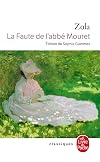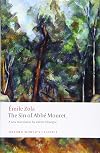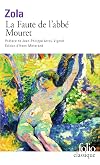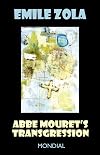
The Sin of Father Mouret
by Émile Zola
Les Rougon-Macquart (publication order) (5), Les Rougon-Macquart (Zola's recommended reading order) (9)
On This Page
Description
Serge Mouret, the younger son of Francois Mouret (see La Conquete de Plassans), was ordained to the priesthood and appointed Cure of Les Artaud, a squalid village in Provence, to whose degenerate inhabitants he ministered with small encouragement. He had inherited the family taint of the Rougon-Macquarts, which in him took the same form as in the case of his mother-a morbid religious enthusiasm bordering on hysteria. Brain fever followed, and bodily recovery left the priest without a mental show more past. Dr. Pascal Rougon, his uncle, hoping to save his reason, removed him from his accustomed surroundings and left him at the Paradou, the neglected demesne of a ruined mansion-house near Les Artaud, where he was nursed by Albine, niece of the caretaker. The Abb fell in love with Albine, and, oblivious of his vows, broke them... (J. G. Patterson) show lessTags
Recommendations


















Member Reviews
Abbé Mouret has requested a miserable hamlet for his first posting as a priest. He longs for nothing more than to sacrifice himself to his religion far from the sordidness of man. In particular, he longs for union with the Virgin Mary, his adoration tinged with repressed sexuality. In a fit of hysterical ecstasy, the priest succumbs to a brain fever, and when he awakens, he is as if newly born, stripped of memory and desires. In a long middle section, Serge and his caregiver live out the story of Genesis, with detailed descriptions of the garden. But like Adam, Serge is cast out, and finds himself a priest once more.
The Sin of Abbé Mouret was published right after The Conquest of the Plassans in the Rougon-Macquart cycle, and in some show more ways can be seen as a companion piece. Whereas Conquest dealt with Marthe Rougon Mouret and a politically-motivated priest, Sin is about her newly ordained son, Serge, and his personal failings as a priest and a man. Zola moves the reader from the macro, with an external view of Marthe's religiosity and the involvement of the clergy in national affairs, to the micro, with an internal examination of Serge's religious passions and his domestic life. This shift in perspective and field of vision brings to light different problems that Zola had with the clergy.
Another important theme in The Sin of Abbe Mouret, and many of Zola's books in general, is the role of nature. Like Aristide's greenhouse in The Kill, the grounds of the Paradou estate, are personified and sexualized. Yet Zola also goes into incredible detail with his descriptions of all the different plants. Serge's sister Desiree's farmyard is fecund, yet full of animals that attack each other and want to devour their tender. Nature is portrayed in terms both scientific and poetic, and is both beautiful and coarse, nurturing and dangerous.
Although I didn't care for this book as much as the other books in the cycle that I have read, I think there is a great deal to this book. It begs analysis and could be the source of some interesting discussions. show less
The Sin of Abbé Mouret was published right after The Conquest of the Plassans in the Rougon-Macquart cycle, and in some show more ways can be seen as a companion piece. Whereas Conquest dealt with Marthe Rougon Mouret and a politically-motivated priest, Sin is about her newly ordained son, Serge, and his personal failings as a priest and a man. Zola moves the reader from the macro, with an external view of Marthe's religiosity and the involvement of the clergy in national affairs, to the micro, with an internal examination of Serge's religious passions and his domestic life. This shift in perspective and field of vision brings to light different problems that Zola had with the clergy.
Another important theme in The Sin of Abbe Mouret, and many of Zola's books in general, is the role of nature. Like Aristide's greenhouse in The Kill, the grounds of the Paradou estate, are personified and sexualized. Yet Zola also goes into incredible detail with his descriptions of all the different plants. Serge's sister Desiree's farmyard is fecund, yet full of animals that attack each other and want to devour their tender. Nature is portrayed in terms both scientific and poetic, and is both beautiful and coarse, nurturing and dangerous.
Although I didn't care for this book as much as the other books in the cycle that I have read, I think there is a great deal to this book. It begs analysis and could be the source of some interesting discussions. show less
Serge Mouret, whom we met as a child in the previous book, is now in his early twenties and an ordained priest in his first parish. Les Artaud is a tiny and impoverished village not far from Plassans, where Serge's refined, highly mystical and visionary religious ecstasy bumps into the solid, earthy realities of peasant life. The conflict between his ideals and the raw fecundity of his surroundings prompts a nervous collapse, after which he's transferred almost magically to an untouched, paradisiacal garden (Le Paradou) where Serge's supposedly sensible uncle, Dr Pascal, has given the lovely, semi-savage, teenager Albine the task of nursing him back to health.
If you thought the agricultural and ecclesiastical sound-track was too loud show more in Part One, you will be absolutely deafened by the botanical and zoological crescendos of Part Two, as our two innocents roam through the garden mystically drawn to One Particular Tree, with inevitable results that work themselves out to a tragic conclusion in the even louder Part Three. This is Tristan und Isolde with the dial turned up to eleven. At least. Even Wagner wasn't bold enough to attempt Death by Sensory Overload, but for Zola it's all in a day's work...
It's surprisingly hard to pin down what's going on here, partly because Zola for once chooses to blur the distinctions between realism, symbolism and the dream-life of his characters, and partly because it's not the simple struggle between nature and religious faith that it at first appears. Serge and Albine both seem to be doomed to destruction because their lives revolve around a romantic belief in some ideal beyond the physical world - Albine in her love for Serge, Serge in his Catholic faith; only the cynical (Frère Archangios and the peasants) and the truly naive (Serge's "simple" sister Désirée) are able to shrug off the tragedy and keep following the cycle of nature. But we also see the terrible way Serge's seminary training helps to push him into hypocrisy whilst Albine follows her convictions to their logical conclusion - for Zola there's definitely a fundamental difference between priests and wood-nymphs, and it's not to the advantage of the priests.
The book does have its realistic interests as well, of course - there are some fascinating and plausible little glimpses into what real parish life must have been like in the backwoods of Provence in the mid-19th century. And lots of animal and plant life if you happen to have a botanical dictionary to hand. But not really one of the most rewarding Zolas - the unrelentingly high emotional pitch makes it a very trying book to read. show less
If you thought the agricultural and ecclesiastical sound-track was too loud show more in Part One, you will be absolutely deafened by the botanical and zoological crescendos of Part Two, as our two innocents roam through the garden mystically drawn to One Particular Tree, with inevitable results that work themselves out to a tragic conclusion in the even louder Part Three. This is Tristan und Isolde with the dial turned up to eleven. At least. Even Wagner wasn't bold enough to attempt Death by Sensory Overload, but for Zola it's all in a day's work...
It's surprisingly hard to pin down what's going on here, partly because Zola for once chooses to blur the distinctions between realism, symbolism and the dream-life of his characters, and partly because it's not the simple struggle between nature and religious faith that it at first appears. Serge and Albine both seem to be doomed to destruction because their lives revolve around a romantic belief in some ideal beyond the physical world - Albine in her love for Serge, Serge in his Catholic faith; only the cynical (Frère Archangios and the peasants) and the truly naive (Serge's "simple" sister Désirée) are able to shrug off the tragedy and keep following the cycle of nature. But we also see the terrible way Serge's seminary training helps to push him into hypocrisy whilst Albine follows her convictions to their logical conclusion - for Zola there's definitely a fundamental difference between priests and wood-nymphs, and it's not to the advantage of the priests.
The book does have its realistic interests as well, of course - there are some fascinating and plausible little glimpses into what real parish life must have been like in the backwoods of Provence in the mid-19th century. And lots of animal and plant life if you happen to have a botanical dictionary to hand. But not really one of the most rewarding Zolas - the unrelentingly high emotional pitch makes it a very trying book to read. show less
The Sin of Abbé Mouret starts out in almost wooden fashion, reminiscent of The Crime of Father Amaro, published the same year. Serge Mouret was a young priest, fresh out of the seminary. Prayer and devotion meant so much to him that he found it almost impossible to imagine the struggles other priests might have with their less spiritual sides. However, this is Zola, and the themes and descriptions soon let the reader know it.
Serge was a product of both the Rougons and Macquarts. His mother was from the respectable Rougon side of the family, and his father from the tainted Macquart side. Since Zola's aim was to study family, heredity and environment, we know that such a lineage will be fraught with tension and turmoil. Furthermore, not show more only was Serge's father committed to an asylum, perhaps expected as a Macquart, Serge's mother could be seen as suffering from mental instability at the end of The Conquest of Plassans, when she fell under the influence of the terrifying Abbé Faujas.
Serge had not only renounced the world of the flesh when he took his priestly vows, he also renounced the material world. He was now living in Les Artaud with a housekeeper and his mentally deficient younger sister Désirée. He had given his money to his much more worldly older brother Octave, from Pot Luck and [The Ladies' Paradise]. Les Artaud was not the place to be though for a man who found such disturbance in what he considered to be carnal sins. The villagers were all related, were wildly promiscuous, and barely paid lip service to the rites of the Catholic Church, a religion Zola shows as completely unable to meet their needs. Nature also showed no respect. Chickens pecked on the stone floor of the church, birds flew through the broken windows, a rowan tree thrust its branches in. At the altar, the priest, lost in his devotions, ... did not even hear this invasion of the nave by the warm May morning, or the rising flood of sunshine, greenery, and birds, which overflowed even up to the foot of Calvary, on which nature, dammed, lay dying. Nature was already fighting him.
Just outside the village, was a magic estate, Paradou. It had been abandoned a century before. Built in the time of Louis XV, it was like a little Versailles. But the lady of the Paradou must have died there, for she was never seen again after the first season. The following year, the chateau burned down, the park gates were nailed up, and even the narrow slits in the wall filled up with earth, so ever since that distant era, no eye had penetrated the vast enclosure which occupied the whole of one of the high plateaux of the Garrigues. Nature there was left to run riot.
The place was looked after by the caretaker Jeanbernat, the Philosopher, who took care to lodge outside the walls. His sixteen year old niece lived with him. Serge first went to Paradou with his uncle Dr Pascal, the family recorder, to visit Jeanbernat who was rumoured to be dying. Jeanbernat represents the rationalists and the voice of reason against dogma, and as such felt no reticence in challenging Serge on his beliefs. It was here that the Abbé caught his first glimpse of Albine, This blonde child, with her long face, aflame with life, seemed to him to be the mysterious and disturbing daughter of that forest he had glimpsed in a patch of light when he first arrived.
Since the age of five, Serge had been devoted to the Virgin Mary, so white, so pure. He thought of her as a divine sister, the two of them innocents in a sinful world. His priestly devotions had continued that marian focus. Mary was the only representation of the divine to grace his cell; Mary, the ever pure, in an image of the Immaculate Conception. Now, suddenly, he could not help seeing her with the eyes of an adolescent. He feared to contaminate her with his impure thoughts as her image became confused with that of Albine. Feverish, rambling, he prayed. O Mary, Chosen Vessel, castrate in me all humanity, make me a eunuch among men, so you may without fear grant me the treasure of your virginity!
And Abbé Mouret, his teeth chattering, collapsed on the tiled floor, struck down by fever.
Here the book shifts. Serge awoke in a strange room, festooned with fading images of cherubs. Albine was his nurse. He had been there some time. As he convalesced, Albine coaxed him outdoors into the gardens of the Paradou. Gradually the two innocents explored her paradise together in Zola's version of the Garden of Eden. The horticulturalist might quibble that the combinations of blooms Zola gathers don't occur in the real world, but this is the Garden, where all things are possible. There are pages and pages of incredibly lush descriptions of the animals, trees and flowers, done with incredible and accurate detail, everything with voluptuous overtones:
However, just as in the original Garden, there is a forbidden tree and there is a fall. Serge, whose illness had resulted in his forgetting his priestly life, suddenly recalled it, and was driven from the garden. The clash of religion and reality resumed, for Serge and internal one, for Zola an eternal one. show less
Serge was a product of both the Rougons and Macquarts. His mother was from the respectable Rougon side of the family, and his father from the tainted Macquart side. Since Zola's aim was to study family, heredity and environment, we know that such a lineage will be fraught with tension and turmoil. Furthermore, not show more only was Serge's father committed to an asylum, perhaps expected as a Macquart, Serge's mother could be seen as suffering from mental instability at the end of The Conquest of Plassans, when she fell under the influence of the terrifying Abbé Faujas.
Serge had not only renounced the world of the flesh when he took his priestly vows, he also renounced the material world. He was now living in Les Artaud with a housekeeper and his mentally deficient younger sister Désirée. He had given his money to his much more worldly older brother Octave, from Pot Luck and [The Ladies' Paradise]. Les Artaud was not the place to be though for a man who found such disturbance in what he considered to be carnal sins. The villagers were all related, were wildly promiscuous, and barely paid lip service to the rites of the Catholic Church, a religion Zola shows as completely unable to meet their needs. Nature also showed no respect. Chickens pecked on the stone floor of the church, birds flew through the broken windows, a rowan tree thrust its branches in. At the altar, the priest, lost in his devotions, ... did not even hear this invasion of the nave by the warm May morning, or the rising flood of sunshine, greenery, and birds, which overflowed even up to the foot of Calvary, on which nature, dammed, lay dying. Nature was already fighting him.
Just outside the village, was a magic estate, Paradou. It had been abandoned a century before. Built in the time of Louis XV, it was like a little Versailles. But the lady of the Paradou must have died there, for she was never seen again after the first season. The following year, the chateau burned down, the park gates were nailed up, and even the narrow slits in the wall filled up with earth, so ever since that distant era, no eye had penetrated the vast enclosure which occupied the whole of one of the high plateaux of the Garrigues. Nature there was left to run riot.
The place was looked after by the caretaker Jeanbernat, the Philosopher, who took care to lodge outside the walls. His sixteen year old niece lived with him. Serge first went to Paradou with his uncle Dr Pascal, the family recorder, to visit Jeanbernat who was rumoured to be dying. Jeanbernat represents the rationalists and the voice of reason against dogma, and as such felt no reticence in challenging Serge on his beliefs. It was here that the Abbé caught his first glimpse of Albine, This blonde child, with her long face, aflame with life, seemed to him to be the mysterious and disturbing daughter of that forest he had glimpsed in a patch of light when he first arrived.
Since the age of five, Serge had been devoted to the Virgin Mary, so white, so pure. He thought of her as a divine sister, the two of them innocents in a sinful world. His priestly devotions had continued that marian focus. Mary was the only representation of the divine to grace his cell; Mary, the ever pure, in an image of the Immaculate Conception. Now, suddenly, he could not help seeing her with the eyes of an adolescent. He feared to contaminate her with his impure thoughts as her image became confused with that of Albine. Feverish, rambling, he prayed. O Mary, Chosen Vessel, castrate in me all humanity, make me a eunuch among men, so you may without fear grant me the treasure of your virginity!
And Abbé Mouret, his teeth chattering, collapsed on the tiled floor, struck down by fever.
Here the book shifts. Serge awoke in a strange room, festooned with fading images of cherubs. Albine was his nurse. He had been there some time. As he convalesced, Albine coaxed him outdoors into the gardens of the Paradou. Gradually the two innocents explored her paradise together in Zola's version of the Garden of Eden. The horticulturalist might quibble that the combinations of blooms Zola gathers don't occur in the real world, but this is the Garden, where all things are possible. There are pages and pages of incredibly lush descriptions of the animals, trees and flowers, done with incredible and accurate detail, everything with voluptuous overtones:
The living flowers opened out like naked flesh, like bodices revealing the treasures of the bosom. There were yellow roses like petals from the golden skin of barbarian maidens, roses the colour of straw, lemon-coloured roses, and some the colour of the sun, all the varying shades of skin bronzed by ardent skies. Then the bodies grew softer, the tea roses becoming delightfully moist and cool, revealing what modesty had hidden, parts of the body not normally shown, fine as silk and threaded with a blue network of veins.
However, just as in the original Garden, there is a forbidden tree and there is a fall. Serge, whose illness had resulted in his forgetting his priestly life, suddenly recalled it, and was driven from the garden. The clash of religion and reality resumed, for Serge and internal one, for Zola an eternal one. show less
The Sin of Abbé Mouret is about Serge Mouret, who has become a priest and is assigned to a church in the country town of Artaud. He lives with his sister, Desiree, who is still somewhat simple-minded and loves animals more than people (with good reason based on Zola's views of humanity!). Part 1 sets up the characters and lays the foundation of a clash between nature and countryside and simplicity of life with the church and intellect and rules. Of course it is clear that Zola doesn't actually think things are so black and white, as neither of these views/lifestyles is held up as perfect. In Part 2, suddenly, Mouret is ill and staying in a garden paradise with the 16 year old Albine, who cares for him. They frolick through a garden of show more Eden setting and Zola has fun describing every ounce of the beauty around them. In Part 3, Mouret returns to the church, leaving Albine and they argue about the strictures of the church vs. what joy life away from the church could bring. 16 year old Albine clearly wins this discussion, in my opinion. But, of course, it's Zola, so things do not end happily.
I'm of two minds about this one. I was bored by the extended section 2 with the chapters and chapters of description of their Garden of Eden. I didn't like the extreme black and white views that were presented. And I'm tired of the woman always dying of love. Especially when Albine was so smart and sensible. Her arguments were spot on. She reminded Serge that she was a real person before coming to Paradou. I was impressed with her. And then she dies in a self-made bed of flowers. Ugh.
On the other hand, the descriptive writing (with a little space after reading it) is extremely memorable and impactful. And the tight focus on a few characters made it a little simpler than some of Zola's other novels, for better or worse. Overall, though I didn't love the reading experience, I think I will always remember this one, and there's something to be said for that. show less
I'm of two minds about this one. I was bored by the extended section 2 with the chapters and chapters of description of their Garden of Eden. I didn't like the extreme black and white views that were presented. And
On the other hand, the descriptive writing (with a little space after reading it) is extremely memorable and impactful. And the tight focus on a few characters made it a little simpler than some of Zola's other novels, for better or worse. Overall, though I didn't love the reading experience, I think I will always remember this one, and there's something to be said for that. show less
Amúgy zolásan kezdődik, egy remekül beállított nagyjelenettel, ahogy azt csak a kaporszakállú mester tudja: Mouret abbé az ürességtől kongó templomban szabályosan és lelkesen misét celebrál. Egyszerű, szép, erős jelenet, ami máris megvilágítja a főszereplő és környezete egymáshoz való viszonyát, az ilyen drámai képekhez ő nagyon ért. A táj bemutatása is stimmel: az artaud-i völgy leírása hibátlan, érzem a talpam alatt a kiszáradt talajt. Aztán Zola sutba dobja a naturalizmust, és elmerül a romantika mocsarában… nem véletlenül: egy átélten vallásos katolikust akar bemutatni Mouret személyében, és vén megátalkodott ateista lévén ilyet csak úgy tud elképzelni, mint egyben show more mélységesen romantikus embert*, aki a nagy szenvedély eszközével köti magát valamihez, amit objektíven nem tud megérinteni. És egy ilyen figura bemutatásához a romantika eszközei dukálnak. A csapdát pedig, amit neki állít (mert Zolának sajnos mániája, hogy a szereplők azért vannak, hogy csapdát állítsunk nekik), szintén a romantika eszköztárából kölcsönzi: megteremti Albine-t, Rousseau vademberének női megfelelőjét, a féktelen, irányíthatatlan, természetmániás süldőlányt.
És ha ez nem lenne elég, Zola megteremti Paradout, a misztikus kertet, ami nem is kert igazán, hanem az ember vágyainak és félelmeinek projekciója, az ősdzsungel, csapda és menedék egyszerre. Megteremtéséhez felhasználja gyakorlatilag a Dél-Franciaország flórája és faunája című többkötetes mű teljes névmutatóját, valamit egy vagon hasonlatot, ami igazi jelzőorgiát eredményez. Paradou és Albine együtt olyan elegy, aminek igazán nehéz ellenállni. El is időz itt Zola a könyv középső harmadában, hogy aztán visszadobja Mouret-t a való világba – hát elég erős a kontraszt.
Nem a legjobb Zola-regény, az szinte bizonyos. Az író szükségét érzi, hogy a regénytestbe komplett teológiai értekezéseket iktasson a Mária-kultuszról, talán mert maga sem érti, Mouret hogy hihet ilyesmiben. Amúgy a maguk módján jól sikerült értekezések ezek, de megtörik a regény dinamikáját. Továbbá Zola a szenvedélyes hitet mintha csak valamiféle pszichológiai betegség tüneteként tudná elképzelni, én a magam részéről nem feltétlenül értek egyet, de végül is ez csak egy regény, Mouret abbé pedig csak fiktív személy. Paradou sűrű leírásával is lehet problémája annak, aki Zolától nem ilyet várt, de az nekem speciel tetszett. Erős, nehéz, emlékezetes fejezetek voltak ott a sűrű lombok alatt.
* A romantikus keresztényen kívül persze ismer ő másfélét is: a moralista keresztényt. Nincsenek kétségeim, hogy Zola melyik fajtával szimpatizál inkább: Archangias testvér a zolai univerzum egyik legundorítóbb figurája. Nőgyűlölő fanatikus, kárörvendő, ostoba impotens, bakkecskeszagú pokolfajzat. Aranyos. show less
És ha ez nem lenne elég, Zola megteremti Paradout, a misztikus kertet, ami nem is kert igazán, hanem az ember vágyainak és félelmeinek projekciója, az ősdzsungel, csapda és menedék egyszerre. Megteremtéséhez felhasználja gyakorlatilag a Dél-Franciaország flórája és faunája című többkötetes mű teljes névmutatóját, valamit egy vagon hasonlatot, ami igazi jelzőorgiát eredményez. Paradou és Albine együtt olyan elegy, aminek igazán nehéz ellenállni. El is időz itt Zola a könyv középső harmadában, hogy aztán visszadobja Mouret-t a való világba – hát elég erős a kontraszt.
Nem a legjobb Zola-regény, az szinte bizonyos. Az író szükségét érzi, hogy a regénytestbe komplett teológiai értekezéseket iktasson a Mária-kultuszról, talán mert maga sem érti, Mouret hogy hihet ilyesmiben. Amúgy a maguk módján jól sikerült értekezések ezek, de megtörik a regény dinamikáját. Továbbá Zola a szenvedélyes hitet mintha csak valamiféle pszichológiai betegség tüneteként tudná elképzelni, én a magam részéről nem feltétlenül értek egyet, de végül is ez csak egy regény, Mouret abbé pedig csak fiktív személy. Paradou sűrű leírásával is lehet problémája annak, aki Zolától nem ilyet várt, de az nekem speciel tetszett. Erős, nehéz, emlékezetes fejezetek voltak ott a sűrű lombok alatt.
* A romantikus keresztényen kívül persze ismer ő másfélét is: a moralista keresztényt. Nincsenek kétségeim, hogy Zola melyik fajtával szimpatizál inkább: Archangias testvér a zolai univerzum egyik legundorítóbb figurája. Nőgyűlölő fanatikus, kárörvendő, ostoba impotens, bakkecskeszagú pokolfajzat. Aranyos. show less
When we meet Serge Mouret at the beginning of the novel, he has just recently been ordained as a priest after spending many years, from adolescence until now at the age of twenty-five, on his religious studies. So enraptured is he with his religion and the many rites that his Catholic faith demands, we soon learn he was very pleased about being sent to the tiny village of Artaud, where the locals are all related by blood and scorn religion, because he sees this as an opportunity to demonstrate his undying devotion to the church, against all odds. But when learn about his extreme passion for the Virgin Mary and the extent to which he is obsessed with her, we are made aware of two things: that he has inherited the mental instability of show more his grandmother, Tante Dide, and that he's being set up for a fall. His uncle, the doctor Pascal, invites him to accompany him to Le Paradou, and old domain which has been left practically abandoned, save for the old man who looks after the place. The old man's niece Albine is a beautiful and wild girl of sixteen, and soon after his visit, Serge has a complete mental breakdown when he realizes he is attracted to her. Suffering from amnesia following his meltdown, his uncle Pascal decides the best cure for the abbé is to send him to Le Paradou, where he believes daily contact with nature will restore the young man to his health. Albine and Serge spend their days roaming the vast gardens, fields and orchards of the property and over time fall deeply in love with each other, though of course that state of affairs cannot last.
So far, this fifth book in the series is my least favourite. The theme of religion and of Catholic rites is one that doesn't particularly interest me, and I knew before reading the novel that there would be extensive descriptions of those rites and of Serge's battle with temptation. The romantic meanderings of the two young people in what is of course akin to the Garden of Eden (Zola obviously intended to make that comparison by naming the place Le Paradou, a name very close to Paradis, which is the French word for Paradise) was probably my favourite part, but there were many sections where the only thing keeping me going was the goal I've set myself of reading the whole series. The ending was predictable to a certain degree, though in all fairness, it was probably considered original in Zola's time. I would definitely NOT recommend to make this your first book by Zola, unless you happen to have a great interest in the themes explored here. show less
So far, this fifth book in the series is my least favourite. The theme of religion and of Catholic rites is one that doesn't particularly interest me, and I knew before reading the novel that there would be extensive descriptions of those rites and of Serge's battle with temptation. The romantic meanderings of the two young people in what is of course akin to the Garden of Eden (Zola obviously intended to make that comparison by naming the place Le Paradou, a name very close to Paradis, which is the French word for Paradise) was probably my favourite part, but there were many sections where the only thing keeping me going was the goal I've set myself of reading the whole series. The ending was predictable to a certain degree, though in all fairness, it was probably considered original in Zola's time. I would definitely NOT recommend to make this your first book by Zola, unless you happen to have a great interest in the themes explored here. show less
This book, while generous in lush detail (especially the "Garden of Eden"), was stark in allowing human beings any choices at all. Devotion to the church was all or nothing, there wasn't room for devotion to any relationship except with God; love was sin. Zola continues his nature vs. nurture argument in this novel. I found that book two went a bit overboard with its description of Paradou (the Garden of Eden), but all in all this was a good read. 352 pages
Members
- Recently Added By
Talk Discussions
Past Discussions
Abbe Mouret's Sin by Zola in Author Theme Reads (April 2013)
Author Information

680+ Works 35,758 Members
Zola was the spokesperson for the naturalist novel in France and the leader of a school that championed the infusion of literature with new scientific theories of human development drawn from Charles Darwin (see Vol. 5) and various social philosophers. The theoretical claims for such an approach, which are considered simplistic today, were show more outlined by Zola in his Le Roman Experimental (The Experimental Novel, 1880). He was the author of the series of 20 novels called The Rougon-Macquart, in which he attempted to trace scientifically the effects of heredity through five generations of the Rougon and Macquart families. Three of the outstanding volumes are L'Assommoir (1877), a study of alcoholism and the working class; Nana (1880), a story of a prostitute who is a femme fatale; and Germinal (1885), a study of a strike at a coal mine. All gave scope to Zola's gift for portraying crowds in turmoil. Today Zola's novels have been appreciated by critics for their epic scope and their visionary and mythical qualities. He continues to be immensely popular with French readers. His newspaper article "J'Accuse," written in defense of Alfred Dreyfus, launched Zola into the public limelight and made him the political conscience of his country. (Bowker Author Biography) show less
Some Editions
Series

Les Rougon-Macquart (publication order)
21 works (5)

Les Rougon-Macquart (Zola's recommended reading order)
20 works (9)
Belongs to Publisher Series
Work Relationships
Common Knowledge
- Canonical title
- The Sin of Father Mouret; The Sin of Father Mouret
- Original title
- La faute de l'Abbé Mouret; La Faute de l'Abbé Mouret
- Alternate titles
- Abbe Mouret's Transgression
- Original publication date
- 1875
- People/Characters
- Serge Mouret; Pascal Rougon; Albine
- Important places
- France
- Related movies*
- The Demise of Father Mouret (1970 | IMDb); La faute de l'abbé Mouret (1937 | IMDb)
- First words
- La Teuse, en entrant, posa son balai et son plumeau contre l’autel.
- Last words
- (Click to show. Warning: May contain spoilers.)– Serge ! Serge ! cria-t-elle plus fort, en tapant des mains, la vache a fait un veau !
- Blurbers
- Lang, Andrew; Taine, Hippolyte; Levin, Harry; Hemmings, F. W. J.
- Original language
- French
*Some information comes from Common Knowledge in other languages. Click "Edit" for more information.
Classifications
Statistics
- Members
- 567
- Popularity
- 52,047
- Reviews
- 22
- Rating
- (3.46)
- Languages
- 15 — Czech, Dutch, English, French, German, Greek, Hungarian, Italian, Lithuanian, Portuguese, Romanian, Russian, Spanish, Swedish, Turkish
- Media
- Paper, Audiobook, Ebook
- ISBNs
- 83
- ASINs
- 35