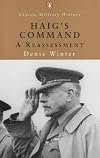
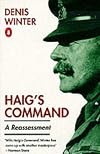
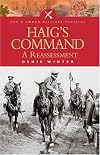
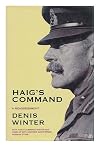
Haig's Command: A Reassessment
by Denis Winter
On This Page
Description
This book sets out to expose and analyse a major historical fraud. The author's theme is the Western Front in Haig's time - from the Somme to the armistice. Using evidence that the documents from which previous histories have been written are tampered-with and often entirely rewritten versions of the truth - for example, a daily war diary was kept by all units up to GHQ and these were often altered by the Cabinet Office and crucial appendices totally removed. Cabinet war minutes were show more likewise rewritten, with reference to whole meetings often removed. Records such as Haig's own diary were also tampered with, and Denis Winter even claims to have found documents which the war's official historian thought he had deliberately destroyed in the 1940s. show lessTags
Recommendations








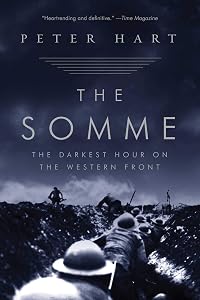
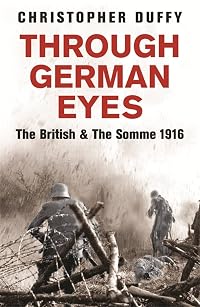
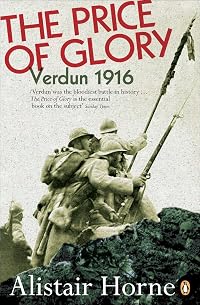

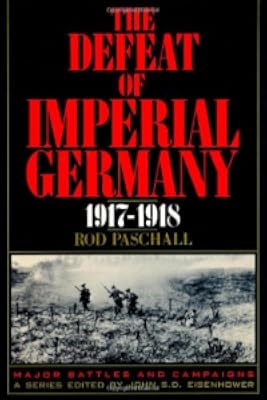



Member Reviews
If the Korean War is America’s forgotten war, then the First World War may be the even more forgotten war for most of this country. In Europe, where the scars of war still dot the landscape, where cemeteries still mark the advance of the armies, and where village centers have monuments to those lost in 1914-18, the war is not forgotten. One of the major figures in that war was Sir Douglas Haig, Commander-in-chief of the British Armies from 1916 to the end of the war. His performance as commander, especially in the bloodbaths that were the Somme and Passchendaele. Denis Winter’s book, written in 1991 with newly released sources, paints a picture that is more troubling than had previously been known.
Winter was able to review newly show more released sources from Great Britain, but also did extensive research in the archives in Australia and the United States, where he realized that significant portions of the story have been hidden from view for years. In fact, Winter notes that “three conclusions emerged after processing this material. The first was that Haig had systematically falsified the record of his military career,” including his diary. Second, “that the official record of the war…had been systematically distorted both during the war as propaganda and after it, in the official history.” And finally, “huge gaps in the war’s documentation remain.” (pgs. 4-5).
According to Winter, Haig’s career owed more to who he knew, rather than any special skill. He received a 20% markup on his grades at Sandhurst, and his performance in the Boer War as a staff officer was solid but not outstanding and served in India following the end of the conflict. His performance in the early years of World War I, were poor, and the defeat at Loos in 1915 rests squarely on his shoulders. Winters writes that Haig’s “period of command, first of a corps, then of an army, had exposed grave professional weakness in a man whose rise had always owed more to intrigue and patronage than to any evidence of talent as a soldier.” (p.41)
When it comes to the battles of 1916-17, Winter is clear in his belief that Haig’s objective had been to fight a wearing out battle on the Somme, while the true breakthrough battle would be fought in Flanders. His inability to manage the battle and the British Army’s tactics – “which assumed war in the eighteenth-century style,” contributed to the brutal slaughter along the river Somme. (p. 61)
As 3rd Ypres approached, Haig and the British Army did little in the way of learning from the previous fighting of 1914-1916. For Winter, “what Haig should have been working towards, as the French and Germans perceived by 1917, were flexible barrages, infiltration methods and training in small groups. Haig’s orders demonstrate that all were beyond his grasp.” (p. 98) Instead, thousands of British and Commonwealth soldiers would be sacrificed in the mud of Flanders, even after all hope of a breakout victory was gone.
One of the weaknesses in the system that produced Haig was the widespread anti-intellectualism that permeated the British Army. One staff officer in the years before the war, “had made a point of questioning all of the officers and found out that 95 per cent had never read a military book of any sort.” (p. 134). This current of anti-intellectualism would continue even after the war had ended, as Elizabeth Keir noted in her book, Imagining War: French and British Military Doctrine Between the Wars. Officers were promoted based on time in service, rather than ability – and then only from the Old Army. Added to this, British policy worked against establishing a strong esprit de corps in the army as “drafts were thus sent as individuals to the first unit calling for men – a practice which effectively destroyed any comradeship which might have developed during training.” (p. 147).
Most appalling was the British government’s desire to erase the truth of what happened during these years. “The quantity of deception and downright lying dealt out by the British official historian makes astonishing reading today…Edmonds had been given very precise instructions on method and story when he began his work, and when the work was completed thirty years later that commission had been faithfully executed.” (p. 254-255).
Winter’s work helps to reframe the role that Sir Douglas Haig played in the Great War. There is not a lot of positive views here on Haig, and if you are looking for a more balanced view of the Field Marshal, you may want to look at Douglas Haig and the First World War, by J. P. Harris. But Winter has scoured archives has presents a disturbing picture of the lengths a nation will go to hide the truth. Everyone interested in the First World War should read this book. show less
Winter was able to review newly show more released sources from Great Britain, but also did extensive research in the archives in Australia and the United States, where he realized that significant portions of the story have been hidden from view for years. In fact, Winter notes that “three conclusions emerged after processing this material. The first was that Haig had systematically falsified the record of his military career,” including his diary. Second, “that the official record of the war…had been systematically distorted both during the war as propaganda and after it, in the official history.” And finally, “huge gaps in the war’s documentation remain.” (pgs. 4-5).
According to Winter, Haig’s career owed more to who he knew, rather than any special skill. He received a 20% markup on his grades at Sandhurst, and his performance in the Boer War as a staff officer was solid but not outstanding and served in India following the end of the conflict. His performance in the early years of World War I, were poor, and the defeat at Loos in 1915 rests squarely on his shoulders. Winters writes that Haig’s “period of command, first of a corps, then of an army, had exposed grave professional weakness in a man whose rise had always owed more to intrigue and patronage than to any evidence of talent as a soldier.” (p.41)
When it comes to the battles of 1916-17, Winter is clear in his belief that Haig’s objective had been to fight a wearing out battle on the Somme, while the true breakthrough battle would be fought in Flanders. His inability to manage the battle and the British Army’s tactics – “which assumed war in the eighteenth-century style,” contributed to the brutal slaughter along the river Somme. (p. 61)
As 3rd Ypres approached, Haig and the British Army did little in the way of learning from the previous fighting of 1914-1916. For Winter, “what Haig should have been working towards, as the French and Germans perceived by 1917, were flexible barrages, infiltration methods and training in small groups. Haig’s orders demonstrate that all were beyond his grasp.” (p. 98) Instead, thousands of British and Commonwealth soldiers would be sacrificed in the mud of Flanders, even after all hope of a breakout victory was gone.
One of the weaknesses in the system that produced Haig was the widespread anti-intellectualism that permeated the British Army. One staff officer in the years before the war, “had made a point of questioning all of the officers and found out that 95 per cent had never read a military book of any sort.” (p. 134). This current of anti-intellectualism would continue even after the war had ended, as Elizabeth Keir noted in her book, Imagining War: French and British Military Doctrine Between the Wars. Officers were promoted based on time in service, rather than ability – and then only from the Old Army. Added to this, British policy worked against establishing a strong esprit de corps in the army as “drafts were thus sent as individuals to the first unit calling for men – a practice which effectively destroyed any comradeship which might have developed during training.” (p. 147).
Most appalling was the British government’s desire to erase the truth of what happened during these years. “The quantity of deception and downright lying dealt out by the British official historian makes astonishing reading today…Edmonds had been given very precise instructions on method and story when he began his work, and when the work was completed thirty years later that commission had been faithfully executed.” (p. 254-255).
Winter’s work helps to reframe the role that Sir Douglas Haig played in the Great War. There is not a lot of positive views here on Haig, and if you are looking for a more balanced view of the Field Marshal, you may want to look at Douglas Haig and the First World War, by J. P. Harris. But Winter has scoured archives has presents a disturbing picture of the lengths a nation will go to hide the truth. Everyone interested in the First World War should read this book. show less
A relentless and detailed demolition of one of the most controversial military commanders of World War 1. Sir Douglas Haig was the commander of British and Empire (including Canada and Newfoundland) troops through 1915 to the end of the war. Thus being in command for such horrific battles as The Somme, Ypres and Passchendaele, considered by many to exemplify the nadir of military stupidity and callousness. In spite (or because of) this Haig still has defenders in Britain who insist that his stubborn, methodical approach was the only way to win the war, and that he was constantly undercut by the despised lilly-livered politicians like David Lloyd George.
Winter methodically destroys such arguments with admirable thoroughness; carefully show more digging through mountains of official records and notes (at least the ones not destroyed) from a variety of sources and nations he paints a overwhelming case for Haig as a a stubbornly clueless bungler. Perhaps worse Haig is revealed as a shameless liar and intriguer who spent an incredible amount of effort to alter, hide and destroy official records that would have proven his ineptitude. Also damning is the role that others in the British military and government played in this shell game, even decades after everyone involved in the war has been long dead. Amazingly even now some records are still confidential, as if German spies working for the Kaiser still lurk in the shadows. It seems that the need of governments and militarizes to protect their own continues long after death, especially if any such questions might reveal an institutional incompetence and indifference towards their public. In spite of all the temptations to do so Winter did not write a pacifist screed though, he is a respected military historian who has some praise for some of Haig's contemporaries, especially the Canadian commander Arthur Currie and the French Marshal Foch an he is even more disdainful of the still revered American General Black Jack Pershing. show less
Winter methodically destroys such arguments with admirable thoroughness; carefully show more digging through mountains of official records and notes (at least the ones not destroyed) from a variety of sources and nations he paints a overwhelming case for Haig as a a stubbornly clueless bungler. Perhaps worse Haig is revealed as a shameless liar and intriguer who spent an incredible amount of effort to alter, hide and destroy official records that would have proven his ineptitude. Also damning is the role that others in the British military and government played in this shell game, even decades after everyone involved in the war has been long dead. Amazingly even now some records are still confidential, as if German spies working for the Kaiser still lurk in the shadows. It seems that the need of governments and militarizes to protect their own continues long after death, especially if any such questions might reveal an institutional incompetence and indifference towards their public. In spite of all the temptations to do so Winter did not write a pacifist screed though, he is a respected military historian who has some praise for some of Haig's contemporaries, especially the Canadian commander Arthur Currie and the French Marshal Foch an he is even more disdainful of the still revered American General Black Jack Pershing. show less
An in-depth look into the British Army and life in general on the Western front, and does a great takedown of General Haig and his leadership. Arguments are well brought out and backed up and changes one's view of the Great War.
Ratings
Members
- Recently Added By
Published Reviews
ThingScore 50
added by booksaplenty1949
added by booksaplenty1949
Author Information
5 Works 451 Members
Series
Belongs to Publisher Series
Common Knowledge
- Original publication date
- 1991
- People/Characters
- Douglas Haig
- Important places
- Ypres, West Flanders, Belgium
- Important events
- World War I (1914 | 1918)
- Dedication
- For my mother/and in memory of my father,/1583 Sergeant H. Winter, MM,/who fought in the front line at/2nd Bullecourt, St Julien, Chipilly/and the Canal du Nord
- First words
- Until the 1960s, Britain's contribution to the Great War seemed clearcut, the roles of her chief players generally accepted.
- Blurbers
- Jackson, William; Keegan, John; Howard, Michael
Classifications
- Genres
- History, Nonfiction, Biography & Memoir, General Nonfiction
- DDC/MDS
- 940.414092 — History & geography History of Europe History of Europe Military History Of World War I Operations And Units Europe
- LCC
- D544 .H29 .W56 — History of Europe, Asia, Africa and Oceania History (General) World War I (1914-1918)
- BISAC
Statistics
- Members
- 148
- Popularity
- 221,099
- Reviews
- 3
- Rating
- (3.56)
- Languages
- English
- Media
- Paper, Ebook
- ISBNs
- 5
- UPCs
- 1
- ASINs
- 4