76 Members (5.00)
On This Page
Description
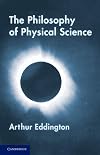
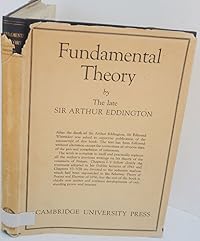
Sir Arthur Eddington (1882-1944) was both a key figure in the development of astrophysics during the early part of the twentieth century and a notable philosopher of science. Originally published in 1939, this book contains the substance of the course of lectures delivered by Eddington as Tarner Lecturer of Trinity College, Cambridge in the Easter term of 1938. The text discusses the principles of philosophical thought associated with advances in physical science, developing the ideas show more contained in earlier titles such as The Nature of the Physical World (1928) in line with discoveries in quantum mechanics and group theory. This is a highly insightful title that will be of value to anyone with an interest in Eddington, the development of physics and the philosophy of science. show lessTags
Recommendations










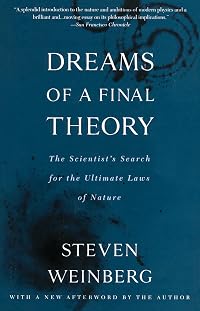


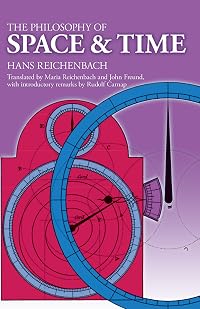

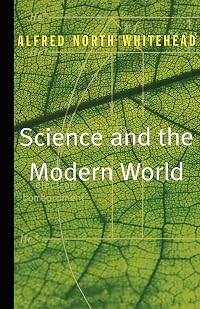


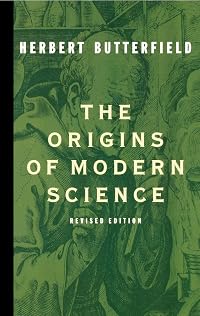








Member Reviews
Members
- Recently Added By
Author Information

30+ Works 868 Members
Born in Kendal, England, Arthur Eddington was the son of the headmaster of the Kendal school. At the age of 16, Eddington won a scholarship to Owens College in Manchester, graduating with a degree in physics in 1902. Although he was very shy in public, he had an outstanding ability to convey mathematical concepts to the layperson. Eddington was show more widely known in the early twentieth century for his popular books, many of which remain in print. But he also was one of the pioneers of twentieth-century astrophysics, a founder of many important lines of astrophysical research. Eddington spent a few years studying stellar motions at the Royal Observatory at Greenwich. However, most of his professional career was spent at Cambridge University, where he was Plumian Professor of Astronomy and observatory director for four decades. But Eddington's most important contribution relates to the understanding of relativity and the structure and composition of stars. He was one of the first people outside Germany to understand and appreciate Albert Einstein's general theory of relativity. This led to his expedition to Principe (in South America) to test the theory experimentally. Although the source of stellar energy, nuclear fusion, had not been discovered, Eddington's analysis of stellar interiors in the 1920s correctly demonstrated the composition of stars and stellar behavior. He predicted that nuclear reactions were ultimately responsible for the phenomenon of sunshine. In his later years, Eddington was preoccupied with establishing fundamental numerical relationships between various cosmic quantities. In fact, he first recognized the fundamental importance of a number called the fine structure constant, which is a measure of the strength of electrical interaction. (Bowker Author Biography) show less
Series

Belongs to Publisher Series
Common Knowledge
- Canonical title
- The Philosophy of Physical Science
- Original publication date
- 1939
Classifications
Statistics
- Members
- 76
- Popularity
- 416,770
- Rating
- (5.00)
- Languages
- English, Italian
- Media
- Paper, Ebook
- ISBNs
- 8
- ASINs
- 7