On This Page
Description
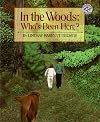
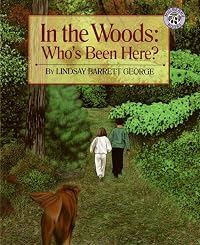
A boy and girl in the autumn woods find an empty nest, a cocoon, gnawed bark, and other signs of unseen animals and their activities.Tags
Recommendations















Member Reviews
This is a cute book about two siblings walking in the woods and discovering plants and animals. Reading this book would be great before going on a nature walk to see what kids discover. The book does include a picture of a bird with a dead bird with some blood on it. While it is not very graphic, it is something to be mindful of while reading. I think this book is at a primary reading level.
I really enjoyed this book for multiple reasons. First, the plot encourages readers to love and learn about nature. Each page presents a new creature and a fact about them. For example, the children find milkweed in the tree and ask, "Who's been here?" The author then presents the monarch butterfly to the readers on the next page. Second, the language is repetitive and descriptive in order to enhance the story. For example, on one page the children describe what they have seen and the next the author gives the reader the name of the animal. This allows for readers to make predictions, and be more inclined to follow along in the story. Third, the illustrates are capturing. For example, the image of the orioles nest have the children show more pointing up to the small, sagging nest. The children and their dog are in each picture. This allows for readers to really see the details about the animals and make predictions. The main idea of this story is learning different creatures in the woods. show less
This book begins describing the setting. Two children Williams and Cammy decide to go for a walk on a path through the woods. Along the way the children see different animals and their habitats. The narrator simply states “Who’s been here?” On the next page after the question is asked the narrator will state the animal that inhabited the niche. The author is very specific in stating the exact animal that inhabits the niche such as: (the Northern Oriole, Red Squirrel, Goshawk, etc…). The book ends with the two children meeting up with their Dad for a nice picnic.
I love this book and share it with my child often. I love that the author is very specific about the animals. This book is a great informational book that would be show more classified as a concept book. It has beautiful illustrations that are accurate of all the animals portrayed.
This would be a great book to use when teaching life sciences. This book would be great for older children when discussing living diversity and the food chain. This could also be used for young children when you introduce them to the different forms of life. show less
I love this book and share it with my child often. I love that the author is very specific about the animals. This book is a great informational book that would be show more classified as a concept book. It has beautiful illustrations that are accurate of all the animals portrayed.
This would be a great book to use when teaching life sciences. This book would be great for older children when discussing living diversity and the food chain. This could also be used for young children when you introduce them to the different forms of life. show less
This book is about a brother and sister who take a walk through the woods. On each page it describes where they are and what is around them. For example on one page it says how they are next to an orange wood lily in a sunny clearing. The stalk next to the flower does not have a flower on it and they ask who’s been here? Then on the next page it says a deer. I like this book because it gives the reader a chance to think about what animal has been to the place they’re standing. I would use this book to teach students about making predictions and inferences. They can make an inference based on the information given and what they know and then guess what animal has been there.
The plot of this story is full of repetition, and engages the reader because it gives the reader an opportunity to guess what animal the children are going to find. There is no real conflict in the story, only following the children on a walk through the forest. The genre of this book is realistic fiction because it seems to be set in present day and the plot, characters and setting all seem believable and real. The places and animals the author writes about are realistic because the readers themselves may easily have seen or been to one of these places or animals.
William and Cammy take a walk through the woods and discover lots of animals that live there. The Snowshoe hare who gnawed off branches close to the ground or a family of foxes living in a dark cave. This is a good book about informing children what can be found in the woods.
This book is written for younger children, but can be used for older students as an introduction to habitats. The book follows a pattern of providing clues regarding observations about a location, and then the question, "Who's been here?" Many animals and a few plants are mentioned, but details are not given about each one until the very end of the book. I will read this book aloud to the whole class as an introduction to the students' research project for the "living things" unit. Students will pick one living organism to research, write about, and present to the class. This book (and others that the teacher will supply) will provide students with many options for research.
Members
- Recently Added By
Author Information

16 Works 2,439 Members
Awards and Honors
Awards
Distinctions
Series

Common Knowledge
- Original publication date
- 1995
Classifications
Statistics
- Members
- 478
- Popularity
- 63,279
- Reviews
- 13
- Rating
- (3.66)
- Languages
- English
- Media
- Paper
- ISBNs
- 7
- ASINs
- 3