The Science of Mechanics: A Critical and Historical Account of Its Development
by Ernst Mach
Biblioteca di cultura scientifica [Einaudi] (67)
On This Page
Description
Ernst Mach (1838-1916), the first scientist to study objects moving faster than the speed of sound, propounded a scientific philosophy which called for a strict adherence to observable data. He maintained that the sole purpose of scientific study is to provide the simplest possible description of detectable phenomena. In this work, first published in German in 1883 and here translated in 1893 by Thomas J. McCormack (1865-1932) from the 1888 second edition, Mach begins with a historical show more discussion of mechanical principles. He then proceeds to a critique of Newton's concept of 'absolute' space and time, reflecting Mach's rejection of theoretical concepts in the absence of definitive evidence. Although historically controversial, Mach's ideas and attitudes informed philosophers as influential as Russell and Wittgenstein, and his insistence upon a 'relative' idea of space and time provided much of the philosophical basis for Einstein's theory of general relativity decades later. show lessTags
Recommendations











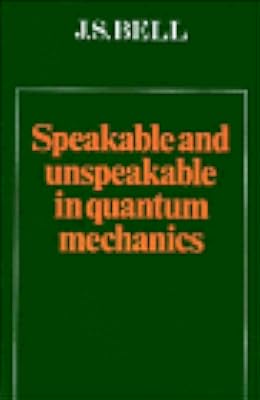


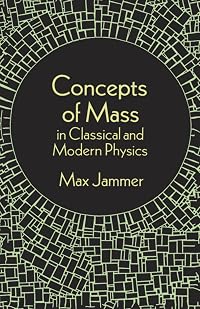



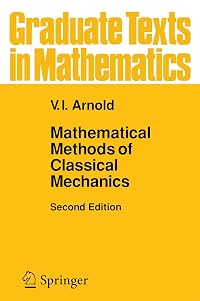
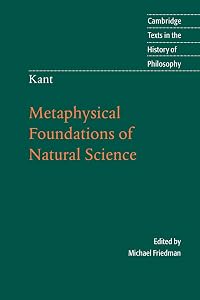













Member Reviews
Earlier, I bought a paperback, at Amherst
7=A=1080
Jan 30, 2012Italian
Ratings
Members
- Recently Added By
Lists

Trinity College Booklist (1951): Class One, Natural Science
98 works; 2 members
Author Information

26+ Works 400 Members
Educated by his father, who stressed the importance of carpentry and farming, Ernst Mach received his Ph.D. from the University of Vienna in 1860. Mach made many contributions to science in a variety of fields, but he is best known for his powerful influence on several generations of scientists as a critic of science and as a philosopher. His show more initial research in experimental psychology revealed the function of the semicircular canals of the ear. Mach is best known in physics for his work on shock waves, which led to the mach number being introduced in 1929 as a measure of speed. The mach number is the ratio of the speed of an object in a fluid to the speed of sound in the fluid. Mach is also known to cosmologists for his controversial statement of the principle of inertia, called Mach's principle. The Mach principle rejected the Newtonian notion of absolute space and time. Mach's elimination of absolute space was part of his more general program in which he hoped to eliminate metaphysics (all those purely "thought-things" that cannot be pointed to in experience) from science. His views influenced the important philosophical movement of logical positivism and also had some impact on scientific practice, especially Einstein in formulating his theory of relativity. Despite his influence, Mach was a radical thinker who never accepted the existence of atoms or Einstein's theory of relativity. (Bowker Author Biography) show less
Series

Common Knowledge
- Canonical title
- The Science of Mechanics: A Critical and Historical Account of Its Development
- Original title
- Die Mechanik in ihrer Entwickelung historisch-kritisch dargestellt
Classifications
Statistics
- Members
- 128
- Popularity
- 251,926
- Reviews
- 2
- Rating
- (4.10)
- Languages
- English, French, German, Italian
- Media
- Paper, Ebook
- ISBNs
- 18
- ASINs
- 6