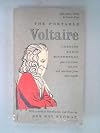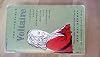
The Portable Voltaire
by Voltaire
On This Page
Description
Collects the most significant writings of Voltaire, preceded by a brief biography of the author, a bibliography of his works, and a chronology.Tags
Recommendations


























Member Reviews
The Editor's Introduction by Ben Ray Redman is extensive yet so succinctly and delightfully written that it alone is a sufficient reason to add The Portable Voltaire to your library.
Even translated Voltaire is quite entertaining. We get comlete texts of Zadig, and Candide, as well as Micromegas. There are letters and essays as well as a brief biography of this accomplished writer. I read an earler edition
Great collection of Voltaire's works, the translation manages to be just as witty and tongue-in-cheek as the original!
Good old Voltaire: he was mad at everyone, and said so in style.
Book Description: New York: Viking, 1966. No Jacket. Good Condition, Cover has Spine Creases, and Cober Creases, Hinge wear, Inside is very clean, 16th Printing, Mass Market Paperback, 569pp.,
See my review at Tales of an Ordinary Girl.
Members
- Recently Added By
Lists

Trinity College Booklist (1951): Class Nine, Foreign Literatures
161 works; 3 members
Author Information

1,817+ Works 42,018 Members
François-Marie Arouet known as Voltaire, was born in Paris in 1694. He was educated by the Jesuits at the Collège Louis-le-Grand (1704-1711), where he learned Latin and Greek; later in life he became fluent in Italian, Spanish, and English. By the time he left school, Voltaire had decided he wanted to be a writer. His father then obtained a job show more for him as a secretary to the French ambassador in the Netherlands. Most of Voltaire's early life revolved around Paris. From early on, Voltaire had trouble with the authorities for critiques of the government and religious intolerance. These activities were to result in two imprisonments and a temporary exile to England. The name "Voltaire", which the author adopted in 1718, is an anagram of "AROVET LI," the Latinized spelling of his surname, Arouet, and the initial letters of "le jeune" ("the young"). The name also echoes in reverse order the syllables of the name of a family château in the Poitou region: "Airvault". The adoption of the name "Voltaire" following his incarceration at the Bastille is seen by many to mark Voltaire's formal separation from his family and his past. Voltaire continued to write plays, such as Mérope (or La Mérope française) and began his long research into science and history. From 1762, he began to champion unjustly persecuted people, the case of Jean Calas being the most celebrated. This Huguenot merchant had been tortured to death in 1763, supposedly because he had murdered his son for wanting to convert to Catholicism. His possessions were confiscated and his remaining children were taken from his widow and were forced to become members of a monastery. Voltaire, seeing this as a clear case of religious persecution, managed to overturn the conviction in 1765. n February 1778, Voltaire returned for the first time in 20 years to Paris. He soon became ill again and died on 30 May 1778. show less
Some Editions
Series
Belongs to Publisher Series
Common Knowledge
- Canonical title
- The Portable Voltaire
- Original publication date
- 1949
- People/Characters
- Voltaire "François-Marie Arouet", 1694-1778
- Important places*
- Parijs, Île-de-France, Frankrijk
- Important events
- French Enlightenment
- First words
- The word abbé, let it be remembered, signifies father.
- Last words
- (Click to show. Warning: May contain spoilers.)Hope he omitted, man's sole bliss below.
- Original language
- French
*Some information comes from Common Knowledge in other languages. Click "Edit" for more information.
Classifications
Statistics
- Members
- 746
- Popularity
- 37,824
- Reviews
- 7
- Rating
- (4.03)
- Languages
- English
- Media
- Paper, Ebook
- ISBNs
- 7
- ASINs
- 16