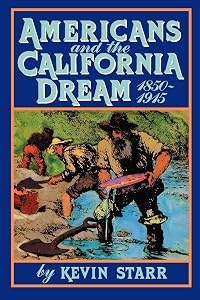
Americans and the California Dream, 1850-1915
by Kevin Starr
Americans and the California Dream (Book 1)
On This Page
Description
Examining California's formative years, this innovative study seeks to discover the origins of the California dream and the social, psychological, and symbolic impact it has had not only on Californians but also on the rest of the country.Tags
Recommendations












Member Reviews
Despite this being the highest rated book on California history, it is not a history of California. This is a history of California identity. In other words it is a history of how people thought of California.
Starr states this objective in the intro, but it took a couple if chapters for it to become clear what he meant.
You will not learn a lot about concrete California from this book, except maybe how identity shaped architecture. Starr assumes the reader knows California history and events are rarely discussed directly. For readers looking for a comprehensive history of this time period, I would definitely start elsewhere before circling back to this book.
Starr states this objective in the intro, but it took a couple if chapters for it to become clear what he meant.
You will not learn a lot about concrete California from this book, except maybe how identity shaped architecture. Starr assumes the reader knows California history and events are rarely discussed directly. For readers looking for a comprehensive history of this time period, I would definitely start elsewhere before circling back to this book.
This is a book I found fascinating even though it seemed to drag on forever. I worked on it for over two weeks.
I'm a native Californian and this book taught me many new things. The content would have worked very well for the Cultural Geography of California course I took ages ago. The book was first published in 1972. I was surprised and pleased to find the content was quiet honest about many racist and cruel elements in California's past, and how that connected to the very title of the book. The quest to make California American was also often considered part of a manifest destiny against a Catholic dominion. The native peoples were enslaved. The original Mexican landholders found their legal rights ignored, their dominion overrun by show more squatters, their recourse limited.
The text goes into great depth on the psychology behind the Gold Rush, the founding of San Francisco, early historians of the state, Josiah Royce, John Muir, Jack London, the very self-destructive Bohemian artists and writers of San Francisco and Carmel, the "City Beautiful" movement, the founding of Stanford University, Gertrude Atherton, and the attempt to create California as a new Mediterranean. At almost 500 pages, it digs deep. I appreciated the constant use of primary sources of the period--there is a massive index and bibliography in the back--and I found out about several more books I want to read.
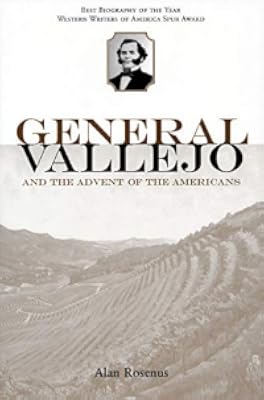
I knew this volume focused on northern California but I was a bit disappointed in how heavily it focused on San Francisco. I had hoped for more on the Central Valley, where I'm from. There were scattered mentions of the Mussel Slough Tragedy (a settler versus railroad face off that ended in death) and Fresno, but not much at all. Starr worked in the roles of women quite often, and the importance of early Mexican settlers like Vallejo, but the Chinese and Japanese were almost totally ignored despite their sizable representation. That really surprised me, especially with the emphasis on San Francisco.
I'll keep this on my shelf as a future reference, but I'll continue to search for better books on this time period in California. show less
I'm a native Californian and this book taught me many new things. The content would have worked very well for the Cultural Geography of California course I took ages ago. The book was first published in 1972. I was surprised and pleased to find the content was quiet honest about many racist and cruel elements in California's past, and how that connected to the very title of the book. The quest to make California American was also often considered part of a manifest destiny against a Catholic dominion. The native peoples were enslaved. The original Mexican landholders found their legal rights ignored, their dominion overrun by show more squatters, their recourse limited.
The text goes into great depth on the psychology behind the Gold Rush, the founding of San Francisco, early historians of the state, Josiah Royce, John Muir, Jack London, the very self-destructive Bohemian artists and writers of San Francisco and Carmel, the "City Beautiful" movement, the founding of Stanford University, Gertrude Atherton, and the attempt to create California as a new Mediterranean. At almost 500 pages, it digs deep. I appreciated the constant use of primary sources of the period--there is a massive index and bibliography in the back--and I found out about several more books I want to read.
I knew this volume focused on northern California but I was a bit disappointed in how heavily it focused on San Francisco. I had hoped for more on the Central Valley, where I'm from. There were scattered mentions of the Mussel Slough Tragedy (a settler versus railroad face off that ended in death) and Fresno, but not much at all. Starr worked in the roles of women quite often, and the importance of early Mexican settlers like Vallejo, but the Chinese and Japanese were almost totally ignored despite their sizable representation. That really surprised me, especially with the emphasis on San Francisco.
I'll keep this on my shelf as a future reference, but I'll continue to search for better books on this time period in California. show less
Ratings
Members
- Recently Added By
Author Information

33+ Works 2,693 Members
Kevin Starr was born in San Francisco, California on September 3, 1940. He received a bachelor's degree in English from the University of San Francisco in 1962. After serving two years in the Army in West Germany, he received a master's degree in 1965 and a PhD in English and American literature in 1969 from Harvard University. He returned to San show more Francisco in 1973 and served as an aide and speechwriter to Mayor Joseph Alioto. After being appointed city librarian, he received a master's degree in library science from the University of California, Berkeley, in 1974. He wrote a column for The San Francisco Examiner and was appointed a professor of urban and regional planning at the University of Southern California in 1989. In 1994, Governor Pete Wilson named him state librarian, a post he held for 10 years. He wrote numerous book about the history of California including the eight-volume California Dream series, California, Golden Gate: The Life and Times of America's Greatest Bridge, and Continental Ambitions: Roman Catholics in North America, the Colonial Experience. In 2006, he received the National Humanities Medal for his work as a scholar and historian from President George W. Bush. He died from a heart attack on January 14, 2017 at the age of 76. (Bowker Author Biography) show less
Awards and Honors
Series

Common Knowledge
- Important places
- California, USA
- Original language
- English
Classifications
Statistics
- Members
- 288
- Popularity
- 112,291
- Reviews
- 3
- Rating
- (3.90)
- Languages
- English
- Media
- Paper, Ebook
- ISBNs
- 8