The Pumpkin Giant
by Mary E. Wilkins, Ellin Greene (Retelling)
On This Page
Tags
Recommendations


















Member Reviews
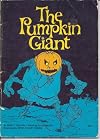
The origin of pumpkins is told in this original fairy-tale, as a terrible child-eating Pumpkin Giant roams the kingdom, looking for especially fat boys and girls to eat. The king, worried for his rotund daughter, offers a knighthood to any man who can defeat this enemy, while poor potato farmer Patroclus just worries about his fat son Aeneas. When the Pumpkin Giant comes upon Patroclus and Aeneas in their field, the father's quick action, in throwing a potato at his head, saves the day. The king forgets his promise for a time, until Patroclus' wife, Daphne, begins to make delicious treats from the pumpkins which sprang up in the family's potato field, following the slaying of the giant...
Published in 1970, The Pumpkin Giant is a show more retelling of a story that was originally included in Mary E. Wilkins' 1892 collection, The Pot of Gold, and was adapted by Ellin Greene, at one time a storytelling specialist at the New York Public Library. It was illustrated by the marvelous Trina Schart Hyman. The story itself is amusing, and I appreciated the original take on how both pumpkins and jack-o-lanterns came to be. I thought it was interesting that the pumpkin targeted fat children—no doubt more to eat—and that their size was not problematized in the narrative. Both the princess and Aeneas were happy children, although I winced a bit at the description of them rolling merrily along. I like the idea of not body shaming, and showing heavier children having fun, but the thought of not being able to walk because of weight doesn't strike me as a happy one. Leaving that aside, this is an interesting and unusual fairy-tale, and is recommended to readers who enjoy such fare. show less
Published in 1970, The Pumpkin Giant is a show more retelling of a story that was originally included in Mary E. Wilkins' 1892 collection, The Pot of Gold, and was adapted by Ellin Greene, at one time a storytelling specialist at the New York Public Library. It was illustrated by the marvelous Trina Schart Hyman. The story itself is amusing, and I appreciated the original take on how both pumpkins and jack-o-lanterns came to be. I thought it was interesting that the pumpkin targeted fat children—no doubt more to eat—and that their size was not problematized in the narrative. Both the princess and Aeneas were happy children, although I winced a bit at the description of them rolling merrily along. I like the idea of not body shaming, and showing heavier children having fun, but the thought of not being able to walk because of weight doesn't strike me as a happy one. Leaving that aside, this is an interesting and unusual fairy-tale, and is recommended to readers who enjoy such fare. show less
I read this book over and over again as a child. For some reason this story just popped into my head and I had to "Google it" because I couldn't remember the title of it. I knew it immediately as soon as I saw the cover art. I used to spend hours studying the illustrations because they were so detailed and fun and the story, if I remember correctly, was kind of bizarre. I'll have to see if I can find a copy of this one again to refresh my memory.
Cute tale with fanciful drawings. I can't help noticing how beautifully shaded the orange screening is over the b&w drawings.
Ratings
Members
- Recently Added By
Author Information

98+ Works 1,026 Members
Author Mary E. Wilkins Freeman was born in Randolph, Massachusetts on October 31, 1852. She attended Mount Holyoke College for one year and later finished her education at West Brattleboro Seminary. As a teenager, she began writing stories and verse for children in order to help support her family. She continued to write short stories, novels, show more poetry, and children's works throughout her life. Her best known works are A Humble Romance and Other Stories, A New England Nun and Other Stories, and Pembroke. Her characters were usually older women who confronted and asserted their independence in the changing social structure of rural New England. In April 1926, the American Academy of Arts and Letters presented her with the first William Dean Howells Medal for Distinction in Fiction. She was also inducted into the National Institute of Arts and Letters. She died of a heart attack on March 13, 1930 in Metuchen, New Jersey. (Bowker Author Biography) show less
All Editions
Classifications
Statistics
- Members
- 44
- Popularity
- 672,530
- Reviews
- 3
- Rating
- (4.17)
- Languages
- English
- Media
- Paper
- ISBNs
- 2
- ASINs
- 5