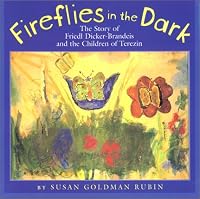
Fireflies in the Dark: The Story of Friedl Dicker-Brandeis and the Children of Terezin
by Susan Goldman Rubin
On This Page
Description
Covers the years during which Friedl Dicker, a Jewish woman from Czechoslovakia, taught art to children at the Terezin Concentration Camp. Includes art created by teacher and students, excerpts from diaries, and interviews with camp survivors.Tags
Recommendations






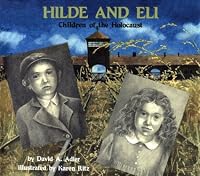
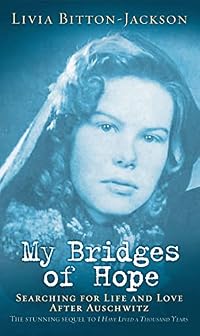
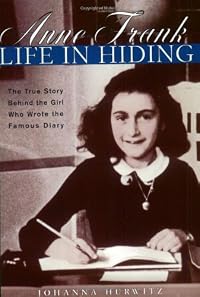
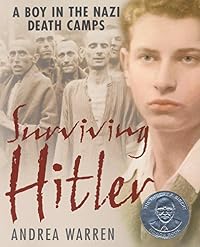
Member Reviews
The tale of Friedl Dicker-Brandeis and the children with whom she worked in the Terezin concentration camp is at once hopeful and haunting. The reader will not find a happy story here, but, rather, they will find the story of a brave woman who did her best to brighten the worlds of children subjected to inhuman and heinous conditions and a collection of historical pictures and the artwork the children created. The narrative about this heroic teacher of the arts is framed by images drawn by children who were terrified of what life had become, and who just missed their home and normalcy. Children’s drawing of home or family are interspersed with chilling poems, written by other young children, about the weak dying off or about the show more terror they faced daily at the prospect of being transported to a death camp. The well-researched work states that only 100 of the 15,000 children who went through Terezin survived the war. Friedl Dicker-Brandeis also died in a death camp. This is an important book. Much like the tale of Breendonk, which I reviewed earlier this year, it puts human faces and agency to the masses of people who were killed during this dark period of history. I would gladly include this book in my high school social studies classes, and it would have a place in any class which discussed World War 2. show less
In December 1942 Freidl Dicker-Brandeis packed her suitcase for the last time. What did she fill it with? Art supplies. Brushes, paints, and paper were her luggage when she was forced by Nazi soldiers to move to the Terezin concentration camp. An artist and art instructor, Freidl used her limited supplies to bring a world of beauty and fantasy to children in the camp—most of whom would die tragically at Auschwitz. This story reveals how flashes of kindness can bring joy and relief—like fireflies in the dark.The story is enhanced with photographs and reproductions of the amazing artwork completed by Freidl Dicker-Brandeis, her students, and her colleagues during their time at Terezin.
This a beautiful, yet heart breaking story. Although this is a story of hope, and the bright spot in the darkness, it still breaks my heart to think of the lives lost in the holocaust, and the children that had to face such a hard reality. With that being said, this story was truly beautiful. Friedl Dicker-Brandeis brought art supplies for all of the children in the ghetto so that they would create art instead of fearing their reality. She provided a sense of escape and brightness. This story should definitely be shared in the classroom to communicate that you can make efforts to make the best out of any situation. This book would be perfect to use in a place like New Orleans who still feels the affects of Hurricane Katrina. Our storm show more is in no way comparable to a multi-nation genocide, but it was still a very dark moment that affected the lives of many and left them devastated. In a New Orleans classroom, you could have students write about efforts that they could've made in light of Katrina to be the bright spot in the dark. show less
This book covers the story of Friedl Dicker-Brandeis, a Jewish woman from Czechoslovakia, beginning from the time she was shipped from her home to a concentration camp, until the point of her death at the camp. Over the years, she taught the children at the camp art as a way of coping with the tragedies that were surrounding them.
The book reads as a historical biography, and includes many people's statements, memories, and views of what was going on at the time to reconstruct Friedl's life during the war. Excerpts from diaries, interviews with camp survivors, and art from Friedl and her students are stored all through the pages, which really brought the reader into the place and thoughts of the people who drew them, and creates a show more connection to the story.
Looking at many of the pictures reminded me of the art that my younger siblings and cousins draw- it made the text and story that much more personal, relatable and emotional, as we remember just how young some of these children were and see the kinds of horrors they were witnessing through their drawings. show less
The book reads as a historical biography, and includes many people's statements, memories, and views of what was going on at the time to reconstruct Friedl's life during the war. Excerpts from diaries, interviews with camp survivors, and art from Friedl and her students are stored all through the pages, which really brought the reader into the place and thoughts of the people who drew them, and creates a show more connection to the story.
Looking at many of the pictures reminded me of the art that my younger siblings and cousins draw- it made the text and story that much more personal, relatable and emotional, as we remember just how young some of these children were and see the kinds of horrors they were witnessing through their drawings. show less
This is the remarkable story of how one person's love and understanding of the importance of artistic expression can touch and heal.Friedl Dicker-Brandeis was a very well known artist in Austria who was deported to a Jewish ghetto called Terezin in 1942. During her time at Terezín, she gave art lessons and lectures to the others in the camp, especially the children. When packing for her transfer to the ghetto, Friedl chose to bring more art supplies than anything else because she knew that there would be so many children who would need an outlet to express their thoughts and fears in order to help them cope.
The book is filled with images from the work produced by her students, most of whom died at the tender ages of 12-14 after being show more transported to Auschwitz. In the two years at Terezin, 4,500 drawings were produced.
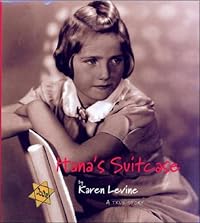
This is an extremely powerful story that I think should be read after Hana's Suitcase, because Hana Brady had been one of her students. show less
The book is filled with images from the work produced by her students, most of whom died at the tender ages of 12-14 after being show more transported to Auschwitz. In the two years at Terezin, 4,500 drawings were produced.
This is an extremely powerful story that I think should be read after Hana's Suitcase, because Hana Brady had been one of her students. show less
I really enjoyed this book and reading about this generous woman. I have so much respect for her, and how gracious she was for bringing art supplies to the camps thinking of the children. This was a heartwarming story for coming from such a tragedy. I really enjoyed looking at all of the artwork in the story and empathizing with the people who drew them. A wild fact to me is that the Germans tried to hide how awful they were being to the Jews by fixing up their camp to look like a town and then shipping prisoners and orphans out of it while Red Cross came to look at it. This is so crazy to me that things of such nature went on and no one knew.
An amazing story of yet another hero amidst the Holocaust, Friedl Dicker-Brandeis. I was so inspired by her efforts to provide the children in Terezin with as positive as an experience as could be expected, and I enjoyed learning about her independent personality and flare for artistic style as presented in this book. The artwork and photographs from the plays included in the book also make it an invaluable collection of primary resources for any Holocaust unit.
Members
- Recently Added By
Author Information

62 Works 3,368 Members
Susan Goldman Rubin grew up in the Bronx and dreamed of becoming an artist. She illustrated her first three picture books but then turned to writing nonfiction, mainly about art and history, and is the author of more than 55 books for young people. Her titles include Diego Rivera: An Artist For The People, They Call Me A Hero: A Memoir of My show more Youth, Music Was It! Young Leonard Bernstein, Everyone Paints! The Art and Lives of the Wyeth Family, and Freedom Summer: The 1964 Struggle for Civil Rights in Mississippi. Most recently Susan has created board books based on fine art for very young children. Her titles include Counting with Wayne Thiebaud, Andy Warhol's Colors, and Matisse: Dance For Joy. Susan has been an instructor in the UCLA Extension Writers' Program for 20 years. (Bowker Author Biography) show less
Awards and Honors
Awards
Notable Lists
Common Knowledge
- Important events
- Holocaust
- Dedication
- LJCRS Book Fair Selection 5761
c. 2 Joe Haberer
Classifications
Statistics
- Members
- 291
- Popularity
- 110,114
- Reviews
- 14
- Rating
- (4.55)
- Languages
- English
- Media
- Paper
- ISBNs
- 6
- ASINs
- 2