On This Page
Description
Set in Los Angeles, private eye Philip Marlowe moves deeper than ever into labyrinths of crime, duplicity, and murder.Tags
Recommendations








Member Reviews
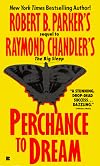
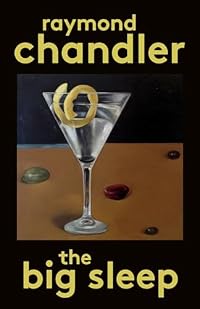
Perchance to Dream is Robert B. Parker’s authorized sequel to Raymond Chandler’s incredibly complex novel, The Big Sleep. Parker takes most of the same characters (at least those who were still alive) of Chandler’s epic novel, and spins another (not quite so complicated) tale that captures the style and mood of the original. The sequel opens with long quotations from the original to set the scene and remind readers of the original.
It is now a few years after the end of The Big Sleep, and General Sternwood has just died. His older daughter Vivian still lives in the family manse, but the younger sister, Carmen, has been sent off to live at a psychiatric rehab facility—think insane asylum with more luxurious accouterments. When show more the younger sister mysteriously disappears, the butler (who has been handsomely compensated by the General), calls in Philip Marlowe to find her.
Philip Marlowe, the knight errant private eye, returns in all his depravity and taciturnity. Parker’s own favorite private eye (Spenser, with an “s”) was probably based somewhat on Marlowe. Both are big—Spenser is bigger—and tough, and neither uses his first name very often (in Spenser’s case, never). Parker allows the older sister to call Marlowe “Philip” once, but it comes as quite a surprise to the detective.
Marlowe encounters a few very tough characters (“hard men” in his usage), whom Parker delights in describing. One Mexican in particular is uniquely formidable. As Parker describes him:
“The Mexican had no gun. He’d probably gotten hungry one day and eaten it.”
Or
“I could see my gun in his [the Mexican’s] belt. At least he hadn’t tied a knot in the barrel.”
Parker describes the smile of another character as having “all the warmth of a pawnbroker examining your mother’s diamond.”
While Parker is a master of the light(er) crime fiction genre, this is still a fitting tribute to one of the pioneers of noir crime fiction.
(JAB) show less
It is now a few years after the end of The Big Sleep, and General Sternwood has just died. His older daughter Vivian still lives in the family manse, but the younger sister, Carmen, has been sent off to live at a psychiatric rehab facility—think insane asylum with more luxurious accouterments. When show more the younger sister mysteriously disappears, the butler (who has been handsomely compensated by the General), calls in Philip Marlowe to find her.
Philip Marlowe, the knight errant private eye, returns in all his depravity and taciturnity. Parker’s own favorite private eye (Spenser, with an “s”) was probably based somewhat on Marlowe. Both are big—Spenser is bigger—and tough, and neither uses his first name very often (in Spenser’s case, never). Parker allows the older sister to call Marlowe “Philip” once, but it comes as quite a surprise to the detective.
Marlowe encounters a few very tough characters (“hard men” in his usage), whom Parker delights in describing. One Mexican in particular is uniquely formidable. As Parker describes him:
“The Mexican had no gun. He’d probably gotten hungry one day and eaten it.”
Or
“I could see my gun in his [the Mexican’s] belt. At least he hadn’t tied a knot in the barrel.”
Parker describes the smile of another character as having “all the warmth of a pawnbroker examining your mother’s diamond.”
While Parker is a master of the light(er) crime fiction genre, this is still a fitting tribute to one of the pioneers of noir crime fiction.
(JAB) show less
Philip Marlowe returns to the Sternwood mansion in the hills of Los Angeles, having been called by Norris, the butler. Marlow finds the older daughter, Vivian, still resides there and still dating gangster Eddie Mars but her younger sister Carmen, still tormented by the events of the original story, has been sent off to live at Resthaven, a psychiatric rehabilitation facility. When Carmen disappears from there, Marlowe is hired to find her.
As most people will know, I’m a huge Raymond Chandler fan, and I think Philip Marlowe is such a great character. I was a little concerned to see that Robert B. Parker was authorised to write a sequel to The Big Sleep. As far as I can see, he butchered the character, the series and it just was show more torture to read. Parker is something of an expert with all things to do with Chandler, having been hired to complete the 1958 unfinished Chandler novel; Poodle Springs. But being an expert doesn’t mean he can write like Chandler nor do any justice to Marlowe.
Parker’s take on Philip Marlowe is a disaster; I found none of the wit remained and as a Private investigator, he was a bit of a lightweight. The attempt at nostalgia turns into an unequivocally puerile attempt at Chandler’s coolly sardonic narrative. Chandler’s plots are like a shadowy figure in the background, making it difficult for the reader to predict just what will happen but Parker’s plot is thrown at the reader and nothing is surprising.
Hugely unnecessary, Perchance to Dream adds no significance to the series and is just pointless. While I want to read more of Marlowe’s adventures, if they are anything like this, it’s not worth it. I’m sure I can find fan-fic with better character development and plotting than this attempt at another Philip Marlowe novel. This is the only Robert B. Parker novel I’ve read and with the damage he’s done to my beloved Marlowe, I don’t think I would want to read anything by him again.
This review originally appeared on my blog; http://literary-exploration.com/2013/02/25/book-rage-perchance-to-dream/ show less
As most people will know, I’m a huge Raymond Chandler fan, and I think Philip Marlowe is such a great character. I was a little concerned to see that Robert B. Parker was authorised to write a sequel to The Big Sleep. As far as I can see, he butchered the character, the series and it just was show more torture to read. Parker is something of an expert with all things to do with Chandler, having been hired to complete the 1958 unfinished Chandler novel; Poodle Springs. But being an expert doesn’t mean he can write like Chandler nor do any justice to Marlowe.
Parker’s take on Philip Marlowe is a disaster; I found none of the wit remained and as a Private investigator, he was a bit of a lightweight. The attempt at nostalgia turns into an unequivocally puerile attempt at Chandler’s coolly sardonic narrative. Chandler’s plots are like a shadowy figure in the background, making it difficult for the reader to predict just what will happen but Parker’s plot is thrown at the reader and nothing is surprising.
Hugely unnecessary, Perchance to Dream adds no significance to the series and is just pointless. While I want to read more of Marlowe’s adventures, if they are anything like this, it’s not worth it. I’m sure I can find fan-fic with better character development and plotting than this attempt at another Philip Marlowe novel. This is the only Robert B. Parker novel I’ve read and with the damage he’s done to my beloved Marlowe, I don’t think I would want to read anything by him again.
This review originally appeared on my blog; http://literary-exploration.com/2013/02/25/book-rage-perchance-to-dream/ show less
A novel that absolutely did not need to be written. When Parker isn't ripping off Chinatown, he has his hero get all sentimental about the Sternwoods, suggesting Parker did not really understand the point of the original novel which put the Sternwoods at the center of rot and decay, environmental and social.
Robert B. Parker still does a decent ventriloquist's act when taking on Raymond Chandler's genre-defining literary creation, but Perchance to Dream is not a patch on his previous effort, Poodle Springs. A sequel to Marlowe's 1939 debut The Big Sleep, Parker's book is interspersed with relevant passages from that earlier classic. It is an interesting technique that neither works nor doesn't work – it is just there – but it does make comparisons inevitable rather than moving the character or intellectual property (ugh) forward. Parker's plots are easier to follow than Chandler's, though his prose is noticeably inferior and his ending in this book is an anticlimactic squib of cartoonish villainy. If Perchance to Dream often seems more show more like a classy retrospective than a novel in its own right, well, there are worse things to be. show less
52 years after Chandler wrote the first Marlowe novel, The Big Sleep, Robert B. Parker writes the sequel. Although I found it an OK read, it left a lot to be desired. Marlowe is a shadow of his old self, and the plot is weak and fairly predictable. Parker just isn't the writer that Chandler was. Although it was nice to visit with Marlowe again, I could have done without this one.
PLOT OR PREMISE:
In Raymond Chandler's "The Big Sleep", the reader was introduced to all the main characters -- Sternwood himself, his butler, his two daughters, and a gangster. And of course Marlowe was along for the ride. In this sequel by Robert B. Parker, Philip Marlowe returns to Sternwood Manor to solve the case of a missing daughter, Carmen, who disappeared from her much-deserved stay in a sanitarium.
.
WHAT I LIKED:
A nice tribute to the Marlowe style, and you get to see Parker's and Chandler's styles side-by-side.
.
WHAT I DIDN'T LIKE:
I found this to be a very strange book to read because of its constantly switching styles. The main text, written by Parker, reads like classic Spenser -- same style, sentence structure, etc. However, show more there are constant "flashbacks" that show up as classic Marlowe in the style of Chandler. If they were just occasional flashbacks, it might have made for an interesting read, but the constant jumps made it very hard to adjust at times.
.
BOTTOM-LINE:
Nice tribute, I hope future Marlowe stories stick to Spenser style
.
DISCLOSURE:
I received no compensation, not even a free copy, in exchange for this review. I was not personal friends with the author before he died, nor did I follow him on social media. show less
In Raymond Chandler's "The Big Sleep", the reader was introduced to all the main characters -- Sternwood himself, his butler, his two daughters, and a gangster. And of course Marlowe was along for the ride. In this sequel by Robert B. Parker, Philip Marlowe returns to Sternwood Manor to solve the case of a missing daughter, Carmen, who disappeared from her much-deserved stay in a sanitarium.
.
WHAT I LIKED:
A nice tribute to the Marlowe style, and you get to see Parker's and Chandler's styles side-by-side.
.
WHAT I DIDN'T LIKE:
I found this to be a very strange book to read because of its constantly switching styles. The main text, written by Parker, reads like classic Spenser -- same style, sentence structure, etc. However, show more there are constant "flashbacks" that show up as classic Marlowe in the style of Chandler. If they were just occasional flashbacks, it might have made for an interesting read, but the constant jumps made it very hard to adjust at times.
.
BOTTOM-LINE:
Nice tribute, I hope future Marlowe stories stick to Spenser style
.
DISCLOSURE:
I received no compensation, not even a free copy, in exchange for this review. I was not personal friends with the author before he died, nor did I follow him on social media. show less
so-so book by Parker trying to sound like Raymond Chandler; some nice poetic phrases. There is not much to guess and the massive corruption is reminiscent of Chinatown.
Members
- Recently Added By
Lists

Best Noir Fiction
160 works; 14 members

Shakespeare Quote Titles
112 works; 10 members
Author Information

126+ Works 72,849 Members
Robert Brown Parker is an American fiction writer of mysteries. He was born in Springfield, Massachusetts and earned his BA degree from Colby College in Waterville, Maine. He went on to earn his master's degree in English literature from Boston University. He started his career working in advertising. After some years, he went back to school to show more earn his PhD in English from Boston University in 1971. He then began his writng career while teaching at Northeastern University. He decided to become a full-time writer in 1979. His most popular works were the 40 novels written about the private detective Spenser. The ABC Television Network developed the television series "Spenser: For Hire", based on the character in the mid-1980s. Parker also wrote nine novels based on the character Jesse Stone and six novels based on the character Sunny Randall. On January 18, 2010, Robert Parker died suddenly of a heart attack at his home in Cambridge Massachusetts. (Bowker Author Biography) show less
Some Editions
Series

Work Relationships
Is a (non-series) sequel to
Common Knowledge
- Canonical title*
- Perchance to Dream (Sequel to Raymond Chandler's The Big Sleep) (Sequel to Raymond Chandler's The Big Sleep)
- Original publication date
- 1991
- People/Characters
- Philip Marlowe; Vivian Sternwood; Carmen Sternwood; Norris (the butler); Eddie Mars
- Disambiguation notice
- Written by Robert B. Parker
This book is by Robert B. Parker, not Raymond Chandler.
*Some information comes from Common Knowledge in other languages. Click "Edit" for more information.
Classifications
Statistics
- Members
- 456
- Popularity
- 66,689
- Reviews
- 9
- Rating
- (3.13)
- Languages
- 6 — Czech, Dutch, English, Finnish, German, Italian
- Media
- Paper, Audiobook
- ISBNs
- 27
- ASINs
- 7