On This Page
Description
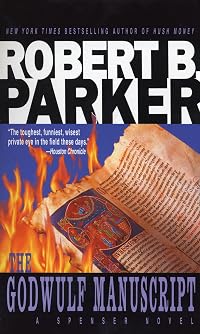
A private detective's investigation into the theft of a rare manuscript from a university library brings him face to face with clues to a young man's murder.Tags
Recommendations






Member Reviews
Ah, the first Spenser mystery, the one to start a series of almost forty books in forty years. Having started the series somewhere in the middle, I went back to the beginning in 1973 to see where it all began. The short version? Read if you are a series completionist or you want an eye-blink view into the 1970s scene, which was something, man.
I discovered Parker's writing appealed more than mid-series when it had been distilled to the bare bones. Though I'm a fan for the art of minimizing in my physical life, there's something to be said for richness in mood and setting, particularly in a mystery, and this supplies it in spades. Unfortunately, at times the description takes a bit of a list form over integrated scene-building.
"I'd come show more down mainly to check my mail, and the trip had been hardly worth it. There was a phone bill, a light bill, an overdue notice from the Boston Public Library, a correspondence course offering to teach me karate at home in my spare time, a letter from a former client insisting that while I had found his wife she had left again and hence he would not pay my bill, an invitation to join a vacation club, an invitation to buy a set of socket wrenches, an invitation to join an automobile club, an invitation to subscribe to five magazines of my choice at once-in-a-lifetime savings, an invitation to shop the specials on port at my local supermarket, and a number of less important letters. Nothing from Germain Greer or Lenny Bernstein, no dinner invitations, no post cards from the Costa del Sol, no mash notes from Helen Gurley Brown. Last week had been much the same."
See? Time period. Also classic deadpan Spencer. (Also, the more things change, the more they stay the same).
It is also coarser, to be certain; late Spenser was sanitized and heroic, faithful to Susan, dogs, and knightly values. It's clearly early Spenser, evidenced by a gratuitous torture-porn scene that literally did nothing for the plot, and Spenser's general attitude of a swinging 70s ladies' man Yes, he has sex with both a mother and a daughter--at different times--and finds himself dialing a third woman by the end of the book. Also notable for a 'fag' exchange between Lt. Quirk and a member of the squad (indirectly supportive of gay people in a very passive way).
There's a bit of social commentary as well, which late Spenser also seems more comfortable avoiding. Spenser is consulted by a college dean who wants him to find a missing illuminated manuscript which is apparently being held for ransom. He has to spend his time hanging around radical, anti-establishment college students who are all about the dogma, man. It allows for some solid, world-weary reflections: "I felt the beer a little, and I felt the sadness of kids like that who weren’t buying it and weren’t quite sure what it was." One of the radicals gets framed for murder, so the case rapidly shifts from a missing McGuffin to a Find the Real Killer.
It's interesting, sometimes, to read these older books and feel the time period soaking through. This is a booze-soaked Spencer story, to the point of a cop offering him a pint as he's recovering in the hospital. Spencer is frequently drinking or hungover. Speaking of cops, there's another period moment when the police officers transported a gunshot victim. They did that, you know, pre-ambulance days. Emergency medical services didn't really get underway until 1970, and paramedics a bit later.
I'll be honest; the female characters are accessorizing sex objects or victims, none of them heroic, which would annoy me more if it had been long-standing through the series. Some day, the psychologist Susan will come in and annoy us all with her anorexic eating habits, so I suspect my tolerance was indirectly the result of my irritation with future direction. Parker is also weirdly fascinated by clothes and describes what each character is wearing, even extraneous ones. Again, fun in the retrospective sense. "He looked like a zinnia. Tall and thin with an enormous corona of rust red hair flowing out around his pale, clean-shaven face. He wore a lavender undershirt and a pair of faded, flare-bottomed denim dungarees that were too long and dragged on the floor over his bare feet."
Overall, a solid P.I. mystery, good start to a series and a fun window into a time period. Of note, this is one that introduces the heroic Lt. Quirk as part of Boston PD's Detective Bureau, Sgt. Belson, a red-faced beat officer named Kenneally, and the infamous Joe Broz. show less
I discovered Parker's writing appealed more than mid-series when it had been distilled to the bare bones. Though I'm a fan for the art of minimizing in my physical life, there's something to be said for richness in mood and setting, particularly in a mystery, and this supplies it in spades. Unfortunately, at times the description takes a bit of a list form over integrated scene-building.
"I'd come show more down mainly to check my mail, and the trip had been hardly worth it. There was a phone bill, a light bill, an overdue notice from the Boston Public Library, a correspondence course offering to teach me karate at home in my spare time, a letter from a former client insisting that while I had found his wife she had left again and hence he would not pay my bill, an invitation to join a vacation club, an invitation to buy a set of socket wrenches, an invitation to join an automobile club, an invitation to subscribe to five magazines of my choice at once-in-a-lifetime savings, an invitation to shop the specials on port at my local supermarket, and a number of less important letters. Nothing from Germain Greer or Lenny Bernstein, no dinner invitations, no post cards from the Costa del Sol, no mash notes from Helen Gurley Brown. Last week had been much the same."
See? Time period. Also classic deadpan Spencer. (Also, the more things change, the more they stay the same).
It is also coarser, to be certain; late Spenser was sanitized and heroic, faithful to Susan, dogs, and knightly values. It's clearly early Spenser, evidenced by a gratuitous torture-porn scene that literally did nothing for the plot, and Spenser's general attitude of a swinging 70s ladies' man
There's a bit of social commentary as well, which late Spenser also seems more comfortable avoiding. Spenser is consulted by a college dean who wants him to find a missing illuminated manuscript which is apparently being held for ransom. He has to spend his time hanging around radical, anti-establishment college students who are all about the dogma, man. It allows for some solid, world-weary reflections: "I felt the beer a little, and I felt the sadness of kids like that who weren’t buying it and weren’t quite sure what it was." One of the radicals gets framed for murder, so the case rapidly shifts from a missing McGuffin to a Find the Real Killer.
It's interesting, sometimes, to read these older books and feel the time period soaking through. This is a booze-soaked Spencer story, to the point of a cop offering him a pint as he's recovering in the hospital. Spencer is frequently drinking or hungover. Speaking of cops, there's another period moment when the police officers transported a gunshot victim. They did that, you know, pre-ambulance days. Emergency medical services didn't really get underway until 1970, and paramedics a bit later.
I'll be honest; the female characters are accessorizing sex objects or victims, none of them heroic, which would annoy me more if it had been long-standing through the series. Some day, the psychologist Susan will come in and annoy us all with her anorexic eating habits, so I suspect my tolerance was indirectly the result of my irritation with future direction. Parker is also weirdly fascinated by clothes and describes what each character is wearing, even extraneous ones. Again, fun in the retrospective sense. "He looked like a zinnia. Tall and thin with an enormous corona of rust red hair flowing out around his pale, clean-shaven face. He wore a lavender undershirt and a pair of faded, flare-bottomed denim dungarees that were too long and dragged on the floor over his bare feet."
Overall, a solid P.I. mystery, good start to a series and a fun window into a time period. Of note, this is one that introduces the heroic Lt. Quirk as part of Boston PD's Detective Bureau, Sgt. Belson, a red-faced beat officer named Kenneally, and the infamous Joe Broz. show less
This is my first Spenser novel. It was Parker's first, too. I'm not sure how to rate it, though. I liked it fine, but it didn't really blow my skirt up. Perhaps I've read too many P.I. novels, and a lot of them just blend together into the same old story. Apparently, Spenser is a little different, in that he works out and tries to stay in shape, although he didn't make it to the gym in this one. He did eat a lot of junk food and drank a fair amount of bourbon, which doesn't go all that well with strength and fitness.
I did appreciate his humor.
The police lieutenant says to Spenser, "You're not working for the D.A. now, boy, you're working my side of the street, and if you get in my way, I'll kick your ass right into the gutter. Got show more that?"
Spencer replies, "Can I feel your muscle?"
"Start up with the lieutenant, Spenser, and you'll end up looking like you went through a pepper mill."
"I won't be able to sleep without a night light," I said.
"A cold McDonald's hamburger is halfway between a jelly doughnut and a hockey puck, but the nine-dollar bourbon helped."
For health reasons, I'd recommend Spenser eat the jelly doughnut and/or the puck.
The story wasn't difficult to figure out, but I enjoyed the ride, and especially the slam-bang ending. I'll certainly try more Spenser novels. show less
I did appreciate his humor.
The police lieutenant says to Spenser, "You're not working for the D.A. now, boy, you're working my side of the street, and if you get in my way, I'll kick your ass right into the gutter. Got show more that?"
Spencer replies, "Can I feel your muscle?"
"Start up with the lieutenant, Spenser, and you'll end up looking like you went through a pepper mill."
"I won't be able to sleep without a night light," I said.
"A cold McDonald's hamburger is halfway between a jelly doughnut and a hockey puck, but the nine-dollar bourbon helped."
For health reasons, I'd recommend Spenser eat the jelly doughnut and/or the puck.
The story wasn't difficult to figure out, but I enjoyed the ride, and especially the slam-bang ending. I'll certainly try more Spenser novels. show less
Yes I've started another series. This one is a tough, gritty detective novel that owes a lot to Dashell Hammet and Raymond Chandler. But it is set on the familiar streets of Boston in the early 1970s when gentrified neighborhoods were still slums, the universities were highly politicized with leftist messages, and $5 could buy four beers, two sandwiches, AND cover the tip at a bar. Robert Parker's Spenser is definitely imperfect and he solves the case through a combination of dumb luck and brute force (and some deus ex machina as well). What makes this book great (and unique) is that Spenser is a wiseass and laugh out loud funny. It makes me want to read more.
This book is so much tosh, Librarything didn't even want to let me add to my library! An unusual case of reverse-first book syndrome - most series debuts make me want to buy the rest of the set in one go, but this one bored me silly. I'll play fair, though, and try a later title from the series.
I think my main problem was the 1970s setting - the dialogue (I'd check the word count on 'sonova bitch' if I could be bothered), the sleaze and dear lord, the fashion (which Parker describes in detail, for some reason)! Please stop! Also, Spenser - with an s - tries way too hard. His tough guy narration is pathetic, paling in comparison with Marlowe or even my pet detetctive Archie Goodwin. He boffs a mother and daughter, gets beaten and shot, show more drinks and drives (yeah, I know, me and my modern sensibilities), and is just generally skeevy. Plus - not as funny as Parker obviously thinks he is. My favourite line? 'I am a horse's ass'. Because it's true.
The 'mystery' is nonsensical too. Don't expect Inspector Morse at Oxford, despite the title - the manuscript is just a plot device. What we actually get is drugs and gangsters, hey ho. Nice try, though, Mr Parker. show less
I think my main problem was the 1970s setting - the dialogue (I'd check the word count on 'sonova bitch' if I could be bothered), the sleaze and dear lord, the fashion (which Parker describes in detail, for some reason)! Please stop! Also, Spenser - with an s - tries way too hard. His tough guy narration is pathetic, paling in comparison with Marlowe or even my pet detetctive Archie Goodwin. He boffs a mother and daughter, gets beaten and shot, show more drinks and drives (yeah, I know, me and my modern sensibilities), and is just generally skeevy. Plus - not as funny as Parker obviously thinks he is. My favourite line? 'I am a horse's ass'. Because it's true.
The 'mystery' is nonsensical too. Don't expect Inspector Morse at Oxford, despite the title - the manuscript is just a plot device. What we actually get is drugs and gangsters, hey ho. Nice try, though, Mr Parker. show less
This is the first book in a loooong series. I'm glad I have 39 more of them to read. This one was a fast-paced crime novel with plenty of bad guys for sassy and savvy Private Investigator Spenser to put in their place. He is hired by a Boston university president to recover a stolen medieval manuscript. The plot quickly thickens with several murders and Mafia involvement. Spenser's softer side is awakened when a female college student is accused of the murder of her boyfriend. He doggedly pursues her innocence as he maneuvers his way through the twists and turns of a rollicking good read.
Set in the early 1970s, I enjoyed the nostalgia of a time when two sandwiches, four beers, and the tip could be covered by a five-dollar bill. I was a show more bit surprised by the literary references until I read that at the time he wrote this book, Parker was a professor at Northeastern University. My goal is to read the 40 books in the Spenser series in the next five years. Wish me luck! show less
Set in the early 1970s, I enjoyed the nostalgia of a time when two sandwiches, four beers, and the tip could be covered by a five-dollar bill. I was a show more bit surprised by the literary references until I read that at the time he wrote this book, Parker was a professor at Northeastern University. My goal is to read the 40 books in the Spenser series in the next five years. Wish me luck! show less
The Bottom Line or Tweet
Welcome to Boston's finest
.
Plot or Premise
Spenser is hired to find a rare book stolen from a university and the first witness he talks to ends up standing over a dead body within a day, but claims she didn't do it
.
What I Liked
This is the first book in the long-running Spenser series, and it is one of my favorite series of all time. Quirk and Belson are introduced, as well as some general hoodlums, and it is classic Spenser. Keep plugging along, doing what he wants to do or thinks is right, even after the book-napping is resolved.
.
What I Didn't Like
Without Silverman or Hawk, it almost feels like Spenser's on vacation on his own, not quite a full Spenser story. As such, it runs a bit more linearly than some of his show more other books.
.
Disclosure
I received no compensation, not even a free copy, in exchange for this review. I am not personal friends with the author, nor do I follow him / her on social media. show less
Welcome to Boston's finest
.
Plot or Premise
Spenser is hired to find a rare book stolen from a university and the first witness he talks to ends up standing over a dead body within a day, but claims she didn't do it
.
What I Liked
This is the first book in the long-running Spenser series, and it is one of my favorite series of all time. Quirk and Belson are introduced, as well as some general hoodlums, and it is classic Spenser. Keep plugging along, doing what he wants to do or thinks is right, even after the book-napping is resolved.
.
What I Didn't Like
Without Silverman or Hawk, it almost feels like Spenser's on vacation on his own, not quite a full Spenser story. As such, it runs a bit more linearly than some of his show more other books.
.
Disclosure
I received no compensation, not even a free copy, in exchange for this review. I am not personal friends with the author, nor do I follow him / her on social media. show less
A decent first entry into a series that I am assured gets much better. This one was rather by-the-numbers: the central mystery is not especially compelling and the Godwulf Manuscript itself is just an under-utilised MacGuffin. Parker sails close to the shore of the crime-novel landscape charted out by Raymond Chandler, and in style, character and plotting the book is basically just Chandler-lite. Even his private detective, Spenser, is named after an English poet, just like Chandler's Marlowe. But if you're going to imitate someone, it might as well be the best, and Parker does just enough – the rain and slush of Boston is an agreeably noir atmosphere – to make the short read an entertaining one.
Members
- Recently Added By
Published Reviews
ThingScore 50
A missing illuminated manuscript takes private eye Spenser to a Boston campus with familiar extracurricular activities — student radicalism, sex and drugs — but it is an attractive, flaky gift charged with murder — who really gives him something to think about. The publishers make the comparison to Philip Marlowe (author-professor Parker did a dissertation on Chandler-Hammett) but it show more won't serve him well — there's some of the toughness and the terseness but the hat's much too big for him and it hasn't got the right slouch. show less
added by AKBouterse
Lists

Favorite Series
238 works; 94 members

A Boston Reading List
120 works; 10 members
Author Information

126+ Works 72,849 Members
Robert Brown Parker is an American fiction writer of mysteries. He was born in Springfield, Massachusetts and earned his BA degree from Colby College in Waterville, Maine. He went on to earn his master's degree in English literature from Boston University. He started his career working in advertising. After some years, he went back to school to show more earn his PhD in English from Boston University in 1971. He then began his writng career while teaching at Northeastern University. He decided to become a full-time writer in 1979. His most popular works were the 40 novels written about the private detective Spenser. The ABC Television Network developed the television series "Spenser: For Hire", based on the character in the mid-1980s. Parker also wrote nine novels based on the character Jesse Stone and six novels based on the character Sunny Randall. On January 18, 2010, Robert Parker died suddenly of a heart attack at his home in Cambridge Massachusetts. (Bowker Author Biography) show less
Awards and Honors
Notable Lists
Series

Belongs to Publisher Series
Work Relationships
Common Knowledge
- Canonical title
- The Godwulf Manuscript
- Original title
- The Godwulf Manuscript
- Original publication date
- 1973
- People/Characters
- Spenser; Brenda Loring; Martin Quirk; Frank Belson; Joe Broz; Vince Haller (show all 11); Bradford W. Forbes; Terry Orchard; Roland Orchard; Marion Orchard; Lowell Hayden
- Important places
- Boston, Massachusetts, USA; Massachusetts, USA
- Dedication
- This, like everything else, is for Joan, David, and Daniel.
- First words
- The office of the university president looked like the front parlor of a successful Victorian whorehouse.
- Last words
- (Click to show. Warning: May contain spoilers.)A hell of a laugh when you thought about it.
- Canonical DDC/MDS
- 813.54
- Canonical LCC
- PS3566.A686
Classifications
Statistics
- Members
- 1,801
- Popularity
- 12,099
- Reviews
- 51
- Rating
- (3.53)
- Languages
- 12 — Czech, Danish, Dutch, English, German, Japanese, Norwegian (Bokmål), Norwegian, Russian, Slovak, Spanish, Swedish
- Media
- Paper, Audiobook, Ebook
- ISBNs
- 31
- ASINs
- 20