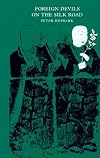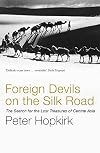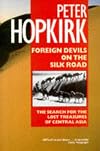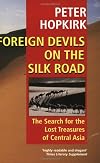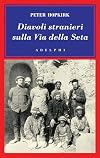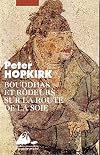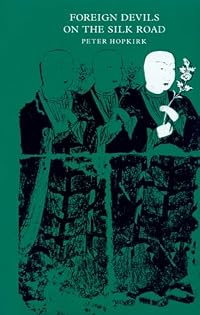
Foreign Devils on the Silk Road: The Search for the Lost Cities and Treasures of Chinese Central Asia
by Peter Hopkirk
On This Page
Description
The Silk Road, which linked imperial Rome and distant China, was once the greatest thoroughfare on earth. Along it travelled precious cargoes of silk, gold, and ivory, as well as revolutionary new ideas. It s oasis towns blossomed into thriving centres of Buddhist art and learning.In time it began to decline. The traffic slowed, the merchants left, and finally its towns vanished beneath the desert sands to be forgotten for a thousand years. But legends grew up of lost cities filled with show more treasurees and guarded by demons. In the early years of this century, foreign explorersbegan to investigate these legends, and very soon an international race began for the art treasures of the Silk Road. Huge wall paintings, sculptures, and priceless manuscripts were carried away, literally by the ton, and are today scattered through the museums of a dozen countries.Peter Hopkirk tells the story of the intrepid men who, at great personal risk, led these long-range archaeological raids, incurring the undying wrath of the Chinese. show lessTags
Recommendations




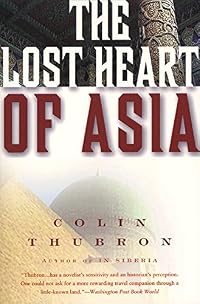
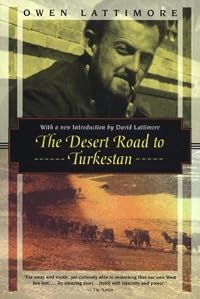

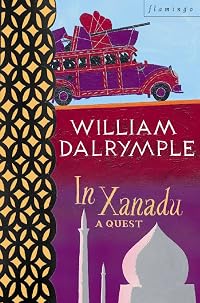


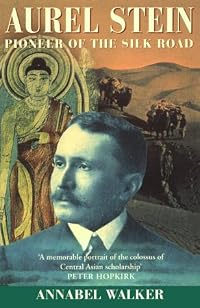


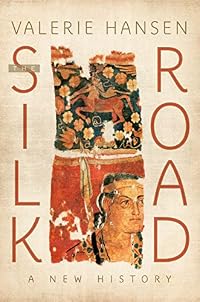

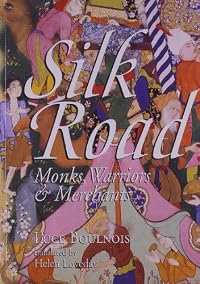

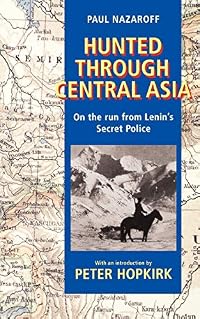





Member Recommendations
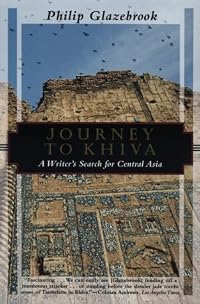
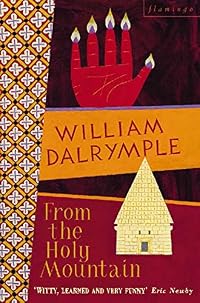
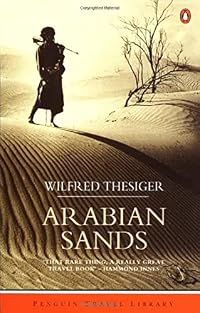
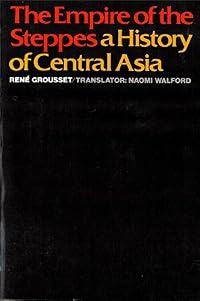
supersidvicious Peter Hopkirk racconta la storia dei "predatori occidentali" nelle regioni cinesi orientali dopo la prima guerra mondiale, Rob Gifford viaggia da Shangai fino al confine del Kazakistan 100 anni dopo nella Cina moderna
Member Reviews
A short but entertaining book about the exploration of lost cities that made up the Silk Road and the race for archaeological treasures from those cities.
The Silk Road flourished for centuries as an overland path from China West to European markets. All along the Silk Road cities and civilizations came into being to service the traders with many of the cities becoming trading powers in their own rights. At the same time, the cities that developed created a unique mix of art and culture as Buddhist traditions and art were merged with Western ideals. This culture flourished for centuries until the diminishing importance of the silk trade and environmental changes led to the abandonment of the cities. The cities sat, barely remembered for show more hundreds of years, remembered vaguely by locals and in writings by the likes of Marco Polo. In the late 19th century, England, France, Russia and Japan send explorers and archaeologists to find and excavate these lost cities.
The book is part adventure story as it details the horrendous conditions that the explorers endured trying to find the cities, many lost in the midst of nearly impassible deserts. The book also details the nature of their discoveries, describing the art and languages discovered. Finally, the book discusses at length the ethics of the removal of the art and manuscripts by Western archaeologists. Hopkirk certainly makes a strong case that the these cultures should be better known and that Western museums should do a better job of showcasing the materials they have.
Call me a cultural imperialist, but I am less troubled by the removal of the art and manuscripts then Hopkirk. As a conceptual matter, I am all for keeping cultural materials in the country of origin (as inapplicable as the modern nation-state is to many ancient cultures). However, the reality is that many of the countries that "should" be protecting their cultural patrimony have failed to do so. China presents something of a special case - specifically the Cultural Revolution and China's subsequent handling of its cultural heritage - are examples of systematic, deliberate destruction of cultural assets. As Foreign Devils on the Silk Road makes clear, the treasures of Central Asia were hardly being protected by the relevant authorities at the time. In the instance of some painted caves, the caves were used to house soldiers resulting in destruction of important murals. So, on balance, I lean toward sympathizing with the archaeologists who removed the manuscripts and art that they could take. Certainly today, where China is actively preserving and protecting its cultural assets, the conduct of Western archaeologists would constitute theft. But this wasn't the case at the end of the 19th century and there is strong evidence that, but for the work of these explorers, nothing of this cultural and artistic heritage would have survived. show less
The Silk Road flourished for centuries as an overland path from China West to European markets. All along the Silk Road cities and civilizations came into being to service the traders with many of the cities becoming trading powers in their own rights. At the same time, the cities that developed created a unique mix of art and culture as Buddhist traditions and art were merged with Western ideals. This culture flourished for centuries until the diminishing importance of the silk trade and environmental changes led to the abandonment of the cities. The cities sat, barely remembered for show more hundreds of years, remembered vaguely by locals and in writings by the likes of Marco Polo. In the late 19th century, England, France, Russia and Japan send explorers and archaeologists to find and excavate these lost cities.
The book is part adventure story as it details the horrendous conditions that the explorers endured trying to find the cities, many lost in the midst of nearly impassible deserts. The book also details the nature of their discoveries, describing the art and languages discovered. Finally, the book discusses at length the ethics of the removal of the art and manuscripts by Western archaeologists. Hopkirk certainly makes a strong case that the these cultures should be better known and that Western museums should do a better job of showcasing the materials they have.
Call me a cultural imperialist, but I am less troubled by the removal of the art and manuscripts then Hopkirk. As a conceptual matter, I am all for keeping cultural materials in the country of origin (as inapplicable as the modern nation-state is to many ancient cultures). However, the reality is that many of the countries that "should" be protecting their cultural patrimony have failed to do so. China presents something of a special case - specifically the Cultural Revolution and China's subsequent handling of its cultural heritage - are examples of systematic, deliberate destruction of cultural assets. As Foreign Devils on the Silk Road makes clear, the treasures of Central Asia were hardly being protected by the relevant authorities at the time. In the instance of some painted caves, the caves were used to house soldiers resulting in destruction of important murals. So, on balance, I lean toward sympathizing with the archaeologists who removed the manuscripts and art that they could take. Certainly today, where China is actively preserving and protecting its cultural assets, the conduct of Western archaeologists would constitute theft. But this wasn't the case at the end of the 19th century and there is strong evidence that, but for the work of these explorers, nothing of this cultural and artistic heritage would have survived. show less
This is a fascinating book. Hopkirk tells the story of European explorers and archaeologists in the Taklamakan Desert, a veritable sea of sand in Chinese Turkestan, at the intersection of China, India, Russia and Afghanistan. Two branches of the Old Silk Road, which once connected Xian, China to Rome, skirt the northern and southern edges of the Taklamakan through a series of oases and garrison towns known to Alexander the Great and first described for outsiders by Marco Polo. What adventurers found under the waves of Taklamakan sand in the first decade of the 20th c. was a lost civilization, with a distinctive Graeco-Buddhist aesthetic: statuary of exquisite inspiration and craftsmanship, colorful frescoes combining Persian, Indian and show more Chinese elements, and troves of sacred texts, some in unknown languages. The most valuable discovery was the bundles of manuscripts from the secret chamber at Tun-huang, in the Caves of a Thousand Buddhas (which was only one of a number of cave-temples in the region).
Removal of the artworks and manuscripts from the Taklamakan was controversial, with the Europeans defending their excavations as necessary for the preservation of previously unknown artifacts, and the Chinese charging outsiders with the theft of their cultural patrimony. One ironic consequence of the removal of artifacts abroad was the destruction of some of the most impressive frescoes during the bombing of Berlin during WWII. show less
Removal of the artworks and manuscripts from the Taklamakan was controversial, with the Europeans defending their excavations as necessary for the preservation of previously unknown artifacts, and the Chinese charging outsiders with the theft of their cultural patrimony. One ironic consequence of the removal of artifacts abroad was the destruction of some of the most impressive frescoes during the bombing of Berlin during WWII. show less
Another swashbuckling tale by Peter Hopkirk, this time covering the Europeans (and Japanese) who visited/looted sites of international significance. While not his best work, Hopkirk is still able to draw the reader into the world of archeology in the late nineteenth and early twentieth century, involving visits to far off lands, searching for lost cities while fighting off marauding gangs of bandits. It almost sounds like an Indiana Jones plot line, except for the femme fatales.
It makes me wish I'd studied archeology.
It makes me wish I'd studied archeology.
The scholarship needed for the many cool observations of crossing paths of adventurers before modern roads and communications led to a TRUE STORY of the difficulties of an Indiana Jones tale. The descriptions of characters and vignettes about daily struggles, as well as decades long commitments, made for a lively illumination of latterday Silk Road travel and robbing Buddhist temples for treasure. The Chinese and tribal characters are described along with the current issues of returning treasure discussed with balance. Larger pieces were saved from the sand of time to be destroyed during bombings in WWII. An enjoyable read with excellent structure and level of diction.
Excellent resource for the silk road. Hopkirk is an excellent writer bringing in a myriad of sources to complete this really, really interesting history.
Wonderful exploration of the first Western explorers of the 'Silk Road', and how they fit into the 'The Great Game' in Central Asia in the last decades of the 19th century and the first of the 20th.
Book 144
Foreign Devil's on the Silk Route.
Peter Hopkirk.
Again we probably picked this up en route. He travelled to some of the places we did including the caves at Dunhuang and Turpan.
Nick Wannan
Foreign Devil's on the Silk Route.
Peter Hopkirk.
Again we probably picked this up en route. He travelled to some of the places we did including the caves at Dunhuang and Turpan.
Nick Wannan
Members
- Recently Added By
Lists

Books recommended in the history category on FiveBooks.com
329 works; 4 members
Author Information

9+ Works 4,419 Members
Peter Hopkirk has traveled widely over many years in Central Asia, Russia, China, India, Pakistan, and the Middle East as writer
Some Editions
Series
Belongs to Publisher Series
Common Knowledge
- Original title
- Foreign devils on the Silk Road : the search for the lost cities and treasures of Chinese Central Asia
- Original publication date
- 1980
- People/Characters
- Aurel Stein; Sven Hedin
- Important places
- Xinjiang, China; Silk Road; Turkestan; Karakoram Range
- Publisher's editor
- Murray, John R.
Classifications
Statistics
- Members
- 693
- Popularity
- 41,032
- Reviews
- 9
- Rating
- (3.97)
- Languages
- 8 — Danish, Dutch, English, Finnish, French, German, Italian, Spanish
- Media
- Paper, Audiobook, Ebook
- ISBNs
- 18
- ASINs
- 8