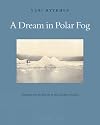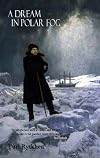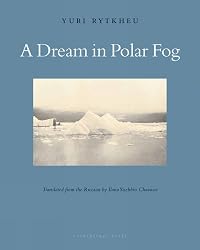
A Dream in Polar Fog
by Yuri Rytkheu
On This Page
Description
A Dream in Polar Fog is at once a cross-cultural journey, an ethnographic chronicle of the people of Chukotka, and a politically and emotionally charged adventure story. It is the story of John MacLennan, a Canadian sailor who is left behind by his ship, stranded on the northeastern tip of Siberia and the story of the Chukchi community that adopts this wounded stranger and teaches him to live as a true human being. Over time, John comes to know his new companions as a real people who share show more the best and worst of human traits with his own kind. Tragedy strikes, and wounds are healed with compassion and honesty as tensions rise and fall. Rytkheu’s empathy, humor, and provocative voice guide us across the magnificent landscape of the North and reveal all the complexity and beauty of a vanishing world. show lessTags
Recommendations



















Member Reviews
In the second decade of the 20th century, a young Canadian sailor, John MacLennan, comes to the far North to the northern tip of Siberia. His ship is stuck in ice and detonating charges to free it, he suffers terrible injuries to his hands. Three Chukchi tribesmen start to take him to the nearest hospital, miles and miles away, and on the way his hands turn gangrenous. So a shaman-woman amputates all but several fingers. Upon return to the Chukchi settlement, they find the ship has left without John, after a storm has broken up the ice. So he lives among them and takes up their customs. They help him and he finds, instead of being savages and frightening, they are trusting and really human, in the best sense of the word. Much of the show more book is a description of their daily lives--joys and troubles alike. John acculturates, adopts their customs, takes on a wife, and finally has to face a decision when his mother arrives: does he leave and go back to Canada a cripple or does he stay?
This was a marvelous book. Not only is there the description of a people, but the village elder Orvo, speaks much wisdom. Sometimes the writing was a bit awkward and clunky, but that could have been the translation.
Highly recommended. show less
This was a marvelous book. Not only is there the description of a people, but the village elder Orvo, speaks much wisdom. Sometimes the writing was a bit awkward and clunky, but that could have been the translation.
Highly recommended. show less
I really enjoyed this novel. It's about an American man who is on a ship in the Arctic, on the coast of far eastern Russian where the Chukchi people live. He has an accident that causes him to lose his hands, and while he is healing, the boat departs without him. He eventually assimilates into the Chukchi culture and this novel is the story of him doing that. As the story progresses, outside influences begin to creep in, and this reintroduction of western culture and people shows just how deeply John has adapted to this new way of living.
I thought this was really well done. Sometimes books that are this foreign in culture and setting are hard for me to connect with, but I think because there was a well-drawn American character show more experiencing this way of life, I was able to really get what the author was trying to say.
Highly recommended - a great look at a different culture and way of life, and also a good exploration of what matters in life. show less
I thought this was really well done. Sometimes books that are this foreign in culture and setting are hard for me to connect with, but I think because there was a well-drawn American character show more experiencing this way of life, I was able to really get what the author was trying to say.
Highly recommended - a great look at a different culture and way of life, and also a good exploration of what matters in life. show less
It's 1910, and Canadian sailor John MacLennan is aboard a ship frozen above the Arctic Circle, north of Siberia. While using dynamite to try and create a path through the ice to open water, John is injured, and the captain decides John's best chance of survival is with the local Chukchi people, who promise to dogsled him to the nearest doctor. The rest of the novel chronicles John's experiences with the Chukchi.
If you are looking for a well-written piece of literature, this is not it. The style and the plot construction feel amateurish. The beauty of this work lies in the details about the Chukchi way of life. The author, himself, was born in Chukotka lands and writes convincingly of the ice, Northern Lights, walrus hunts, and show more ceremonial rituals. He uses Chukchi words throughout, and I hope the author's dozen novels and collections of stories help preserve the language. One of the themes of the novel is the benefits and drawbacks of interaction with non-Native peoples. Although his characters are stereotypes (the greedy White merchant, the violent gold rush prospectors, the head-in-the-clouds scientists), the conversations between John and Orvo, the village elder, touch upon important questions of Native rights, condescension, prejudice, and exploitation.
Although reviews of this book have been mixed, I found it interesting enough to make up for the lack of literary polish. show less
If you are looking for a well-written piece of literature, this is not it. The style and the plot construction feel amateurish. The beauty of this work lies in the details about the Chukchi way of life. The author, himself, was born in Chukotka lands and writes convincingly of the ice, Northern Lights, walrus hunts, and show more ceremonial rituals. He uses Chukchi words throughout, and I hope the author's dozen novels and collections of stories help preserve the language. One of the themes of the novel is the benefits and drawbacks of interaction with non-Native peoples. Although his characters are stereotypes (the greedy White merchant, the violent gold rush prospectors, the head-in-the-clouds scientists), the conversations between John and Orvo, the village elder, touch upon important questions of Native rights, condescension, prejudice, and exploitation.
Although reviews of this book have been mixed, I found it interesting enough to make up for the lack of literary polish. show less
A Dream in Polar Fog tells the story of how an outsider, Canadian John MacLennan, comes to live with, and gradually become part of, a settlement of indigenous Chukchi people living on the Arctic coast of Siberia, during the years 1910-1917. Yuri Rytkheu, himself Chukchi, uses the outsider MacLennan as our introduction to the life of the Chukchi, and to the encroaching threats that Western ships and Western ways pose to their way of life and their hunting grounds.
MacLennan is forced to cross the barrier that separates white explorer from native when he is badly injured in an accident. His acceptance of, and acceptance into, the Chukchi culture is gradual and sometimes problematic, but his marriage to Pyl'mau and the birth of their show more children is a key factor in making him decide to stay.
Along with the observations on the ways in which cultures and both clash and cohere, there is an exciting story of death, sacrifice and survival here. If you are at all interested in either life in the polar regions, or the relationship between indigenous people and colonisers, this book is worth reading. show less
MacLennan is forced to cross the barrier that separates white explorer from native when he is badly injured in an accident. His acceptance of, and acceptance into, the Chukchi culture is gradual and sometimes problematic, but his marriage to Pyl'mau and the birth of their show more children is a key factor in making him decide to stay.
Along with the observations on the ways in which cultures and both clash and cohere, there is an exciting story of death, sacrifice and survival here. If you are at all interested in either life in the polar regions, or the relationship between indigenous people and colonisers, this book is worth reading. show less
An early 20th-century Canadian adventurer named John MacLennan finds himself stranded in a small Chukchi community in far northeastern Siberia. This small Arctic fishing and hunting community takes him in, cares for him and eventually embraces him. It's a wonderful and beautiful story of cross-cultural differences and acceptance. But there are certainly the inevitable dramatic confrontations, heart-breaking disasters and ugly cultural clashes. Who has even heard of the Chukchi? The novel captures their daily lives and subsistence struggles in great, powerful and beautiful detail. The author is a native Chukchi who was educated in Russia. This book was originally published in 1968 and recently translated and published in the US.
It’s cold on the northeastern tip of Siberia, really cold, especially when you’re a group a ice locked sailors from everywhere except where they are icebound. When the opportunity presents itself to break through before the hardest part of winter arrives they do so however it is costly for one sailor in particular, John MacLennan. It becomes clear to sailor and native alike that he needs emergency medical attention. It’s a long trip for the inhabitants of Chukotka to make but the captain of John’s ship, Hugh Grover vows to stay until John’s return. Grover's decision forces John to learn what it truly means to be called a man among the Chukotka.
Polar Fog is a beautifully written novel. It presents what I love most about show more reading. Being taken away to a place and a people I had no idea existed. As it was for John it was for me, the reader, it was the chance to spend some time with the residents of Chukotka, learn their customs, their strengths and their talents show less
Polar Fog is a beautifully written novel. It presents what I love most about show more reading. Being taken away to a place and a people I had no idea existed. As it was for John it was for me, the reader, it was the chance to spend some time with the residents of Chukotka, learn their customs, their strengths and their talents show less
I have mixed feelings about this book, which I also read for the Reading Globally Polar Regions theme read. On the one hand, it provides remarkable insight into the world of the Chuchki people of the Arctic at a time when white explorers/traders/gold searchers are beginning to change their way of life. The descriptions of their hunting and living practices and their adaptations to their harsh environment are fascinating, if a tad anthropological. The story of John McLennan, a white Canadian who ends up first stuck living with the Chuchki and then blending in as completely as possible with the life of their village, is interesting in spots.
On the other hand, I found the book heavy-handed. The life of the Chuchki is romanticized, the show more story is a little plodding and didactic, and the impact of western "civilization" on traditional civilization is a little obvious. The author points out more than once that cultures are different and we should live and let live. But the portrait of a lost way of life is interesting. show less
On the other hand, I found the book heavy-handed. The life of the Chuchki is romanticized, the show more story is a little plodding and didactic, and the impact of western "civilization" on traditional civilization is a little obvious. The author points out more than once that cultures are different and we should live and let live. But the portrait of a lost way of life is interesting. show less
Members
- Recently Added By
Lists

Troublesome bodies
110 works; 7 members
Author Information

30+ Works 603 Members
Some Editions
Awards and Honors
Awards
Series
Belongs to Publisher Series
Work Relationships
Common Knowledge
- Canonical title
- A Dream in Polar Fog
- Original title
- Сон в начале тумана; Son v natsjale toemana
- Original publication date
- 1968
- People/Characters*
- John MacLennan
- Important places
- Sibirien, Russland; Siberia, Russia
- First words*
- Am Morgen des 4. September hörten die Einwohner der Siedlung Enmyn an der Eismeerküste ein Krachen, das anders klang als das Krachen von berstendem Eis, rollenden Schneelawinen oder herabstürzendem Gestein am Felsenkap von... (show all) Enmyn.
- Last words*
- (Click to show. Warning: May contain spoilers.)"Ich sähe dich lieber tot als so!"
- Original language*
- Russisch
*Some information comes from Common Knowledge in other languages. Click "Edit" for more information.
Classifications
- Genres
- Fiction and Literature, General Fiction
- DDC/MDS
- 891.73 — Literature & rhetoric Literatures of other languages East Indo-European and Celtic literatures Russian and East Slavic languages Russian fiction
- LCC
- PG3476 .R965 .S613 — Language and Literature Slavic languages and literatures. Baltic languages. Albanian language Slavic. Baltic. Albanian Russian literature Individual authors and works 1917-1960
- BISAC
Statistics
- Members
- 230
- Popularity
- 141,631
- Reviews
- 11
- Rating
- (4.09)
- Languages
- Dutch, English, Finnish, German
- Media
- Paper, Ebook
- ISBNs
- 12
- ASINs
- 3