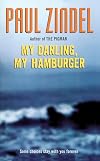
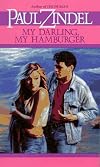
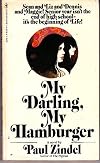
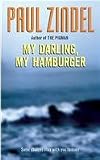
My Darling, My Hamburger
by Paul Zindel
On This Page
Description
Four high school seniors struggle with the responsibilities of growing up, particularly the problems of an intimate relationship.Tags
Recommendations





















Member Reviews
“The speeches! They were filled with borrowed things--borrowed over and over again until the words were nothing more than a series of clichés.”
― Paul Zindel, My Darling, My Hamburger
A favorite from childhood. Review to follow.
I heard from someone that Paul Zindel commented on how he did not write good books in the time period this came out.
I cannot confirm he said this. I hope he didn't.
He needs a reality check if he did.
It is difficult to explain how much this book meant to me and how beloved it is to a great deal of readers. I am not sure any writer has so accurately portrayed teenagers and that is the beauty in this little gem of a book.
It isn't happy. It is bitingly cynical, brutal in its tragedy and seamless in getting into show more the heads of the four individuals in this story.
It covers some pretty heavy subjects..suicide, abortion, sex, dating in general, friendship..all the things teens worry about.
It is a capsule in time. I often wonder about Liz and Sean and Maggie and Dennis.
I was in Elementary school when I first read this book. Actually I did not read it. A family member who was big into theater did an oral reading for myself and my whole family. I fell in love with the book then and have reread many times since.
So as for Paul Zindel....he wrote a masterpiece. A masterpiece of feeling and bittersweet pain, the kind that we all feel as teens. A book of loneliness, alienation and yearning. A book that stands as a gr eat novel and a classic that should be read by any constant reader who favors the Literary Young Adult novel. You won't get happily ever after but you will get a book that may resonate deeply and one you will never forget. show less
― Paul Zindel, My Darling, My Hamburger
A favorite from childhood. Review to follow.
I heard from someone that Paul Zindel commented on how he did not write good books in the time period this came out.
I cannot confirm he said this. I hope he didn't.
He needs a reality check if he did.
It is difficult to explain how much this book meant to me and how beloved it is to a great deal of readers. I am not sure any writer has so accurately portrayed teenagers and that is the beauty in this little gem of a book.
It isn't happy. It is bitingly cynical, brutal in its tragedy and seamless in getting into show more the heads of the four individuals in this story.
It covers some pretty heavy subjects..suicide, abortion, sex, dating in general, friendship..all the things teens worry about.
It is a capsule in time. I often wonder about Liz and Sean and Maggie and Dennis.
I was in Elementary school when I first read this book. Actually I did not read it. A family member who was big into theater did an oral reading for myself and my whole family. I fell in love with the book then and have reread many times since.
So as for Paul Zindel....he wrote a masterpiece. A masterpiece of feeling and bittersweet pain, the kind that we all feel as teens. A book of loneliness, alienation and yearning. A book that stands as a gr eat novel and a classic that should be read by any constant reader who favors the Literary Young Adult novel. You won't get happily ever after but you will get a book that may resonate deeply and one you will never forget. show less
This is the book I was so excited to review. I had so many thoughts when reading it and when I finished I just could not wait to get them down. Essentially, My Darling, My Hamburger is a book about first love, but it is more than that, rather it is a book on how teens deal with sexuality. Two couples are featured, Maggie and Dennis -- testing relationship waters for the first time, and Liz and Sean who engaged in sex. Now, get this, when I read a book, I never ever think about the context in which it was published. The thought does not ever cross my mind, that oh this book was published in 1945, what a crazy time. However, this book, I was like OMG CONTEXT BABY CONTEXT. Then I did a little context-ing dance. What you should know is that show more this book was copyrighted in 1969, and ooo does it push some envelopes. First, there is a abortion in this book. Yet, it's published pre Roe v. Wade, riding the wave of the feminist movement. So yes, read this with all of that context in mind and prepare for your mind to be blown. I mean, I sat there think, wow this is pretty darn racy for YA, what with the sex themes and abortion. I could definitely see this book being banned. It's interesting too, because I see a whole lot of preggs in the YA I read but never any abortion. I wonder then, is it still a taboo topic?
ALSO, while parts of this book are fairly progressive other parts had me shaking my head going, omg, pre-Rape Culture. Especially because what I had read mirrored this post. Now, I'm wondering, this does contain Rape Culture by today's standards, but what about by the standards of 1969. Was this acceptable then? You see, Sean wears Liz down so she eventually dates him. Then, he wears her down until she has sex with him. She gives in because she probably does not want to hear him complain any more, and the pressure is on for her to do the girlfriend thing. She gives into dating him because she doesn't want to be seen as an ice queen, and boy doesn't take no for an answer. Yes, not cool.
"He had told her off. 'Who the hell do you think you are?' He remembered how shocked she looked when he said that....The next day he asked her out again and she refused. This time he was the one who said 'I'm sorry.' And the next day he asked her out again. Every day for two weeks he asked her out. He checked the attendence book in her register class for her telephone number, and on weekends he called her house." pg. 15
Ding, ding, stalker alert.
However, on a different tack, I do admire this book. Mainly because it tackles difficult topics for the time it was written in. I mean, omg, it mentions THE PILL. As you know, the Pill had just come out, and like anything that has to do with sex ever, it was controversial. I mean, mentioning the Pill in a book for teens? In the late sixties? Oh, friend, that is crazy talk.
Then, like I stated, I waver. Especially when some of the attitudes in the book strike me as sexist in today's context. For example, Maggie. She has all the self-esteem of a wet blanket, therefore her self-worth is based on how attractive she is to males. Then there is Liz. Liz, Liz, Liz who is a passive participant in her relationship. She doesn't really sexually awaken or anything, and it's her boyfriend who is CONSTANTLY pressuring her to do it. I'm not sure that's very accurate. I mean, yes teen boys want IT, but so do girls.
I think by today's standards, this book falls short. It's not as good as say, Ellen Hopkins, but I see it's value. I think it's an interesting look at teens of the late 1960s/early 1970s. It reveals a bit about the social constructs of adolescence of it's era. If you look at this from a sociological/gender context, I absolutely recommend this. It's a good book to read for analysis and making meaning of text and how our attitudes have changed over time and remained the same over decades. show less
ALSO, while parts of this book are fairly progressive other parts had me shaking my head going, omg, pre-Rape Culture. Especially because what I had read mirrored this post. Now, I'm wondering, this does contain Rape Culture by today's standards, but what about by the standards of 1969. Was this acceptable then? You see, Sean wears Liz down so she eventually dates him. Then, he wears her down until she has sex with him. She gives in because she probably does not want to hear him complain any more, and the pressure is on for her to do the girlfriend thing. She gives into dating him because she doesn't want to be seen as an ice queen, and boy doesn't take no for an answer. Yes, not cool.
"He had told her off. 'Who the hell do you think you are?' He remembered how shocked she looked when he said that....The next day he asked her out again and she refused. This time he was the one who said 'I'm sorry.' And the next day he asked her out again. Every day for two weeks he asked her out. He checked the attendence book in her register class for her telephone number, and on weekends he called her house." pg. 15
Ding, ding, stalker alert.
However, on a different tack, I do admire this book. Mainly because it tackles difficult topics for the time it was written in. I mean, omg, it mentions THE PILL. As you know, the Pill had just come out, and like anything that has to do with sex ever, it was controversial. I mean, mentioning the Pill in a book for teens? In the late sixties? Oh, friend, that is crazy talk.
Then, like I stated, I waver. Especially when some of the attitudes in the book strike me as sexist in today's context. For example, Maggie. She has all the self-esteem of a wet blanket, therefore her self-worth is based on how attractive she is to males. Then there is Liz. Liz, Liz, Liz who is a passive participant in her relationship. She doesn't really sexually awaken or anything, and it's her boyfriend who is CONSTANTLY pressuring her to do it. I'm not sure that's very accurate. I mean, yes teen boys want IT, but so do girls.
I think by today's standards, this book falls short. It's not as good as say, Ellen Hopkins, but I see it's value. I think it's an interesting look at teens of the late 1960s/early 1970s. It reveals a bit about the social constructs of adolescence of it's era. If you look at this from a sociological/gender context, I absolutely recommend this. It's a good book to read for analysis and making meaning of text and how our attitudes have changed over time and remained the same over decades. show less
Considering that this book was first published in 1969, the story and characters have held up remarkably well. It is still highly readable, relevant and relatable to today's YAs. The 4 main characters (Liz, Sean, Maggie & Dennis) are believable because they are modern archetypes. Liz & Sean are the "alpha" couple -- attractive, popular, seemingly self-assured, and quite selfish; their friends Maggie & Dennis are the "beta" couple -- not so attractive or popular, plagued by insecurities, self-doubt and a certain amount of self-hatred. Maggie especially rings true as the ever-loyal friend, putting Liz's needs, desires and ultimately welfare ahead of her own -- for which Maggie will pay a hefty price in the end.
The story is ageless: Sean show more wants to have sex with Liz - allegedly because he "loves her" -- but Liz is afraid of getting pregnant. Of course, that is precisely what does happen, and Liz is now faced with the problem of paying for an abortion (interestingly enough, the moral question is never raised, only the practical aspects of who to go to, how to pay for it, and how to hide the whole thing from her parents and the world.) When Sean decides to marry Liz, however, the problem appears to be over -- at least, in Liz's mind. She's so happy, she's almost dancing on a cloud. And this is perhaps the least realistic part of the story, or the least relatable to today's teens. Most teenage girls today are not, I think, so eager to marry at such a young age. This is not 1969; today's girls assume that they will go to college and/or have careers before becoming wives and/or mothers. So just marrying the baby's father is no longer necessarily a satisfactory -- or ANY -- solution.
The teens' relationships with their respective families also ring true. Liz's stepfather constantly erodes her self-esteem, accusing her of loose morals. (The irony is that, up until the moment he calls her a tramp, Liz had in fact kept her virginity. His declaration would prove to be the pivotal point in the story.) Liz's mother tries to be more understanding but ultimately is more concerned about her own relationship with her 2nd husband than she is about her daughter. Sean's father is a boorish, blow-hard, good-ol'-boy type who doesn't understand his son at all (yet in the end Sean seeks, and winds up taking, his dad's chauvinistic advice.) Dennis' parents are well-meaning but utterly clueless about their son. Maggie's mother is kind and caring, she's the only one who does understand and has a good relationship with her daughter.
I see the usefulness of this book more along the lines of in-depth character studies, rather than as part of a unit on sex education, abstinence, pregnancy, or dating. show less
The story is ageless: Sean show more wants to have sex with Liz - allegedly because he "loves her" -- but Liz is afraid of getting pregnant. Of course, that is precisely what does happen, and Liz is now faced with the problem of paying for an abortion (interestingly enough, the moral question is never raised, only the practical aspects of who to go to, how to pay for it, and how to hide the whole thing from her parents and the world.) When Sean decides to marry Liz, however, the problem appears to be over -- at least, in Liz's mind. She's so happy, she's almost dancing on a cloud. And this is perhaps the least realistic part of the story, or the least relatable to today's teens. Most teenage girls today are not, I think, so eager to marry at such a young age. This is not 1969; today's girls assume that they will go to college and/or have careers before becoming wives and/or mothers. So just marrying the baby's father is no longer necessarily a satisfactory -- or ANY -- solution.
The teens' relationships with their respective families also ring true. Liz's stepfather constantly erodes her self-esteem, accusing her of loose morals. (The irony is that, up until the moment he calls her a tramp, Liz had in fact kept her virginity. His declaration would prove to be the pivotal point in the story.) Liz's mother tries to be more understanding but ultimately is more concerned about her own relationship with her 2nd husband than she is about her daughter. Sean's father is a boorish, blow-hard, good-ol'-boy type who doesn't understand his son at all (yet in the end Sean seeks, and winds up taking, his dad's chauvinistic advice.) Dennis' parents are well-meaning but utterly clueless about their son. Maggie's mother is kind and caring, she's the only one who does understand and has a good relationship with her daughter.
I see the usefulness of this book more along the lines of in-depth character studies, rather than as part of a unit on sex education, abstinence, pregnancy, or dating. show less
This is the book I was so excited to review. I had so many thoughts when reading it and when I finished I just could not wait to get them down. Essentially, My Darling, My Hamburger is a book about first love, but it is more than that, rather it is a book on how teens deal with sexuality. Two couples are featured, Maggie and Dennis -- testing relationship waters for the first time, and Liz and Sean who engaged in sex. Now, get this, when I read a book, I never ever think about the context in which it was published. The thought does not ever cross my mind, that oh this book was published in 1945, what a crazy time. However, this book, I was like OMG CONTEXT BABY CONTEXT. Then I did a little context-ing dance. What you should know is that show more this book was copyrighted in 1969, and ooo does in push some envelopes. First, there is a abortion in this book. Yet, it's published pre Roe v. Wade, riding the wave of the feminist movement. So yes, read this with all of that context in mind and prepare for your mind to be blown. I mean, I sat there think, wow this is pretty darn racy for YA, what with the sex themes and abortion. I could definitely see this book being banned. It's interesting too, because I see a whole lot of preggs in the YA I read but never any abortion. I wonder then, is it still a taboo topic?ALSO, while parts of this book are fairly progressive other parts had me shaking my head going, omg, pre-Rape Culture. Especially because what I had read mirrored this post. Now, I'm wondering, this does contain Rape Culture by today's standards, but what about by the standards of 1969. Was this acceptable then? You see, Sean wears Liz down so she eventually dates him. Then, he wears her down until she has sex with him. She gives in because she probably does not want to hear him complain any more, and the pressure is on for her to do the girlfriend thing. She gives into dating him because she doesn't want to be seen as an ice queen, and boy doesn't take no for an answer. Yes, not cool."He had told her off. 'Who the hell do you think you are?' He remembered how shocked she looked when he said that....The next day he asked her out again and she refused. This time he was the one who said 'I'm sorry.' And the next day he asked her out again. Every day for two weeks he asked her out. He checked the attendence book in her register class for her telephone number, and on weekends he called her house." pg. 15Ding, ding, stalker alert. However, on a different tack, I do admire this book. Mainly because it tackles difficult topics for the time it was written in. I mean, omg, it mentions THE PILL. As you know, the Pill had just come out, and like anything that has to do with sex ever, it was controversial. I mean, mentioning the Pill in a book for teens? In the late sixties? Oh, friend, that is crazy talk.Then, like I stated, I waver. Especially when some of the attitudes in the book strike me as sexist in today's context. For example, Maggie. She has all the self-esteem of a wet blanket, therefore her self-worth is based on how attractive she is to males. Then there is Liz. Liz, Liz, Liz who is a passive participant in her relationship. She doesn't really sexually awaken or anything, and it's her boyfriend who is CONSTANTLY pressuring her to do it. I'm not sure that's very accurate. I mean, yes teen boys want IT, but so do girls.I think by today's standards, this book falls short. It's not as good as say, Ellen Hopkins, but I see it's value. I think it's an interesting look at teens of the late 1960s/early 1970s. It reveals a bit about the social constructs of adolescence of it's era. If you look at this from a sociological/gender context, I absolutely recommend this. It's a good book to read for analysis and making meaning of text and how our attitudes have changed over time and remained the same over decades. show less
Paul Zindel's MY DARLING, MY HAMBURGER has attained the status of classic in YA fiction. First published in 1969, it has never been out of print. I've had the book on my shelf for over forty years, but am just now getting around to reading it. Its a small book, but it packs an enormous emotional punch, dealing as it does with the delicate subject of teens and sex. I suspect it's been on some banned books lists in the past five decades. But teens have always found it anyway, and have read it too, as evidenced by more than 500 reviews on its Amazon product page. The positive reviews are mostly from the kids, while the more cautious ones seem to be from adults.
I'll bet there are a few generations by now whose lives have been affected show more deeply by this moving story of high school seniors Maggie and Dennis and Liz and Sean. And, oddlY, even after fifty years, it doesn't seem all that dated. The message still hits home. (No spoilers from me.)
I read MD,MH in a single sitting of a few hours. Couldn't put it down. Zindel was a very good writer who remembered how it felt to be young. Very highly recommended for kids AND parents.
- Tim Bazzett, author of the memoir, BOOKLOVER show less
I'll bet there are a few generations by now whose lives have been affected show more deeply by this moving story of high school seniors Maggie and Dennis and Liz and Sean. And, oddlY, even after fifty years, it doesn't seem all that dated. The message still hits home. (No spoilers from me.)
I read MD,MH in a single sitting of a few hours. Couldn't put it down. Zindel was a very good writer who remembered how it felt to be young. Very highly recommended for kids AND parents.
- Tim Bazzett, author of the memoir, BOOKLOVER show less
Did you read this one when you were younger? I thought I had but the fact that I didn't remember it at all makes me think now that I didn't. Did I miss out on something special by not reading it then? I'll never know. But I sure didn't find that something special reading it now as an adult, which was a disappointment.
Maggie and Liz have been friends forever, despite the fact that Liz is pretty and popular and Maggie is fat and awkward and mostly just heor worships Liz. Liz insists on setting Maggie up for double dates when she and boyfriend Sean go out. Dennis, Sean's equivalent to a Maggie although he's gangling and nerdy rather than fat and awkward, is Maggie's date and neither one of them finds all that much appealing about the show more other but they continue to go out with Liz and Sean. Maggie and Sean, in the meantime, are in love and have to buck their parents to continue to see each other. Their ups and downs dictate in large part the ebb and flow of the fledgling, conflicted, but finally developing relationship between Maggie and Dennis.
Occasional notes passed between the friends or couples are interspersed between the chapters, allowing for Zindel to dispose of large chunks of time in the narration. This isn't entirely successful as it means that the disagreements and avoidances between the friends remains superficial. And there's very little narrative getting from Liz and Sean happy, albeit with Sean, the typical teenaged boy, pressuring Liz to have sex, to the rather predictable denouement of the ending. And while Maggie seems more the focus of the book than the other three characters, Liz and Sean provide the (obvious) object lesson here in a fairly heavy-handed manner. And frankly neither of them end up being terribly appealing characters. Liz is hard to like from the outset and while her unplanned pregnancy and subsequent rejection by Sean is supposed to inspire pity, it doesn't. Sean likewise doesn't grab the reader's empathy despite his frigid and emotionally barren upbringing so his ultimate buckling under to his father's advice leaves the reader feeling a rush of indigestion. And as it's completely in character, Sean comes off as just other unlikeable character in this book of many unlikeables.
The book is dated (published in the 60's) and honestly I can't see it having been terribly interesting to kids of my generation, much less the more sophisticated kids of today. And lest anyone say that society has changed for the worse, Zindel's portrait of society in the late 60's is pretty darn bleak too. Stereotypical characters, superficial plot, and an obvious, belaboured lesson. Do we not give our kids credit for being more intelligent than this? I really didn't enjoy this but I know it is a favorite of many so perhaps I missed something vital here. show less
Maggie and Liz have been friends forever, despite the fact that Liz is pretty and popular and Maggie is fat and awkward and mostly just heor worships Liz. Liz insists on setting Maggie up for double dates when she and boyfriend Sean go out. Dennis, Sean's equivalent to a Maggie although he's gangling and nerdy rather than fat and awkward, is Maggie's date and neither one of them finds all that much appealing about the show more other but they continue to go out with Liz and Sean. Maggie and Sean, in the meantime, are in love and have to buck their parents to continue to see each other. Their ups and downs dictate in large part the ebb and flow of the fledgling, conflicted, but finally developing relationship between Maggie and Dennis.
Occasional notes passed between the friends or couples are interspersed between the chapters, allowing for Zindel to dispose of large chunks of time in the narration. This isn't entirely successful as it means that the disagreements and avoidances between the friends remains superficial. And there's very little narrative getting from Liz and Sean happy, albeit with Sean, the typical teenaged boy, pressuring Liz to have sex, to the rather predictable denouement of the ending. And while Maggie seems more the focus of the book than the other three characters, Liz and Sean provide the (obvious) object lesson here in a fairly heavy-handed manner. And frankly neither of them end up being terribly appealing characters. Liz is hard to like from the outset and while her unplanned pregnancy and subsequent rejection by Sean is supposed to inspire pity, it doesn't. Sean likewise doesn't grab the reader's empathy despite his frigid and emotionally barren upbringing so his ultimate buckling under to his father's advice leaves the reader feeling a rush of indigestion. And as it's completely in character, Sean comes off as just other unlikeable character in this book of many unlikeables.
The book is dated (published in the 60's) and honestly I can't see it having been terribly interesting to kids of my generation, much less the more sophisticated kids of today. And lest anyone say that society has changed for the worse, Zindel's portrait of society in the late 60's is pretty darn bleak too. Stereotypical characters, superficial plot, and an obvious, belaboured lesson. Do we not give our kids credit for being more intelligent than this? I really didn't enjoy this but I know it is a favorite of many so perhaps I missed something vital here. show less
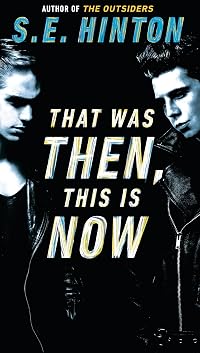
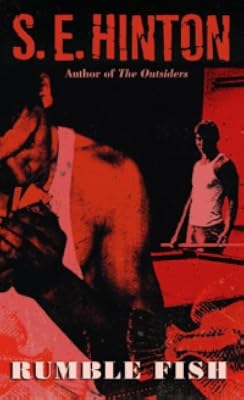
I found the title for this book on a "My Guilty Pleasures" list on NPR.org. Today we would call this a young adult novel. When it was first published in 1969, I am not sure what it would have been classified as. Controversial for sure because of the subject matter (teen sex and abortion) but the imagery is so mild compared to what young adults are exposed to nowadays that I find the controversy quaint. Nevertheless, the writing was excellent, the characters were well-developed and relatable and I enjoyed this short but profound read. I can't believe I missed this one in my teen years but it was already a 15 year old book by that time and had apparently fallen out of fashion with Judy Blume and S.E. Hinton books taking its place. We were show more all wishing our lives were scripted just like a John Hughes movie but this book provides a clarity in retrospect that teenage angst is timeless. Excellent read. show less
Members
- Recently Added By
Lists

Teen Pregnancy
25 works; 3 members

Books Featured in "Paperback Crush"
228 works; 7 members
Author Information

71+ Works 9,266 Members
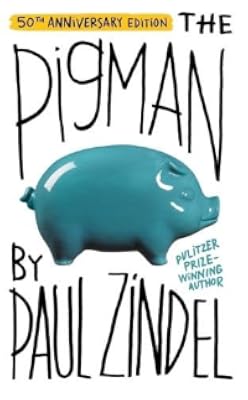
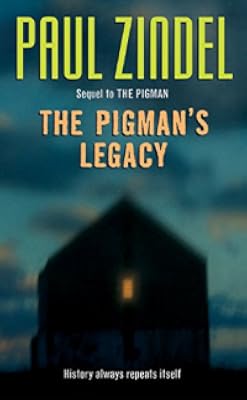
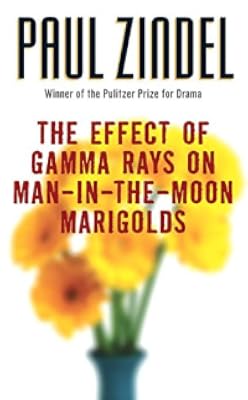
Paul Zindel Born on Staten Island, New York, Zindel was raised by a single mother who pursued a variety of odd and mostly unsuccessful jobs and took in terminally ill patients to supplement the family income. Due to her eccentricity and restlessness, the mother moved the family from one apartment to another, making it difficult for Zindel to form show more lasting friendships. As a consequence, the boy lived in the world of his imagination, developing interests in both science and writing. Zindel majored in chemistry at Wagner College on Staten Island, completing both bachelors and masters degrees. During this period he also took a creative-writing course offered by the playwright Edward Albee. After college he worked briefly as a technical writer for a chemical company and then discovered a more fulfilling vocation as a teacher of chemistry and physics at a Staten Island high school. It was during this period in the early 1960s that Zindel was able to develop his potential as a playwright by drawing on his own background as well as the experiences of his young students. The Effect of Gamma Rays on Man-in-the-Moon Marigolds premiered at the Alley Theater in Houston in 1965, was presented in a condensed version on television the following year, and finally opened off-Broadway at the Mercer-O'Casey Theater in 1970. Because of a fire in the theater, the play was moved, with a new cast, to the New Theater on Broadway, where it ran for a total of 819 performances. In addition to being enormously popular, Gamma Rays earned in 1970 an Obie Award as the best play of the season, the New York Drama Critics Circle Award as the best American play, and the Vernon Rice Drama Desk Award for most promising playwright. In 1971 the play was awarded the Pulitzer Prize in Drama. Gamma Rays is the story of an embittered, half-mad widow, Beatrice Hunsdorfer; her teenaged daughters, Ruth and Tillie; and Nanny, a decrepit old woman who boards with them. The family lives in chaos, with Beatrice dealing out petty vengeance to everyone. Nanny has been abandoned by her daughter. Ruth is wanton, untidy, and subject to seizures. Tillie, however, has become interested in science and enters her marigold experiment in the science fair; by exposing the marigold seeds to radiation, she shows that some produce normal plants, others produce mutations with beautiful double blooms, while still others die. The metaphor, of course, is that Tillie has emerged from her chaotic environment as a beautiful and whole person, a human "double bloom." Zindel's other plays include And Miss Reardon Drinks a Little (1971), The Secret Affairs of Mildred Wild(1973), Let Me Hear You Whisper (1973), and Ladies at the Alamo(1975). While these plays continue to show Zindel's skill in writing excellent roles for women, none of them have matched the critical and popular success of Gamma Rays. Since the late 1960s, Zindel has also written several novels for young adults. The Pigman (1968), which is about a lonely widower and two destructive teenagers, has sold more than 1 million copies. His other novels include My Darling, My Hamburger (1969), I Never Loved Your Mind (1970), Pardon Me, You're Stepping on My Eyeball (1976), Confessions of a Teenage Baboon (1977), and The Undertaker's Gone Bananas (1978). As in Gamma Rays, these works display not only a penchant for grotesque humor but an uncanny awareness of the problems of teenagers. Zindel's works, which also include several screenplays, explore the themes of loneliness, escapism, and eccentricity. His best works are humorous, perceptive, and warm; they present an affirmation of life emerging from desperate and grotesque circumstances. He is especially noted for his excellent women's roles, which has helped sustain him as a best-selling playwright for school and community groups. (Bowker Author Biography) show less
Awards and Honors
Awards
Work Relationships
Common Knowledge
- Canonical title
- My Darling, My Hamburger
- Original publication date
- 1969
- People/Characters
- Liz Carstensen; Sean Collins; Maggie Tobin; Dennis Holowitz; Rod Gittens; Karl Zamborsky
- Dedication
- To My Darling,
My Charlotte Zolotow
To My Darling,
My Charlotte Zolotow - First words
- "It was Marie Kazinski who asked how to stop a boy if he wants to go all the way," Maggie whispered.
- Last words
- (Click to show. Warning: May contain spoilers.)She kissed him quickly on the cheek. "I'll always remember you," she said, and she started down the hall.
Classifications
- Genres
- Fiction and Literature, Teen, Young Adult
- DDC/MDS
- 813.54 — Literature & rhetoric American literature in English American fiction in English 1900-1999 1945-1999
- LCC
- PZ7 .Z647 .M — Language and Literature Fiction and juvenile belles lettres Fiction and juvenile belles lettres Juvenile belles lettres
- BISAC
Statistics
- Members
- 487
- Popularity
- 62,190
- Reviews
- 19
- Rating
- (3.32)
- Languages
- Dutch, English, Italian
- Media
- Paper, Ebook
- ISBNs
- 28
- ASINs
- 9