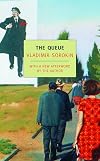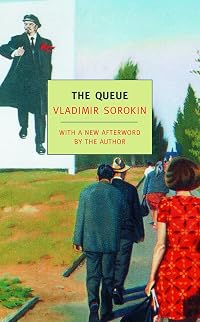
The Queue
by Vladimir Sorokin
On This Page
Description
"Vladimir Sorokin's first published novel, The Queue, is a sly comedy about the late Soviet years of stagnation. Thousands of citizens are in line for . . . nobody knows quite what, but the rumors are flying. Leather or suede? Jackets, jeans? Turkish, Swedish, maybe even American? It doesn't matter-if anything is on sale, you better line up to buy it. Sorokin's tour de force of ventriloquism and formal daring tells the whole story in snatches of unattributed dialogue, adding up to nothing show more less than the real voice of the people, overheard on the street as they joke and curse, fall in and out of love, slurp down ice cream or vodka, fill out crossword puzzles, even go to sleep and line up again in the morning as the queue drags on." show lessTags
Recommendations








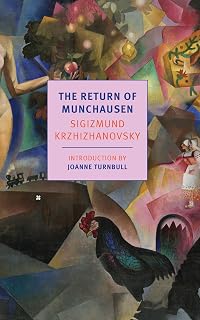
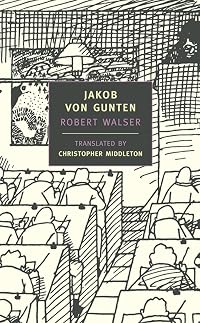


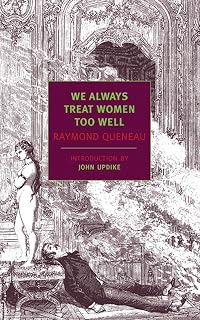

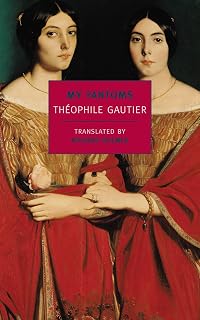
Member Recommendations
Member Reviews
For me, the most interesting thing about this book was its form: entirely unattributed dialogue, mostly extremely short comments by a variety of people waiting over the course of two days in one of the Soviet Union's iconic queues. Sorokin is trying to create the whole feeling of waiting in the queue: the boredom, the conversations, the woman annoyed with her child, groups of people leaving the queue for drinks or food, couples flirting, monitors urging the people waiting to line up more neatly or counting off their names and numbers for pages and pages. There are even blank pages where one of the characters (for characters do emerge from the seemingly random talk) passes out or goes to sleep, and at the end there is a scene, still in show more dialogue, that takes place outside the queue. What are they queuing for? We never find out, and in fact, the descriptions of the item change as the novel proceeds.
I found this book fascinating for its look at the queue phenomenon and for its experimental style, but otherwise it didn't really grab me. show less
I found this book fascinating for its look at the queue phenomenon and for its experimental style, but otherwise it didn't really grab me. show less
With witty, brilliant Vladimir Sorokin, novelist and playwright from the land of Gogol, Bulgakov and Kharms, the spirit of great Russian literature lives on.
Post-Soviet bad boy? Many of his countryman would undoubtedly shout “yes!” since his novel Blue Lard contains explicit anal sex between Stalin and Khrushchev and The Norm, another novel, takes place in the Brezhnev-era where Soviet citizens are required to eat packages of shit. Added to this, many of his works feature slaughter, sadism and even cannibalism mixed in with elements of crime thriller, science fiction, fantasy and the absurd.
However, the book under review here precedes all of the above. Indeed, The Queue is a first novel published in 1985 when the author was a mere show more lad of thirty.
Back In 1985 the Soviet Union still existed and Socialist Realism was the authorized, acceptable way of writing fiction, since, according to the state, such writing is a faithful mirroring of life and expresses essential truths.
Vladimir Sorokin’s novel is realism but a variety unwelcomed by the authorities – he blows state sanctioned realism to smithereens by actually giving it back to the people on the street. In this way I'm reminded of what Raymond Chandler said about crime writer Dashiell Hammett, that he "gave murder back to the kind of people that commit it."
Reading The Queue I had the impression Vladimir Sorokin simply joined his Comrades on line (a very long, twisting line) with a hidden microphone to record their conversations, their shouting, their jokes, their complaining and cursing, their conniving and conjectures, their grunting and groaning. The dialogue is that natural. Nothing is forced. Here’s an author, even at a relatively young age, that had a superb ear for how people speak.
To underscore the novel’s form: it’s 100% dialogue - atmosphere, mood, setting, character development all emerge from dialogue and the dialogue has no character attributions, that is, there are no he said, she said, Ivan said, Natasha said. Rather, the left side of each page is filled with dashes (-) to indicate a change in speaker. In this way, flipping through The Queue looks very much like Manuel Puig’s Kiss of the Spider Woman or Eternal Curse on the Reader of These Pages. Well, actually, with The Queue there are a number of blank pages noting a break in the waiting to take time out for things like sleep. These blank pages give the novel a decidedly Postmodern look and feel.
And what do these men and women standing in the queue have to say? Although it’s never entirely clear what everyone is so eager to buy, they sure have lots to talk about: Did he cut in line up there? What do you do for a living? How would you like to join me for coffee? Shut up! Don’t be so rude.
Talking and more talking about superior foreign products, asking for assistance on a crossword puzzle, old people yammering about the good old Stalin days, exchanging insults, telling jokes, arguing politics, making witty and not so witty remarks, comparisons with American workers (they have to work their assess off over there), offering opinions on food, making plans to step out of line for a drink. And on it goes.
Then there is the roll call conducted by the organizers which goes on for pages. Thirty-three pages of roll call! In this way, a reader is given an actual taste of the queue experience. Now that’s Socialist Realism, Vladimir Sorokin-style.
But I must say there is one queue hell several women in the novel had to endure that strikes me as the worst: standing in line for hours and hours with kids. I don’t know how they could take it. The organizers should have awarded metals to those courageous souls along with the blue jeans from America or suede jacket from Turkey or spike shoes from Sweden or whatever else they waited in queue days on end to receive.
Not nearly as bad, but bad enough is having an emotionally charged negative exchange with the next person on line: pushing, shoving, accusing (you stepped out of line!) and various other forms of crudeness and rudeness.
Conversely, affectionate physical contact is occasionally made, and, who knows, such connection might lead to a date or coffee, a relationship and even, heart of hearts, romance. It's the luck of the queue.
From what I've written so far you might be surprised to know The Queue does have a main character and hero, a handsome, single young man, an editor for a magazine by the name of Vadim.
And perhaps not so obvious from the beginning pages, The Queue turns out to be a sweet, charming love story. Quite different than Vladimir Soroken’s later work. To say anything more regarding Vadim's ups and downs in and out of the queue would be to say too much, so let me shift focus and mention this New York Review Books edition is 250-pages but with the short clips of dialogue (rarely will a person say more than a sentence or two or three), The Queue is a quick, delightful day’s read.
The NYRB edition includes translator Sally Laird’s informative Preface providing cultural context for the novel. She writes: “If part of the pleasure in reading The Queue lies in picking out the “melody” (and the numerous sub-melodies along the way), a related satisfaction comes simply from the novel’s perfect – sometimes pitiless – realism.”
Also included is an Afterward written in 2008 by Vladimir Sorokin himself, wherein he speaks of the rise and fall of Russian and Soviet queues. One part of the history is a tragedy where more than two thousand people were crushed waiting to receive a bag of gifts from the Tsar. Also, how according to statistics, Soviet citizens would spend a third of each day standing in lines. This to say, the queue played a vital role in his country’s history.
Not only does The Queue document a particular historic phenomenon but Vladimir Sorokin has written a love story of great beauty – I almost couldn’t believe such a happy ending.
"And the queue? That fantastic, many headed monster, the hallmark of socialism? Where has it gone, the monstrous Leviathan that wound entire cities in its motely coils? Where are the long hours of standing, the stirring shouts, the dramatic confrontations, the joyous trembling of the person at the head of the line?" - Vladimir Sorokin, from his new Afterward to the New York Review Books publication of The Queue show less
Obviously, Sorokin could write rather well before he became an icon of stylistic castles in the air, letting the zombies of obscenity and gore into the office building of social realism, then rebuilding himslef again as politically and socially laden author of the age of the New Regime.
In "The Queue" he stages an astute and highly relevant formalistic experiment balancing whatever content could be salvaged after almost 70 years of brain-crushing collective thinking in an endless dialog inside a humongous queue: the all too known format of thought and communication in Soviet times.
He pulls it off with what in hindsight can be dubbed Sorokinian relish and stylistic elegance in dealing with extremely inelegant and unpleasant situations. show more "The Queue" does so much to establish this, that despite the immense weight and broadness of his later work, if this work had not existed, he would most probably have had to invent it into his creative past. show less
In "The Queue" he stages an astute and highly relevant formalistic experiment balancing whatever content could be salvaged after almost 70 years of brain-crushing collective thinking in an endless dialog inside a humongous queue: the all too known format of thought and communication in Soviet times.
He pulls it off with what in hindsight can be dubbed Sorokinian relish and stylistic elegance in dealing with extremely inelegant and unpleasant situations. show more "The Queue" does so much to establish this, that despite the immense weight and broadness of his later work, if this work had not existed, he would most probably have had to invent it into his creative past. show less
Absolutely wonderful. Hilarious, heartbreaking, and inventive. The experimental style -- all dialogue -- adds rather than detracts from the narrative. While this will be most accessible to those familiar with Soviet life and literature, any reader can enjoy it.
I would love to see a stage show of this.
I would love to see a stage show of this.
If you like "Waiting for Godot", this book is for you. I personally love Godot, and I found this book just as enthralling. I can easily imagine it translated to the stage, especially since the entire text is nothing but dialog. No character descriptions, no setting descriptions. Just the back and forth that you would hear if you were standing in a line for days on end. And yet, somehow characters and familiar voices emerge. Relationships develop, fall apart, and rise from the ashes. The state of Russia in the 1970s is touched upon, and the notion that the privileged few get to skip the lines is front and center in the story. I was surprised when I reached the end of the book, because I had become so familiar with the characters I show more expected to hear them going on about their problems for many more pages. The relationship that develops at the end of the book is unexpected, especially the intensity of it, but it was a very satisfying way to end the tale. show less
Tired of standing in line this holiday season? Well, nothing you faced could compare to the thousands of Muscovites who wait in line in Sorokin's The Queue. Yes, thousands. In Soviet style, people join the line when they hear some imported good is at the head of it -- shoes, coats, jeans, who knows what awaits the winners who make it to the front? Sorokin wrote this dialogue-only novel as his ode to the long-lost Soviet queue -- a unique beast that I saw in action during my time in Leningrad in the 1980's, but which, out of sheer stubborness, I avoided becoming part of.
This is the first and only pure dialogue novel I've ever read. Even more unnerving than having no narrative is the fact that there are no tag lines with the dialogue. show more Crafty, humorous writer that Sorokin is, setting, characters and conflict emerge, and we ultimately follow the hapless Vadim, through flirtations and fights, through sleep (announced by blank pages) and drinking binges, even the start of a love affair, all while he waits in this never-ending queue. The translator, Sally Laird, does an excellent job of making sense of Russian and Soviet jargon and slang. Anyone who's been part of a massive crowd or, god forbid, a queue, will find much to laugh over in this book.
(Note: Sorokin has an excellent essay in the afterward of thiis novel about the end of the queue. An abridged version of this essay can be found in the Borders Without Words anthology, Wall in my Head: Words and Images from the Fall of the Iron Curtain, which I reviewed in the December issue of The Quarterly Conversation) show less
This is the first and only pure dialogue novel I've ever read. Even more unnerving than having no narrative is the fact that there are no tag lines with the dialogue. show more Crafty, humorous writer that Sorokin is, setting, characters and conflict emerge, and we ultimately follow the hapless Vadim, through flirtations and fights, through sleep (announced by blank pages) and drinking binges, even the start of a love affair, all while he waits in this never-ending queue. The translator, Sally Laird, does an excellent job of making sense of Russian and Soviet jargon and slang. Anyone who's been part of a massive crowd or, god forbid, a queue, will find much to laugh over in this book.
(Note: Sorokin has an excellent essay in the afterward of thiis novel about the end of the queue. An abridged version of this essay can be found in the Borders Without Words anthology, Wall in my Head: Words and Images from the Fall of the Iron Curtain, which I reviewed in the December issue of The Quarterly Conversation) show less
Sorokin's first novel is written entirely in lines of dialogue and though a narrative emerges the main function of the novel makes you feel as if you're also standing in a queue. This isn't an easy feat and technically I'd say it's an impressive debut but it's also an experiment and I didn't think the experiment was a success. If you're interested in experimental fiction and would like to capture the essence of waiting in a line, with all it's shoving and politics, I'd say check out The Queue, otherwise I wouldn't recommend adding it to your reading list.
Members
- Recently Added By
Lists

Best of World Literature
435 works; 52 members

Queues
9 works; 2 members

contemporary literary fiction list to check out
47 works; 1 member
Author Information

67+ Works 3,015 Members
Some Editions
Awards and Honors
Notable Lists
Series
Belongs to Publisher Series
Work Relationships
Common Knowledge
- Canonical title
- The Queue
- Original title
- очередь
- Original publication date
- 1983; 1988 (English) (English)
- Original language
- Russian
Classifications
- Genres
- General Fiction, Fiction and Literature
- DDC/MDS
- 891.7344 — Literature & rhetoric Literatures of other languages East Indo-European and Celtic literatures Russian and East Slavic languages Russian fiction USSR 1917–1991 Late 20th century 1917–1991
- LCC
- PG3488 .O66 .O2813 — Language and Literature Slavic languages and literatures. Baltic languages. Albanian language Slavic. Baltic. Albanian Russian literature Individual authors and works 1961-2000
- BISAC
Statistics
- Members
- 348
- Popularity
- 90,775
- Reviews
- 12
- Rating
- (3.72)
- Languages
- 8 — Dutch, English, Finnish, French, German, Italian, Norwegian (Bokmål), Russian
- Media
- Paper, Ebook
- ISBNs
- 17
- ASINs
- 3