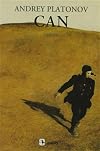
Soul
by Andrey Platonov
On This Page
Description
Born in Central Asia Chagataev, the hero, goes on to be educated in Moscow. As an adult he is sent back to his birthplace as a kind of missionary, believing his people are 'lost in the desert' he goes to rescue them and lead them towards Communism. His mission becomes a search for happiness and, ultimately, Chagataev discovers that he needs their help as much as they need his. Platonov's style is that of myth and fable. Chagataev is an epic hero, a 20th century Moses leading his people to show more freedom and battling against the powers of darkness and yet, at the same time, he is lost and vulnerable, uncomfortable with the responsibility he tries to shoulder. In trying to release the people from one ruling power, he himself fills the r-le of another. This is ultimately a story about being in possession of your own life. Platonov weaves together Zoroastrian myth, Sufism, Communism and Freud creating a work of psychological and philosophical complexity. show lessTags
Recommendations






































Member Reviews
Soul was written by Platonov in Soviet Russia during the thirties, but was only finally published in un-bowdlerised form in 1999. This might be surprising, given its ostensible plot of a young man, an analogue of Stalin, sent from Moscow to spread socialism to the 'nation' he was born in, and his (probable, depending on which of Platonov's endings one accepts) success. But Soul subverts the epic hero narrative so fundamentally that it was impossible for it to be accepted in Soviet Russia.
I found reading it a strange experience - most of my understanding of it seems to have popped out fully formed having been fermenting in my subconcious (although no doubt abetted by the helpful introduction) while I followed Chagataev and the Dzhan on show more their journey back to their 'hell' of a homeland. Platonov's description of the bleak desert through which they travel and the unremitting hardship of their poverty is spare but perfect, but its underlying theme of a search for a place and a people to belong and be useful in is far wider than the Dzhan or Soviet Russia.
If I had known more about the grim subject matter before beginning Soul, I would perhaps have avoided it, which would have been a terrible waste; despite the harshness of the narrative, the novel has a strangely compelling lightness to it. I am only disappointed that the British edition only includes Soul - I will be seeking out the NYRB edition which also includes a number of Platonov's short stories. show less
I found reading it a strange experience - most of my understanding of it seems to have popped out fully formed having been fermenting in my subconcious (although no doubt abetted by the helpful introduction) while I followed Chagataev and the Dzhan on show more their journey back to their 'hell' of a homeland. Platonov's description of the bleak desert through which they travel and the unremitting hardship of their poverty is spare but perfect, but its underlying theme of a search for a place and a people to belong and be useful in is far wider than the Dzhan or Soviet Russia.
If I had known more about the grim subject matter before beginning Soul, I would perhaps have avoided it, which would have been a terrible waste; despite the harshness of the narrative, the novel has a strangely compelling lightness to it. I am only disappointed that the British edition only includes Soul - I will be seeking out the NYRB edition which also includes a number of Platonov's short stories. show less
This is a beautiful story of a young Turkmen, who tries to save, or perhaps, uplift his tribe of people, referred to as dzhan, which means soul. Chagataev is abandoned by his other, and ends up in Moscow. He does marry but returns alone to his group in Turkemenistan to lead his people away from their drudgery into the presumed brightness of the Stalin's Soviet system. He leads them through desert, initially with much hope, but really into much privation. At one point in the story, they run into a flock of feral sheep, who allow a portion of themselves to be slaughtered for food, but then escape. Chagataev tries to find them, and eventually loses his way. Eventually he and his tribe are reunited, but Chagatev's fear of their decimation show more doesn't occur. They survive by a residency of soul in their being. The old Sufyan represents their stalwartness, the young Aidym represents the flower and resourceful of youth, and the contemporary Nur-Mohammed represents idealism gone bleak. The story has an "all-well" ending which some believe was Platonov's effort to have a good spin with the Soviet government. show less
Ratings
Members
- Recently Added By
Lists

Central Asia
59 works; 2 members
Author Information

150+ Works 2,854 Members
Andrei Platonov was born in Yanskaya, Sloboda, Russia. An engineer and land-reclamation specialist, Platonov was also a writer. He His first poems were published in the 1920s. Stories and folk tales followed. He became a member of the Pereval group of the 1920s and early 1930s. This group of writers was influenced by the humanistic, cultivated show more ideas of the critic Voronsky. After World War II, the more extreme proletarian writers and critics of the time vehemently attacked Platonov for what was considered his ideological mistakes. Platonov was forced to stop publishing. Russians knew only a portion of his real output until the 1960s when he became popular again. During the 1970s, publication of Platonov's writings in the West revealed him to be an important figure in modern Russian prose. His key novels, The Fountain Pit (1975), and Chevengur (1978), explored the bitter ironies of a land of triumphant socialism-a new Utopia-which systematically deforms language. Profoundly pessimistic, the novels reveal a man deeply skeptical of attempts to remold human nature and highly sensitive to the dark underside of Stalin's grandiose economic projects. (Bowker Author Biography) Andrei Platonov was born in Yanskaya, Sloboda, Russia. An engineer and land-reclamation specialist, Platonov was also a writer. He His first poems were published in the 1920s. Stories and folk tales followed. He became a member of the Pereval group of the 1920s and early 1930s. This group of writers was influenced by the humanistic, cultivated ideas of the critic Voronsky. After World War II, the more extreme proletarian writers and critics of the time vehemently attacked Platonov for what was considered his ideological mistakes. Platonov was forced to stop publishing. Russians knew only a portion of his real output until the 1960s when he became popular again. During the 1970s, publication of Platonov's writings in the West revealed him to be an important figure in modern Russian prose. His key novels, The Fountain Pit (1975), and Chevengur (1978), explored the bitter ironies of a land of triumphant socialism-a new Utopia-which systematically deforms language. Profoundly pessimistic, the novels reveal a man deeply skeptical of attempts to remold human nature and highly sensitive to the dark underside of Stalin's grandiose economic projects. (Bowker Author Biography) Alvar Aalto is considered the father of modernism in Scandinavia. He was born in Kuortane, Finland. His reputation as an architect has spread far beyond the bounds of his native country, where he built the major part of his work. He is perhaps Finland's greatest architect and certainly one of the major figures of twentieth-century architecture. As early as 1923, Aalto built in a typical Scandinavian style, relying heavily on native materials-timber in Finland's case-and produced such masterworks as the Library at Viipuri (1927-35), the Paimio Sanitarium, and the Villa Mairea. In 1932 he invented the process for making bent wood furniture. After World War II, his work began to be noticed internationally as he developed his own singular style, and he built some of his finest works-the Finlandia Concert Hall, in Helsinki, and the Baker Dorms at the Massachusetts Institute of Technology, his only building in the United States, (1947-49). His style is based on irregular and asymmetric forms with many curved walls and single-pitched roofs and with a highly imaginative use of natural materials. Aalto is also known for the design of several classic styles of chairs, tables, and glassware. (Bowker Author Biography) show less
Some Editions
Awards and Honors
Awards
Series
Belongs to Publisher Series
Work Relationships
Is contained in
Common Knowledge
- Original title
- Джан
- Original publication date
- 1934; 1972 (fr) (fr); 1979 (ru) (ru)
- People/Characters
- Nazar Chagataev; Aidym (young girl); Gyulchatay (mother); Nur-Mohammed; Sufyan; Ksenya
- Important places
- Sary-Kamysh, Turkmenistan
- Epigraph*
- Dzjan: ziel die het geluk zoekt (Turkmeens volksgeloof)
- First words*
- Nazar Tsjagatajev trok de deur van het Moskouse Economische Instituut achter zich dicht en keek verwonderd om zich heen.
- Last words*
- (Click to show. Warning: May contain spoilers.)Tsjagatajev wist nu zeker dat hij alleen hulp van een medemens kon krijgen.
- Original language*
- Russisch
- Disambiguation notice
- Harvill's edition (ISBN 184343038X) contains only one story, "Soul" (Dzhan) and ought not to be combined with "Soul and other stories".
*Some information comes from Common Knowledge in other languages. Click "Edit" for more information.
Classifications
- Genres
- Fiction and Literature, General Fiction
- DDC/MDS
- 891.7342 — Literature & rhetoric Literatures of other languages East Indo-European and Celtic literatures Russian and East Slavic languages Russian fiction USSR 1917–1991 Early 20th century 1917–1945
- LCC
- PG3476 .P543 — Language and Literature Slavic languages and literatures. Baltic languages. Albanian language Slavic. Baltic. Albanian Russian literature Individual authors and works 1917-1960
- BISAC
Statistics
- Members
- 135
- Popularity
- 242,050
- Reviews
- 3
- Rating
- (4.06)
- Languages
- 8 — Catalan, Dutch, English, Estonian, French, Spanish, Swedish, Turkish
- Media
- Paper, Ebook
- ISBNs
- 13
- ASINs
- 4