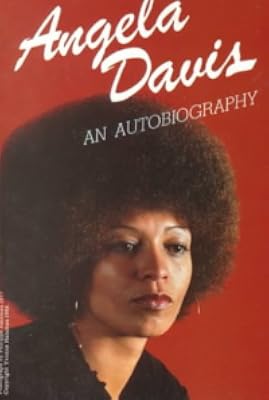
Angela Davis: An Autobiography
by Angela Y. Davis
On This Page
Description
This new edition of Angela Davis's classic Autobiography features an expansive new introduction by the author. Angela Davis has been a political activist at the cutting edge of the Black Liberation, feminist, queer, and prison-abolitionist movements for more than fifty years. Angela Davis: An Autobiography, first published and edited by Toni Morrison in 1974, is a powerful and commanding account of her early years in these struggles. Davis describes her journey from a childhood on Dynamite show more Hill in Birmingham, Alabama, to one of the most significant political trials of the century: from her political activity in a New York high school to her work with the US Communist Party, the Black Panther Party, and the Soledad Brothers, and from the faculty of the philosophy department at the University of California at Los Angeles to the FBI's list of the "Ten Most Wanted Fugitives." Read by Angela Davis herself, this autobiography, told with warmth, brilliance, humor, and conviction, is a classic account of a life in struggle, with echoes in our own time. show lessTags
Recommendations





Member Reviews
I found this book amongst those I inherited from my late uncle, and it had found its way onto my crowded to-read table. It took me a little time to get through this one as it is a long book and does drag here and there due to details especially when it comes to the legal system and webs of communication. However, I did find this to be a very compelling, and unfortunately, still relevant read.
The first quarter of the book is concerned with her flight from the authorities and time behind bars, the second is a retelling of some relevant events from her formative years, the third bit is concerned with her activism and the events that lead to her flight and eventual incarceration, and the final fourth is about her trial. I do not have any show more solid complaints about this book; some of it really had me on edge or fully on her side and frustrated and outraged with the injustice of the justice system. I did like this book and found it a decent read. The prose was clear and straightforward. However, the sections are insanely long with no chapter breaks and are broken up with extra line spaces. This, for me, is definitely a weakness but easily overcome due to the clarity of her writing. I did have a few favorite bits scattered about the book.
One such bit is when talking about how some of her radical contemporaries view all white people as the enemy and not the institution of racism itself, I think she hit the nail on the head with this: “When white people are indiscriminately viewed as the enemy, it is virtually impossible to develop a political solution.” (pg.148) Similarly, her take on reactionary responses was also spot on. “I was learning that as long as the Black response to racism remained purely emotional, we would go nowhere.” (pg.148)
Another is her mention of the bond between capitalists and racism presented by James Forman of the Student Non-Violent Coordinating Committee and is, IMHO, still very relevant today. "His presentation was clear and incisive: power relationships which placed Black people at the bottom stemmed from the use of racism as a tool of the economically ascendant class – the capitalists. Racism meant more profits and, insofar as white workers are concerned, division and confusion.” (pg.158) Today, it seems just about anything that can identify someone or group of people as “other” is weaponized in the pursuit of profits and control to the benefit of man-child billionaires, corrupt politicians, and mega-corporations. Likewise, idealizing the oppressed's struggle is not a good idea either. Realism and practicality driven by radicalism is the theme/moral that I came away with from this book. “Romanticizing the plight of oppressed people is dangerous and misleading." (pg.208)
Another favorite is: “It seemed to me that if there were hungry children, something was wrong and if I did nothing about it, I would be wrong too.” (pg.88)
I definitely like this book, and I would recommend this to just about anyone though with the caveat about the section length and no actual chapters to speak of. And if you’re a radical, there are some pointers in here you might be interested in. show less
The first quarter of the book is concerned with her flight from the authorities and time behind bars, the second is a retelling of some relevant events from her formative years, the third bit is concerned with her activism and the events that lead to her flight and eventual incarceration, and the final fourth is about her trial. I do not have any show more solid complaints about this book; some of it really had me on edge or fully on her side and frustrated and outraged with the injustice of the justice system. I did like this book and found it a decent read. The prose was clear and straightforward. However, the sections are insanely long with no chapter breaks and are broken up with extra line spaces. This, for me, is definitely a weakness but easily overcome due to the clarity of her writing. I did have a few favorite bits scattered about the book.
One such bit is when talking about how some of her radical contemporaries view all white people as the enemy and not the institution of racism itself, I think she hit the nail on the head with this: “When white people are indiscriminately viewed as the enemy, it is virtually impossible to develop a political solution.” (pg.148) Similarly, her take on reactionary responses was also spot on. “I was learning that as long as the Black response to racism remained purely emotional, we would go nowhere.” (pg.148)
Another is her mention of the bond between capitalists and racism presented by James Forman of the Student Non-Violent Coordinating Committee and is, IMHO, still very relevant today. "His presentation was clear and incisive: power relationships which placed Black people at the bottom stemmed from the use of racism as a tool of the economically ascendant class – the capitalists. Racism meant more profits and, insofar as white workers are concerned, division and confusion.” (pg.158) Today, it seems just about anything that can identify someone or group of people as “other” is weaponized in the pursuit of profits and control to the benefit of man-child billionaires, corrupt politicians, and mega-corporations. Likewise, idealizing the oppressed's struggle is not a good idea either. Realism and practicality driven by radicalism is the theme/moral that I came away with from this book. “Romanticizing the plight of oppressed people is dangerous and misleading." (pg.208)
Another favorite is: “It seemed to me that if there were hungry children, something was wrong and if I did nothing about it, I would be wrong too.” (pg.88)
I definitely like this book, and I would recommend this to just about anyone though with the caveat about the section length and no actual chapters to speak of. And if you’re a radical, there are some pointers in here you might be interested in. show less
I love this book! Angela Davis has such a strong voice. It was a real treat to be able to get a closer look at her life, her ideas and the work she has done. Reading this book sparked my interest in autobiographies and got me reading more books by and about women I admire. I highly recommend this book to anyone interested in civil rights, radical history, criticisms of the prison industrial complex, anti-racism, prison-abolition, communism and stories of resistance. The story of her activism is very relevant to today's climate, and her analysis has had a great influence on the Black Lives Matter movement. A truly inspiring read!!
"...render impassable with our bodies the corridor to the gas chamber. For, if they take you in the morning, they will be coming for us that night." -James Baldwin, An Open Letter to My Sister, Angela Y. Davis
On the FBI's most wanted list at only 26yrs old. A life so eventful she could write an utterly suspenseful autobiography at 28yrs old.
Angela Y. Davis.
When I started reading this autobiography I had to stop a moment and think about the ages Davis was when all these events were taking place. This autobiography was sobering to say the least. Currently at ages 23-26, most women have extremely superficial or vanity laden thoughts. At the same age Angela Davis was making history. She was one of the leaders and very few women of a show more national movement to liberate Black and Brown people alike.
"...love has been ordained by God. White people's hatred of us was neither natural nor eternal."
In Birmingham, AL, Davis grew up in the middle of the civil Rights Movement and constant bombings in her neighborhood. When Davis speaks about her parents and siblings, especially her mother, there is a certain tenderness and love that leaps off the page. Despite all she faced she stated she wanted it all to be over more so for her mom than herself. Her sister Fania was relentless in her devotion. There were numerous loyal friends from various political factions. Throughout this book you get the feel that Angela Davis was born for the fight she was in. She had a certain resilience and calm that most people, man or woman, would break into pieces under. She was totally devoted to the revolution. During her stay in the NY House of Detention, Davis really began to develop where her life work would be. There is where she saw addicts as young as fourteen, deplorable living conditions, and guards who she described as prisoners themselves. Davis spent a lot of her time in jail observing the system instead of allowing it to defeat her. She was determined to help her fellow sisters and brothers that were living in subhuman conditions and being denied even some of the most basic necessities. While in prison, she seemed detached from her own plight thinking on how she could assist or gain assistance for others.
"I decided then and there that if I was ever free, I would use my life to uphold the cause of my sisters and brothers behind walls."
Davis stated that she hated being the center of excessive attention and never aspired to be a "public revolutionary." She had to get use to it quick. Right now in 2012 she is still larger than life. The most moving sections of this autobiography for me was the times Davis spent in prison and her love for George Jackson. In prison she described the horrors of and shed a blinding light on the injustices within the penal system. The isolation that was imposed on her was designed to destroy her. It is was simply mind blowing. The only time Davis gave a glimpse into her personal life was when it came to George Jackson. She still remained very discreet. You get the feel that Davis is very guarded in this area which is understandable. The love between them was so strong when she when did describe it she could not have left it out of her story if she wanted to. When Davis received the news that George was killed in San Quentin it was heartbreaking. She decribed it as "the loss of an irretrievable love." This was a man she only saw in chains. Their love blossomed out of words and a love for the people. This devastating loss seemed to have pushed her on to victory. show less
On the FBI's most wanted list at only 26yrs old. A life so eventful she could write an utterly suspenseful autobiography at 28yrs old.
Angela Y. Davis.
When I started reading this autobiography I had to stop a moment and think about the ages Davis was when all these events were taking place. This autobiography was sobering to say the least. Currently at ages 23-26, most women have extremely superficial or vanity laden thoughts. At the same age Angela Davis was making history. She was one of the leaders and very few women of a show more national movement to liberate Black and Brown people alike.
"...love has been ordained by God. White people's hatred of us was neither natural nor eternal."
In Birmingham, AL, Davis grew up in the middle of the civil Rights Movement and constant bombings in her neighborhood. When Davis speaks about her parents and siblings, especially her mother, there is a certain tenderness and love that leaps off the page. Despite all she faced she stated she wanted it all to be over more so for her mom than herself. Her sister Fania was relentless in her devotion. There were numerous loyal friends from various political factions. Throughout this book you get the feel that Angela Davis was born for the fight she was in. She had a certain resilience and calm that most people, man or woman, would break into pieces under. She was totally devoted to the revolution. During her stay in the NY House of Detention, Davis really began to develop where her life work would be. There is where she saw addicts as young as fourteen, deplorable living conditions, and guards who she described as prisoners themselves. Davis spent a lot of her time in jail observing the system instead of allowing it to defeat her. She was determined to help her fellow sisters and brothers that were living in subhuman conditions and being denied even some of the most basic necessities. While in prison, she seemed detached from her own plight thinking on how she could assist or gain assistance for others.
"I decided then and there that if I was ever free, I would use my life to uphold the cause of my sisters and brothers behind walls."
Davis stated that she hated being the center of excessive attention and never aspired to be a "public revolutionary." She had to get use to it quick. Right now in 2012 she is still larger than life. The most moving sections of this autobiography for me was the times Davis spent in prison and her love for George Jackson. In prison she described the horrors of and shed a blinding light on the injustices within the penal system. The isolation that was imposed on her was designed to destroy her. It is was simply mind blowing. The only time Davis gave a glimpse into her personal life was when it came to George Jackson. She still remained very discreet. You get the feel that Davis is very guarded in this area which is understandable. The love between them was so strong when she when did describe it she could not have left it out of her story if she wanted to. When Davis received the news that George was killed in San Quentin it was heartbreaking. She decribed it as "the loss of an irretrievable love." This was a man she only saw in chains. Their love blossomed out of words and a love for the people. This devastating loss seemed to have pushed her on to victory. show less
This book reveals the person behind the icon. Angela Davis, friend and schoolmate of the four little girls killed in the horrible Birmingham firebombing. Academic above all else until she joined in the liberation struggle. Proud communist until she broke with the group when the Soviet military attempted an overthrow of Gorbachev. Fugitive. Professor whom Ronald Reagan attempted to silence and dismiss. Ally of the Black Panther Party. Comrade of Jonathan and George Jackson. Cane cutter in Cuba.
The book cover shows a woman who dares not look directly at the camera. Based on what she reveals in the book, Davis was a most private person whose entire persona was challenged and opened up by the 16 months she spent in jail, in the old Womens show more House of Detention in NYC and in California. The inhumanely miserable conditions and the support of the women jailed with her, even some of the guards, seems to have made her into a different woman, one who could engage directly rather than from the heights of academia and Marxist rhetoric.
An inspiring story and a solid view behind the curtains. show less
The book cover shows a woman who dares not look directly at the camera. Based on what she reveals in the book, Davis was a most private person whose entire persona was challenged and opened up by the 16 months she spent in jail, in the old Womens show more House of Detention in NYC and in California. The inhumanely miserable conditions and the support of the women jailed with her, even some of the guards, seems to have made her into a different woman, one who could engage directly rather than from the heights of academia and Marxist rhetoric.
An inspiring story and a solid view behind the curtains. show less
this is not pop fiction. You're not going to get neat drawn-out analogies that compares human struggle to a football game or any such nonsense. It's a very intelligent, articulate book that doesn't try to dumb down its message for the uninitiated. But it's also not rocket science. Read it with an open mind and any knowledge you may have of the 60's and 70's and you'll do just fine.
What is often misunderstood is that Ms. Davis did not like the idea of a 'personal' autobiography and was very reluctant to do the book in the first place. She didn't see herself as so special or disconnected in any way from the lives of the millions of struggling people that she and her struggle sought to better. So, she wrote a 'political' autobiography. show more Every facet of her own life that she chose to share with us is tied in some way to that struggle to bring dignity to the masses of human beings exploited throughout the world. What you walk away with after reading this book is how much she really does care the lives of people. It's not just a bunch of abstract ideas, neat theories, or some trivial intellectual excercise. It really is life and death issues. And she fought for the lives of many as if she would fight for her own.
I think the most important thing you walk away with, and what she wants you to walk away with, is a clear and powerful demonstration of just how much people can bring about real change when we work together collectively in mass and fight for what we believe is right. Time and time again, victory after victory, against what some would consider insurmountable odds, the will of the people were heard. Not because they elected some noble politician who changed it from within. And not because of the kindness of those in power. But because thousands of everyday people like you and me took to the streets and DEMANDED that obvious wrongs be made right. Anyone who takes for granted the 5-day work week, child labor laws, civil rights, humane working conditions, fair and equal compensation, should not take lightly the efforts of people throughout history like Ms. Angela Davis. We benefit from all those things because people got in the street, fought and died for those things. Check your history.
The bottom line is if you are looking for 'light' entertainment reading, you might not find it in this book. But, if you are politicially minded or even curious about the social environment of the 60's, this is a must read. If you care about the plight of black people and opressed people everywhere, get this book. If all you've ever known about revolution, black power struggle, and those damn communists is what you've read about in school or in the papers and you KNOW they're not telling the full story, get this book. Finally, if you know how messed up things are in this country but don't know what to do about it, your life will be changed by this book show less
What is often misunderstood is that Ms. Davis did not like the idea of a 'personal' autobiography and was very reluctant to do the book in the first place. She didn't see herself as so special or disconnected in any way from the lives of the millions of struggling people that she and her struggle sought to better. So, she wrote a 'political' autobiography. show more Every facet of her own life that she chose to share with us is tied in some way to that struggle to bring dignity to the masses of human beings exploited throughout the world. What you walk away with after reading this book is how much she really does care the lives of people. It's not just a bunch of abstract ideas, neat theories, or some trivial intellectual excercise. It really is life and death issues. And she fought for the lives of many as if she would fight for her own.
I think the most important thing you walk away with, and what she wants you to walk away with, is a clear and powerful demonstration of just how much people can bring about real change when we work together collectively in mass and fight for what we believe is right. Time and time again, victory after victory, against what some would consider insurmountable odds, the will of the people were heard. Not because they elected some noble politician who changed it from within. And not because of the kindness of those in power. But because thousands of everyday people like you and me took to the streets and DEMANDED that obvious wrongs be made right. Anyone who takes for granted the 5-day work week, child labor laws, civil rights, humane working conditions, fair and equal compensation, should not take lightly the efforts of people throughout history like Ms. Angela Davis. We benefit from all those things because people got in the street, fought and died for those things. Check your history.
The bottom line is if you are looking for 'light' entertainment reading, you might not find it in this book. But, if you are politicially minded or even curious about the social environment of the 60's, this is a must read. If you care about the plight of black people and opressed people everywhere, get this book. If all you've ever known about revolution, black power struggle, and those damn communists is what you've read about in school or in the papers and you KNOW they're not telling the full story, get this book. Finally, if you know how messed up things are in this country but don't know what to do about it, your life will be changed by this book show less
Angela Y. Davis has been a political activist at the cutting edge of the Black liberation, feminist, queer, and prison abolitionist movement for more than five decades. Told with warmth, brilliance, humor, and conviction, Angela Davis's autobiography is a classic account of life in struggle.
This book is a trip down “memory lane” for me. During the Vietnam War era, I was a conscientious objector performing my Alternative Service duty by working in a home for the aging. After I completed my national service I moved to Pittsburgh to pursue health care studies. The building where I lived would soon become headquarters for the Thomas Merton Society for Peace and Justice which in 2009 bestowed the Thomas Merton award on Angela Y Davis for her work in social justice. When I bid farewell to my neighbor in 1971, they gave me a good bye note card picturing Angela Davis on the front. “Six degrees of separation” in my own life! Yet my life was calmer than Davis or my neighbors’.
When I bid on this book, I had just discovered show more that Angela Davis, and my Pittsburgh neighbor in 1970-1971, had each worked for the Student Non-violent Coordinating Committee. Their work involved sit-ins for civil rights in the 1960s. Later, I received this book for review through the LibraryThing Members’ Giveaway “lottery” on January 21, 2022. Angela Davis: An Autobiography, Haymarket Books, 2021 is the 360 page, third edition memoir focused on the subject’s 1970 prosecution for “conspiracy to commit murder”, her year-long incarceration and her subsequent exoneration of all charges in 1972. Six chapters, which range in length from 28 to 118 pages, record her moving story.
The “Introduction” to the original 1974 edition was edited by Toni Morrison. Unfortunately this current edition lacks much needed brevity. Here, run-on sentences extending for a full half-page paragraph rival those of satirist “Professor Irwin Corey” (1914-2017). Coincidentally, Corey supported Communist/Socialist left-wing politics, as did our subject.
More troubling is a rare error of fact; such as a reference to “the Black Lives Matter movement in the second decade of the [20th] century”. The second decade of the 20th century was 1910-1919. Events suggest that “the second decade of the 21st century” must have been intended.
But that is a quibble in the larger. more important context. A recent article by Eduardo Medina (New York Times, online, February 18, 2022) helps put this book in perspective. Headlined, “In Twilight of Life, Civil Rights Activists Feel ‘Urgency to Tell Our History’ ”, Medina notes that “young people who marched and organized during the civil rights movement are now in their 70s and 80s. With fewer and fewer remaining, historians rush to record their stories.” Davis’ book is a window into her life and part of our nation’s history.
If you are of any age, you should read this book. If you were an activist, it will be an affirmation for you. If you were a by-stander, it will show you what you missed. If you are too young to have known of Angela Davis, it will be an eye-opener to help you grow. show less
When I bid on this book, I had just discovered show more that Angela Davis, and my Pittsburgh neighbor in 1970-1971, had each worked for the Student Non-violent Coordinating Committee. Their work involved sit-ins for civil rights in the 1960s. Later, I received this book for review through the LibraryThing Members’ Giveaway “lottery” on January 21, 2022. Angela Davis: An Autobiography, Haymarket Books, 2021 is the 360 page, third edition memoir focused on the subject’s 1970 prosecution for “conspiracy to commit murder”, her year-long incarceration and her subsequent exoneration of all charges in 1972. Six chapters, which range in length from 28 to 118 pages, record her moving story.
The “Introduction” to the original 1974 edition was edited by Toni Morrison. Unfortunately this current edition lacks much needed brevity. Here, run-on sentences extending for a full half-page paragraph rival those of satirist “Professor Irwin Corey” (1914-2017). Coincidentally, Corey supported Communist/Socialist left-wing politics, as did our subject.
More troubling is a rare error of fact; such as a reference to “the Black Lives Matter movement in the second decade of the [20th] century”. The second decade of the 20th century was 1910-1919. Events suggest that “the second decade of the 21st century” must have been intended.
But that is a quibble in the larger. more important context. A recent article by Eduardo Medina (New York Times, online, February 18, 2022) helps put this book in perspective. Headlined, “In Twilight of Life, Civil Rights Activists Feel ‘Urgency to Tell Our History’ ”, Medina notes that “young people who marched and organized during the civil rights movement are now in their 70s and 80s. With fewer and fewer remaining, historians rush to record their stories.” Davis’ book is a window into her life and part of our nation’s history.
If you are of any age, you should read this book. If you were an activist, it will be an affirmation for you. If you were a by-stander, it will show you what you missed. If you are too young to have known of Angela Davis, it will be an eye-opener to help you grow. show less
This review was written for LibraryThing Member Giveaways.
Members
- Recently Added By
Lists

Read
293 works; 4 members

KW Wishlist
61 works; 1 member

autobiographies, biographies & memoirs
56 works; 1 member

ethnic history
19 works; 1 member

2025
42 works; 1 member

Biographies: Women
112 works; 1 member
Author Information

46+ Works 9,814 Members
Some Editions
Series
Belongs to Publisher Series
dtv (1274)
Common Knowledge
- Alternate titles*
- Zinnen op de vrijheid : een autobiografie
- Original publication date
- 1974
- People/Characters
- Angela Davis
- Dedication
- For my family, my strength.
For my comrades, my light.
For the sisters and brothers whose fighting spirit was my liberator.
For those whose humanity is too rare to be destroyed by walls, bars, and death h... (show all)ouses.
And especially for those who are going to struggle until racism and class injustice are forever banished from our history. - First words
- I believe I thanked her but I am not sure.
- Blurbers
- Duvernay, Ava; Kendi, Ibram X.
*Some information comes from Common Knowledge in other languages. Click "Edit" for more information.
Classifications
- Genres
- Biography & Memoir, Nonfiction, General Nonfiction, History, Politics and Government, Sexuality and Gender Studies
- DDC/MDS
- 322.4 — Society, government, & culture Political science Relation of the state to organized groups and their members Political action groups
- LCC
- E185.97 .D23 .A3 — History of the United States United States Elements in the population Afro-Americans Biography. Genealogy
- BISAC
Statistics
- Members
- 1,086
- Popularity
- 23,590
- Reviews
- 12
- Rating
- (4.15)
- Languages
- 11 — Danish, Dutch, English, French, German, Italian, Norwegian (Bokmål), Slovenian, Spanish, Swedish, Portuguese (Portugal)
- Media
- Paper, Audiobook, Ebook
- ISBNs
- 42
- ASINs
- 17