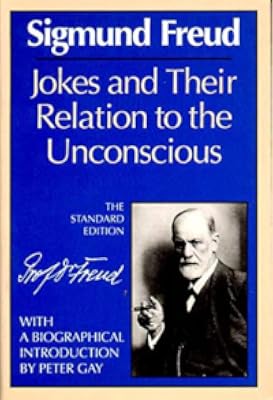
Jokes and Their Relation to the Unconscious
by Sigmund Freud
On This Page
Description
"Wit and Its Relation to the Unconscious" is Sigmund Freud's psychoanalytic examination of what makes something funny. From the father of psychoanalysis we get an interesting argument that at the heart of humor is the need to satisfy ones unconscious desires. Freud explains through numerous examples how jokes allow us a release from our inhibitions and provide significant satisfaction of the desire for pleasure. Building upon his earlier work, "The Interpretation of Dreams," Freud draws show more parallels to dreaming, neuroses, and psychopathology. A captivating work of psychoanalysis, "Wit and Its Relation to the Unconscious" gives great insight into Freud's theories and the nature of humor in the human mind. show lessTags
Recommendations












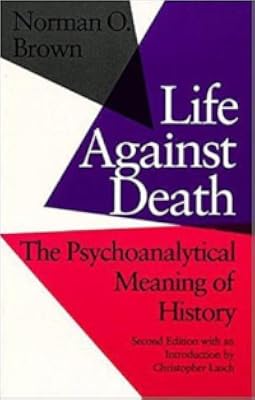
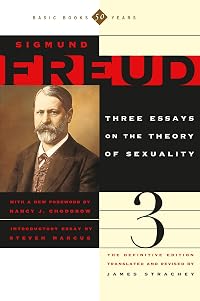
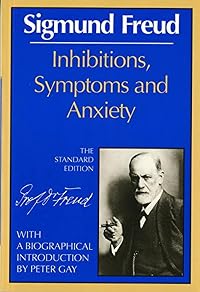





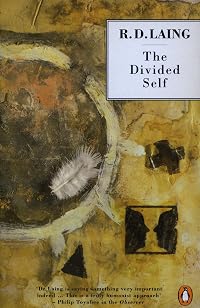




Member Reviews
This was a very interesting study by Freud about the nature of humor, comedy, and jokes. It was different from his other major, and even minor, pieces- and herein lies its strength and weakness. Although it's dated now and the scientific relevance is dubious in nature, the ideas that permeate through this (and the analysis) I feel are still worth denoting.
3 stars.
3 stars.
Sigmund Freud‘s Il motto di spirito e la sua relazione con l'inconscio (Jokes and their relation to the unconscious). A very good book, the differences between different genres of humor are interesting. This book wises people up to humor and its functions, structures and social influence. I didn’t like the link between jokes and repressed sexual impulses, it felt too forced and unnatural, especially when applied to some kinds of jokes.
Freud had first discussed jokes in his work on dreams, drawing upon the relationship--and the fact that so many dreams really are jokes had been observed. This dates back to 1899. Freud also credits and draws upon the work of Theodor Lipps, the Munich professor who introduced the term 'Einfulung" [empathy]. Among others, Freud also credits Kuno Fisher, whose definition provides many windows and doors: "A joke is a playful judgment". [10]
Once Freud's structural view of the mind had been developed, his collection of the material for this book on the function of Jokes began in earnest.
Much of this material plays off linguistics. For example, "Traduttore--Traditore!" [Translator--Traitor!] Fortunately, this translation does very well with show more the German-English, minimizing clumsy periphrases but adding clarifications with care -- "care-ifications" (Sorry, could not help myself, after reading the Witzig-Scherz "strange fatality" in which German and English terms never seem to coincide).[7] And even the German "Humor" often used by itself, but in English is rarely used without "sense of".
Freud takes on the complex psychological processes and relationships invoked by Jokes, showing how they appear and are used. After analyzing examples, he theorizes "what it is that jokes achieve" in the service of their purpose. "They make possible the satisfaction of an instinct (whether lustful or hostile) in the face of an obstacle that stands in its way." [101] show less
Once Freud's structural view of the mind had been developed, his collection of the material for this book on the function of Jokes began in earnest.
Much of this material plays off linguistics. For example, "Traduttore--Traditore!" [Translator--Traitor!] Fortunately, this translation does very well with show more the German-English, minimizing clumsy periphrases but adding clarifications with care -- "care-ifications" (Sorry, could not help myself, after reading the Witzig-Scherz "strange fatality" in which German and English terms never seem to coincide).[7] And even the German "Humor" often used by itself, but in English is rarely used without "sense of".
Freud takes on the complex psychological processes and relationships invoked by Jokes, showing how they appear and are used. After analyzing examples, he theorizes "what it is that jokes achieve" in the service of their purpose. "They make possible the satisfaction of an instinct (whether lustful or hostile) in the face of an obstacle that stands in its way." [101] show less
Blue cloth. 1st edition in English, translated by A.A. Brill. Near fine with mildly sunned spine, with cloth binding thread looking like a minor scratch. ; 8vo 8 - 9 tall; 388 pp
150 FREU 12
Members
- Recently Added By
Author Information

1,412+ Works 51,477 Members
Sigmund Freud was the founder of psychoanalysis, simultaneously a theory of personality, a therapy, and an intellectual movement. He was born into a middle-class Jewish family in Freiburg, Moravia, now part of Czechoslovakia, but then a city in the Austro-Hungarian Empire. At the age of 4, he moved to Vienna, where he spent nearly his entire life. show more In 1873 he entered the medical school at the University of Vienna and spent the following eight years pursuing a wide range of studies, including philosophy, in addition to the medical curriculum. After graduating, he worked in several clinics and went to Paris to study under Jean-Martin Charcot, a neurologist who used hypnosis to treat the symptoms of hysteria. When Freud returned to Vienna and set up practice as a clinical neurologist, he found orthodox therapies for nervous disorders ineffective for most of his patients, so he began to use a modified version of the hypnosis he had learned under Charcot. Gradually, however, he discovered that it was not necessary to put patients into a deep trance; rather, he would merely encourage them to talk freely, saying whatever came to mind without self-censorship, in order to bring unconscious material to the surface, where it could be analyzed. He found that this method of free association very often evoked memories of traumatic events in childhood, usually having to do with sex. This discovery led him, at first, to assume that most of his patients had actually been seduced as children by adult relatives and that this was the cause of their neuroses; later, however, he changed his mind and concluded that his patients' memories of childhood seduction were fantasies born of their childhood sexual desires for adults. (This reversal is a matter of some controversy today.) Out of this clinical material he constructed a theory of psychosexual development through oral, anal, phallic and genital stages. Freud considered his patients' dreams and his own to be "the royal road to the unconscious." In The Interpretation of Dreams (1900), perhaps his most brilliant book, he theorized that dreams are heavily disguised expressions of deep-seated wishes and fears and can give great insight into personality. These investigations led him to his theory of a three-part structure of personality: the id (unconscious biological drives, especially for sex), the superego (the conscience, guided by moral principles), and the ego (the mediator between the id and superego, guided by reality). Freud's last years were plagued by severe illness and the rise of Nazism, which regarded psychoanalysis as a "Jewish pollution." Through the intervention of the British and U.S. governments, he was allowed to emigrate in 1938 to England, where he died 15 months later, widely honored for his original thinking. His theories have had a profound impact on psychology, anthropology, art, and literature, as well as on the thinking of millions of ordinary people about their own lives. Freud's daughter Anna Freud was the founder of the Hampstead Child Therapy Clinic in London, where her specialty was applying psychoanalysis to children. Her major work was The Ego and the Mechanisms of Defense (1936). (Bowker Author Biography) show less
Some Editions
Awards and Honors
Notable Lists
Series
Belongs to Publisher Series
Work Relationships
Common Knowledge
- Canonical title*
- Остроумие и его отношение к бессознательному
- Original title
- Der Witz und seine Beziehung zum Unbewussten; Der Witz und seine Beziehung zum Unbewußten
- Original publication date
- 1905; 1960 (English: Strachey) (English: Strachey)
- First words*
- Wer einmal Anlaß gehabt hat, sich in der Literatur bei Ästhetikern und Psychologen zu erkundigen, welche Aufklärung über Wesen und Beziehungen des Witzes gegeben werden kann, der wird wohl zugestehen müssen, daß die phi... (show all)losophische Bemühung dem Witz lange nicht in dem Maße zu teil geworden ist, welches er durch seine Rolle in unserem Geistesleben verdient.
- Last words*
- (Click to show. Warning: May contain spoilers.)Denn die Euphorie, welche wir auf diesen Wegen zu erreichen streben, ist nichts anderes als die Stimmung einer Lebenszeit, in welcher wir unsere psychische Arbeit überhaupt mit geringem Aufwand zu bestreiten pflegten, die Stimmung unserer Kindheit, in der wir das Komische nicht kannten, des Witzes nicht fähig waren und den Humor nicht brauchten, um uns im Leben glücklich zu fühlen.
- Original language
- German
*Some information comes from Common Knowledge in other languages. Click "Edit" for more information.
Classifications
- Genres
- Nonfiction, General Nonfiction, Philosophy
- DDC/MDS
- 155.232 — Philosophy & psychology Psychology Differential and developmental psychology Individual Psychology Traits Particular Traits
- LCC
- PN6149 .P5 .F6813 — Language and Literature Literature (General) Literature (General) Collections of general literature Wit and humor
- BISAC
Statistics
- Members
- 1,061
- Popularity
- 24,188
- Reviews
- 5
- Rating
- (3.69)
- Languages
- 12 — Czech, Dutch, English, Estonian, Finnish, French, German, Italian, Norwegian (Bokmål), Russian, Spanish, Swedish
- Media
- Paper, Ebook
- ISBNs
- 54
- UPCs
- 1
- ASINs
- 33