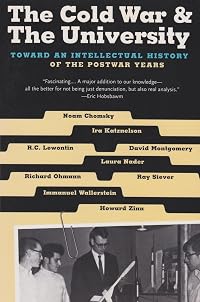
The Cold War & the University: Toward an Intellectual History of the Postwar Years
by Noam Chomsky
On This Page
Description
The years following 1945 witnessed a massive change in American intellectual thought and in the life of American universities. The effort to mobilize intellectual talent during the war established new links between the government and the academy. After the war, many of those who had worked with the military or the Office of Strategic Studies took jobs in the burgeoning postwar structure of university-based military research and intelligence agencies, bringing large infusions of government show more money into many fields. The essays in this text explore what happened to the university in these years and why. They show the many ways existing disciplines, such as anthropology, were affected by the Cold War ethos, and discuss the rise of new fields, such as area studies, and the changing nature of dissent and academic freedom during and since the Cold War. show lessTags
Recommendations


Members
- Recently Added By
Author Information

584+ Works 47,593 Members
Noam Chomsky was born in Philadelphia, Pennsylvania on December 7, 1928. Son of a Russian emigrant who was a Hebrew scholar, Chomsky was exposed at a young age to the study of language and principles of grammar. During the 1940s, he began developing socialist political leanings through his encounters with the New York Jewish intellectual show more community. Chomsky received his Ph.D. from the University of Pennsylvania, where he studied linguistics, mathematics, and philosophy. He conducted much of his research at Harvard University. In 1955, he began teaching at MIT, eventually holding the Ferrari P. Ward Chair of Modern Language and Linguistics. Today Chomsky is highly regarded as both one of America's most prominent linguists and most notorious social critics and political activists. His academic reputation began with the publication of Syntactic Structures in 1957. Within a decade, he became known as an outspoken intellectual opponent of the Vietnam War. Chomsky has written many books on the links between language, human creativity, and intelligence, including Language and Mind (1967) and Knowledge of Language: Its Nature, Origin, and Use (1985). He also has written dozens of political analyses, including Manufacturing Consent: The Political Economy of the Mass Media (1988), Chronicles of Dissent (1992), and The Prosperous Few and the Restless Many (1993). (Bowker Author Biography) show less
Common Knowledge
- Important events
- Cold War
Classifications
Statistics
- Members
- 76
- Popularity
- 416,770
- Languages
- English
- Media
- Paper
- ISBNs
- 2