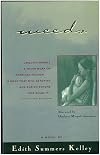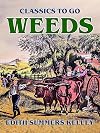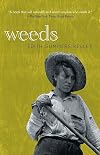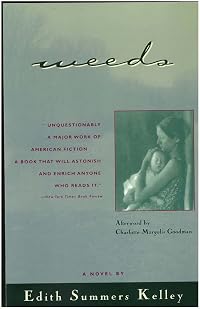
Weeds
by Edith Summers Kelley
On This Page
Description
Weeds was published by Harcourt Brace in 1923 and also brought out in England by Jonathan Cape. Despite favorable reviews by well-regarded critics the book made no impact, and Edith Summers Kelley never published another novel. Its reprinting here in this innovative series which brought back Zelda Fitzgerald’s Save Me the Waltz is in the opinion of the publishers a literary event of great magnitude—perhaps equal to the rediscovery of Henry Roth’s Call It Sleep. Weeds show more portrays the monotonous, drudging life of the small tenant farmer of the tobacco fields of Kentucky. The story centers around Judith Pippinger, who has spirit, beauty, and a restless seeking for a purpose in life, but who is brutalized by farm life. It is not a dramatic novel, as Matthew Bruccoli notes in his Introduction to this neglected masterpiece. But it is convincing. The people live. On two counts this book is important. It is a perfectly controlled work of fiction, and therefore has the automatic worth that any superior piece of literature has. Also, it has historical value as a peak achievement in the revolt-from-the-farm school of naturalistic American fiction. Edith Summers Kelley was the last writer in the Hamlin Garland, E. W. Howe, Joseph Kirkland line of development. Aside from its probable worth as social history, Weeds is highly readable. Readers will find here plausible people in a beautifully-handled realistic setting. Interesting to note, the novel’s strongest supporter heretofore was Sinclair Lewis, who was engaged to the author. In the opinion of Professor Bruccoli, Weeds is as good as Main Street. show lessTags
Recommendations




















Member Reviews
In recent times, I've taken to a little interest in "lost" novels. What causes a well-written story to be forgotten in such a relatively short time span? Last year, I "discovered" Midsummernight by Carl Wilhelmson, a book written by one-time John Steinbeck roommate, a novel that has seemingly been forgotten. While Weeds is not nearly as forgotten as Midsummernight, it certainly has not received the attention it deserves.
Weeds, first published in 1923, rediscovered in the 1970s, has never been in the literary spotlight. When first published, it quickly went out of print. Efforts by small presses in the 1970s and 1990s to reintroduce the work have kept it alive, but it still remains largely unnoticed.
That's unfortunate, because Kelley has show more written a strangely riveting novel with such dynamic characters. Our protagonist, Judith, is unique and strong-willed, a woman with considerable potential who is constantly fighting against poverty and societal expectations. Perhaps what makes this story stand out from others like it is that Judith marries the one man in the region who is not only considerate, but "grants" her the freedoms she asks for. He's certainly not the drunk and abusive misogynist the reader likely expects. Despite this, Judith eventually learns that marriage and motherhood were not what she expected them to be, and refuses to be confined to such roles. These distinctions in these two characters build upon a story with multiple dimensions.
In the end, this story doesn't build up to much of a conclusion, and this is perhaps the novel's greatest weakness. Despite this potential misstep, Weeds is a wonderful look at the brilliance of one woman, struggling against the current in 1920s rural America. show less
Weeds, first published in 1923, rediscovered in the 1970s, has never been in the literary spotlight. When first published, it quickly went out of print. Efforts by small presses in the 1970s and 1990s to reintroduce the work have kept it alive, but it still remains largely unnoticed.
That's unfortunate, because Kelley has show more written a strangely riveting novel with such dynamic characters. Our protagonist, Judith, is unique and strong-willed, a woman with considerable potential who is constantly fighting against poverty and societal expectations. Perhaps what makes this story stand out from others like it is that Judith marries the one man in the region who is not only considerate, but "grants" her the freedoms she asks for. He's certainly not the drunk and abusive misogynist the reader likely expects. Despite this, Judith eventually learns that marriage and motherhood were not what she expected them to be, and refuses to be confined to such roles. These distinctions in these two characters build upon a story with multiple dimensions.
In the end, this story doesn't build up to much of a conclusion, and this is perhaps the novel's greatest weakness. Despite this potential misstep, Weeds is a wonderful look at the brilliance of one woman, struggling against the current in 1920s rural America. show less
Ratings
Members
- Recently Added By
Lists

Top Five Books of 2020
982 works; 349 members

500 Great Books by Women
507 works; 60 members

Books Set in Kentucky
14 works; 5 members

McMurtry's Texas Literature
27 works; 1 member
Author Information
2+ Works 105 Members
Awards and Honors
Notable Lists
Series
Belongs to Publisher Series
Common Knowledge
- Original publication date
- 1923
- Important places
- Scott County, Kentucky, USA
- First words
- Bill Pippinger was counted to be as good a neighbor, as bountiful a provider and as kind a husband and father as was to be found in the whole of Scott County, Kentucky, according to local standards of goodness, kindness and b... (show all)ountifulness -Chapter 1
- Quotations
- He was of much commoner clay than his wife and with age had become a mere clod.
As they looked the faint, frail pink gradually deepened into a richer rose, then glowed for a few passionate moments the color of intense flame. The little delicate shreds high up in the sky were each a slender whiff of spun ... (show all)gold, fine and pure. The under edges of the clouds burned with the amber and scarlet of flame against a background of shaded grays and purples. The grayish purple bank that lay along the horizon was slashed here and there by bright swords of fire. The burning clouds hung low, as if one might reach up and touch them. A rosy flush hung over everything. - Last words
- (Click to show. Warning: May contain spoilers.)It was the inevitable summons. In obedience to it she roused herself, as she had done so many times before, and went into the house.
- Canonical DDC/MDS
- 813.52
- Canonical LCC
- PS3521.E4117 W4
Classifications
Statistics
- Members
- 98
- Popularity
- 328,069
- Reviews
- 1
- Rating
- (3.96)
- Languages
- English
- Media
- Paper, Ebook
- ISBNs
- 6
- ASINs
- 4