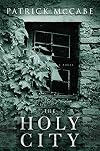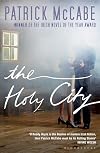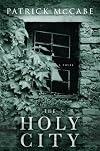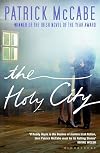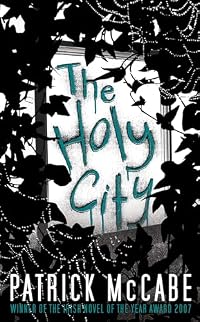
The Holy City
by Patrick McCabe
On This Page
Description
Now entering his sixty-seventh year, Chris McCool can confidently call himself a member of the Happy Club: he has an attractive and exceedingly accommodating Croatian girlfriend and has been told he bears more than a passing resemblance to Roger Moore. As he looks back on the glory days of his youth, he recalls the swinging sixties of rural Ireland: a decade in which the cool cats sang along to Lulu and drove around in Ford Cortinas, when swinging meant wearing velvet trousers and shirts show more with frills, and where Dolores McCausland - Dolly Mixtures to those who knew her best - danced on the tops of tables and set the pulses of every man in small-town Cullymore racing. Chris McCool had it all back then. He had the moves, he had the car, and he had Dolly, a woman who purred suggestive songs and tugged gently at her skin-tight dresses, a Protestant femme fatale who was glamorous, transgressive and who called him her very own 'Mr Wonderful'. She was, in short, the answer to this bastard son of a Catholic farmer's prayers. Except that there was another Mr Wonderful in town, a certain Marcus Otoyo - a young Nigerian with glossy curls and a dazzling devoutness that was all but irresistible. Although Chris, of course, was interested in Marcus only because of their shared religious fervour and mutual appreciation of the finer things. That was all. Besides, Mr McCool was always a hopeless romantic - some even described him as excessively so - but is there anything wrong with that? Spiked with macabre humour and disquieting revelations, The Holy City is a brilliant, disturbing and compelling novel from one of Ireland's most original contemporary writers. show lessTags
Recommendations







Member Reviews
The Holy City is unreliably yet truthfully narrated by another of McCabe’s mentally unstable characters, Christopher J. McCool, currently, in his late sixties, a resident of his own little abode he refers to as “The Happy Club.” McCool’s heyday was the 1960s, when he reveled in the music and wild dress. His town, Cullymore, was changing radically as the world changed. The story switches between then and present time.
The product of an illicit liaison between his protestant mother and a catholic, McCool was not allowed to live with her as a child, only seeing his mother during her furtive visits. McCool has never quite recovered from his abandonment and the scorn of his father.
McCabe doles out McCool’s truth in small bites, show more hint, and intimations, skillfully. His obsessions and disappointments are the basis for a danger that is never quite spelled out, but can be deduced. show less
The product of an illicit liaison between his protestant mother and a catholic, McCool was not allowed to live with her as a child, only seeing his mother during her furtive visits. McCool has never quite recovered from his abandonment and the scorn of his father.
McCabe doles out McCool’s truth in small bites, show more hint, and intimations, skillfully. His obsessions and disappointments are the basis for a danger that is never quite spelled out, but can be deduced. show less
Ratings
Members
- Recently Added By
Author Information

18+ Works 4,158 Members
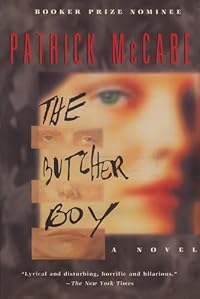
Patrick McCabe has been twice short-listed for the prestigious Booker Prize in Great Britain. He is considered one of Ireland's major new writers. McCabe was teaching learning-disabled students in a grammar school in London when his third novel, "The Butcher Boy," was published in 1992. The novel is a coming-of-age story written in the voice of show more its young narrator. The small town that Francie Brady lives in is modeled on the town where McCabe grew up. "The Butcher Boy" was an immediate success, and was nominated for the Booker Prize. It won the top literary prize in Ireland, the Aer Lingus Prize. McCabe's fifth novel, "Breakfast on Pluto," was published in 1998. It too was on the shortlist for the Booker Prize. He has also written several plays, including an adaptation of "The Butcher Boy." Patrick McCabe was born in 1955 in Ireland and was educated at St. Patrick's College in Dublin. He is married to Margot Quinn and has two daughters, Ellen and Katy. (Bowker Author Biography) show less
Common Knowledge
- Original publication date
- 2009
- First words
- Now entering upon one's sixty-seventh year, one is at pains to recall such a blissful degree of contentment - ever.
- Last words
- (Click to show. Warning: May contain spoilers.)But in her place a complete stranger, resting his chine upon a cane, eyeing me with a chill, mute poise: the stark orb of his head void - white and virginal - as perfectly formed as a consecrated bread.
Classifications
Statistics
- Members
- 65
- Popularity
- 464,517
- Reviews
- 1
- Rating
- (2.88)
- Languages
- English
- Media
- Paper, Audiobook, Ebook
- ISBNs
- 15
- ASINs
- 3