On This Page
Description
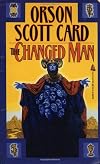
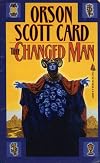
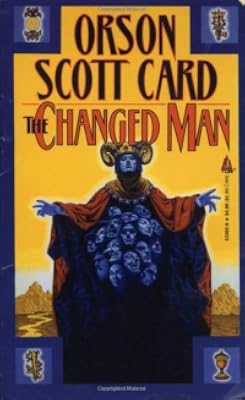
This first volume in a five-volume anthology of Orson Scott Card's short stories features eleven chilling tales that provoke the dreaded dark side of the reader's imagination A sinful man finally faces his conscience in the form of a baby-like creature that haunts his waking hours. A thrill-seeking playboy uses a time machine to experience the excitement of death without actually dying...Tags
Recommendations



















Member Reviews
I'd read about half of the stories in this collection of eleven before, in different books. This collection is on the theme of Card's more horror-oriented stories.
In his introduction, he talks about the delineations between dread, terror, and horror, and goes on rather sententiously about how horror is just about the blood and gore and nastiness, and how HIS (superior) stories are all about the "dread."
Then, the first story in the collection ("Eumenides in the Fourth Floor Lavatory") features an inhuman monster baby with suckers that create running sores, slime, blood, pus, said "baby" being hacked apart with a knife, shoved down a toilet, etc... In other words, as much gore and goo as in any story I've ever come across....
So... HMMM.
Of show more course, the story isn't all about the gross-out factor, it's about guilt and nasty people getting the punishment that coming to them, even when other people forgive them their sins. But you know what? Very little horror isn't actually "about" something, if one actually reads it.
Anyway, Card is a good writer, and many of these stories are very good. However, some do get annoyingly moralizing, especially "Closing the Timelid," which, as Card himself states in his Afterword, is "a homily against hedonism." As a pro-hedonist, obviously, I disagree! show less
In his introduction, he talks about the delineations between dread, terror, and horror, and goes on rather sententiously about how horror is just about the blood and gore and nastiness, and how HIS (superior) stories are all about the "dread."
Then, the first story in the collection ("Eumenides in the Fourth Floor Lavatory") features an inhuman monster baby with suckers that create running sores, slime, blood, pus, said "baby" being hacked apart with a knife, shoved down a toilet, etc... In other words, as much gore and goo as in any story I've ever come across....
So... HMMM.
Of show more course, the story isn't all about the gross-out factor, it's about guilt and nasty people getting the punishment that coming to them, even when other people forgive them their sins. But you know what? Very little horror isn't actually "about" something, if one actually reads it.
Anyway, Card is a good writer, and many of these stories are very good. However, some do get annoyingly moralizing, especially "Closing the Timelid," which, as Card himself states in his Afterword, is "a homily against hedonism." As a pro-hedonist, obviously, I disagree! show less
I loved OSC as a teenager and these stories still give a lot to think about. I'd say most of these are not fun, not always science fiction, but they are more experiments on humanity. Usually they touch on guilt, selfishness, indulgence, and realizing what matters most, but too late. It's also fun to see how often OSC mentions Mormons or Utah, but doesn't shy away from cursing or sex.
A collection of short stories of fantasy and science fiction which rely on our sense of dread to produce a sense of horror. No prolonged gore, no profanity, no sexual exploits. Good psychological drama -- excellent plotting.
Some good, creepy stuff in here. Fat Farm is a good, mindbending sci-fi tale. A Sepulchre of Songs is easily my favorite of the bunch.
Ratings
Members
- Recently Added By
Author Information

575+ Works 214,674 Members
Orson Scott Byron Walley Card, was born in 1951 and studied theater at Brigham Young University. He received his B.A. in 1975 and his M.A. in English in 1981. He wrote plays during that time, including Stone Tables (1973) and the musical, Father, Mother, Mother and Mom (1974). A Mormon, Scott served a two-year mission in Brazil before starting show more work as a journalist in Utah. He also designed games at Lucas Film Games, 1989-92. He is best known for his science fiction novels, including the popular Ender series. Well known titles include A Planet Called Treason (1979), Treasure Box (1996), and Heartfire (1998). He has also written the guide called How to Write Science Fiction and Fantasy (1990). His novel Ender's Game and its sequel Speaker for the Dead, both won Hugo and Nebula awards, making Card the only author to win both prizes in consecutive years. His titles Shadows in Flight, Ruins and Ender's Game made The New York Times Best Seller List. He is also the author of The First Formic War Series, which includes the titles Earth Unaware, Earth Afire, and Earth Awakens. (Bowker Author Biography) show less
Series

Belongs to Publisher Series
Work Relationships
Is contained in
Common Knowledge
- Canonical title
- The Changed Man
- Original title
- The Changed Man
- Original publication date
- 1990 (collection) (collection); 1992 (standalone volume) (standalone volume)
- Dedication*
- A Charly Ben,
que puede volar - Disambiguation notice
- There are two versions of Maps in a Mirror, Volume 1. This is the version containing 11 stories.
*Some information comes from Common Knowledge in other languages. Click "Edit" for more information.
Classifications
Statistics
- Members
- 379
- Popularity
- 83,022
- Reviews
- 4
- Rating
- (3.63)
- Languages
- Czech, English, French, Spanish
- Media
- Paper, Audiobook, Ebook
- ISBNs
- 7
- ASINs
- 3