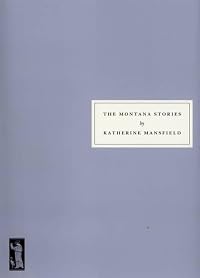
The Montana Stories
by Katherine Mansfield
On This Page
Description
Contains all the short stories written during the last year of Katherine Mansfield's life at Montana, with a new and lengthy publisher's note.Tags
Recommendations


































Member Reviews
I didn't know what to expect when I picked up this book--I actually put off reading it for a while because I didn't feel in the mood. When I read the introduction I was almost turned off again, upon learning that Mansfield would not have approved of the collection at all (because it included unfinished and unedited stories). However, I kept reading, and then I couldn't stop reading. I think I may never write again, after reading her unpolished gems. I loved these stories more than anything else I've read by Mansfield--her prose absolutely sparkled, and I found myself desperate for more after each fragment. I can understand why she would have disapproved, but I'm glad Persephone published this collection anyway. Absolutely lovely.
When I read my first collection of short-stories by Katherine Mansfield I was sure it wouldn’t be long before I read my next. Well that was five years ago!
The Montana Stories was one of those odd gaps I had in my Persephone collection – I had meant to acquire a copy for years. I love collections of short-stories – and I have no idea why I left it so long to get and read this one – it is glorious.
The Montana Stories ticked off 2001 in my A Century of Books – which felt like a bit of a cheat, because all the stories were written in 1921 – but this collection was only put together by Persephone in 2001. In 1921, Katherine Mansfield, very ill with TB went to stay in a chalet in Montana, Switzerland for her health. This period show more became one of her most creative periods – and the pieces in this collection are presented chronologically – which is often such an interesting way to read a writer’s work. This collection contains short stories and unfinished fragments – and some extracts from her letters in the editorial notes at the back. The unfinished stories can be a little frustrating – though still beautiful to read. Some of these unfinished pieces end less abruptly and could be seen as having an ambiguous ending – other pieces end more suddenly. Many of the stories in this edition had been previously published in The Spectator – and illustrations that accompanied those stories are reproduced here too.
With so many very short stories and fragments in this collection I am only to talk about three particular stories in any detail – but I really can’t stress how perfect every word of the whole collection is. What a truly gifted writer Katherine Mansfield was. Some other stories that will stay with me particularly are: Mr and Mrs Dove, Marriage á la Mode and A Cup of Tea, as well as the frustratingly unfinished A Married Man’s story.
In Bliss and other Stories (1920) – the collection opens with Prelude – a story still that is very memorable to me five years later. In that story we meet the Burnell family – perhaps that story is so memorable for me because it was my introduction to Katherine Mansfield. So, imagine my delight to find not one but two more stories in The Montana Stories featuring the Burnell family; At the Bay and The Doll’s House. One of the daughters of the Burnell family is Kezia – and I read something, somewhere online that suggests that Kezia is an autobiographical character, having little patience with conventional society rules. These two stories were perhaps not surprisingly among my favourites in the collection.
“As the morning lengthened whole parties appeared over the sand-hills and came down on the beach to bathe. It was understood that at eleven o’clock the women and children of the summer colony had the sea to themselves. First the women undressed, pulled on their bathing dresses and covered their heads in hideous caps like sponge bags; then the children were unbuttoned. The beach was strewn with little heaps of clothes and shoes; the big summer hats, with stones on them to keep them from blowing away, looked like immense shells. It was strange that even the sea seemed to sound differently when all those leaping, laughing figures ran into the waves.”
(At the Bay)
In At the Bay, Stanley Burnell, Kezia’s father goes out for an early morning swim, then returns to the house for breakfast before leaving for work. When he leaves, the women and children – left behind – breathe a sigh of relief. Aunt Beryl talks coolly to a society woman, while Kezia’s mother daydreams the day away, her latest baby at her side – leaving the majority of the household tasks to be supervised by Kezia’s grandmother. It is a beautifully atmospheric story – suffused with a feeling of long, indolent sunny days, bathing, dreaming and talking the day away, until the time comes for the men to return.
In The Doll’s House the Burnell children are given a fabulous Doll’s House that is so large it has to sit outside the house in the garden. The house opens up to reveal tiny, beautifully furnished rooms, Kezia is particularly enchanted by a lamp. The children delight in telling the other children at school all about their doll’s house, Kezia’s older sister reserves the right to do the telling first, she is, after all, the eldest. They are permitted to bring their friends home to see it – a couple at a time, glorying in the envy and delight the other children have for it. However, they are not allowed to bring the Kelveys – who no one else ever associates with the Kelvey siblings either. No one knows who their father is – and their mother is the washerwoman. It is only Kezia who is made uncomfortable by such rules and dares to go against them.
“The hook at the side was stuck fast. Pat prised it open with his penknife, and the whole house swung back, and – there you were gasping at one and the same moment into the drawing-room and dining-room, the kitchen and two bedrooms. That is the way for a house to open! Why don’t all houses open like that? How much more exciting than peering through the slit of a door into a mean little hall with a hat stand and two umbrellas! That is – isn’t it? – what you long to know about a house when you put your hand on the knocker.”
(The Doll’s House)
Another of Katherine Mansfield’s most well-known stories in this collection, is The Garden Party – and this too is utterly masterful. The Sheridan family are preparing for their garden party. Daughter Laura has been put in charge of ensuring the marquee is put in the correct place, while her sister Jose tests the piano. Their mother has ordered masses of lilies and the girls are enchanted by the flowers. As the preparations near completion, the family learn that a working-class neighbour has been killed in an accident, leaving behind a wife and children. Laura thinks the party should be called off out of respect but neither her mother or sister agree. Later she is asked to take a basket of left-overs to the family. The Sheridan sisters also appear briefly in the story Her First Ball.
Persephone short story collections are always a hit with me – I’ve yet to read one that isn’t fabulous. This collection reminds me that I haven’t read nearly enough Katherine Mansfield – and I do have another collection waiting on my kindle. show less
The Montana Stories was one of those odd gaps I had in my Persephone collection – I had meant to acquire a copy for years. I love collections of short-stories – and I have no idea why I left it so long to get and read this one – it is glorious.
The Montana Stories ticked off 2001 in my A Century of Books – which felt like a bit of a cheat, because all the stories were written in 1921 – but this collection was only put together by Persephone in 2001. In 1921, Katherine Mansfield, very ill with TB went to stay in a chalet in Montana, Switzerland for her health. This period show more became one of her most creative periods – and the pieces in this collection are presented chronologically – which is often such an interesting way to read a writer’s work. This collection contains short stories and unfinished fragments – and some extracts from her letters in the editorial notes at the back. The unfinished stories can be a little frustrating – though still beautiful to read. Some of these unfinished pieces end less abruptly and could be seen as having an ambiguous ending – other pieces end more suddenly. Many of the stories in this edition had been previously published in The Spectator – and illustrations that accompanied those stories are reproduced here too.
With so many very short stories and fragments in this collection I am only to talk about three particular stories in any detail – but I really can’t stress how perfect every word of the whole collection is. What a truly gifted writer Katherine Mansfield was. Some other stories that will stay with me particularly are: Mr and Mrs Dove, Marriage á la Mode and A Cup of Tea, as well as the frustratingly unfinished A Married Man’s story.
In Bliss and other Stories (1920) – the collection opens with Prelude – a story still that is very memorable to me five years later. In that story we meet the Burnell family – perhaps that story is so memorable for me because it was my introduction to Katherine Mansfield. So, imagine my delight to find not one but two more stories in The Montana Stories featuring the Burnell family; At the Bay and The Doll’s House. One of the daughters of the Burnell family is Kezia – and I read something, somewhere online that suggests that Kezia is an autobiographical character, having little patience with conventional society rules. These two stories were perhaps not surprisingly among my favourites in the collection.
“As the morning lengthened whole parties appeared over the sand-hills and came down on the beach to bathe. It was understood that at eleven o’clock the women and children of the summer colony had the sea to themselves. First the women undressed, pulled on their bathing dresses and covered their heads in hideous caps like sponge bags; then the children were unbuttoned. The beach was strewn with little heaps of clothes and shoes; the big summer hats, with stones on them to keep them from blowing away, looked like immense shells. It was strange that even the sea seemed to sound differently when all those leaping, laughing figures ran into the waves.”
(At the Bay)
In At the Bay, Stanley Burnell, Kezia’s father goes out for an early morning swim, then returns to the house for breakfast before leaving for work. When he leaves, the women and children – left behind – breathe a sigh of relief. Aunt Beryl talks coolly to a society woman, while Kezia’s mother daydreams the day away, her latest baby at her side – leaving the majority of the household tasks to be supervised by Kezia’s grandmother. It is a beautifully atmospheric story – suffused with a feeling of long, indolent sunny days, bathing, dreaming and talking the day away, until the time comes for the men to return.
In The Doll’s House the Burnell children are given a fabulous Doll’s House that is so large it has to sit outside the house in the garden. The house opens up to reveal tiny, beautifully furnished rooms, Kezia is particularly enchanted by a lamp. The children delight in telling the other children at school all about their doll’s house, Kezia’s older sister reserves the right to do the telling first, she is, after all, the eldest. They are permitted to bring their friends home to see it – a couple at a time, glorying in the envy and delight the other children have for it. However, they are not allowed to bring the Kelveys – who no one else ever associates with the Kelvey siblings either. No one knows who their father is – and their mother is the washerwoman. It is only Kezia who is made uncomfortable by such rules and dares to go against them.
“The hook at the side was stuck fast. Pat prised it open with his penknife, and the whole house swung back, and – there you were gasping at one and the same moment into the drawing-room and dining-room, the kitchen and two bedrooms. That is the way for a house to open! Why don’t all houses open like that? How much more exciting than peering through the slit of a door into a mean little hall with a hat stand and two umbrellas! That is – isn’t it? – what you long to know about a house when you put your hand on the knocker.”
(The Doll’s House)
Another of Katherine Mansfield’s most well-known stories in this collection, is The Garden Party – and this too is utterly masterful. The Sheridan family are preparing for their garden party. Daughter Laura has been put in charge of ensuring the marquee is put in the correct place, while her sister Jose tests the piano. Their mother has ordered masses of lilies and the girls are enchanted by the flowers. As the preparations near completion, the family learn that a working-class neighbour has been killed in an accident, leaving behind a wife and children. Laura thinks the party should be called off out of respect but neither her mother or sister agree. Later she is asked to take a basket of left-overs to the family. The Sheridan sisters also appear briefly in the story Her First Ball.
Persephone short story collections are always a hit with me – I’ve yet to read one that isn’t fabulous. This collection reminds me that I haven’t read nearly enough Katherine Mansfield – and I do have another collection waiting on my kindle. show less
Katherine Mansfield was in the last stages of tuberculosis when she moved to a chalet at Montana-sur-Sierre (nowadays Montana-Crans) in Switzerland hoping that the mountain air would help her condition. It was here that she wrote this collection of stories. She struggled with the demands of writing to pay her medical bills & the debilitating effects of her illness (exhaustion & extreme fevers). These were the last pieces she ever wrote & she would be dead in a year. This collection shows Mansfield having to write commercially (a number of the stories were for publication in "The Sphere" which paid well.) and she felt that she was having to compromise her craft to earn the money she desperately needed. She also felt that she wasn't show more achieving all that she was capable of, while being only too well aware that time was running out for her. This is a background that makes reading the collection almost unbearably poignant. Combining the completed stories with fragments & extracts from her letters & journals leaves one in awe of her bravery & determination & also grieving at what might have been had she lived. Glittering in the collection is the awesome achievement of "At the Bay", written in just 9 hours, a series of 12 vignettes spread through a single day from dawn to dusk. Exquisite description & brilliant observation flow through these stories & it was particularly interesting to read Mansfield's sympathetic portraits of men forced to work to keep their families in style. Her thinly veiled contempt for spoilt women expecting worn out husbands to maintain lavish lifestyles is also clearly conveyed.
All in all, a fascinating window into the mind of a writer of genius. show less
All in all, a fascinating window into the mind of a writer of genius. show less
Ratings
Members
- Recently Added By
Lists

Persephone
148 works; 3 members
Author Information

386+ Works 8,720 Members
Katherine Mansfield was born Katherine Beauchamp in Wellington, New Zealand on October 14, 1888, the third daughter of a prominent banker. She attended the Wellington College for Girls before entering Queen's College in London in 1903. Her interest in the cello led to lessons at the Royal Academy of Music, where she became secretly engaged to a show more young prodigy named Arnold Trowell, who already had a successful concert career. Upon being summoned back to New Zealand by her father in 1906, she decided to abandon music in favor of writing. She soon had three stories published in a Melbourne monthly and gained her father's consent to return to England. Once there, she became depressed when she found that Trowell no longer loved her, and she rushed into a hasty marriage to a young musician, only to leave him a few days later. She had a miscarriage, which marked the beginning of her decline in health. After returning to England in 1910, Katherine Beauchamp published her work under the name Katherine Mansfield. A collection of her stories, "In a German Pension," was published in 1911. A year later, she met John Middleton Murry, who eventually became her second husband when she was finally able to secure a divorce. By the time of this marriage in 1918, Mansfield was found to have tuberculosis. Her ill health, combined with the death of her brother in World War I, turned the focus of her work inward and on her homeland. Her memoirs, collected in a book entitled "Bliss," secured her reputation as a writer, and she followed it up with the equally acclaimed "Garden Party and Other Stories." Her lyrical style and stream of consciousness method placed her along side James Joyce and Virginia Woolf for her strength of characterization and her subtlety of detail. Katherine Mansfield died on January 9, 1923 at the Gurdjieff Institute for the Harmonic Development of Man at Fontainebleau. (Bowker Author Biography) show less
Series
Belongs to Publisher Series
Persephone (25)
Common Knowledge
- Canonical title
- The Montana Stories
- Original publication date
- 2001
Classifications
Statistics
- Members
- 86
- Popularity
- 370,441
- Reviews
- 3
- Rating
- (4.06)
- Languages
- English
- Media
- Paper
- ISBNs
- 1