On This Page
Description
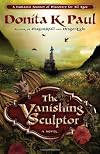
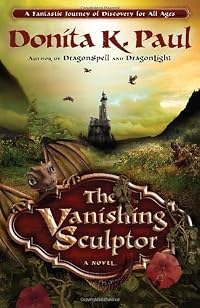
Fantasy. Young Adult Fiction. Young Adult Literature. HTML:Before DragonSpell, on a different continent and a different time, a young emerlindian’s desperate decision threatens to disrupt the foundation of the world.Tipper has been caring for her family’s estate for years now, ever since her father disappeared, making a living by selling off his famous artwork. Then she learns that three statues she sold were carved from an ancient foundation stone, and the fabric of her reality is show more crumbling.
She must free her father and save the world. But she can’t do it alone.
Her ragtag band of adventurers includes Beccaroon, a giant parrot; Bealomondore, an aristocratic young artist; a handsome dragonkeeper prince; the Wizard Fenworth; and the tumanhofer librarian Librettowit. Together they travel through valleys and kingdoms and consort with purveyors of good and agents of evil to find and reunite the missing statues. Will they learn to rely on Wulder’s grace and guidance along the way... show less
Tags
Recommendations
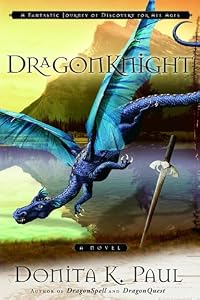
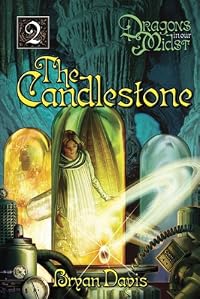
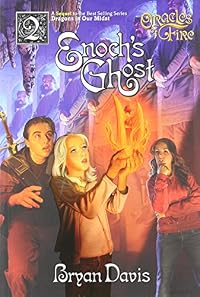
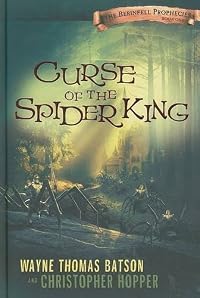



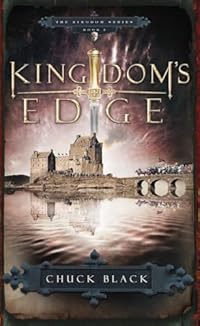
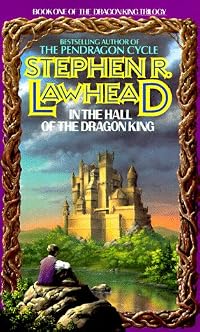
Member Recommendations
BrynDahlquis Also Christian with dragons
BrynDahlquis Similar types of humor and has the same quest-type feel
BrynDahlquis Similar fantasy atmosphere and also has dragons
Member Reviews
In The Vanishing Sculptor author Donita K. Paul returns to the world of The DragonKeeper Chronicles to whack the reader over the head with more didactic preaching about the pseudo-Christian religion of Wulder wrapped in poorly thought out fantasy fiction. Except the story is not set in Amara, it is set in the distant faraway land of Chiril, which is very different. Well, okay, it isn't very different, it is pretty much exactly the same as Amara, but everyone calls Wulder by the name Boscamon and thinks he's a joke and dragons are rare. And they have giant talking parrots.
The first thing that should be pointed out about The Vanishing Sculptor is that it is the first book in a prequel series to The DragonKeeper Chronicles. Because Mrs. show more Paul seems to assume that anyone who is reading this series would have already read her other series, the book would be nigh incomprehensible to anyone who has not done so. In fact, I originally tried to read this book first, and after a couple dozen pages gave up and went back to trudge through the interminably lousy DragonKeeper Chronicles first, just so I could come back and slog through this one. The book throws out terms like tumanhofer and emmerlindian from the start, not pausing to try to explain what they mean, which serves to confuse the reader from the get-go. Granted, the book has an extensive glossary, but having to flip back to the glossary every paragraph or two is a serious distraction from the story. Further, the extensive glossary is loaded with piles of definitions that are almost completely pointless and artificial pieces of jargon added to the book. When an author feels the need to define "flatrats", "banana bugs", and "mumfers", none of which affect the plot in any way, one gets the idea that they are just adding clutter to their fantasy reality because they think that is what you do in a fantasy novel, rather than adding fantasy elements because they actually bring something new and interesting to the reality being depicted. One wonders what things like "flatrats", "banana bugs", and "mumfers" bring to the story that "mice", "caterpillars", and "mums" would not, other than a distracting glossary entry that must be consulted when they show up in the story.
Which might not be such a problem is the story was compelling enough to hold a reader's interest despite such distractions. But the story starts off slow, and mostly stays that way. The main character is a young emmerlindian girl named Tipper whose father disappeared years before, leaving her with a mentally unstable mother and in the care of the giant talking parrot Beccaroon. In order to make ends meet, Tipper sells off pieces of her father's artwork and tries to keep the household afloat. After reading through The DragonKeeper Chronicles, with its collection of parentless children, and now with a story that begins with Tipper effectively left to fend for herself, it seems that Mrs. Paul has some sort of fetish for abandoned children. I suspect that Mrs. Paul's affinity for parentless children, along with the inclusion of talking animals, may stem from The Chronicles of Narnia. But in C.S. Lewis' works, the Pevensie children were separated from their parents by the exigencies of war, not because their parents went gallivanting about the countryside heedless of their responsibilities to their progeny. Mrs. Paul seems to be saying that so long as you are on a mission for God, er, Wulder, that abandoning your children is okay.
Of course, the "grand parrot" Beccaroon raises the same questions in this story that the meech dragons and minnekins raised in The DragonKeeper Chronicles. Having made a big deal out of the existence of seven "high" races and seven "low" races in DragonSpell, and how the wizard Risto's plan to create a new "low" race from a meech egg would be disastrous. But meech dragons, minnekins, and now grand parrots are outside this constructs of "high" and "low" races. One wonders exactly how they fit in, or how dragons (which seem to be highly intelligent creatures themselves) fit in. The answer seems to be that they don't. The balance of the seven high and low races seems to have been merely a plot device for the first book, a thematic MacGuffin that was discarded as soon as sufficient didactic lessons could be milked out of it. It is this sort of sloppy world-building - setting up a thematic element than then casually ignoring it - that is one of the elements that serves to drag Mrs. Paul's stories down.
Another element that serves to drag Mrs. Paul's stories down is the extreme didacticism of the "moral lessons" that litter her books, and The Vanishing Sculptor is no exception. Though the beginning of the book is slow, because the beginning of the book is set in Chiril, not Amara, and the characters have not been exposed to the tedious reality of Wulder, it is not weighed down by long-winded explanatory passages in which everyone quotes the precepts of Wulder. This changes fairly quickly, as the wizard Fenworth and his librarian sidekick Librettowit pop up with Tipper's long-missing father Verrin Schope to try to fix the malfunctioning gate that causes Verrin to periodically vanish and reform, and also is apparently in danger of destroying the world. And along the way they will spread the good word about Wulder, who the natives of Chiril call Boscamon. This, plus the fact that in Chiril there are no wizards and dragons are are rare and unusual creatures, appears to be pretty much the only real difference between Chiril and Amara. Despite the fact that the two regions are supposed to be separated by vasts distances and culturally isolated from one another, even the naming conventions used by various races are the same - tumanhofers, for example, have ridiculously long names in Chiril, just like they do in Amara. But since, like everything else in the book, the evangelizing is clumsily handled, one wonders exactly how anyone is converted to believing that Wulder is worth spending more than a moment thinking about. Verrin seems to have the zeal of the recently converted, but this doesn't translate into any kind of convincing arguments. Apparently, people are simply supposed to accept Wulder's authority because they are supposed to accept Wulder's authority. In short, the main problem with the evangelizing seems to be that Mrs. Paul simply does not understand why anyone would reject Christ, em, um, Wulder, and thus cannot come up with any cogent arguments in favor of her chosen creed that don't rely upon simple assertions in favor of its rightness. Needless to say, this is rather unconvincing to anyone who isn't already a believer.
So, the plot meanders along - having been alerted by the newcomers that the gate has to be repaired, Tipper realizes that the stone that made the gate was made into sculptures by her father, which she had sold to a tumanhofer artist that she then offended. So Fenworth, Librettowit, Verrin, Tipper, Beccaroon and the house dragons set out to track down the artist Bealomondore (note the long and tedious tumanhofer name) and find out who he sold the statues to. So, despite having no useful skills, Tipper sets out on a quest, which turns out to be mostly riding in a carriage from place to place until Fenworth decides to take a side trip to find some riding dragons to speed things up. Along the way the questers encounter, well, not much really, unless one counts a herd of rampaging sheep as a threat. The unnecessary side-trip to pick up some riding dragons turns out to have been completely necessary when the group finds Prince Jayrus, the dragon keeper, and coincidentally, the Paladin of Chiril. How does Fenworth figure out that Jayrus is the Paladin of Chiril? Like so many other elements of the book, this revelation is simply presented as a fait accompli and the reader is expected to accept it as a given. Once Jayrus the Paladin shows up, the platitudes start flowing thick and fast, interspersed with the extraordinarily thinly plotted quest to retrieve the missing statues which basically involves the questers going to the homes of the people Bealomondore sold the statues to and asking for them back.
Of course, one of the people who owns a statue is a villain who wants all three of Verrin's statues for himself, so that he can use the power of the gate to remove the current king and queen of Chiril and replace them with Tipper's mother who would serve as a figurehead for his own rule of the country. Given the obnoxiousness with which the King and Queen of Chiril are portrayed in their brief appearance in the book, one wonders why this would be a bad thing. But all the characters immediately decide that this is a bad thing, and act accordingly. Tipper, who has no useful skills, and Verrin, who is an invalid for much of the journey, seem to primarily contribute to the success of the quest by getting seized and held hostage by clumsy villains a couple times, leading their companions to rescue them and thereby uncover the evildoer's plans. (As a side note, the kidnappers are always nice enough to serve their hostages tasty meals while they hold them captive, continuing the odd theme that runs through all the books of ensuring that everyone stops for tea and cakes while in the middle of supposedly critical world-saving quests). So the questers more or less fail their way forward through the plot. Highlighting just how extraneous to the point of the book the author considers the quest to be, when confronted with the refusal of this villain to turn over the statue, Fenworth, Verrin, Librettowit, and Jayrus engage in an extended discussion about why simply stealing the statue would be wrong (after also discounting handing the statue over to the bad guy based upon a vague suspicion that he is evil). To put the ludicrousness of this stance in context, consider that the consequences of not reassembling the statues include not only Verrin Schope's death, but the end of the world. But in the eyes of the characters, the most important thing is not to prevent either of these occurrences, but to make sure that they do not lie or steal.
The heroes are incompetent enough that the villain gets the three statues anyway, which kind of makes all the effort spent to try to avoid him getting them more or less moot. Of course, once he gets the statues, he makes sure to bring the heroes along as he invades the King's castle and puts his ill-thought out plan into action. This ensures that Fenworth, Jayrus, and the other questers are conveniently on-hand to foil his plan, which kind of highlights just how stupid the villainous plan was. Fenworth unravels the evil wizard's magic, although there is no indication given as to how he does it, because it isn't explained to Tipper and consequently it isn't explained to the reader either. This makes for a rather flashy but uninteresting scene in which Fenworth does a bunch of magic stuff, but since the reader doesn't understand what he is doing, there is no way to build up dramatic tension with the possibility of failure. Jayrus, for his part, demonstrates his qualifications for the position of Paladin by being better at killing people than anyone else, and then telling a maudlin and weepy story after which Princess Peg is reconciled with Queen Venmarie, which all the characters seem to think is the most important event that happens in the story - apparently much more so than saving the world or averting a threat to the royal family - attributing the reconciliation to Wulder. (Need I point out that according to the theology that permeates the book, Wulder was responsible for the animosity that developed between the women to begin with, making it kind of hard to give him credit for healing the rift). And so the book closes, with everyone safe, the world rescued from impending destruction, the integrity of the crown preserved, and, most importantly, mothers and daughters once again speaking to one another.
The fact that the plot is mildly original, revolving as it does around a search for lost artwork, makes this slapdash and heavily didactic effort all the more disappointing. Although the book starts off slow, the early going is at least more or less focused on something resembling a story and wonderfully free of the heavy-handed "lessons" of highly dubious morality that laced The DragonKeeper Chronicles. Unfortunately, this portion of the book is all too short, and Mrs. Paul quickly returns to her usual pattern, and the book is soon weighed down by a ton of didactic moralizing. Like The DragonKeeper Chronicles, The Vanishing Sculptor is little more than badly written Christian apologetics dressed up as poorly thought out fantasy fiction.
This review has also been posted to my blog Dreaming About Other Worlds. show less
The first thing that should be pointed out about The Vanishing Sculptor is that it is the first book in a prequel series to The DragonKeeper Chronicles. Because Mrs. show more Paul seems to assume that anyone who is reading this series would have already read her other series, the book would be nigh incomprehensible to anyone who has not done so. In fact, I originally tried to read this book first, and after a couple dozen pages gave up and went back to trudge through the interminably lousy DragonKeeper Chronicles first, just so I could come back and slog through this one. The book throws out terms like tumanhofer and emmerlindian from the start, not pausing to try to explain what they mean, which serves to confuse the reader from the get-go. Granted, the book has an extensive glossary, but having to flip back to the glossary every paragraph or two is a serious distraction from the story. Further, the extensive glossary is loaded with piles of definitions that are almost completely pointless and artificial pieces of jargon added to the book. When an author feels the need to define "flatrats", "banana bugs", and "mumfers", none of which affect the plot in any way, one gets the idea that they are just adding clutter to their fantasy reality because they think that is what you do in a fantasy novel, rather than adding fantasy elements because they actually bring something new and interesting to the reality being depicted. One wonders what things like "flatrats", "banana bugs", and "mumfers" bring to the story that "mice", "caterpillars", and "mums" would not, other than a distracting glossary entry that must be consulted when they show up in the story.
Which might not be such a problem is the story was compelling enough to hold a reader's interest despite such distractions. But the story starts off slow, and mostly stays that way. The main character is a young emmerlindian girl named Tipper whose father disappeared years before, leaving her with a mentally unstable mother and in the care of the giant talking parrot Beccaroon. In order to make ends meet, Tipper sells off pieces of her father's artwork and tries to keep the household afloat. After reading through The DragonKeeper Chronicles, with its collection of parentless children, and now with a story that begins with Tipper effectively left to fend for herself, it seems that Mrs. Paul has some sort of fetish for abandoned children. I suspect that Mrs. Paul's affinity for parentless children, along with the inclusion of talking animals, may stem from The Chronicles of Narnia. But in C.S. Lewis' works, the Pevensie children were separated from their parents by the exigencies of war, not because their parents went gallivanting about the countryside heedless of their responsibilities to their progeny. Mrs. Paul seems to be saying that so long as you are on a mission for God, er, Wulder, that abandoning your children is okay.
Of course, the "grand parrot" Beccaroon raises the same questions in this story that the meech dragons and minnekins raised in The DragonKeeper Chronicles. Having made a big deal out of the existence of seven "high" races and seven "low" races in DragonSpell, and how the wizard Risto's plan to create a new "low" race from a meech egg would be disastrous. But meech dragons, minnekins, and now grand parrots are outside this constructs of "high" and "low" races. One wonders exactly how they fit in, or how dragons (which seem to be highly intelligent creatures themselves) fit in. The answer seems to be that they don't. The balance of the seven high and low races seems to have been merely a plot device for the first book, a thematic MacGuffin that was discarded as soon as sufficient didactic lessons could be milked out of it. It is this sort of sloppy world-building - setting up a thematic element than then casually ignoring it - that is one of the elements that serves to drag Mrs. Paul's stories down.
Another element that serves to drag Mrs. Paul's stories down is the extreme didacticism of the "moral lessons" that litter her books, and The Vanishing Sculptor is no exception. Though the beginning of the book is slow, because the beginning of the book is set in Chiril, not Amara, and the characters have not been exposed to the tedious reality of Wulder, it is not weighed down by long-winded explanatory passages in which everyone quotes the precepts of Wulder. This changes fairly quickly, as the wizard Fenworth and his librarian sidekick Librettowit pop up with Tipper's long-missing father Verrin Schope to try to fix the malfunctioning gate that causes Verrin to periodically vanish and reform, and also is apparently in danger of destroying the world. And along the way they will spread the good word about Wulder, who the natives of Chiril call Boscamon. This, plus the fact that in Chiril there are no wizards and dragons are are rare and unusual creatures, appears to be pretty much the only real difference between Chiril and Amara. Despite the fact that the two regions are supposed to be separated by vasts distances and culturally isolated from one another, even the naming conventions used by various races are the same - tumanhofers, for example, have ridiculously long names in Chiril, just like they do in Amara. But since, like everything else in the book, the evangelizing is clumsily handled, one wonders exactly how anyone is converted to believing that Wulder is worth spending more than a moment thinking about. Verrin seems to have the zeal of the recently converted, but this doesn't translate into any kind of convincing arguments. Apparently, people are simply supposed to accept Wulder's authority because they are supposed to accept Wulder's authority. In short, the main problem with the evangelizing seems to be that Mrs. Paul simply does not understand why anyone would reject Christ, em, um, Wulder, and thus cannot come up with any cogent arguments in favor of her chosen creed that don't rely upon simple assertions in favor of its rightness. Needless to say, this is rather unconvincing to anyone who isn't already a believer.
So, the plot meanders along - having been alerted by the newcomers that the gate has to be repaired, Tipper realizes that the stone that made the gate was made into sculptures by her father, which she had sold to a tumanhofer artist that she then offended. So Fenworth, Librettowit, Verrin, Tipper, Beccaroon and the house dragons set out to track down the artist Bealomondore (note the long and tedious tumanhofer name) and find out who he sold the statues to. So, despite having no useful skills, Tipper sets out on a quest, which turns out to be mostly riding in a carriage from place to place until Fenworth decides to take a side trip to find some riding dragons to speed things up. Along the way the questers encounter, well, not much really, unless one counts a herd of rampaging sheep as a threat. The unnecessary side-trip to pick up some riding dragons turns out to have been completely necessary when the group finds Prince Jayrus, the dragon keeper, and coincidentally, the Paladin of Chiril. How does Fenworth figure out that Jayrus is the Paladin of Chiril? Like so many other elements of the book, this revelation is simply presented as a fait accompli and the reader is expected to accept it as a given. Once Jayrus the Paladin shows up, the platitudes start flowing thick and fast, interspersed with the extraordinarily thinly plotted quest to retrieve the missing statues which basically involves the questers going to the homes of the people Bealomondore sold the statues to and asking for them back.
Of course, one of the people who owns a statue is a villain who wants all three of Verrin's statues for himself, so that he can use the power of the gate to remove the current king and queen of Chiril and replace them with Tipper's mother who would serve as a figurehead for his own rule of the country. Given the obnoxiousness with which the King and Queen of Chiril are portrayed in their brief appearance in the book, one wonders why this would be a bad thing. But all the characters immediately decide that this is a bad thing, and act accordingly. Tipper, who has no useful skills, and Verrin, who is an invalid for much of the journey, seem to primarily contribute to the success of the quest by getting seized and held hostage by clumsy villains a couple times, leading their companions to rescue them and thereby uncover the evildoer's plans. (As a side note, the kidnappers are always nice enough to serve their hostages tasty meals while they hold them captive, continuing the odd theme that runs through all the books of ensuring that everyone stops for tea and cakes while in the middle of supposedly critical world-saving quests). So the questers more or less fail their way forward through the plot. Highlighting just how extraneous to the point of the book the author considers the quest to be, when confronted with the refusal of this villain to turn over the statue, Fenworth, Verrin, Librettowit, and Jayrus engage in an extended discussion about why simply stealing the statue would be wrong (after also discounting handing the statue over to the bad guy based upon a vague suspicion that he is evil). To put the ludicrousness of this stance in context, consider that the consequences of not reassembling the statues include not only Verrin Schope's death, but the end of the world. But in the eyes of the characters, the most important thing is not to prevent either of these occurrences, but to make sure that they do not lie or steal.
The heroes are incompetent enough that the villain gets the three statues anyway, which kind of makes all the effort spent to try to avoid him getting them more or less moot. Of course, once he gets the statues, he makes sure to bring the heroes along as he invades the King's castle and puts his ill-thought out plan into action. This ensures that Fenworth, Jayrus, and the other questers are conveniently on-hand to foil his plan, which kind of highlights just how stupid the villainous plan was. Fenworth unravels the evil wizard's magic, although there is no indication given as to how he does it, because it isn't explained to Tipper and consequently it isn't explained to the reader either. This makes for a rather flashy but uninteresting scene in which Fenworth does a bunch of magic stuff, but since the reader doesn't understand what he is doing, there is no way to build up dramatic tension with the possibility of failure. Jayrus, for his part, demonstrates his qualifications for the position of Paladin by being better at killing people than anyone else, and then telling a maudlin and weepy story after which Princess Peg is reconciled with Queen Venmarie, which all the characters seem to think is the most important event that happens in the story - apparently much more so than saving the world or averting a threat to the royal family - attributing the reconciliation to Wulder. (Need I point out that according to the theology that permeates the book, Wulder was responsible for the animosity that developed between the women to begin with, making it kind of hard to give him credit for healing the rift). And so the book closes, with everyone safe, the world rescued from impending destruction, the integrity of the crown preserved, and, most importantly, mothers and daughters once again speaking to one another.
The fact that the plot is mildly original, revolving as it does around a search for lost artwork, makes this slapdash and heavily didactic effort all the more disappointing. Although the book starts off slow, the early going is at least more or less focused on something resembling a story and wonderfully free of the heavy-handed "lessons" of highly dubious morality that laced The DragonKeeper Chronicles. Unfortunately, this portion of the book is all too short, and Mrs. Paul quickly returns to her usual pattern, and the book is soon weighed down by a ton of didactic moralizing. Like The DragonKeeper Chronicles, The Vanishing Sculptor is little more than badly written Christian apologetics dressed up as poorly thought out fantasy fiction.
This review has also been posted to my blog Dreaming About Other Worlds. show less
With her father having been missing for 15 years, Tipper has been keeping her family going by selling off the art he left behind. His sudden reappearance is less than joyful however, and soon a journey to find 3 statues she sold of years prior ensues. Tipper, her father, and a group of unlikely characters band together in search of the statues, realizing without them the world will fall apart.
I’m not sure how I feel about this book. It’s definitely one that is hard to describe without revealing too much detail or plot. I found it to be well written in the sense of flow and word choice, and the characters were likeable enough. Donita Paul has a talent for developing a well rounded cast of characters as well as a interesting plotline. show more I suppose it just wasn’t my type of story. I found it to be rushed at points, as if Paul was trying to hurry through the details to get on with the plot and whenever authors do that I often find myself confused. Sure, they understand entirely what’s going on, its their story, but the reader needs those added details to keep up. Maybe it was just me, but the last hundred pages or so seemed out of nowhere. Where was the build up? The little clues throughout the story that all tied up at the end?
To me, this novel was a ho hum kind of story. It wasn’t a horrible novel, but I won’t go out and get the next book to continue the series. show less
I’m not sure how I feel about this book. It’s definitely one that is hard to describe without revealing too much detail or plot. I found it to be well written in the sense of flow and word choice, and the characters were likeable enough. Donita Paul has a talent for developing a well rounded cast of characters as well as a interesting plotline. show more I suppose it just wasn’t my type of story. I found it to be rushed at points, as if Paul was trying to hurry through the details to get on with the plot and whenever authors do that I often find myself confused. Sure, they understand entirely what’s going on, its their story, but the reader needs those added details to keep up. Maybe it was just me, but the last hundred pages or so seemed out of nowhere. Where was the build up? The little clues throughout the story that all tied up at the end?
To me, this novel was a ho hum kind of story. It wasn’t a horrible novel, but I won’t go out and get the next book to continue the series. show less
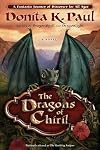
"The Dragons of Chiril", set in the same world, but earlier, than "The Dragonkeeper Chronicles" exhibits some of the same strengths and weaknesses as Donita K. Paul's earlier stories. In fact, many of the characteristics of the world and the varying races are explained much more clearly as part of the story in that series, and the book is easier to understand and follow without continually referring to the glossary at the end of the book if a reader is familiar with "Dragonspell" and its sequels. The world is crafted beautifully and creatively, the dragons and varying races are complicated and fascinating, and the allegorical and theological aspect manages to lead to wise and thought provoking comments without hitting the reader on the show more head or interfering too much with the plot (usually).
However, as in "The Dragonkeeper Chronicles," in Wulder's world, too often the line between right and wrong is both arbitrary and too easily drawn, not reflective of the true complications of morality in our world. For instance, one villain is killed in a fight and no one shows too much remorse, but later stealing from a villain is dismissed because stealing is considered categorically wrong.
Finally, Paul writes wonderfully quirky characters, whose individual personalities are one of the fun parts of reading the books. However, in "The Dragons of Chiril," as in "The Dragonkeeper Chronicles" the main female characters who start out strong, independent, and sympathetic are often treated condescendingly by the males in the story, prevented from acting out of over concern for an appearance of propriety, and too often dismissed and portrayed as over-emotional and hysterical.
Overall, the book is enjoyable and provides a few thought provoking insights, but falls just short of its promise. show less
However, as in "The Dragonkeeper Chronicles," in Wulder's world, too often the line between right and wrong is both arbitrary and too easily drawn, not reflective of the true complications of morality in our world. For instance, one villain is killed in a fight and no one shows too much remorse, but later stealing from a villain is dismissed because stealing is considered categorically wrong.
Finally, Paul writes wonderfully quirky characters, whose individual personalities are one of the fun parts of reading the books. However, in "The Dragons of Chiril," as in "The Dragonkeeper Chronicles" the main female characters who start out strong, independent, and sympathetic are often treated condescendingly by the males in the story, prevented from acting out of over concern for an appearance of propriety, and too often dismissed and portrayed as over-emotional and hysterical.
Overall, the book is enjoyable and provides a few thought provoking insights, but falls just short of its promise. show less
 This review was written for LibraryThing Early Reviewers.
This was the first Paul book that I’d read and I think this one takes place in the same world as her Dragonkeeper Chronicles. I don’t think you have to have read them to follow the story but there are a few things that might have been explained that were assumed as already known in this book. She uses terms like emerlindian and tumanhofer, which are different races, but we are never told that. There is a glossary to help in moments like this but it would have been nice to have some sort of hint in the text. I like the word usage, like rapscallion, falderal, chicanery, obfuscate. Nothing that will make you run for the dictionary but words that you don’t hear much and makes it more interesting to read. The banter between the wizard show more and the librarian is fun, light and witty but also sounds real, like two old friends bickering. Lady Peg, who is a little addle minded, is also fun and done well so she does not go too far and become some absurd comic relief but remains an interesting, believable character. There is a Christian message running through the book and it is not subtle. There is a whole page that goes on about the consequences of lying, several proverbs are quoted in a row for no apparent reason, the gifts given by Wulder are listed, and several times it is mentioned that a character knew there was some power behind everything but he didn’t know what, among other things. But as blatant as the message is it is never really explained exactly who Wulder is or who the paladin is or why he is important and that made me wonder if I missed something by not reading the other Paul books first. Despite a few minor places where I felt I was catching up to a story already in progress I thought it was an enjoyable book. There are a lot of interesting well drawn characters that are fun to follow on their exciting quest. I found myself so engaged in the story that I lost track of time while I was reading it. I liked these people and would be glad to follow them on another adventure. show less
I had very mixed feelings about this book so opted to read it twice before sitting down to write a review. My heart wishes it had been a repeat of the magic the author created in Two Tickets to the Christmas Ball, it is not. For a young reader, or as a way to begin a conversation about Christ without ever having to say his name this book would serve what I assume was the author's purpose. The book had some very fun, and funny moments and I may forever mutter "fish scales in a crocodile's teeth!" but the book often felt stilted and awkward. I'd share it with a child, but would not recommend it for adult readers.
I'm giving it four stars just for the number of times it made me giggle.
I'm giving it four stars just for the number of times it made me giggle.
This review was written for LibraryThing Early Reviewers.The Dragons of Chiril is a good young adult fantasy. This book is set in the same world as "The Dragonkeeper Chronicles" but before those events occur. The book has a well paced plot line and a cast of interesting and diverse characters. A wizard, librarian, dragon keeper, artist and princess all band together to go on a quest and save the day. Some of the statements and descriptions were quite funny. Fenworth and Librettowit were a great pair of characters.
As an allegory the story works well, but there could have been more information about Wulder. I've not read the other books, perhaps it's elaborated upon in more detail. The book obviously had Christian themes, and a clear good triumphs over evil ending. I liked the parts involving show more the dragons, especially Tipper's learning to communicate with them. Overall an enjoyable, quick read with a good moral. show less
As an allegory the story works well, but there could have been more information about Wulder. I've not read the other books, perhaps it's elaborated upon in more detail. The book obviously had Christian themes, and a clear good triumphs over evil ending. I liked the parts involving show more the dragons, especially Tipper's learning to communicate with them. Overall an enjoyable, quick read with a good moral. show less
This review was written for LibraryThing Early Reviewers.**Originally posted at www.bunnycates.com/reading **
My Thoughts:
This story, for me, was a little slow getting going. As an after thought, now, I think I am glad it was. I had never heard of this series or the author – so taking a little time to get the story rolling really allowed me to “discover” the world. If that makes sense? I hope so.
I really enjoyed the characters. I loved that Tipper was very independent and had a strong will. (You can see my goodreads reading updates HERE) At times I was confused on her age because she came across as a very strong headed teenager instead of a 22 year old. As the book progressed, we learn that she has lived a very sheltered life so it totally makes sense.
The world building that went on in show more this story was great. At times, I really felt like this was somewhere REAL. Even though there were talking parrots, and dragons, it still felt organic and real to me. Like somewhere at sometime, these people and this story – really happened. I love it when a story can whisk you away like that.
Plot was, like I said, the beginning was pretty slow. It took so long to get me “hooked” that I almost gave up. I was probably a good 250 pages before I got to the “HAD to finish” feeling. Once it did manage to hook me, though, I was all in! The last couple of chapters in particular were FANTASTIC! So much action and drama and “OMGOSH!”. LOL! I’d say the last 150-200 pages I was so sucked in that I just couldn’t put it down.
In Conclusion:
Great read for middle grade level and up. The main character Tipper is 22, so I don’t know if this falls into the YA genre or not. It reads quick and smooth, it FELT like a YA book. I really enjoyed it. Once the story picked up and “got going”, it was fantastic. I’d say it’s a fantasy adventure type book. Think Eragon, but with a less dragon insight and a girl not a boy. Since this was a prequel, I would love to pick up the rest of the series and see where it goes.
Mom Notes:
This is Christian Fiction so there are no language issues or sex to be worried about. There are a couple of “fight scenes” but nothing graphic. show less
My Thoughts:
This story, for me, was a little slow getting going. As an after thought, now, I think I am glad it was. I had never heard of this series or the author – so taking a little time to get the story rolling really allowed me to “discover” the world. If that makes sense? I hope so.
I really enjoyed the characters. I loved that Tipper was very independent and had a strong will. (You can see my goodreads reading updates HERE) At times I was confused on her age because she came across as a very strong headed teenager instead of a 22 year old. As the book progressed, we learn that she has lived a very sheltered life so it totally makes sense.
The world building that went on in show more this story was great. At times, I really felt like this was somewhere REAL. Even though there were talking parrots, and dragons, it still felt organic and real to me. Like somewhere at sometime, these people and this story – really happened. I love it when a story can whisk you away like that.
Plot was, like I said, the beginning was pretty slow. It took so long to get me “hooked” that I almost gave up. I was probably a good 250 pages before I got to the “HAD to finish” feeling. Once it did manage to hook me, though, I was all in! The last couple of chapters in particular were FANTASTIC! So much action and drama and “OMGOSH!”. LOL! I’d say the last 150-200 pages I was so sucked in that I just couldn’t put it down.
In Conclusion:
Great read for middle grade level and up. The main character Tipper is 22, so I don’t know if this falls into the YA genre or not. It reads quick and smooth, it FELT like a YA book. I really enjoyed it. Once the story picked up and “got going”, it was fantastic. I’d say it’s a fantasy adventure type book. Think Eragon, but with a less dragon insight and a girl not a boy. Since this was a prequel, I would love to pick up the rest of the series and see where it goes.
Mom Notes:
This is Christian Fiction so there are no language issues or sex to be worried about. There are a couple of “fight scenes” but nothing graphic. show less
Members
- Recently Added By
Lists

al.vick-series
381 works; 2 members
Author Information

25+ Works 5,503 Members
Series

Common Knowledge
- Canonical title
- The Vanishing Sculptor or The Dragons of Chiril
- Original title
- The Vanishing Sculptor
- Original publication date
- 2009
- People/Characters
- Tipper Schope; Sir Beccaroon; Bealomondore ; Verrin Schope; Fenworth; Librettowit
- Dedication
- God has blessed me by bringing young people into my life. The days would be so boring if I dealt only with adults. This book is dedicated to my readers. They keep me on my toes and motivated to write. Jessica Agius, Mary ... (show all)Darnell, Hannah Johnson, Alistair and Ian McNear, Rachael Selk, Rebecca Wilber, Kayla and Joshua Woodhouse
- First words
- Sir Beccaroon cocked his head, ruffled his neck feathers, and stretched, allowing his crimson wings to spread.
- Last words
- (Click to show. Warning: May contain spoilers.)"This is Wulder's work."
- Blurbers
- Batson, Wayne Thomas ; Denney, Jim; DiMaria, Megan; Reinhold, Eric
Classifications
Statistics
- Members
- 313
- Popularity
- 101,653
- Reviews
- 22
- Rating
- (3.76)
- Languages
- English, French
- Media
- Paper, Audiobook, Ebook
- ISBNs
- 15
- ASINs
- 5