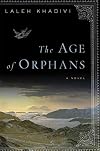
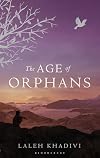
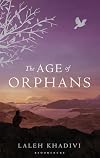
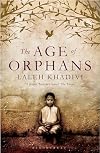
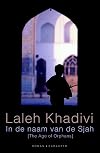
The Age of Orphans
by Laleh Khadivi
On This Page
Description
Told with an evocative richness of language that recalls Michael Ondaatje or Anita Desai, the story of Reza Khourdi is that of the 20th century everyman, cast out from the clan in the name of nation, progress and modernity who cannot help but leave behind a shadow that yearns for the impossible dreams of love, land and home. Before following his father into battle, he had been like any other Kurdish boy: in love with his Maman, fascinated by birds and the rugged Zagros mountains, dutiful to show more his stern and powerful Baba. But after he becomes orphaned in a massacre by the armies of Iran's new Shah, Reza Pahlavi I.; he is taken in by the very army that has killed his parents, re-named Reza Khourdi, and indoctrinated into the modern, seductive ways of the newly minted nation, careful to hide his Kurdish origins with every step. The Age of Orphans follows Reza on his meteoric rise in ranks, his marriage to a proud Tehrani woman and his eventual deployment, as Capitan, back to the Zagros Mountains and the ever-defiant Kurds. Here Reza is responsible for policing, and sometimes killing, his own people, and it is here that his carefully crafted persona begins to fissure and crack. The stunning debut of a gifted new voice in literary fiction, The Age of Orphans tells the story of a Kurdish boy forced to betray his people in service of the new Iranian nation, and its tragic consequences as he grows into manhood as a powerful military leader. Laleh Khadivi was born in Esfahan Iran in 1977. In the aftermath of the Islamic Revolution her family fled, first to Belgium and Puerto Rico, finally settling in Canada and the United States. She graduated from Reed College in 1998 and moved to New York where she began to direct documentary films for A&E, HBO and Showtime. The Age of Orphans is the first novel in a projected trilogy that will trace three generations of a Kurdish family as they make their way to the United States and undergo the profound transformations of the immigrant experience. Based loosely on the life of her own family, Laleh Khadivi conducted extensive interviews with her extended family to get at her haunting story of displacement, exile and loss.. show less
Tags
Recommendations




















Member Recommendations

Member Reviews
I found this a compelling book to read. The poetic language beautifully evokes vivid images of the Persian landscape through the eyes of a young boy. Soon after his initiation into manhood in his mountain tribe, he goes off to war against the Shah's army, with his father and uncles and cousins in a bid for an independent Kurdish nation. He is the only survivor and is taken in as a pet by the senior army officer, alternately cared for and abused. He is conscripted into the army and works to loose his Kurdish origins by commiting atrocities to prove his loyalty to the shah. He is elevated at a young age to captain and tested again as he is sent to command the land of his birth. Slowly his kurdish roots re-emerge. Despite the harrowing show more events for which this book has been criticised, I read this tale feeling compassion for Reza and said incidents were not described in gruesome detail but with a deft hand for language. show less
The Age of Orphans by Leleh Khadivi is the story of a young Kurdish boy who is violently conscripted into the Iranian army of the Shah after his father and the other males from his village are slain in battle. He is badly treated by the Iranians who use him as a plaything. He longs for his mother with whom he shared a close bond, but he realizes that he must learn to accept this new life that has been thrust upon him.
In order to climb the military ladder he suppresses the Kurd within himself and grows to become a brutal and violent hater of Kurds, working to silence the voice of Kurdish independence. We follow this young man as he rises in rank and marries an Iranian woman. He is eventually deployed back to his homeland in the Zagros show more Mountains and there we start to see him imploding as he both polices and sometimes kills his own people.
The Age of Orphans is the debut novel of this author and although beautifully and almost poetically written, it was a difficult story to read. The author is unflinching in her vision of an innocent boy repressing his feelings and becoming more brutal and violent as his inner fury mounts. As well as the stark loneliness and cruelty experienced and expressed by this young man, this is also a story that highlights a part of Iran’s violent history. show less
In order to climb the military ladder he suppresses the Kurd within himself and grows to become a brutal and violent hater of Kurds, working to silence the voice of Kurdish independence. We follow this young man as he rises in rank and marries an Iranian woman. He is eventually deployed back to his homeland in the Zagros show more Mountains and there we start to see him imploding as he both polices and sometimes kills his own people.
The Age of Orphans is the debut novel of this author and although beautifully and almost poetically written, it was a difficult story to read. The author is unflinching in her vision of an innocent boy repressing his feelings and becoming more brutal and violent as his inner fury mounts. As well as the stark loneliness and cruelty experienced and expressed by this young man, this is also a story that highlights a part of Iran’s violent history. show less
It took me a long time to get into [The Age of Orphans], the debut novel of Iranian-born Laleh Khadivi. Her writing at first seemed overdone, but as the book progresses, the rhythm flowed more naturally, and I enjoyed it more.
A nameless boy spends his early years exploring his village from the safety of his mother’s lap. Around the age of eight or so (time is fluid), he goes with his father, uncles, and cousins to a distant cave where he learns the history of the Kurdish people and goes through a rite of passage to become a man. As such, when the village men are called to fight the shah’s soldiers, he rides with them. They are given guns taken from fallen soldiers, but the Kurds are slaughtered in the ensuing battle, in part, show more because they don’t know how to use them. The boy is orphaned on the field and is conscripted into the shah’s army.
The next few years are grim, but eventually he is sent to a training camp and becomes the model Iranian soldier. He is even selected to go to Tehran and take a modern, educated woman as his wife. Because of his brutal treatment of fellow Kurds on his first posting, he is sent to the base of the Zagros Mountains to pacify and modernize a Kurdish border area. The rest of the book follows his career and relationship with his wife and children.
Throughout his life, the boy struggles with his identity as a Kurd in the newly created Iranian state. In a pivotal moment after his conscription, he is given a name (Reza Khourdi) and age (11) by a government official. Reza to signify he belongs to the shah, Reza Pahlavi I, and Khourdi, to represent the area where he was taken. The attempt to completely erase his ethnic identity is embraced by the boy at first. He covets the shiny boots and symbolically powerful gun. But the struggle to suppress a part of himself is as difficult as it is to suppress the Kurdish people. show less
A nameless boy spends his early years exploring his village from the safety of his mother’s lap. Around the age of eight or so (time is fluid), he goes with his father, uncles, and cousins to a distant cave where he learns the history of the Kurdish people and goes through a rite of passage to become a man. As such, when the village men are called to fight the shah’s soldiers, he rides with them. They are given guns taken from fallen soldiers, but the Kurds are slaughtered in the ensuing battle, in part, show more because they don’t know how to use them. The boy is orphaned on the field and is conscripted into the shah’s army.
The next few years are grim, but eventually he is sent to a training camp and becomes the model Iranian soldier. He is even selected to go to Tehran and take a modern, educated woman as his wife. Because of his brutal treatment of fellow Kurds on his first posting, he is sent to the base of the Zagros Mountains to pacify and modernize a Kurdish border area. The rest of the book follows his career and relationship with his wife and children.
Throughout his life, the boy struggles with his identity as a Kurd in the newly created Iranian state. In a pivotal moment after his conscription, he is given a name (Reza Khourdi) and age (11) by a government official. Reza to signify he belongs to the shah, Reza Pahlavi I, and Khourdi, to represent the area where he was taken. The attempt to completely erase his ethnic identity is embraced by the boy at first. He covets the shiny boots and symbolically powerful gun. But the struggle to suppress a part of himself is as difficult as it is to suppress the Kurdish people. show less
 This review was written for LibraryThing Early Reviewers.
I need to get some things out of the way before getting into the story, so let me start with some information you might want to know before you decide to read this. There are some disturbing images and passages in this book—rough language, brutal treatment and death, detailed sexual descriptions and rape. So, if you don’t want to read about them, avoid this book.
Now, let’s talk about the story and its construction. The central character is an unnamed boy. He is the only child of Kurdish parents and the cousin to many in his village in the mountains of the spot on the map that is becoming the new Iran. His male relatives initiate him into manhood and the tribe, and in less than a year, he along with the other men of his village show more enter battle against the soldiers of the new Iran. All, save he, are slaughtered.
He is made a conscript of the shah’s army and at first is treated as the captain’s pet—both doted upon and abused. When he is old enough, he becomes an army cadet and is given the Iranian name, Reza Pejman Khourdi. Throughout his time in the camp, he learns to be a soldier and to hate the Kurdish blood that courses within him and others. Through atrocious actions against his fellow Kurds, he is suggested for further military training in Tehran. While there he marries an educated Tehrani woman and when his training is complete, he is sent back to the Kurdish area to “discipline his own.” His wife soon despises him and his Kurdish blood especially since she believes that he is softening in his treatment of the people there. For the rest of their story, you will have to read the book—I don’t want to provide any more spoilers.
As for my feelings of this book, hmmm, that’s a bit complicated. The story is not a happy one. It’s of a boy losing all that he has known and loved and growing to hate his tribe and himself. It’s a story of war and all the atrocious things that accompany it—how a human being turns against others to further themselves, to survive. But, the language of this book is truly beautiful. It is poetic with beautiful imagery—birds and their flight are used throughout. Yet, at the same time it is harsh, stark and upsetting. So, while normally I would say that the story was one that I couldn’t tolerate because of its darkness and brutal images, I found myself drawn to the man and his life and hoping that he could somehow emerge from the hell he endured. show less
Now, let’s talk about the story and its construction. The central character is an unnamed boy. He is the only child of Kurdish parents and the cousin to many in his village in the mountains of the spot on the map that is becoming the new Iran. His male relatives initiate him into manhood and the tribe, and in less than a year, he along with the other men of his village show more enter battle against the soldiers of the new Iran. All, save he, are slaughtered.
He is made a conscript of the shah’s army and at first is treated as the captain’s pet—both doted upon and abused. When he is old enough, he becomes an army cadet and is given the Iranian name, Reza Pejman Khourdi. Throughout his time in the camp, he learns to be a soldier and to hate the Kurdish blood that courses within him and others. Through atrocious actions against his fellow Kurds, he is suggested for further military training in Tehran. While there he marries an educated Tehrani woman and when his training is complete, he is sent back to the Kurdish area to “discipline his own.” His wife soon despises him and his Kurdish blood especially since she believes that he is softening in his treatment of the people there. For the rest of their story, you will have to read the book—I don’t want to provide any more spoilers.
As for my feelings of this book, hmmm, that’s a bit complicated. The story is not a happy one. It’s of a boy losing all that he has known and loved and growing to hate his tribe and himself. It’s a story of war and all the atrocious things that accompany it—how a human being turns against others to further themselves, to survive. But, the language of this book is truly beautiful. It is poetic with beautiful imagery—birds and their flight are used throughout. Yet, at the same time it is harsh, stark and upsetting. So, while normally I would say that the story was one that I couldn’t tolerate because of its darkness and brutal images, I found myself drawn to the man and his life and hoping that he could somehow emerge from the hell he endured. show less
This review was written for LibraryThing Early Reviewers.I'm sorry - I tried really hard to find characters I liked in this book, but I never did. This book follows a Kurdish boy who is tragically and violently conscripted into the shah's army after his own people are slaughtered in battle. I liked the boy as a child and felt so sad about the manner in which he was treated (cruel and unforgiving), but soon came to dislike him as well. Some of the descriptions of the brutality made me physically ill. I'm sure that life as a Kurd, even now, is hard, but there *must* be some kindness and love existing in families and among friends. Not in this book.
The sexual scenes were overwhelming in their coldness and lack of feeling, and were many. Too many.
While I liked the author's style of writing, I show more simply disliked the subject matter. One good thing - it made me even more grateful to have been born in a civilized nation (USA) where love, gratitude, and kindness is not ridiculed. show less
The sexual scenes were overwhelming in their coldness and lack of feeling, and were many. Too many.
While I liked the author's style of writing, I show more simply disliked the subject matter. One good thing - it made me even more grateful to have been born in a civilized nation (USA) where love, gratitude, and kindness is not ridiculed. show less
This review was written for LibraryThing Early Reviewers.Laleh Khadivi's The Age of Orphans, gives many Americans another view into the Middle East, much as Khaled Hosseini’s works have. This time, however, the country is Iran and the struggle is over the Kurdish People.
I much admired Hosseini’s fluid style, but I found Khadivi's prose even more poetic. As a result, I felt this story even more deeply. I felt our heroe's anguish as he was stripped of his identity and forced into a new life. I was saddened the more he forgot who he was, where he came from and the more he accepted his fate. It was clear, though, he had little choice in the matter; at any moment he could have been summarily executed simply for being a Kurd. Surprisingly I did not feel the rage against the Iranian government show more such treatment should have evoked. I don’t know if this is a failing of my understanding of the situation or the author’s poetic style taking the edge off the rage.
This is not a soft story, despite the author’s writing style. This is the story of the systematic wiping out of a people for no apparent reason. The land the Kurds lived on was not more valuable than the land around Tehran, in fact was marginally livable and the Kurdish people were not a superior military force. Their sole crime was not accepting the new government. If the Shah had left them alone, the Kurds could not have cared, one way or the other, they just wanted to continue on, the way they had from time immemorial.
The subtext of the whole story is coming to grips with who you are and where you come from. Towards the end, the main character seems to be realizing just who that is. There are signs of rebellion against the ruling regime, but nothing that would call attention to himself, more acts of omission than commission.
This is planned as a series, hopefully progressing towards more modern times. If this is an example of what is to come, I hope to read more of the series. I felt drawn in to the character and enjoyed both Laleh Khadivi's storytelling ability and the style it was presented in. This is for people who enjoy exploring other cultures and want to understand the unrest in some areas of the world. Historical fiction fans should also appreciate this work. Well deserving a full four stars. show less
I much admired Hosseini’s fluid style, but I found Khadivi's prose even more poetic. As a result, I felt this story even more deeply. I felt our heroe's anguish as he was stripped of his identity and forced into a new life. I was saddened the more he forgot who he was, where he came from and the more he accepted his fate. It was clear, though, he had little choice in the matter; at any moment he could have been summarily executed simply for being a Kurd. Surprisingly I did not feel the rage against the Iranian government show more such treatment should have evoked. I don’t know if this is a failing of my understanding of the situation or the author’s poetic style taking the edge off the rage.
This is not a soft story, despite the author’s writing style. This is the story of the systematic wiping out of a people for no apparent reason. The land the Kurds lived on was not more valuable than the land around Tehran, in fact was marginally livable and the Kurdish people were not a superior military force. Their sole crime was not accepting the new government. If the Shah had left them alone, the Kurds could not have cared, one way or the other, they just wanted to continue on, the way they had from time immemorial.
The subtext of the whole story is coming to grips with who you are and where you come from. Towards the end, the main character seems to be realizing just who that is. There are signs of rebellion against the ruling regime, but nothing that would call attention to himself, more acts of omission than commission.
This is planned as a series, hopefully progressing towards more modern times. If this is an example of what is to come, I hope to read more of the series. I felt drawn in to the character and enjoyed both Laleh Khadivi's storytelling ability and the style it was presented in. This is for people who enjoy exploring other cultures and want to understand the unrest in some areas of the world. Historical fiction fans should also appreciate this work. Well deserving a full four stars. show less
This review was written for LibraryThing Early Reviewers.The Age of Orphans, by Laleh Khadivi grabs you by the soul and leads you through a land of beauty and pain, wisdom and arrogance, histories lost and created. Where a boy’s journey is measured by stolen love, memories forgotten, maps that circle upon themselves and back again. I was taken to unknown worlds and misunderstood cultures and could not catch my breath. This book delights the heart and then tests its resilience. I found myself as conflicted as the leading character and I could not put this book down. I look forward to reading more of Khadivi’s work.
This review was written for LibraryThing Early Reviewers.Members
- Recently Added By
Lists

Middle East Fiction
179 works; 15 members
Author Information

4+ Works 352 Members
Awards and Honors
Awards
Common Knowledge
- Canonical title
- The Age of Orphans
- Original publication date
- 2009-03-03
- People/Characters
- Reza Pejman Khourdi
- Important places
- Iran
- Epigraph
- These people, the Kurds, lived in the mountains, were very war-like and not subject to the Persian king.
Anabasis
Xenophon
It is more difficult to contend with oneself than with the world.
Kurdish proverb - Dedication
- To Kamran and Fereshteh
- First words
- The roof is made of thick mud, straw and woven sticks.
- Last words
- (Click to show. Warning: May contain spoilers.)Though I have left my step here and there, now I must sit, stuck on this perch, over this vista, in this tight clasp of rock, stuck to watch, to smoke, to sing and die, die unto dust, loyal to the winds of an unspeakable home.
- Publisher's editor
- Mueller, Anton
- Original language
- English
Classifications
Statistics
- Members
- 183
- Popularity
- 178,298
- Reviews
- 25
- Rating
- (3.41)
- Languages
- Dutch, English, Italian
- Media
- Paper, Ebook
- ISBNs
- 12
- ASINs
- 4