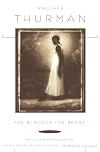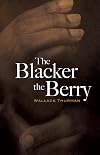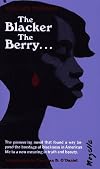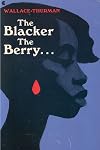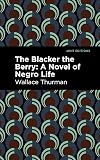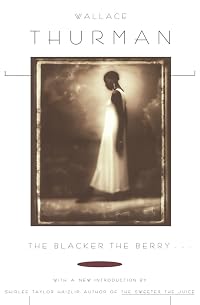
The Blacker the Berry
by Wallace Thurman
On This Page
Description
"The groundbreaking Harlem Renaissance novel about prejudice within the black community Emma Lou Morgan's skin is black. So black that it's a source of shame to her not only among the largely white community of her hometown of Boise, Idaho, but also among her lighter-skinned family and friends. Seeking a community where she will be accepted, she leaves home at age eighteen, traveling first to Los Angeles and then to New York City, where in the Harlem of the 1920s she finds a vibrant scene of show more nightclubs and dance halls and parties and love affairs ... and, still, rejection by her own race. One of the most widely read and controversial works of the Harlem Renaissance, and the first novel to openly address prejudice among black Americans, The Blacker the Berry ... is a book of undiminished power about the invidious role of skin color in American society"-- show lessTags
Recommendations



















Member Reviews
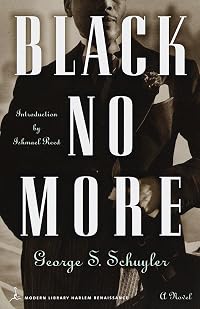
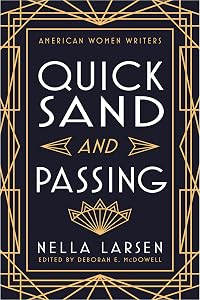
For me the most interesting thing about this novel is its publication date. Nella Larsen's Passing was also published in 1929, and George Schuyler's Black No More came out in 1931. (Maybe that interests me primarily because I prefer the writing in those two novels. I've remembered characters from Passing longer than I'll remember any of these characters, and it's hardly surprising I'd enjoy a satire like Black No More more than a book that isn't meant to be fun for its readers or its main character.) They were concerned with Black characters who choose to "pass" as white, or who opt not to. As its title suggests, The Blacker the Berry is about darker skin.
The novel isn't subtle. Its protagonist, Emma Lou Morgan, is explicitly only show more skin-deep. The darkness of her skin is what defines her, inside and out. She's treated badly because she's so dark, but it's strongly implied that she's so self-conscious she doesn't understand that her treatment isn't always as bad as she imagines, and we're shown that she in turn values others according to the lightness or darkness of their skins. Though we're told that she was raised in a way that made it almost inevitable she'd internalize such an attitude, there's never any suggestion that anyone other than Emma Lou needs to or can do better. And that leaves a bad taste in my mouth. Most of the characters in this novel need to do better. Almost a century later, Emma Lou's whole country still needs to do better. show less
The novel isn't subtle. Its protagonist, Emma Lou Morgan, is explicitly only show more skin-deep. The darkness of her skin is what defines her, inside and out. She's treated badly because she's so dark, but it's strongly implied that she's so self-conscious she doesn't understand that her treatment isn't always as bad as she imagines, and we're shown that she in turn values others according to the lightness or darkness of their skins. Though we're told that she was raised in a way that made it almost inevitable she'd internalize such an attitude, there's never any suggestion that anyone other than Emma Lou needs to or can do better. And that leaves a bad taste in my mouth. Most of the characters in this novel need to do better. Almost a century later, Emma Lou's whole country still needs to do better. show less
 This review was written for LibraryThing Early Reviewers.
WARNING: I DO CURSE IN THIS AND GO ON A BIT OF A RANT...YOU HAVE BEEN WARNED!
4.5/5 stars
The only reason this book got a 4.5/5 stars was because there were some moments I got bored...but other than that, it was a wonderful book that had me ticked off so many times throughout this book.
Why you may ask?
Well, because even during the 1920's when this book took place, the hatred for yourself because of your skin tone, especially if you were a dark skin woman or man, was just frustrating...And to see that same mess happening in 2015. The fact that people still harp on that light skin dark skin bull shit grates on me. I mean, come on...When the hell are we going to get the hell over it?!?! I mean really? Yes, we as people have our preferences, show more that's fine, but to down someone because they're "too dark" and praise for someone who is "high yella" or brown skin?!?! Or even down someone who is light/high yella just for the sake of the old mentality of times that date back to slavery.
When will this damn mentality leave? When will parents stop teaching their kids that its a bad thing to be dark? Or that being High Yella is a good thing? Or that high yella women are stuck up and all about themselves? Not all of us, regardless of skin tone are the same!
I, as a "high yella" woman was and still can be very self conscious of my skin tone because people always made a big deal out of it..and I never saw what the damn big deal was...and I still don't. But I don't want you making me feel less than either because Im light and you are attracted to darker tone women. Just like I do my best to not make anyone else feel less than because I dont see the big damn deal and "high yella" men and women. Yes, I have my preferences when it comes to dating men, but my preferences are so far stretched that it can't really be a big deal.
In a nut shell, as wonderful as this book is, it helped to fuel how pissed off I get with the stupid skin tone bull shit! Let that shit go! I see beauty in all shades...And I personally do find darker skin tones beautiful...Forget what society teaches you and learn to accept and love you for who the hell you are...From the lightest to the darkest! We need to figure out how to let that mess go and move the hell forward! Stop with the Dumb Shit!
Now, what I can say is, I am glad to see Emma Lou's growth by the end of this book and willing to start working on loving who she is and accepting her skin tone. And finally just letting go and just start allowing things to take its course in life....I am proud she got her back bone when it came to handling some things by the end of the book...
#Done show less
4.5/5 stars
The only reason this book got a 4.5/5 stars was because there were some moments I got bored...but other than that, it was a wonderful book that had me ticked off so many times throughout this book.
Why you may ask?
Well, because even during the 1920's when this book took place, the hatred for yourself because of your skin tone, especially if you were a dark skin woman or man, was just frustrating...And to see that same mess happening in 2015. The fact that people still harp on that light skin dark skin bull shit grates on me. I mean, come on...When the hell are we going to get the hell over it?!?! I mean really? Yes, we as people have our preferences, show more that's fine, but to down someone because they're "too dark" and praise for someone who is "high yella" or brown skin?!?! Or even down someone who is light/high yella just for the sake of the old mentality of times that date back to slavery.
When will this damn mentality leave? When will parents stop teaching their kids that its a bad thing to be dark? Or that being High Yella is a good thing? Or that high yella women are stuck up and all about themselves? Not all of us, regardless of skin tone are the same!
I, as a "high yella" woman was and still can be very self conscious of my skin tone because people always made a big deal out of it..and I never saw what the damn big deal was...and I still don't. But I don't want you making me feel less than either because Im light and you are attracted to darker tone women. Just like I do my best to not make anyone else feel less than because I dont see the big damn deal and "high yella" men and women. Yes, I have my preferences when it comes to dating men, but my preferences are so far stretched that it can't really be a big deal.
In a nut shell, as wonderful as this book is, it helped to fuel how pissed off I get with the stupid skin tone bull shit! Let that shit go! I see beauty in all shades...And I personally do find darker skin tones beautiful...Forget what society teaches you and learn to accept and love you for who the hell you are...From the lightest to the darkest! We need to figure out how to let that mess go and move the hell forward! Stop with the Dumb Shit!
Now, what I can say is, I am glad to see Emma Lou's growth by the end of this book and willing to start working on loving who she is and accepting her skin tone. And finally just letting go and just start allowing things to take its course in life....I am proud she got her back bone when it came to handling some things by the end of the book...
#Done show less
A product of the Harlem Renaissance, “The Blacker the Berry: A Novel of Negro Life” by Wallace Thurman is the story a young woman who sets out on a quest to “find herself” and “the right sort of people.” The trouble is, she doesn’t have any of her own thoughts, but rather relies on those that were impressed upon her from an early age. Emma Lou was born with very dark skin into a family of lighter skinned people. As a result, her mother and grandmother make sure she is very conscious of the stereotype that dark girls rarely find husbands because dark skin on a woman is undesirable. It is equally undesirable for men to be darker skinned, but it is not as problematic as it is for women. In a world where lightness/whiteness is show more preferred, Emma Lou must work diligently to become a respectable member of society despite her skin tone.
Moving from Idaho where she was the only black student in her school, to Los Angeles to attend college, she hopes to meet other black students and create relationships with “negroes who really matter,” that is, educated, intelligent, well-spoken, and proper – she desires “to escape the social and economic inferiority” of darker skinned people. What she discovers is that even the light skinned students see her as too black and exclude her from their groups, clubs, and societies. The ones who do accept her are what Emma Lou considers trash with their “circus-like appearance,” and she therefore avoids their association despite her loneliness. It is interesting to see discrimination within a racial group, in this case based on skin tone. This is ostensibly the over-arching theme of the novel, as illustrated even by the title, but it is quite a blatantly superficial theme. Color and skin tone are omnipresent throughout the novel, but all they illustrate is a world we already know - even 100 years since the publication of this book, we still judge others based on skin color.
An underlying theme, however, seems to be that of agency – this can be applied to several different groups based on one’s interpretation, but it certainly highlights that there are certain people in this world who do not have or are not allowed to have their own opinions and thoughts. Unfortunately, many of these groups of people are not aware of this hindrance. Throughout the novel Emma Lou is told what to do, what is appropriate, and is generally led throughout her own life as if she is not the main character in her own story. Emma Lou merely exists in Boise by doing what is appropriate based on the societal norms of her community and forming no opinions of her own. She moves to Los Angeles per her uncle’s suggestion, where “people in large cities…are broad. They do not have time to think of petty things.” But ultimately, it is what she is “supposed” to do. Once in Los Angeles, she “is being shown” the city, not discovering it for herself. Furthermore, she sees herself through the eyes of others without any definition of her own: “She wanted the white people who were listening to know that she knew her grammar if this other person didn’t.”
After growing weary of the people of Los Angeles, “She was now determined to go East where life was more cosmopolitan and people were more civilized. To this end she begged her mother and uncle to send her East to school.” Even her own decision required approval and permission from others, as if she were incapable of getting there on her own. But why did she decide to leave? It is likely that the people she hoped to meet did not fit exactly into the ideals set forth by her community back in Boise; she did not fit in with these “right sort[s] of people.” Once in New York, however, she works for someone else, is told where to go to find housing, and meets a young woman named Gwendolyn whom she “mechanically follows about.” Emma Lou takes on a number of lovers, but the relationships are always on the man’s terms. Before New York, Jasper was passing through and presumably chose Emma Lou because dark girls are more “desperate” for companionship; in Harlem, Benson was not “the right sort of people” because he was uneducated – her family’s assertion plays out once more; and Alva, who rarely took her around his friends and only took her to places that were dark like movie theatres and cabaret clubs lest her be seen with “dark meat.
In one of the cabaret clubs, we hear the song lyrics:
A yellow gal rides in a limousine,
A brown-skin rides a Ford,
A black girl rides an old jackass
But she gets there, yes my Lord.
These seem to suggest that it is commonly understood that black girls are somehow “lesser” than other skin toned women, but they still get where they are going. These lyrics present a sort of foreshadowing, as Emma Lou finally begins to develop her own sense of self. The first evidence of a developing agency presents itself when Emma Lou has two separate opportunities to return home after deciding she hates New York: the first time, her uncle offers to send her back home; and the second time she considers it herself but ultimately decides against it. She is aware that the return home would be to admit defeat and therefore remain within the confines of her family’s narrow worldview. But her own decision to stay in Harlem demonstrates that she is learning to take control of her own life, that she does not have to define herself by others.
The story ends with an introspective train of thought in which Emma Lou is finally learning to discern for herself following a conscious decision to leave Alva who had been treating her poorly for months. It does not seem clear where she is going or what she will do, but she decides on a new outlook – “find – not seek.” She leaves everyone in disarray, suggesting that she was the one holding everything together. She may not have been the main character in her own story, but she was an integral supporting character in many others’. But that is not what Emma Lou wanted for herself: ultimately, she makes the willful decision to take control of her own story, and as such recall the cabaret lyrics: “But she gets there, yes my Lord.” show less
Moving from Idaho where she was the only black student in her school, to Los Angeles to attend college, she hopes to meet other black students and create relationships with “negroes who really matter,” that is, educated, intelligent, well-spoken, and proper – she desires “to escape the social and economic inferiority” of darker skinned people. What she discovers is that even the light skinned students see her as too black and exclude her from their groups, clubs, and societies. The ones who do accept her are what Emma Lou considers trash with their “circus-like appearance,” and she therefore avoids their association despite her loneliness. It is interesting to see discrimination within a racial group, in this case based on skin tone. This is ostensibly the over-arching theme of the novel, as illustrated even by the title, but it is quite a blatantly superficial theme. Color and skin tone are omnipresent throughout the novel, but all they illustrate is a world we already know - even 100 years since the publication of this book, we still judge others based on skin color.
An underlying theme, however, seems to be that of agency – this can be applied to several different groups based on one’s interpretation, but it certainly highlights that there are certain people in this world who do not have or are not allowed to have their own opinions and thoughts. Unfortunately, many of these groups of people are not aware of this hindrance. Throughout the novel Emma Lou is told what to do, what is appropriate, and is generally led throughout her own life as if she is not the main character in her own story. Emma Lou merely exists in Boise by doing what is appropriate based on the societal norms of her community and forming no opinions of her own. She moves to Los Angeles per her uncle’s suggestion, where “people in large cities…are broad. They do not have time to think of petty things.” But ultimately, it is what she is “supposed” to do. Once in Los Angeles, she “is being shown” the city, not discovering it for herself. Furthermore, she sees herself through the eyes of others without any definition of her own: “She wanted the white people who were listening to know that she knew her grammar if this other person didn’t.”
After growing weary of the people of Los Angeles, “She was now determined to go East where life was more cosmopolitan and people were more civilized. To this end she begged her mother and uncle to send her East to school.” Even her own decision required approval and permission from others, as if she were incapable of getting there on her own. But why did she decide to leave? It is likely that the people she hoped to meet did not fit exactly into the ideals set forth by her community back in Boise; she did not fit in with these “right sort[s] of people.” Once in New York, however, she works for someone else, is told where to go to find housing, and meets a young woman named Gwendolyn whom she “mechanically follows about.” Emma Lou takes on a number of lovers, but the relationships are always on the man’s terms. Before New York, Jasper was passing through and presumably chose Emma Lou because dark girls are more “desperate” for companionship; in Harlem, Benson was not “the right sort of people” because he was uneducated – her family’s assertion plays out once more; and Alva, who rarely took her around his friends and only took her to places that were dark like movie theatres and cabaret clubs lest her be seen with “dark meat.
In one of the cabaret clubs, we hear the song lyrics:
A yellow gal rides in a limousine,
A brown-skin rides a Ford,
A black girl rides an old jackass
But she gets there, yes my Lord.
These seem to suggest that it is commonly understood that black girls are somehow “lesser” than other skin toned women, but they still get where they are going. These lyrics present a sort of foreshadowing, as Emma Lou finally begins to develop her own sense of self. The first evidence of a developing agency presents itself when Emma Lou has two separate opportunities to return home after deciding she hates New York: the first time, her uncle offers to send her back home; and the second time she considers it herself but ultimately decides against it. She is aware that the return home would be to admit defeat and therefore remain within the confines of her family’s narrow worldview. But her own decision to stay in Harlem demonstrates that she is learning to take control of her own life, that she does not have to define herself by others.
The story ends with an introspective train of thought in which Emma Lou is finally learning to discern for herself following a conscious decision to leave Alva who had been treating her poorly for months. It does not seem clear where she is going or what she will do, but she decides on a new outlook – “find – not seek.” She leaves everyone in disarray, suggesting that she was the one holding everything together. She may not have been the main character in her own story, but she was an integral supporting character in many others’. But that is not what Emma Lou wanted for herself: ultimately, she makes the willful decision to take control of her own story, and as such recall the cabaret lyrics: “But she gets there, yes my Lord.” show less
This review was written for LibraryThing Early Reviewers.Poor Emma Lou, so naive and self centered....this woman's got issues! Thurman paints a complex portrayal of a dark skinned African American woman who is so caught up in anxieties surrounding the color of her skin that she attributes everything that goes wrong in her life to just that. Granted, her mother planted these seeds of self doubt as she lamented her daughters skin tone and expressed pure resentment of Emma Lou's also dark father, but she really goes to the extreme and blames every negative encounter with others as a consequence of not being fair skinned enough. Is Emma Lou totally at fault for feeling the way she does? Not entirely, because there is definite validity to her thought process because unfortunately dark skinned show more African American's were/are often mocked and ridiculed not only by whites but by other African American's. Thurman does a great job at allowing the reader to see the world through shifting realities...sometime what Emma Lou imagines to be true is true, but other times, she mistakenly attributes actions towards her due to her color when it's really just due to her naivety and her own prejudices.
Thurman tells the story of Emma Lou's journey for acceptance which leads her from Boise, Idaho to Southern California and then on to a hustling and bustling Harlem in New York City in the 1920's. Not only are you able to see a clear picture of the various characters and the different settings, but Thurman is superb at revealing the inner thoughts and the 'why' behind each characters behavior. This was a really good read!! show less
Thurman tells the story of Emma Lou's journey for acceptance which leads her from Boise, Idaho to Southern California and then on to a hustling and bustling Harlem in New York City in the 1920's. Not only are you able to see a clear picture of the various characters and the different settings, but Thurman is superb at revealing the inner thoughts and the 'why' behind each characters behavior. This was a really good read!! show less
quick synopsis: Emma Lou is a dark skinned black woman coming of age in Idaho with a light skinned family that views, and treats her, as a curse on them. She is sent to California for college and hopes to make her way in the world with people like her but she encounters racism from her light skinned peers, and she herself is discriminatory towards her black peers she see's as below herself. When she finds that there is no place for her in either CA of ID she moves across the country to Harlem where she believes she will finally fit in. Her struggle continues in Harlem, light skinned people are prejudiced to her and she is prejudiced to dark skinned people. She is caught in a loop until a few people and events help push her to the other show more side of things. The book had me bouncing between rooting for Emma Lou and cursing her actions but in the end I left feeling like she might just have found her way. The book is full of important lessons (not just on the history of racism in America): If you want to be accepted as you are then start with accepting all people as they are. If you don't love and respect yourself then you will attract people who don't love and respect you either. It may be difficult but find your path in life and don't follow the actions of others. Sometimes people's advice may be based on what they were taught or what they believe and it may not be suited for you. In the end colorism sucks.
Thanks to Mint editions for reprinting this book and offering it on the monthly giveaway. I have been getting into the Harlem Renaisance and was excited to be given a chance to review this book. show less
This review was written for LibraryThing Early Reviewers.I thoroughly enjoyed The Blacker The Berry: A Novel of Negro Life by Wallace Thurman. I had a tough time putting it down because I kept wanting to know what was going to happen next.
I noticed throughout my reading that Emma Lou’s character development was superficial. We didn’t learn about her interests, fears, or memories beyond what was necessary for the story. For some reason, that worked for me. It was probably also purposeful. It allowed me to experience each event for what it was: prejudice, whether it was towards or from Emma Lou. Upon reflection, I feel it may have given me an idea of life for Black people, rather than one character’s experience. However, it doesn’t stay superficial through to the last page.
Thurman gave show more us a teaser of Emma Lou’s development at the beginning of Part V, during her period of self-reflection, although she still concluded that she was not to blame for her unhappiness. This self-reflection gives the reader an idea of how Emma views her life and the impact that racism and cruel treatment has had on her.
Emma Lou’s personal breakthrough and growth at the end of the book was beautifully written and the reader could feel the gamut of emotions with Emma Lou. I loved the ending!
My appreciation to West Margin Press and Mint Editions for my copy. I had not known about this classic novel, and I am grateful for the introduction. What a beautiful cover! It’s what first attracted me to the book. The cover has a soft-touch finish, which makes it feel like velvet, and is fingerprint resistant. The visual matte nature of soft-touch finish complements the cover design and the physical smoothness adds to the enjoyable experience of holding a physical book to read. show less
I noticed throughout my reading that Emma Lou’s character development was superficial. We didn’t learn about her interests, fears, or memories beyond what was necessary for the story. For some reason, that worked for me. It was probably also purposeful. It allowed me to experience each event for what it was: prejudice, whether it was towards or from Emma Lou. Upon reflection, I feel it may have given me an idea of life for Black people, rather than one character’s experience. However, it doesn’t stay superficial through to the last page.
Thurman gave show more us a teaser of Emma Lou’s development at the beginning of Part V, during her period of self-reflection, although she still concluded that she was not to blame for her unhappiness. This self-reflection gives the reader an idea of how Emma views her life and the impact that racism and cruel treatment has had on her.
Emma Lou’s personal breakthrough and growth at the end of the book was beautifully written and the reader could feel the gamut of emotions with Emma Lou. I loved the ending!
My appreciation to West Margin Press and Mint Editions for my copy. I had not known about this classic novel, and I am grateful for the introduction. What a beautiful cover! It’s what first attracted me to the book. The cover has a soft-touch finish, which makes it feel like velvet, and is fingerprint resistant. The visual matte nature of soft-touch finish complements the cover design and the physical smoothness adds to the enjoyable experience of holding a physical book to read. show less
This review was written for LibraryThing Early Reviewers.A short, easy, thought-provoking read. Incredibly insightful getting to experience Emma Lou's world and her relationship with race and others. Would highly recommend this quick read to anyone who wants to consider the effects of race and gender in the last century and this one.
This review was written for LibraryThing Early Reviewers.Members
- Recently Added By
Lists

WBS - Classics Book Club
10 works; 1 member
Author Information

6+ Works 747 Members
Some Editions
Awards and Honors
Series
Belongs to Publisher Series
Work Relationships
Is contained in
Is abridged in
Common Knowledge
- Canonical title
- The Blacker the Berry
- Original title
- The Blacker the Berry: A Novel of Negro Life
- Original publication date
- 1929
- People/Characters
- Emma Lou Brown
- Important places
- Harlem, New York, New York, USA; Boise, Idaho, USA
- Important events
- Harlem Renaissance
- Epigraph
- The blacker the berry
The sweeter the juice...
--Negro folk saying
My color shrouds me in...
---Countee Cullen - Dedication
- To Ma Jack
- First words
- More acutely than ever before Emma Lou began to feel that her luscious black complexion was somewhat of a liability, and that her marked color variation from other people in her environment was a decided curse.
- Last words
- (Click to show. Warning: May contain spoilers.)Then, without saying a word, she resolutely turned away, went into the alcove, pulled her suitcases down from the shelf in the clothes-closet, and to the blasphemous accompaniment of Alva berating Bobbie for wishing to leave, finished packing her clothes, not stopping even when Alva Junior's cries deafened her, and caused the people in the next room to stir uneasily.
Classifications
Statistics
- Members
- 542
- Popularity
- 54,904
- Reviews
- 14
- Rating
- (3.83)
- Languages
- English, German, Spanish
- Media
- Paper, Audiobook, Ebook
- ISBNs
- 27
- ASINs
- 16